










Splitting logs with an axe is a timeless, romantic image—but the reality is often a sore back, blisters, and a mountain of wood that seems to grow larger with every swing. If you rely on firewood for heating your home, enjoying a cozy fireplace, or fueling outdoor gatherings, a log splitter isn't a luxury; it's an essential tool that saves you time, energy, and a significant amount of physical strain. This guide will walk you through everything you need to know to choose the perfect firewood splitter, turning a dreaded chore into a satisfying and efficient task.
Understanding Your Firewood Demands: Why a Log Splitter Matters
Before diving into tonnage ratings and power sources, the first step is to understand why you need a wood splitter in the first place. Are you a casual user who splits a few logs for a backyard fire pit? Or do you need to process multiple cords of wood to heat your home through a long winter? The answer fundamentally shapes your choice. A quality log splitter transforms hours of grueling labor into minutes of simple operation, dramatically increasing your productivity and ensuring you have a well-stocked woodpile ready when you need it. It’s about working smarter, not harder.

Assessing Your Wood Volume and Type: How Much Firewood Do You Need?
The two most critical factors in your decision are the amount of wood you split annually and the type of wood you typically work with.
Wood Volume: Firewood is often measured in cords. A full cord is a tightly stacked pile of wood measuring 4 feet high, 4 feet wide, and 8 feet long (128 cubic feet).
- Light Use (1-3 Cords/Year): For occasional fireplace use or a season of campfire wood, a smaller electric log splitter is often sufficient.
- Moderate Use (4-8 Cords/Year): If you supplement your home's heating with a wood stove, you'll need a more robust electric or a small gas-powered model.
- Heavy Use (8+ Cords/Year): For those who primarily heat their homes with wood, a powerful gas-powered splitter is almost a necessity to handle the volume efficiently.
Wood Type: The hardness of the wood is just as important as the volume. Softwoods like pine and fir are relatively easy to split. Hardwoods such as oak, hickory, and maple are much denser and require significantly more force. If you're splitting freshly cut, green wood, you'll also need more power than for seasoned, dry wood.
Key Factors to Consider When Choosing Your Log Splitter
As you browse the wide range of log splitters available, keep these four core decision points in mind. We'll explore them in more detail, but they are the pillars of a smart purchase:
- Power Source: Gas, electric, or manual?
- Tonnage: How much splitting force do you need?
- Orientation: Horizontal, vertical, or both?
- Portability: Do you need to move it around your property?
Power Source Options: Electric, Gas, or Manual Log Splitters?
The engine or motor is the heart of your machine, and your choice here will have the biggest impact on its performance, convenience, and cost.
Electric Log Splitters
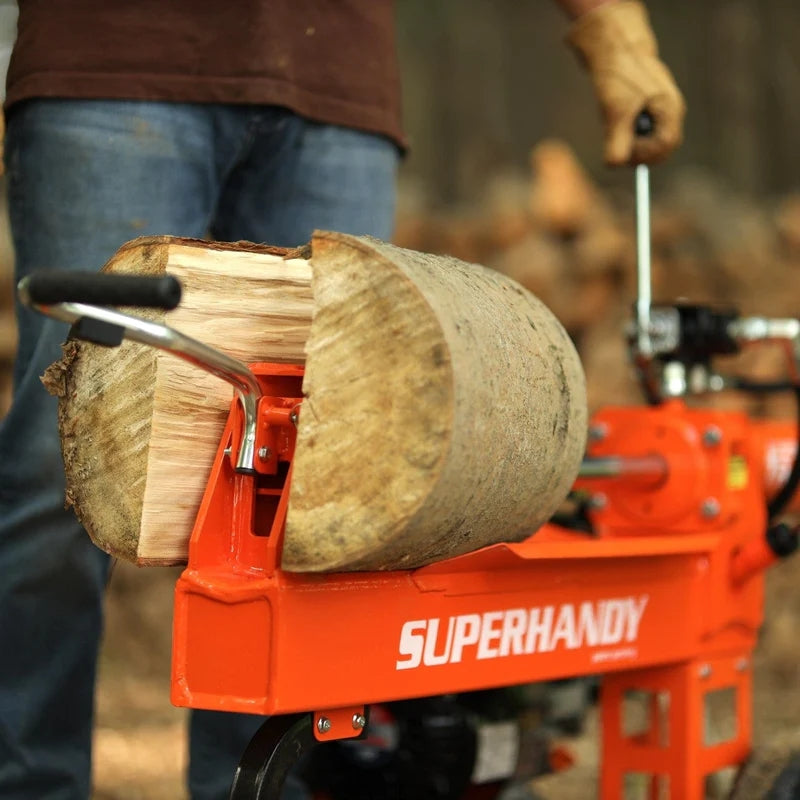
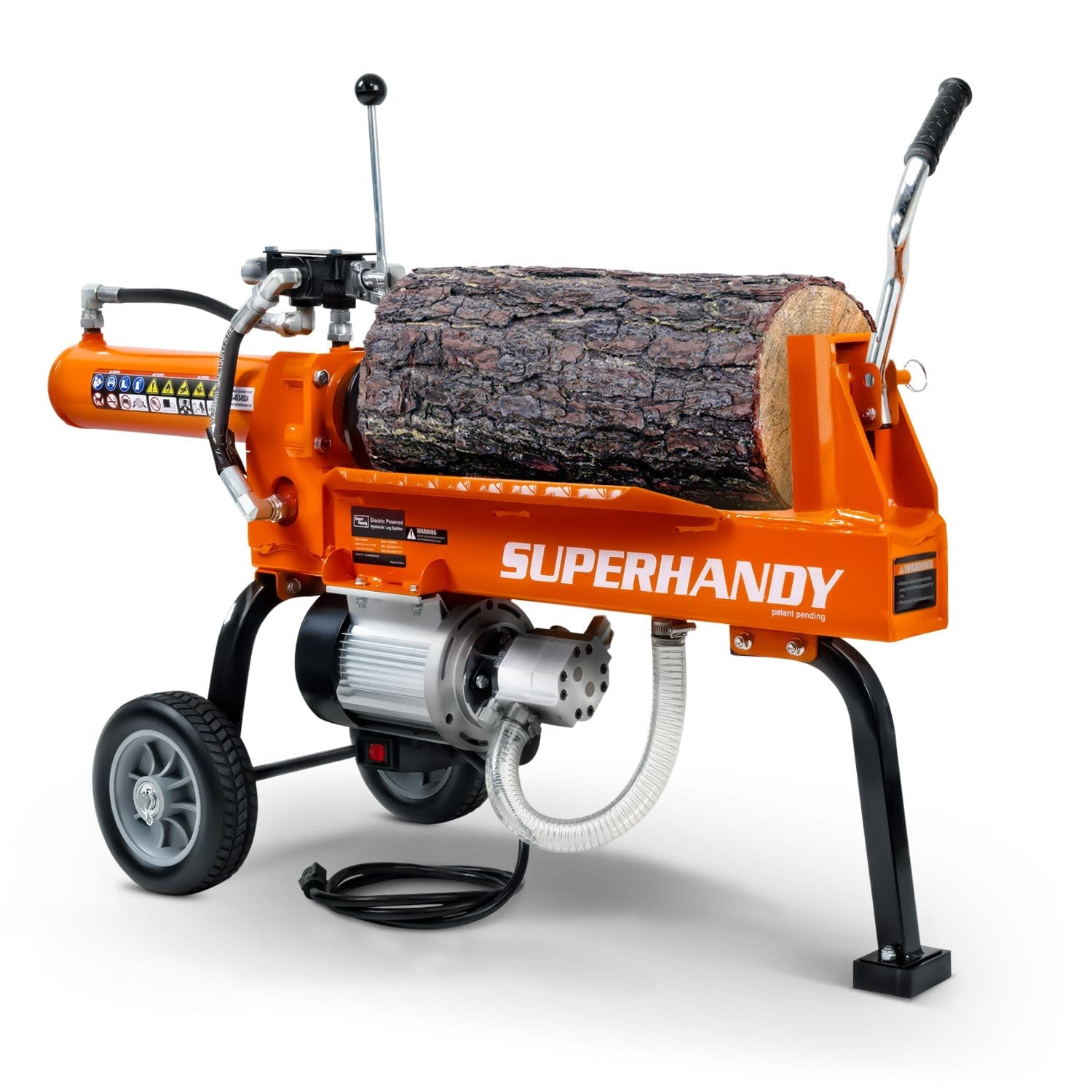
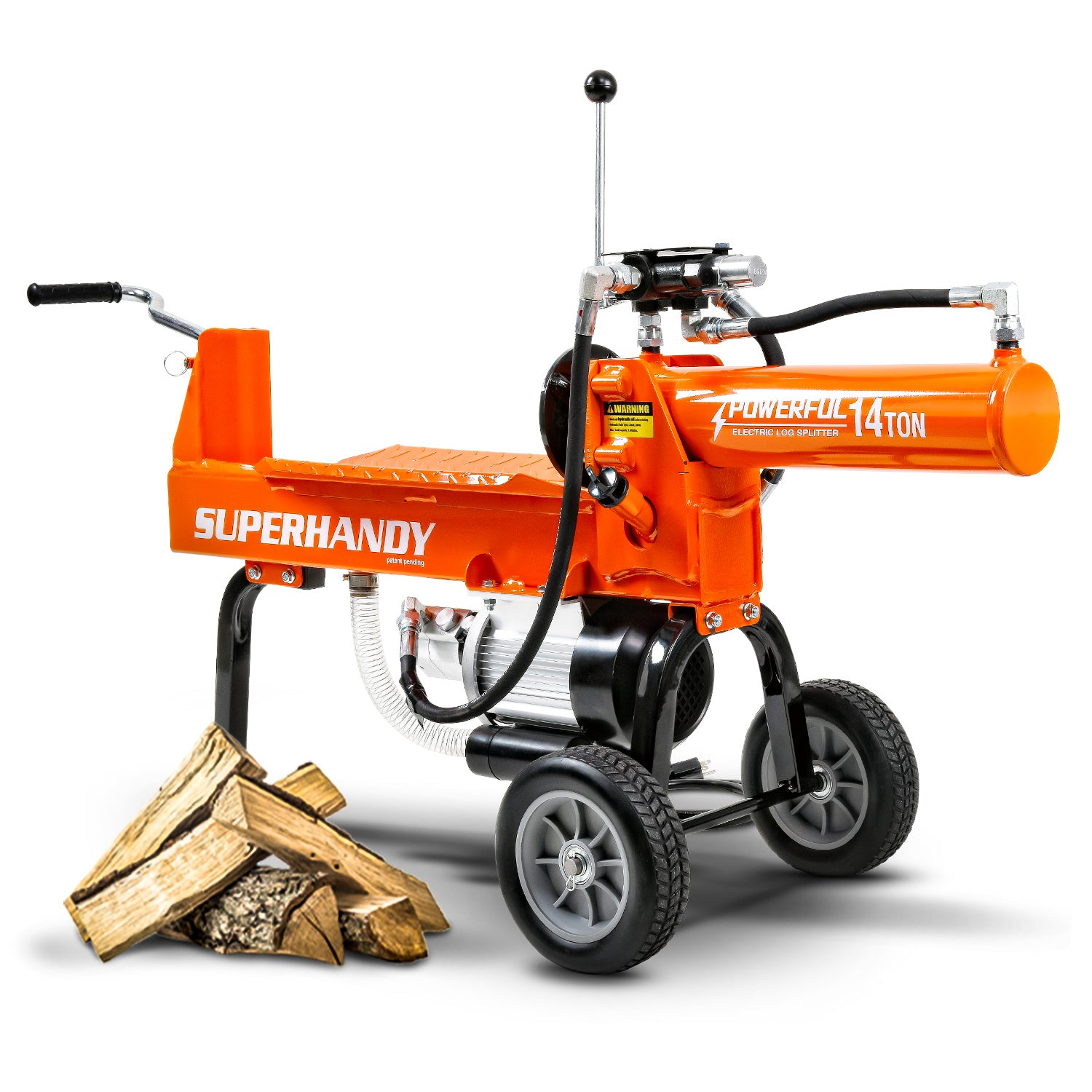
An electric log splitter is the perfect choice for most homeowners. They are quieter, lighter, produce no fumes, and require very little maintenance. Because they can be used in a garage or shed, they allow you to work regardless of the weather. They are ideal for splitting small-to-medium-sized logs of soft or moderately hard wood. For those splitting wood for a fireplace or wood stove, models like the versatile SuperHandy 14-Ton unit offer a fantastic balance of power and convenience for tougher job.
Gas-Powered Log Splitters
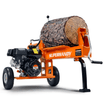
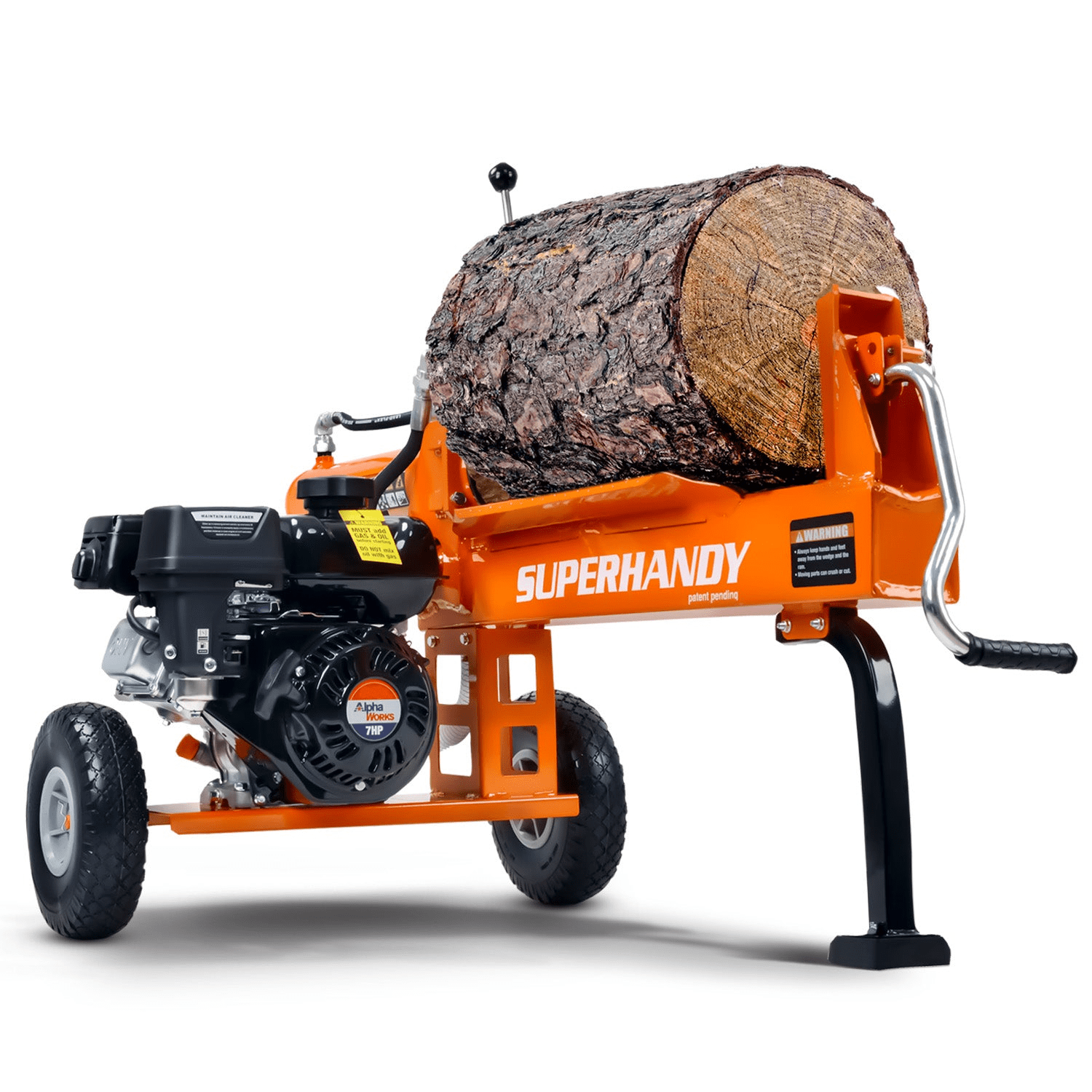
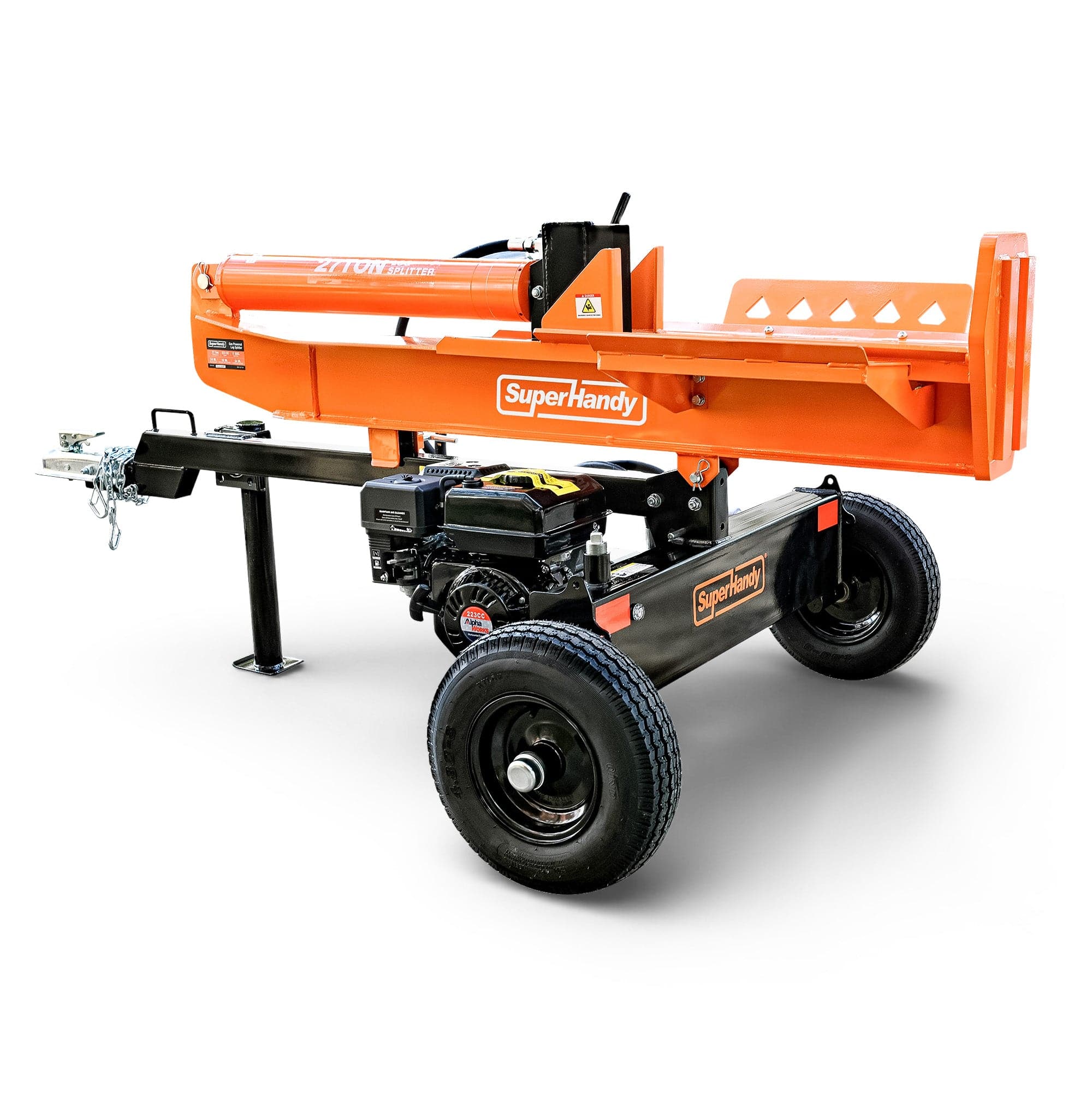
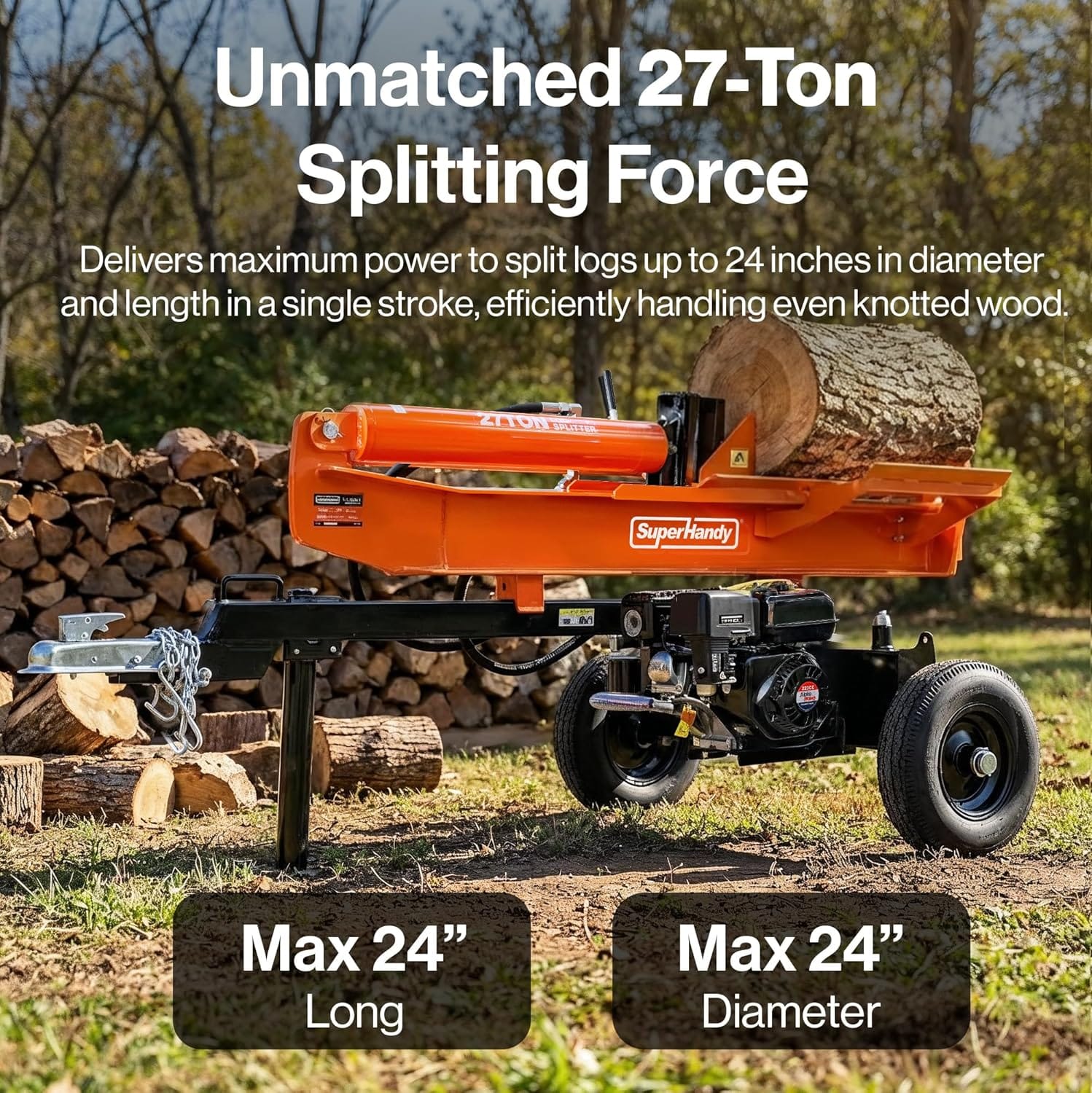
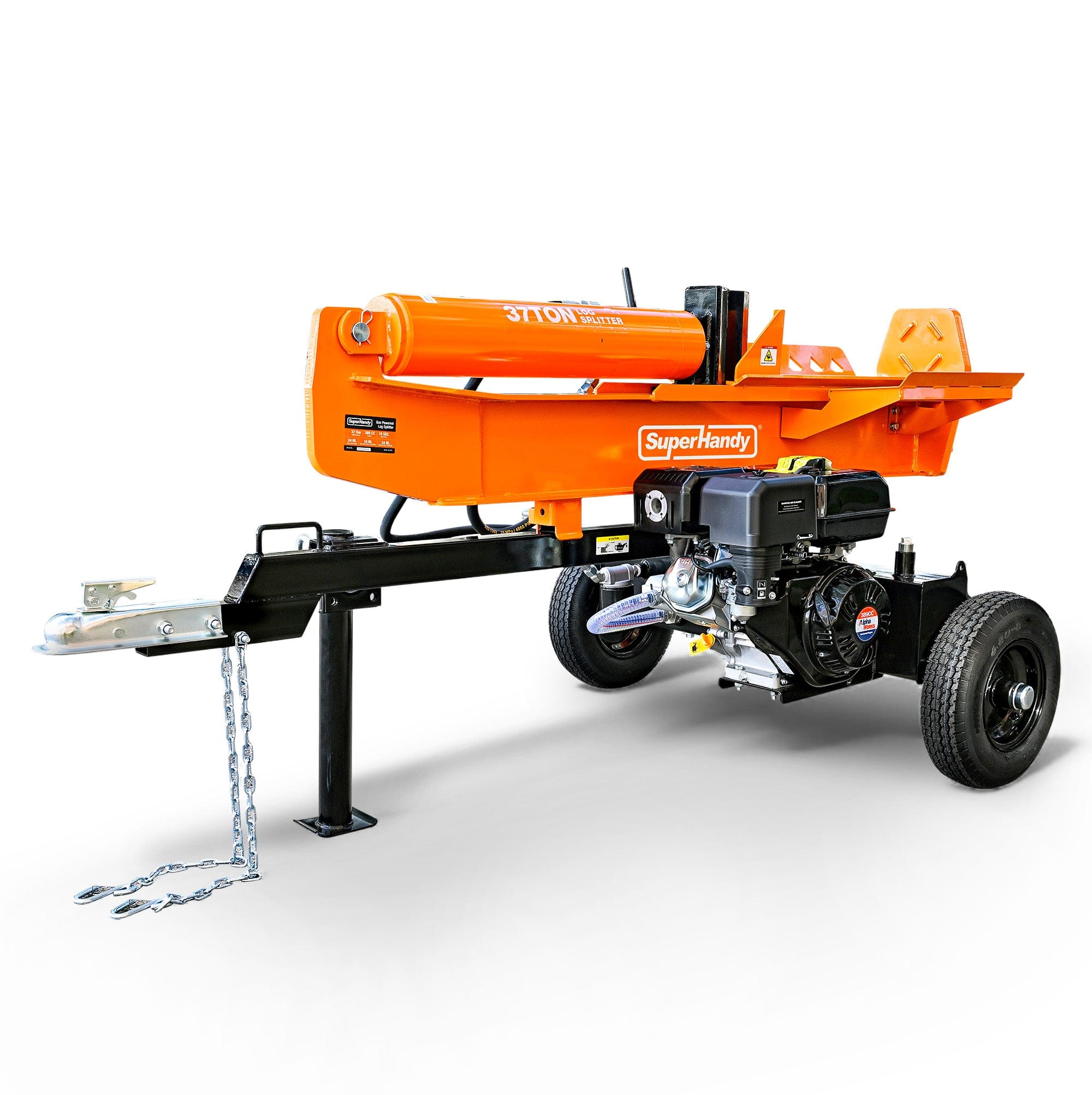
When you need maximum power and ultimate portability, nothing beats a gas-powered wood splitter. These machines are built for high-volume, heavy-duty work. They can be towed anywhere on your property and can handle the largest, toughest, and most knotted hardwood logs with ease. If you need to process multiple cords of dense wood like oak or hickory, a heavy-hitter like the SuperHandy 27-Ton Gas Log Splitter is the tool for the job. The trade-offs are that they are louder, heavier, and require more maintenance (oil changes, fuel) than their electric counterparts.
Manual Log Splitters
Manual splitters use hydraulic or kinetic force generated by the user. They are the quietest and most affordable option, but also the slowest and most labor-intensive. They are a significant step up from an axe or maul for very small, occasional tasks but are not practical for producing large amounts of firewood.
Tonnage Explained: What Splitting Force is Right for Your Wood?
When you see a log splitter advertised, its "tonnage" is the headlining feature. But what does it mean? Tonnage refers to the amount of splitting force the machine can generate. Choosing the right tonnage is crucial; too little, and you'll struggle with tough logs, but too much is overkill for simple tasks.
The key factors determining your tonnage needs are the type and condition of the wood you’ll be splitting.
- Wood Hardness: Softwoods like pine and cedar are much easier to split than hardwoods like oak, hickory, or maple.
- Wood Condition: Green (freshly cut) wood contains more moisture and has tougher fibers, requiring significantly more force than dry, seasoned wood.
- Log Diameter: While important, the wood's grain and knottiness often play a bigger role than its diameter alone.
Here’s a general guide to help you choose:
- 4-7 Tons: Ideal for splitting small-diameter (up to 6 inches) seasoned softwoods, perfect for light, occasional use around the home.
- 10-20 Tons: This is the sweet spot for many homeowners. A firewood splitter in this range can handle larger seasoned logs and some green softwoods with ease.
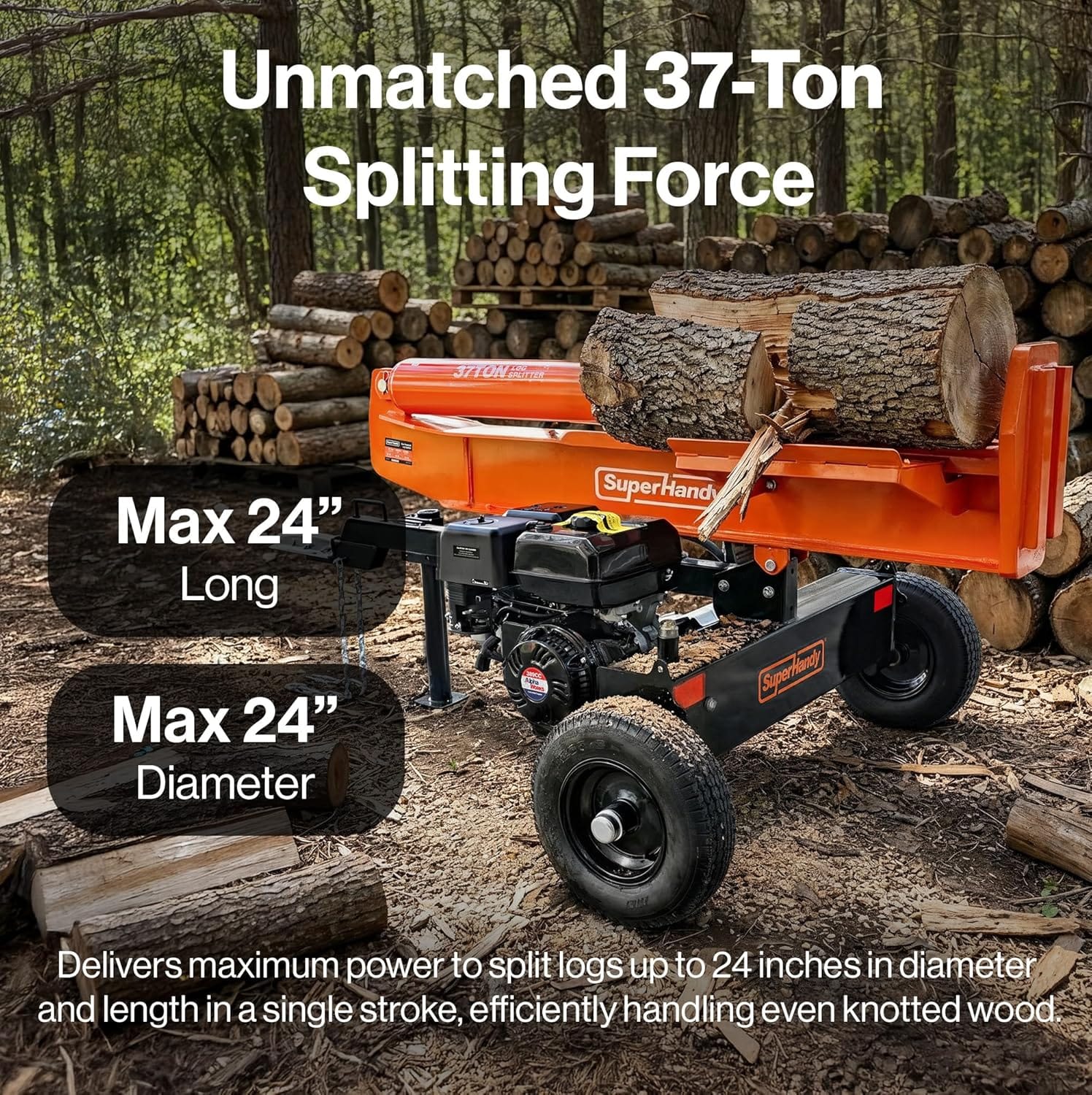
- 25+ Tons: If you regularly split large, green hardwoods or tough, knotty rounds, you’ll need a heavy-duty machine. It provides the raw force necessary to power through the most challenging jobs.
Horizontal vs. Vertical Splitting: Which Orientation Suits Your Work Style?
Log splitters primarily operate in two orientations: horizontal or vertical. Your choice depends on the size of the wood you're handling and your physical preference.

Horizontal Log Splitters: This is the most common design. You lift a log round onto the beam, and a hydraulic ram pushes it against a stationary wedge. This setup is highly efficient for processing manageable logs you can comfortably lift, creating an assembly-line workflow. Most electric log splitters are horizontal-only.
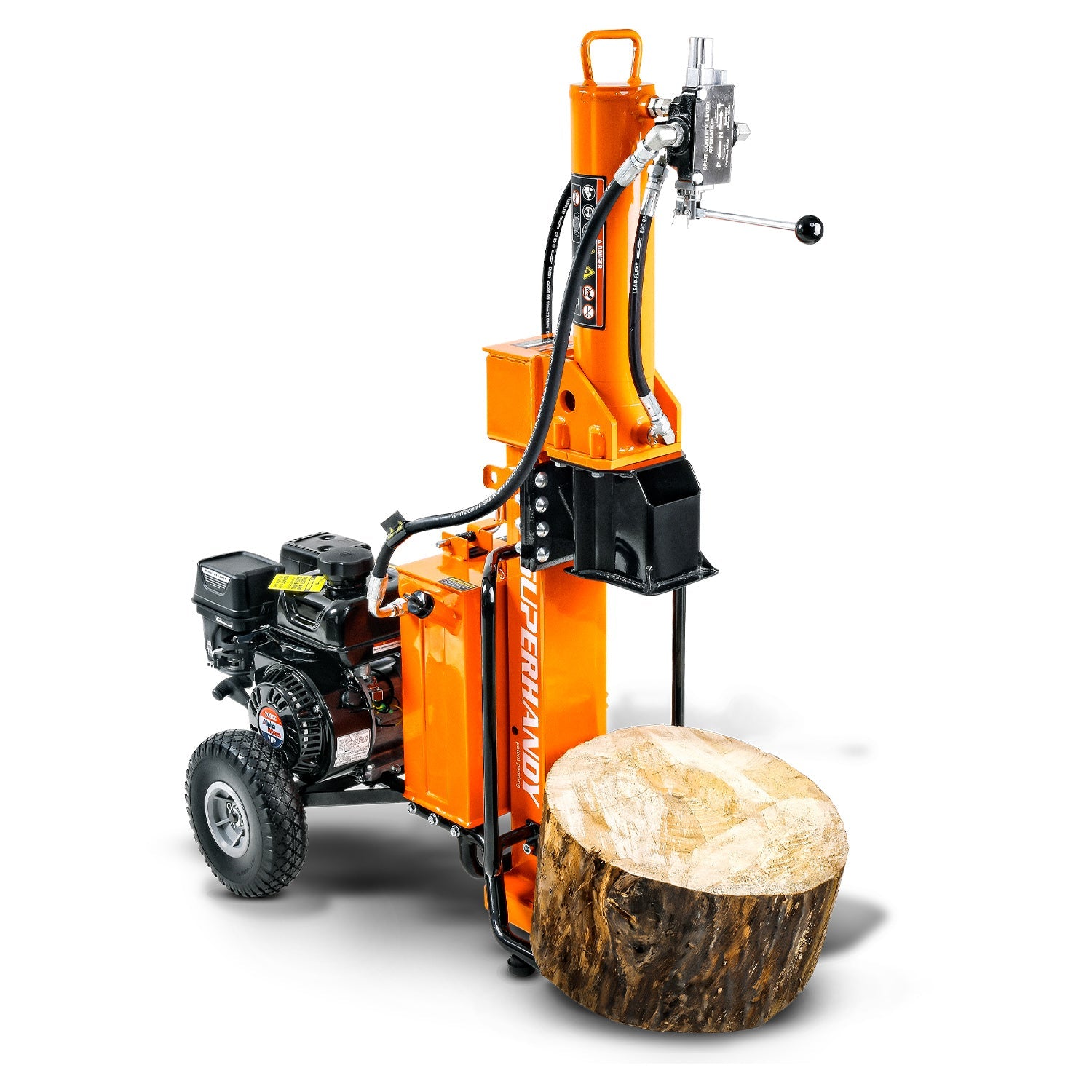
Vertical Log Splitters: With a vertical wood splitter, you don’t have to lift heavy logs at all. You simply roll a large, heavy round onto the splitter plate at ground level and bring the wedge down from above. This is a back-saver and the only practical option for splitting massive, unwieldy logs.
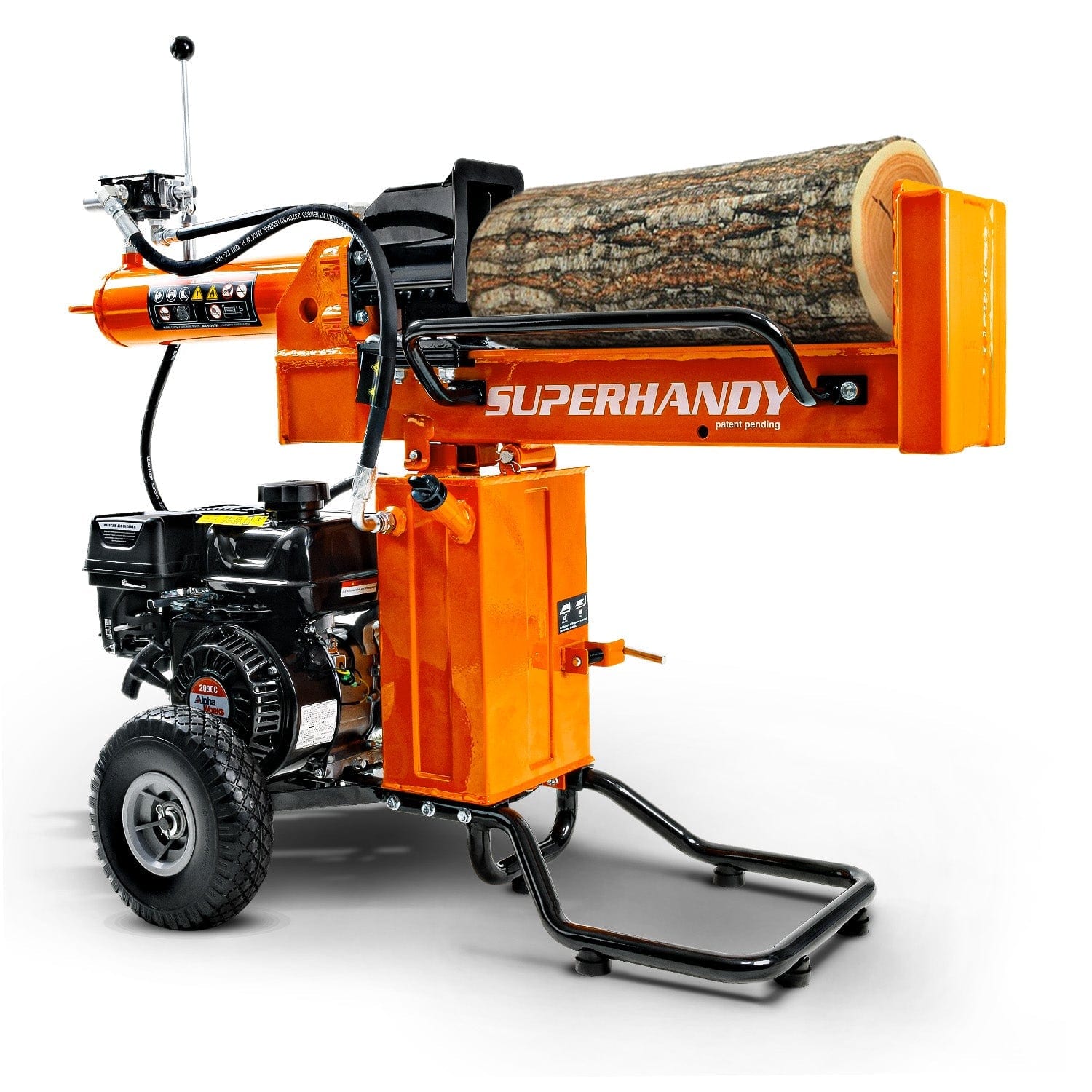
Convertible Splitters: Why choose one? Many gas-powered models offer the best of both worlds. They can be operated in the horizontal position for smaller logs and then easily tilted into the vertical position for tackling the big ones. Models like the SuperHandy 27-Ton Gas Splitter provide this essential flexibility.
Portability and Storage: Where Will You Use and Keep Your Splitter?
Consider your workspace. Will you be splitting wood in your garage, right next to the woodpile, or on a remote part of your property?
- Electric Splitters: These are typically lighter and more compact. They often come with built-in wheels and handles, making them easy to move around a patio or garage and store neatly in a corner. Their smaller footprint is a major advantage for those with limited space.
- Gas Splitters: Being larger and heavier, these models are built for mobility over land. Look for features like large pneumatic tires for handling rough terrain and a ball-hitch coupler for towing the splitter behind an ATV or truck. This is essential for moving the splitter to different work sites on a large property.
Before buying, measure your storage area to ensure your new machine will fit. Some models can be stored vertically to save floor space.
Essential Features and Attachments: Enhancing Efficiency and Safety
When browsing different log splitters, look beyond the core specs for features that make the job faster, easier, and safer.
- Auto-Return Valve: This is a must-have for efficiency. It automatically retracts the hydraulic ram after it has split a log, saving you time and effort on every cycle.
- Two-Handed Operation: A critical safety feature found on most modern splitters. It requires you to use both hands to operate the controls, ensuring your hands are safely away from the ram and wedge during operation.
- Log Cradles or Trays: These simple attachments catch the split halves of the log, preventing them from falling to the ground. This saves you from constantly bending over to pick up wood, reducing fatigue and strain on your back.
- Cycle Time: This is the time it takes for the ram to extend and retract fully, usually between 10-20 seconds. A faster cycle time means you can process more wood in less time.
Types of Log Splitters: Matching Your Specific Needs
Beyond just their power source, log splitters come in various designs tailored to specific tasks. Understanding these types ensures you get a machine that matches your workload and property. By exploring the full collection of log splitters, you can find the perfect fit.
-
Compact Electric Splitters: These are the go-to for most homeowners. Designed for portability and ease of use, they are perfect for splitting a few cords of wood each season for a fireplace or wood stove. They are quiet, emission-free, and can be used in a garage or shed.
-
Heavy-Duty & Towable Splitters: For those with large properties, multiple cords to process, or tougher, larger logs, a heavy-duty gas splitter is essential. These models offer higher tonnage, faster cycle times, and the ability to operate anywhere,allowing you to bring the splitter directly to your woodpile instead of hauling heavy logs across your property.
-
Kinetic Log Splitters: These use a flywheel system to store energy and release it rapidly, resulting in extremely fast cycle times (often 2-3 seconds). They excel at splitting straight-grained, seasoned wood quickly but may struggle more with knotty or green hardwood compared to a hydraulic splitter with equivalent tonnage.
Consumer-Grade vs. Commercial-Grade: When to Invest More?
The line between consumer and commercial wood splitters often comes down to durability, power, and workload capacity.
Consumer-grade splitters are designed for typical homeowners. This usually means processing anywhere from 1 to 10 cords of wood per year. These machines prioritize convenience, portability, and affordability. Most electric log splitters fall into this category, offering sufficient power for common woods like pine, birch, and oak. For homeowners who need a bit more power without moving to a gas engine, a high-tonnage electric model can be a perfect bridge.
Invest in commercial-grade when splitting firewood is part of your business, you manage a large forested property, or you need to process more than 10 cords of dense, knotty hardwood annually. These splitters feature:
- Higher Tonnage: 25 tons and up for tackling any wood type.
- Gas Engines: For maximum power and off-grid operation.
- Heavy-Duty Construction: Thicker steel beams and reinforced components.
- Faster Cycle Times: To maximize productivity.
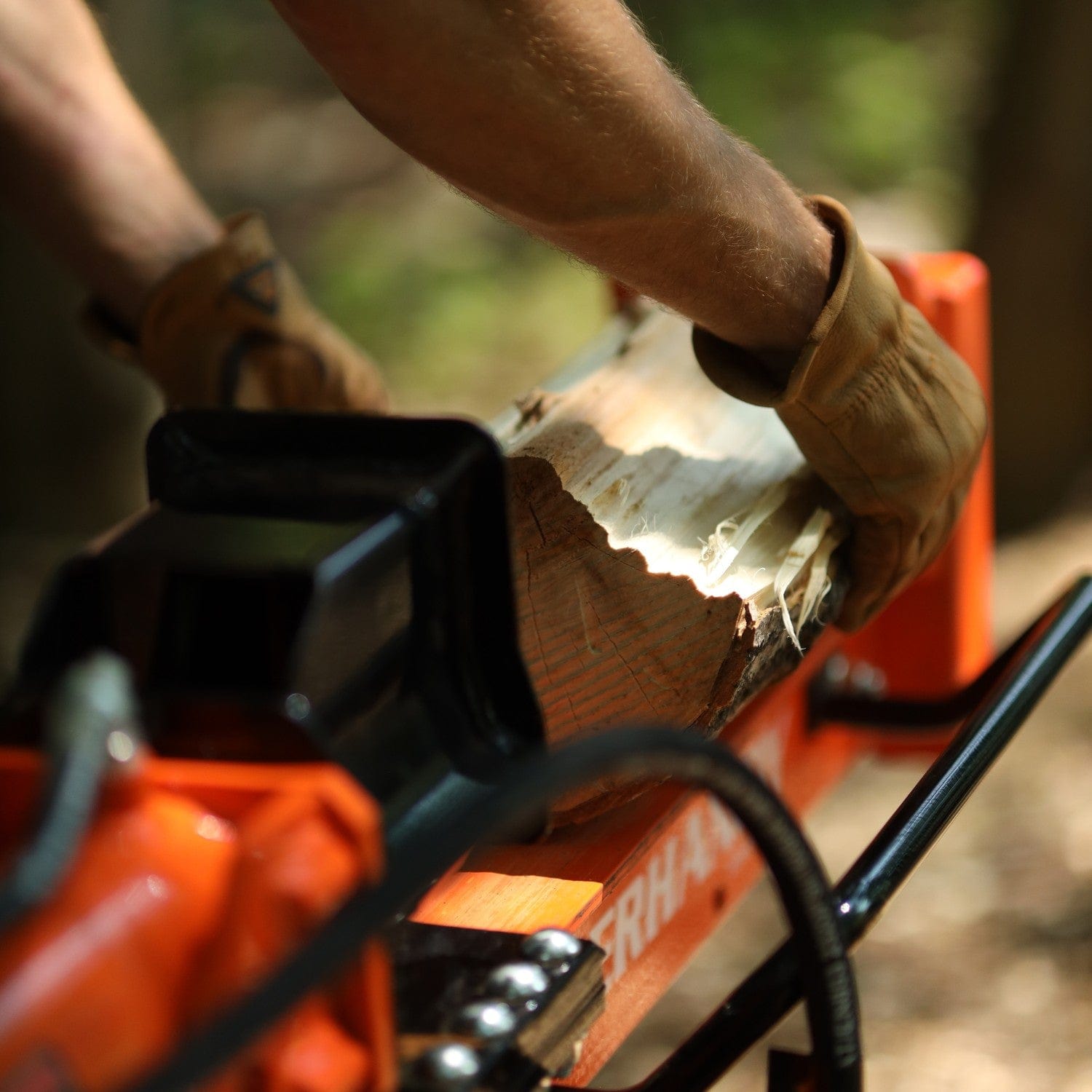
Prioritizing Safety and Maintenance for Your Log Splitter
A log splitter is a powerful tool that transforms a difficult chore into a manageable task. However, that power demands respect. Prioritizing safety and performing regular maintenance are not optional—they are essential for protecting yourself and ensuring your machine operates reliably for years to come. A well-maintained splitter is a safer splitter. Neglecting simple checks on hydraulic fluid, hoses, and the splitting wedge can lead to inefficient operation or, worse, catastrophic failure. Always start by thoroughly reading your owner's manual.
Operating Your Log Splitter Safely: Essential Guidelines
Follow these rules every time you operate your firewood splitter to minimize risk and work efficiently.
- Wear Proper PPE: Always wear safety glasses or goggles, heavy-duty gloves to protect from splinters, and sturdy, closed-toe boots (steel-toed is best). Avoid loose-fitting clothing that could get caught in the machine.
- Work on a Level Surface: Operate your splitter on firm, level ground to prevent it from tipping or rolling during use.
- Inspect Before Use: Before every session, perform a quick walk-around. Check the hydraulic oil level, look for any fluid leaks, and ensure the wedge is sharp and secure.
- Use Two-Handed Controls: Most modern splitters require both hands on the controls to engage the ram. This is a critical safety feature designed to keep your hands away from the splitting area. Never try to defeat this mechanism.
- Keep a Safe Zone: Ensure children, pets, and any bystanders are at least 10-15 feet away from the machine while it's in operation.
- Split One Log at a Time: Never attempt to split two logs at once. Place the log securely on the beam against the footplate.
- Work in Good Conditions: Avoid operating the splitter in wet conditions, which can make logs and controls slippery. Ensure you have adequate lighting if working near dusk. For more information on machine safety, refer to guidelines from the Occupational Safety and Health Administration (OSHA).
Extending Your Log Splitter's Lifespan: Maintenance Tips
A log splitter is a powerful investment that can save you countless hours of back-breaking labor. To ensure it performs reliably season after season, a little proactive maintenance goes a long way. Following these simple steps will keep your firewood splitter in top condition, whether it's an electric or gas-powered model.
1. Check and Change the Hydraulic Fluid The hydraulic system is the heart of your log splitter. Regularly check the fluid level and top it off as needed, using the type of hydraulic oil recommended by the manufacturer. Contaminated or low fluid can cause the pump to overheat and fail. As a general rule, plan to change the hydraulic fluid after every 50-100 hours of use.
2. Keep the Splitting Wedge Sharp A dull wedge requires more force to split logs, putting unnecessary strain on the entire machine. A sharp wedge, on the other hand, slices through wood efficiently. Before each major splitting session, inspect the wedge for nicks or dullness. You can sharpen it with a standard metal file, maintaining the original angle of the cutting edge.

3. Inspect Hoses and Fittings Vibration and high pressure can cause hydraulic hoses and fittings to loosen over time. Before starting work, give all connections a quick visual inspection to check for leaks or cracks. A small leak can quickly become a major problem, so tighten any loose fittings and replace damaged hoses immediately.
4. General Cleaning and Proper Storage After you're done splitting, clean off any sawdust, wood chips, and debris from the machine. This prevents rust and keeps moving parts clear. When storing your log splitter for an extended period, keep it in a dry, covered location like a garage or shed to protect it from the elements.
5. Engine and Motor Care For a gas log splitter, follow the engine manufacturer's guidelines for oil changes, air filter cleaning, and spark plug checks. For an electric log splitter, ensure the power cord is in good condition and keep the motor's air vents clear of debris to prevent overheating.
Frequently Asked Questions About Log Splitters
What size log splitter do I really need?
The right splitter size, or tonnage, depends on the type and diameter of the wood you plan to split. Smaller, seasoned softwoods such as pine generally require less force, while larger rounds (12+ inches) and denser hardwoods like oak or maple call for more power. For most homeowners, a mid-range splitter is suitable for regular firewood preparation, while higher-tonnage models are better equipped for heavy-duty jobs involving large, green, or knotty logs.
Can an electric log splitter handle tough hardwood?
Absolutely. Modern electric log splitters are surprisingly powerful and can make quick work of hardwoods like oak, hickory, and ash. The key is matching the tonnage to the wood. While a smaller electric model might struggle with a large, knotty piece of green oak, a high-tonnage log splitter has the force needed for demanding jobs without the noise and fumes of a gas engine. For most residential firewood needs, a robust electric model is more than capable.
Is it better to split wood when it's green or seasoned?
It's almost always easier to split wood when it's green (freshly cut). Green wood has high moisture content, which allows the grain to separate more easily. Seasoned (dried) wood is harder and its fibers are more interlocked, often requiring more splitting force. However, splitting wood green and then stacking it to season allows it to dry much faster, as more surface area is exposed to the air. According to the USDA Forest Service, properly seasoned wood burns hotter and cleaner.
Related Products

Leave a comment
All comments are moderated before being published.
This site is protected by hCaptcha and the hCaptcha Privacy Policy and Terms of Service apply.