



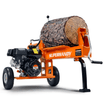






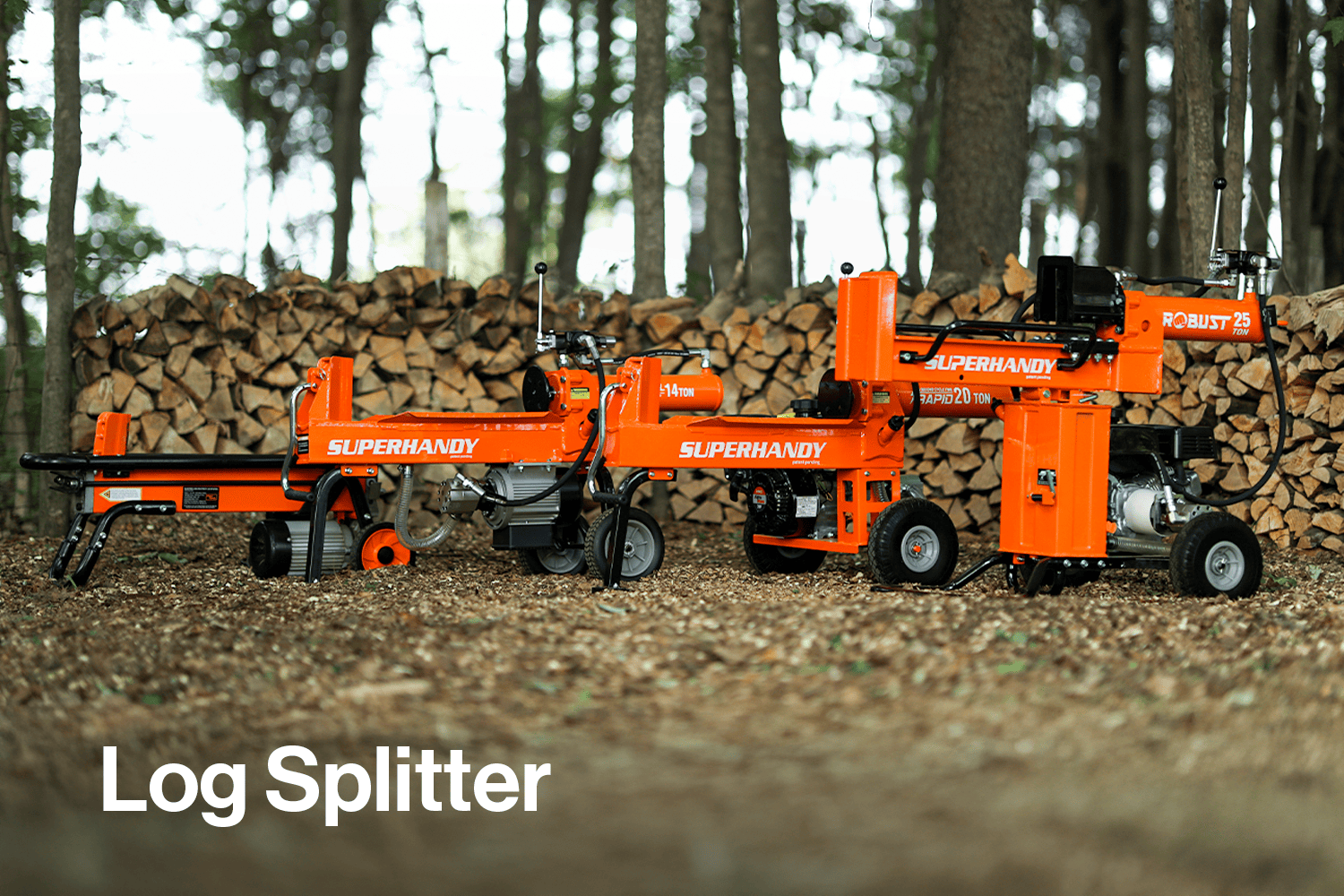
There’s a profound satisfaction that comes from a perfectly stacked woodpile, ready to provide warmth and ambiance through the cold months. But the journey from a felled tree to a neat stack of firewood can be a back-breaking ordeal. Swinging an axe for hours is a romantic notion that quickly fades after the first few blisters. This is where a log splitter transforms a dreaded chore into an efficient, even enjoyable, task. Whether you've been browsing the options at Home Depot, comparing a Lowes log splitter online, or checking out a sale on a log splitter at Harbor Freight, this guide will cut through the noise and help you find the perfect machine for your needs.
Why Invest in a Log Splitter for Your Home? Understanding the Benefits
Before diving into the technical specifications, it’s important to understand why a log splitter is one of the best investments you can make for your property. It’s about more than just convenience; it’s about safety, efficiency, and reclaiming your valuable time.
- Massive Time Savings: What might take you an entire weekend of grueling labor with a maul and wedges can often be accomplished in just a few hours with a log splitter. A machine's hydraulic power works relentlessly, allowing you to process an entire cord of wood in a fraction of the time.
- Reduced Physical Strain and Injury Risk: Repetitive swinging, heavy lifting, and the constant strain on your back, shoulders, and joints can lead to serious soreness or long-term injury. A log splitter eliminates the most strenuous parts of the process. More importantly, it removes the immediate danger of a misplaced axe swing, making it a significantly safer alternative.
- Consistent, High-Quality Firewood: A log splitter produces uniformly sized pieces of wood. This isn't just for aesthetics; consistently split logs stack more easily, dry more evenly, and burn more efficiently in your fireplace or wood stove.
-
Increased Self-Sufficiency: For homeowners who rely on wood for heat, a log splitter is a key tool for self-sufficiency. It empowers you to process your own fuel source quickly and effectively, giving you control over your winter heating supply.

Key Factors to Consider When Choosing Your Ideal Log Splitter
Walking into the world of log splitters can feel overwhelming. You’ll see terms like “tonnage,” “cycle time,” and “full beam.” Don’t worry. Choosing the right machine comes down to understanding a few key variables about the work you need to do. By matching the splitter’s capabilities to the type and amount of wood you’ll be processing, you can select a model that will serve you reliably for years to come.
Electric vs. Gas vs. Manual: Which Power Source Suits Your Needs?
The engine is the heart of your log splitter, and your first major decision is choosing its power source. Each type has distinct advantages and is suited for different environments and workloads.
Electric Log Splitters Electric models are the go-to choice for the majority of homeowners. They are quiet, produce no exhaust fumes, and require very little maintenance. This makes them perfect for use in a garage, workshop, or in residential areas where noise is a concern. While they are tethered to an electrical outlet, they offer more than enough power for processing logs for a fireplace or wood stove.
For most suburban tasks, a compact but capable unit like the SuperHandy 7-Ton Electric Log Splitter is an excellent starting point. If you need to handle slightly larger or tougher rounds, stepping up to a 14-Ton Electric model provides a significant boost in power without the complexities of a gas engine. For the ultimate in electric performance, a powerful 20-Ton Electric splitter can tackle nearly any wood you throw at it.
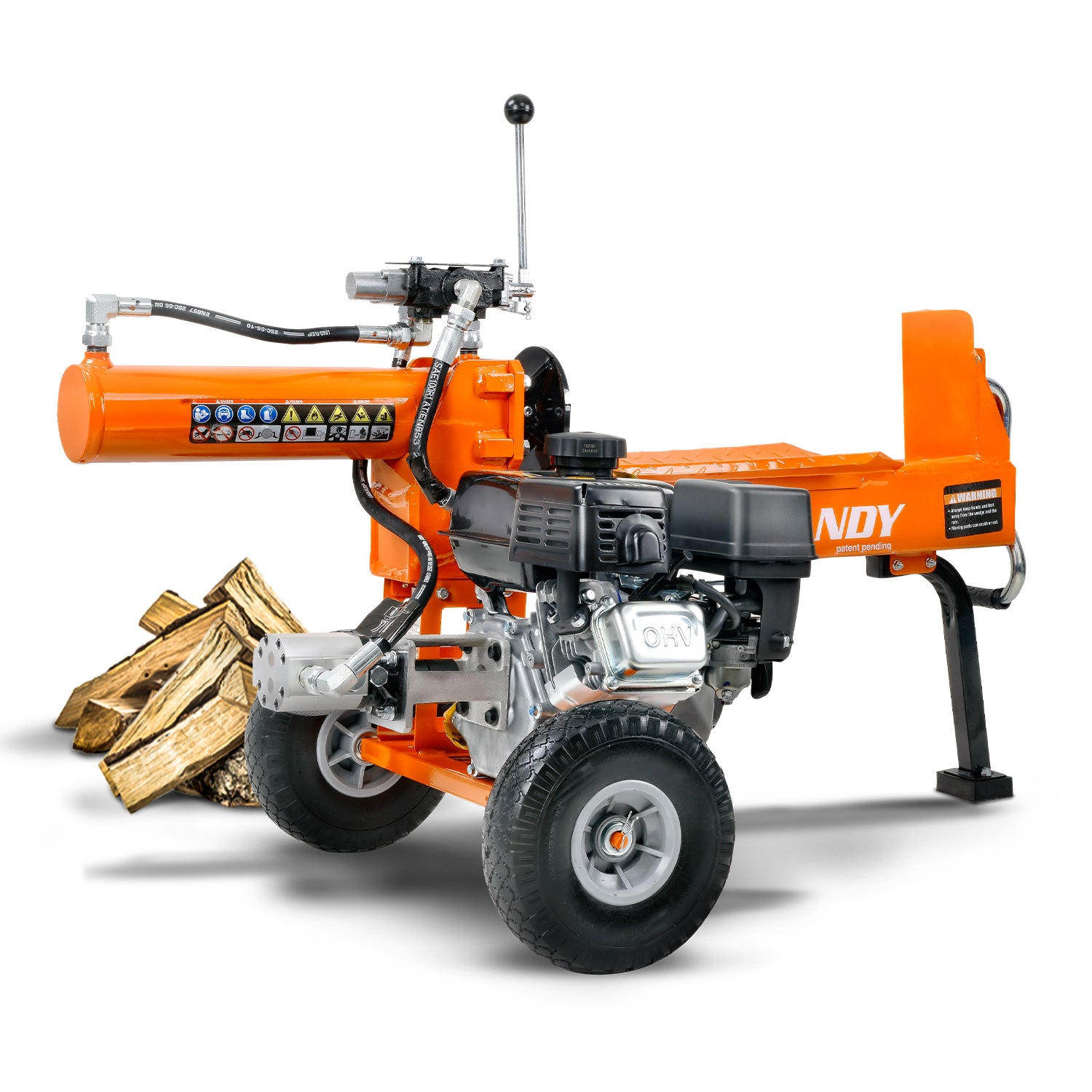
Gas-Powered Log Splitters When you need raw, untethered power and portability, nothing beats a gas-powered log splitter. These are the workhorses designed for processing large quantities of wood, splitting green or knotty logs, and working in remote locations far from a power source. They are louder and require engine maintenance (oil changes, fuel), but their performance is unmatched.
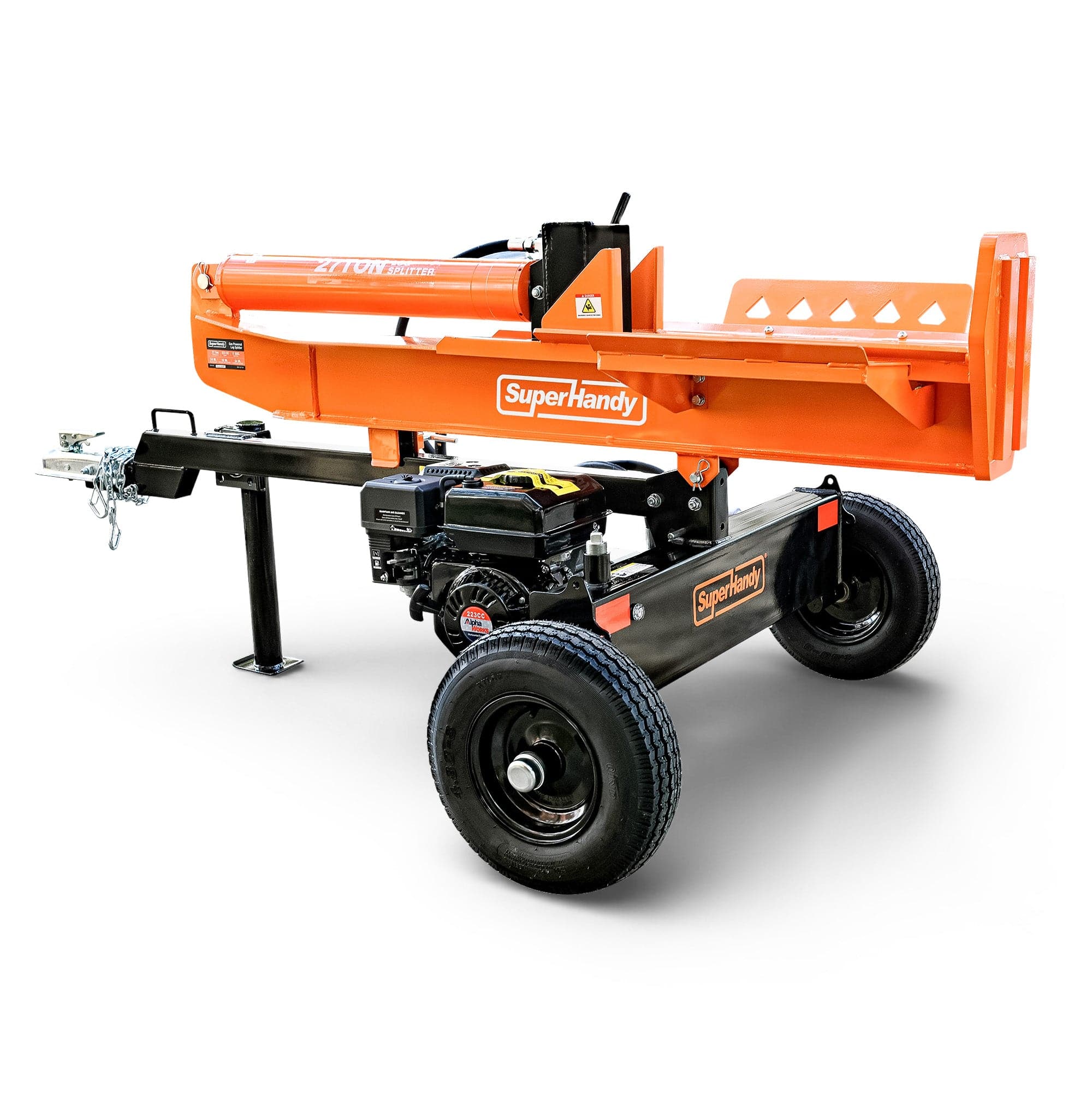
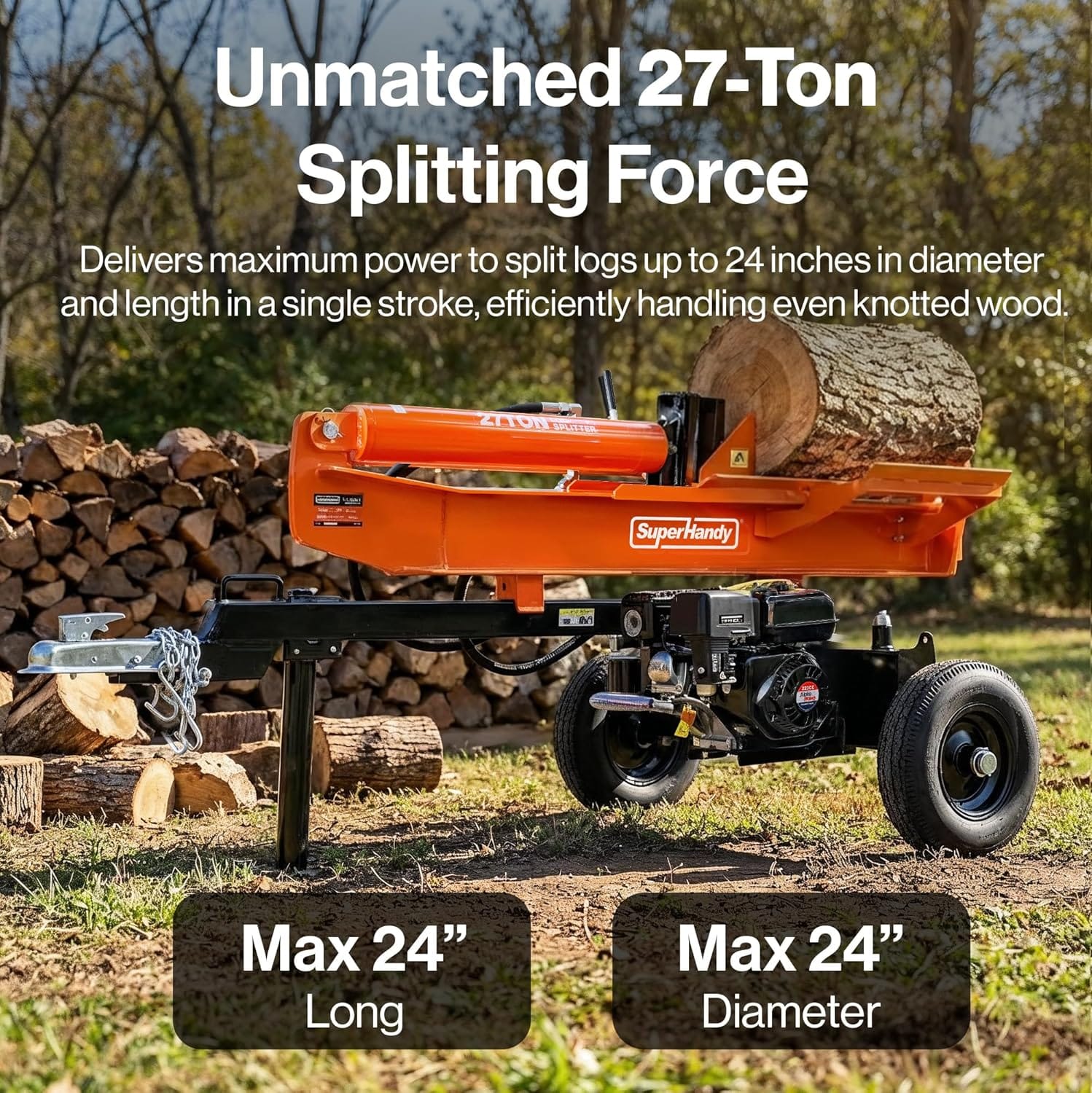
If you’re clearing land or heating your home exclusively with wood, a gas model is a necessity. A robust machine like the SuperHandy 27-Ton Gas Log Splitter offers incredible force for handling dense hardwoods and large-diameter logs with ease.
Manual Log Splitters Manual log splitters use human-powered hydraulics or levers. They are the quietest and most portable option, but also the slowest and most labor-intensive. They are a step up from an axe and are best suited for very small, occasional jobs or for making kindling.
How Much Tonnage Do You Really Need? Matching Force to Wood Type and Diameter
Tonnage is the single most important performance metric—it measures the maximum splitting force the machine can exert. Choosing the wrong tonnage is a common mistake. Too little, and you’ll struggle with tough logs; too much, and you’ve overspent on power you don’t need.
The key is to match the tonnage to the wood you’ll be splitting, considering both its type (softwood vs. hardwood) and condition (seasoned vs. green).
- 4 to 10 Tons: This range is ideal for splitting softwoods like pine and fir, especially if the wood is seasoned (dried). It’s perfect for smaller logs, generally under 12 inches in diameter.
- 12 to 22 Tons: This is the sweet spot for many homeowners. A splitter in this range can handle most seasoned hardwoods like oak, maple, and ash. It’s also where you find the most powerful electric models, which are capable of tackling the majority of residential firewood needs.
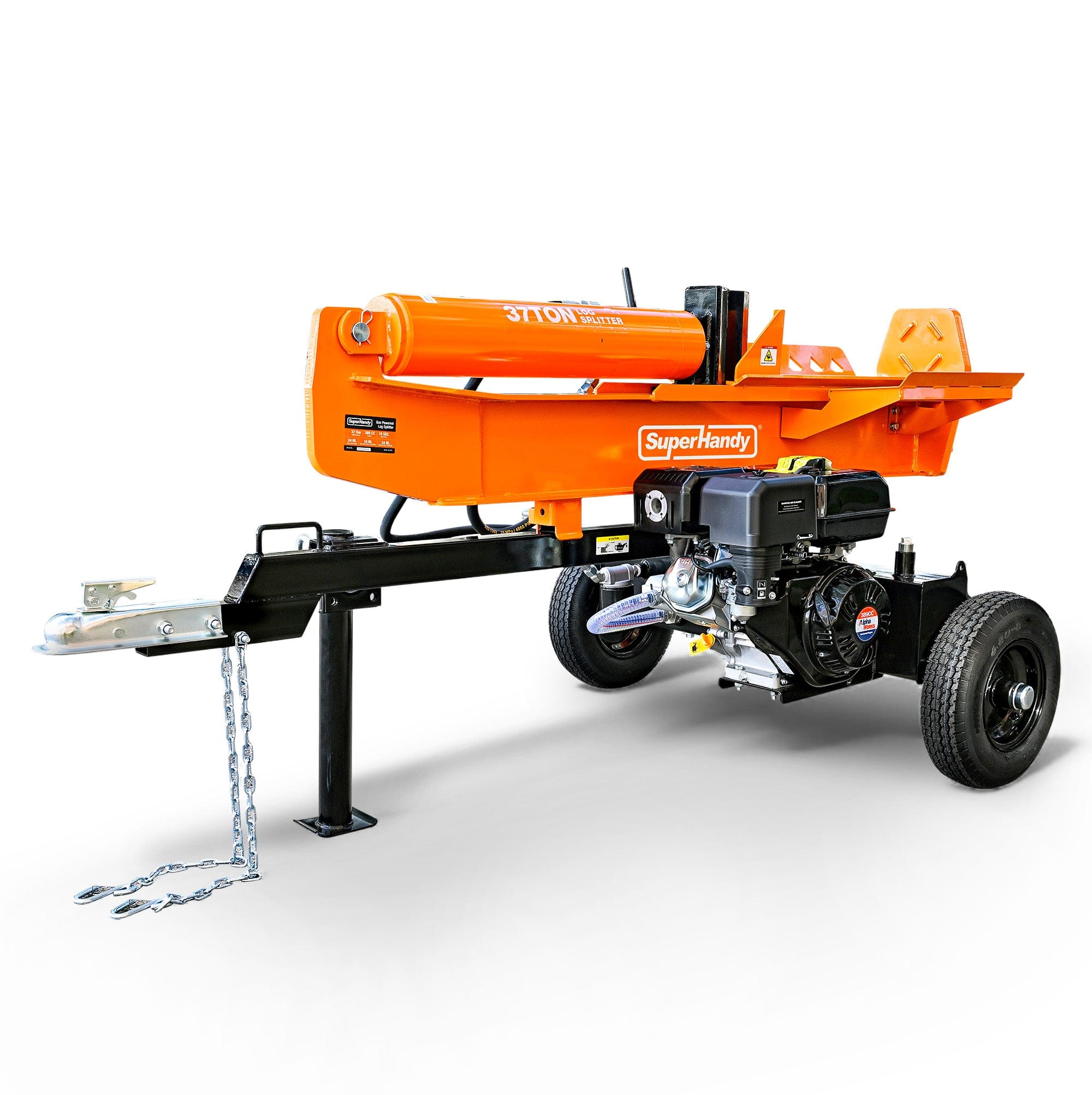
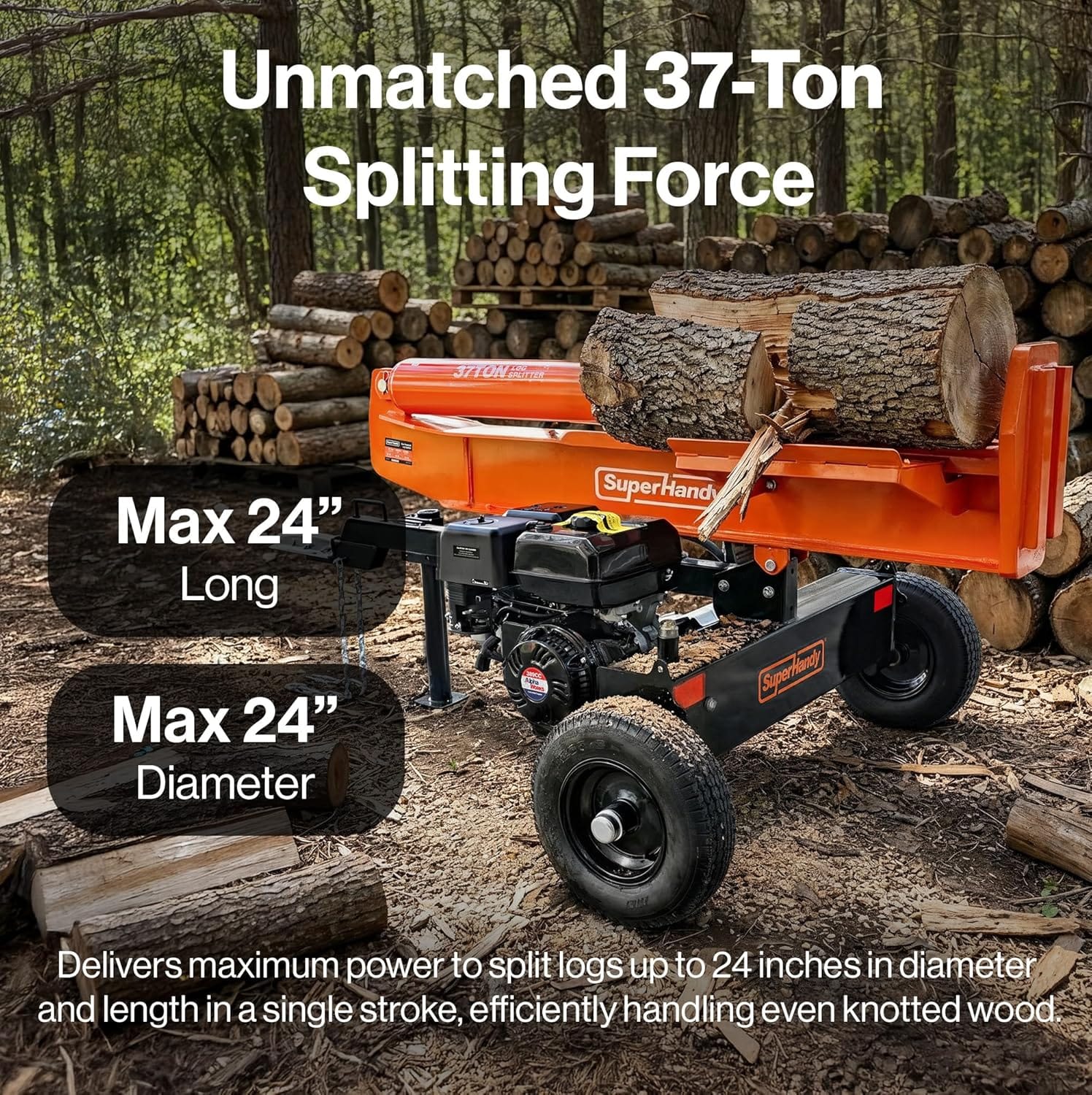
- 25 Tons and Above: This is serious power for serious work. A high-tonnage splitter is necessary for large-diameter rounds (up to 24 inches or more), freshly cut green wood (which is much harder to split), and notoriously tough, stringy, or knotty hardwoods like elm, hickory, or sweetgum. For these demanding jobs, a gas-powered unit like a 27-Ton model is essential. For maximum capability, an unstoppable 37-Ton Gas Splitter ensures no log will stand in your way.
Pro-Tip: When in doubt, it’s always better to choose a splitter with slightly more tonnage than you think you need. You'll appreciate the extra power the first time you encounter a stubborn, knot-filled round.
Horizontal, Vertical, or Both: Optimizing Splitting Orientation for Logs
When you're browsing for a log splitter, you'll immediately notice they come in three main configurations: horizontal, vertical, and convertible (horizontal/vertical). The right choice depends entirely on the size and weight of the wood you plan to split.
-
Horizontal Splitters: This is the most common design, especially for electric models and smaller gas units. You lift a log onto the beam, and a hydraulic ram pushes it against a stationary wedge. This setup is perfect for logs that are a manageable size and weight—typically under 12 inches in diameter. They are efficient and comfortable to operate for processing standard firewood lengths.
-
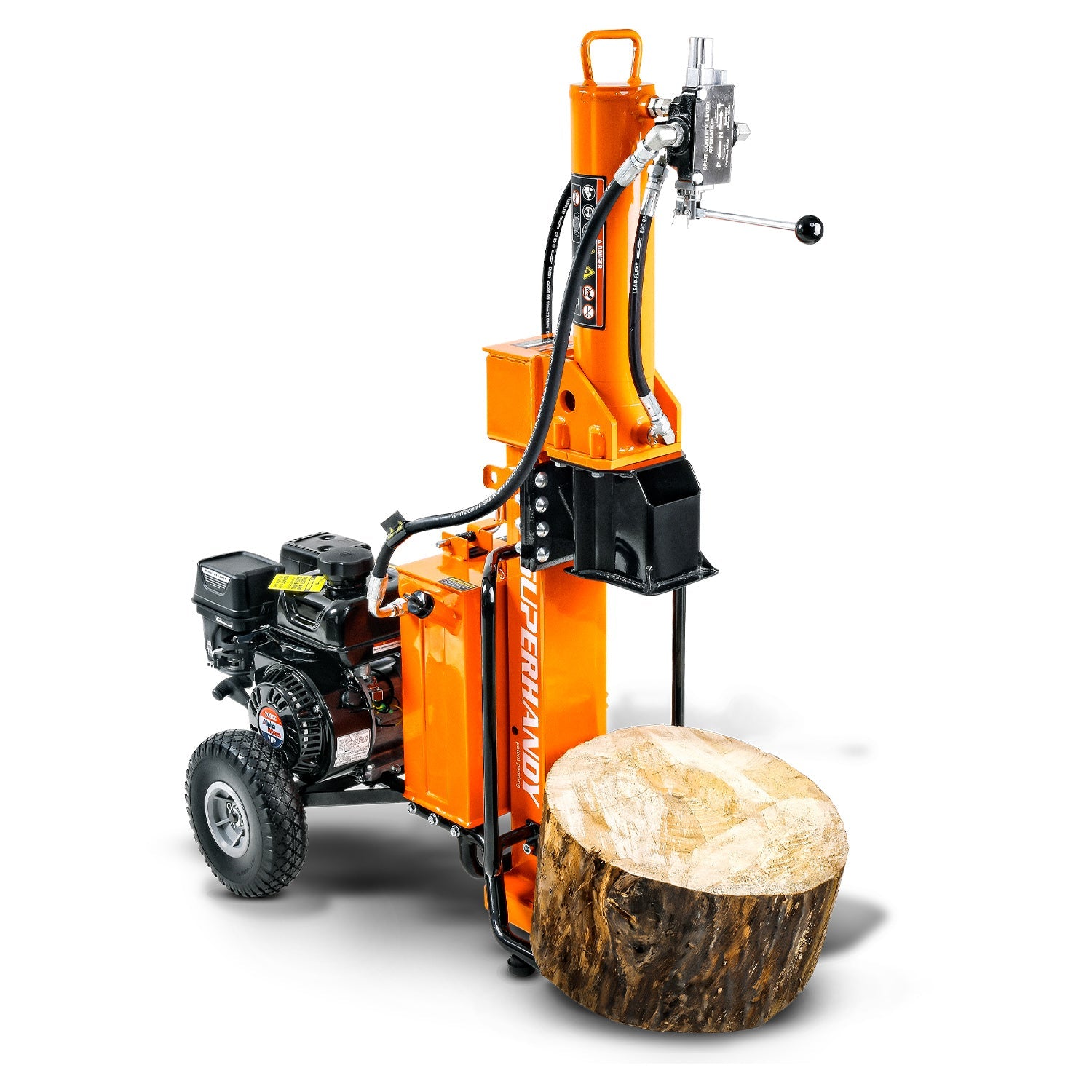
Vertical Splitters: In this design, you place the log on a base plate at ground level and the wedge drives down from above to split it. The major advantage? You don't have to lift heavy, massive rounds of wood. You can simply roll them into position. If you frequently deal with large, gnarled, or heavy logs that are a struggle to lift, a vertical splitter will save your back.
-
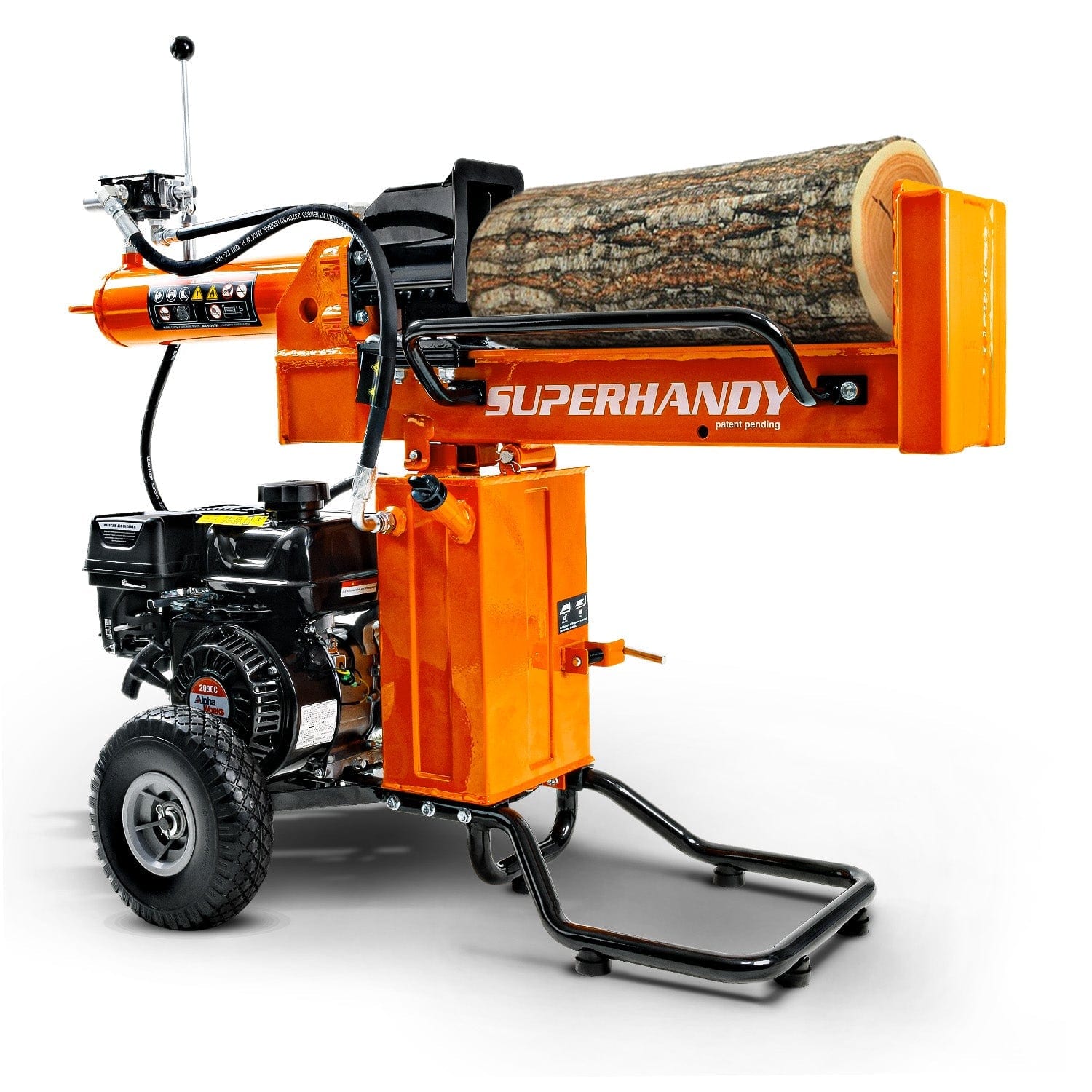
Convertible (Horizontal/Vertical) Splitters: Why choose when you can have both? Convertible models offer the ultimate versatility. You can use them in the horizontal position for smaller logs and then, with a simple pin pull, pivot the beam into the vertical position for those monster rounds you can't lift. This flexibility makes them a top choice for anyone who processes a wide variety of wood. For serious workloads, powerful gas models like the SuperHandy 27-Ton Gas Powered Log Splitter or the even more robust SuperHandy 37-Ton Gas Powered Log Splitter provide this dual-operation capability, ensuring no log is too big or too small.
Assessing Portability and Tire Size: Moving Your Log Splitter Around Your Property
Don't underestimate the importance of portability. Your 400-pound splitter won't do you much good if it's stuck in the garage and the woodpile is at the back of your property.
For smaller jobs around the house, compact electric models are king. They often feature built-in handles and smaller, solid wheels, making them easy to roll across a driveway or patio much like a hand truck. The lightweight design of a unit like the SuperHandy Electric Log Splitter GUO084 makes it simple to store and move exactly where you need it.
For larger properties or moving the splitter between locations, you’ll need a towable model. These heavy-duty gas splitters come equipped with larger, pneumatic tires and a 2-inch ball coupler for towing behind a truck, ATV, or tractor. Pay attention to the tire specifications—some are rated for off-road or yard use only, while others are DOT-approved for highway speeds. Always check the manufacturer's recommended towing speed to ensure safety on the road.
Essential Safety Features: Protecting Yourself While Operating a Log Splitter
A log splitter is a powerful piece of machinery that demands respect. While you'll see many options at stores like Home Depot or Lowe's, it's crucial to look beyond the price tag and tonnage to ensure the model you choose has key safety features. According to the U.S. Consumer Product Safety Commission, log splitters are a significant source of injuries, so prioritize models built with your protection in mind.
Look for these critical features:
- Two-Handed Operation: This is a standard safety feature, especially on electric splitters. It requires you to use one hand to engage the hydraulic lever and the other to operate the power switch. This design ensures both of your hands are clear of the ram and wedge during the splitting process. Models like the SuperHandy GUO096 Electric Splitter incorporate this essential feature.
- Automatic Ram Return: An auto-return valve automatically retracts the splitting ram once you release the controls. This not only speeds up your workflow but also reduces operator fatigue. A tired operator is more likely to make mistakes, making this a valuable feature for both convenience and safety.
- Log Cradles or Trays: These simple metal guides are mounted alongside the beam. They catch the two halves of the log after it's been split, preventing them from falling on your feet or requiring you to bend over constantly.
Always supplement these built-in features by wearing proper personal protective equipment (PPE), including safety glasses, heavy-duty gloves, and steel-toed boots.
Beyond the Purchase: Maintaining and Storing Your Log Splitter for Longevity
Your log splitter is a significant investment, and proper care is the key to ensuring it provides years of reliable service. A well-maintained machine is also a safer machine.
Essential Maintenance Checklist:
- Check Hydraulic Fluid: This is the lifeblood of your splitter. Regularly check the fluid level and clarity. Milky or cloudy fluid may indicate water contamination. Change the fluid and filter according to the schedule in your owner's manual.
- Engine Care (Gas Models): Treat the engine just like you would a lawnmower. Change the oil, clean or replace the air filter, and check the spark plug at regular intervals.
- Keep the Wedge Sharp: A dull wedge crushes wood rather than splitting it, which puts unnecessary strain on the engine and hydraulic system. Use a mill bastard file to sharpen the edge as needed.
- Inspect Hoses and Fittings: Before each use, do a quick visual inspection for any cracked hydraulic hoses or loose fittings. A hydraulic fluid leak under pressure can be extremely dangerous.
- Grease and Lubricate: Refer to your manual for any grease points on the beam or wheel bearings to keep everything moving smoothly.
Proper Storage:
When you're done for the season, store your splitter properly to protect it from the elements.
- Clean It: Remove all wood debris, dirt, and oil from the machine.
- Cover It: Store it in a dry, protected area like a garage or shed. If it must be stored outside, use a high-quality, waterproof cover.
- Prepare Gas Engines for Storage: To prevent carburetor problems, either drain the fuel tank and carburetor completely or add a quality fuel stabilizer to a full tank and run the engine for a few minutes to circulate it.
- Protect the Ram: Retract the hydraulic ram fully to protect the polished cylinder rod from rust and corrosion.
What's Your Budget? Understanding Log Splitter Costs and Where to Buy
A log splitter is a significant investment, but the price can vary dramatically, from a couple of hundred dollars to several thousand. Understanding the different price tiers and where to shop will help you find the best value for your specific needs without overspending.
Log Splitter Price Tiers
- Entry-Level (Under $500): This category is dominated by manual log splitters and smaller electric models, typically offering 4 to 7 tons of force. These are perfect for homeowners with occasional splitting needs—clearing a fallen limb, preparing a few cords of softwood for a backyard fire pit, or splitting small-diameter logs. They are compact, easy to store, and require minimal maintenance.
- Mid-Range Homeowner ($500 - $1,200): This is the sweet spot for most homeowners who heat with wood or process a significant amount of firewood each year. Here you'll find powerful electric splitters and entry-level gas models. Machines in this range, like the highly efficient SuperHandy 7-Ton Electric Log Splitter, offer a fantastic blend of power, convenience, and value. They can handle most common hardwoods like oak and maple with ease.
- Heavy-Duty & Prosumer ($1,200+): If you're tackling large quantities of dense, knotty hardwood, or running a small firewood business, this is your category. These are almost exclusively gas-powered models with 20 tons of force or more. They often feature vertical/horizontal splitting capabilities, towable designs, and faster cycle times. A robust model like the SuperHandy 27-Ton Gas Powered Log Splitter is built for serious, high-volume work and can handle virtually any log you throw at it.
Where to Buy Your Log Splitter
Once you know your budget, the next question is where to shop. You have a few main options, each with pros and cons.
-
Big Box Retailers (Home Depot, Lowe's, etc.): Searching for a
home depot log splitterorlowes log splitteris a common starting point. The main advantage is convenience; you can see the machine in person and take it home the same day. However, their selection is often limited to a few mainstream brands, and the staff may not have specialized knowledge to answer detailed questions. -
Farm & Fleet Stores (Harbor Freight, Tractor Supply): Stores like these often carry a wider range of heavy-duty and gas-powered models. You might find a good deal on a
log splitter harbor freightmodel, but it's important to research the specific brand's reputation for quality and parts availability. - Online & Direct from the Manufacturer: For the best selection, detailed specifications, and expert advice, buying directly from a specialized brand like SuperHandy is often the smartest choice. You get access to the full product line, from ultra-portable units like this 6-Ton Electric Log Splitter to powerful commercial-grade machines. Buying direct ensures you get comprehensive customer support, easy access to replacement parts, and the confidence that you're purchasing a machine designed by experts.
Frequently Asked Questions (FAQ) About Log Splitters
How many tons do I need for a log splitter?
Tonnage is the amount of force the splitter can exert. The amount you need depends on the wood you're splitting. As a general guide:
- 4-7 Tons: Ideal for softwoods (pine, fir) and smaller-diameter (under 12 inches) seasoned hardwoods.
- 10-20 Tons: Necessary for splitting larger, denser, seasoned hardwoods like oak, hickory, and maple.
- 20+ Tons: Recommended for large-diameter (over 18 inches), knotty, or freshly cut green wood. When in doubt, it’s better to have slightly more tonnage than you think you’ll need.
Can a log splitter cut wet or green wood?
Yes, but you need a powerful machine. Green wood contains a lot of moisture and has tougher, more elastic fibers than seasoned wood, making it much harder to split. While some smaller electric splitters may struggle, a high-tonnage gas model is specifically designed for this kind of demanding work. For the toughest green logs, a machine like the beastly SuperHandy 37-Ton Gas Powered Log Splitter provides the raw force needed to power through without hesitation. Remember, even if you split wood green, it must be properly seasoned (dried) for 6-12 months before burning.
Is it cheaper to rent or buy a log splitter?
It depends on your usage. Renting a log splitter typically costs between $80 to $150 per day. If you only need to split a small pile of wood once every few years, renting is more cost-effective. However, if you plan to split firewood every single year, buying is the smarter financial move. A reliable electric splitter can pay for itself in just 3-4 uses compared to rental fees, and you'll have the convenience of using it whenever you want.
What kind of maintenance does a log splitter require?
Log splitter maintenance is relatively straightforward. For all types, you should regularly check the hydraulic fluid level, keep the wedge sharp for clean splits, and inspect hoses for cracks or leaks. For gas models, you'll also need to perform basic engine maintenance, such as changing the oil, cleaning the air filter, and checking the spark plug, just as you would with a lawnmower. Always consult your owner’s manual for the specific maintenance schedule.
Are electric log splitters powerful enough?
Absolutely. Modern electric log splitters are surprisingly powerful and are more than adequate for the vast majority of homeowners. A high-quality electric model, such as the SuperHandy 12-Ton Electric Log Splitter, can easily handle seasoned hardwoods up to 12-16 inches in diameter. They offer the significant advantages of being quieter, producing no fumes (allowing for use in a garage or shed), requiring less maintenance, and being much lighter and easier to move than their gas-powered counterparts.
Related Products



Leave a comment
All comments are moderated before being published.
This site is protected by hCaptcha and the hCaptcha Privacy Policy and Terms of Service apply.