













Choosing the Right Gas Log Splitter for Your Needs
The journey to faster splitting begins with selecting the right tool for the job. A gas log splitter that’s underpowered for your needs will struggle and slow you down, while an overly powerful one might be more than you require. The most important factor to consider is splitting force, measured in tons.
- For lighter-duty work involving smaller rounds and softwoods like pine or fir, a 20Ton log splitter provides ample power and efficiency.
- For all-around use with mixed wood types and moderate volumes, a versatile model like a 25Ton log splitter strikes a perfect balance between power and speed.
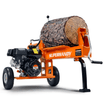
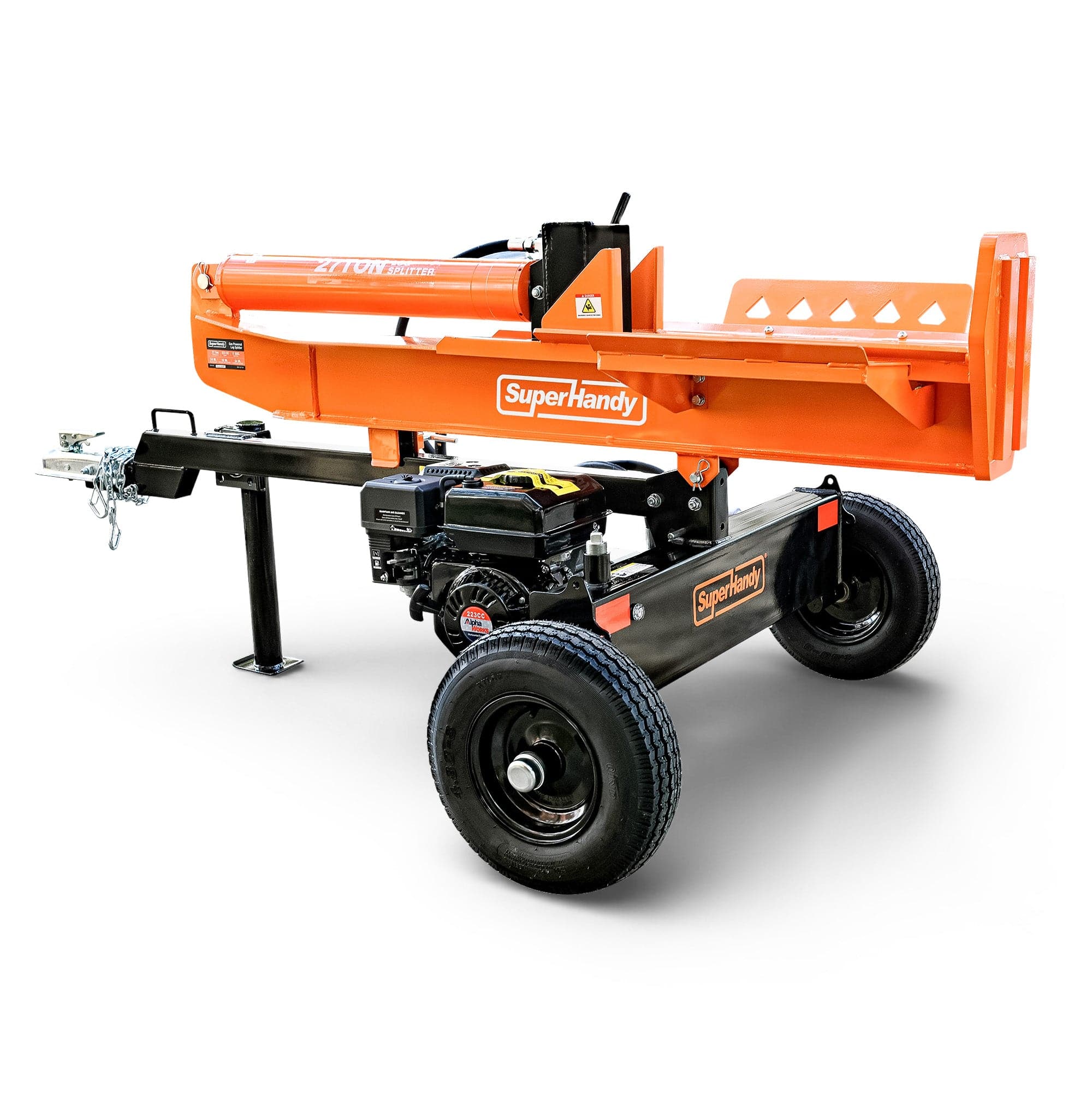
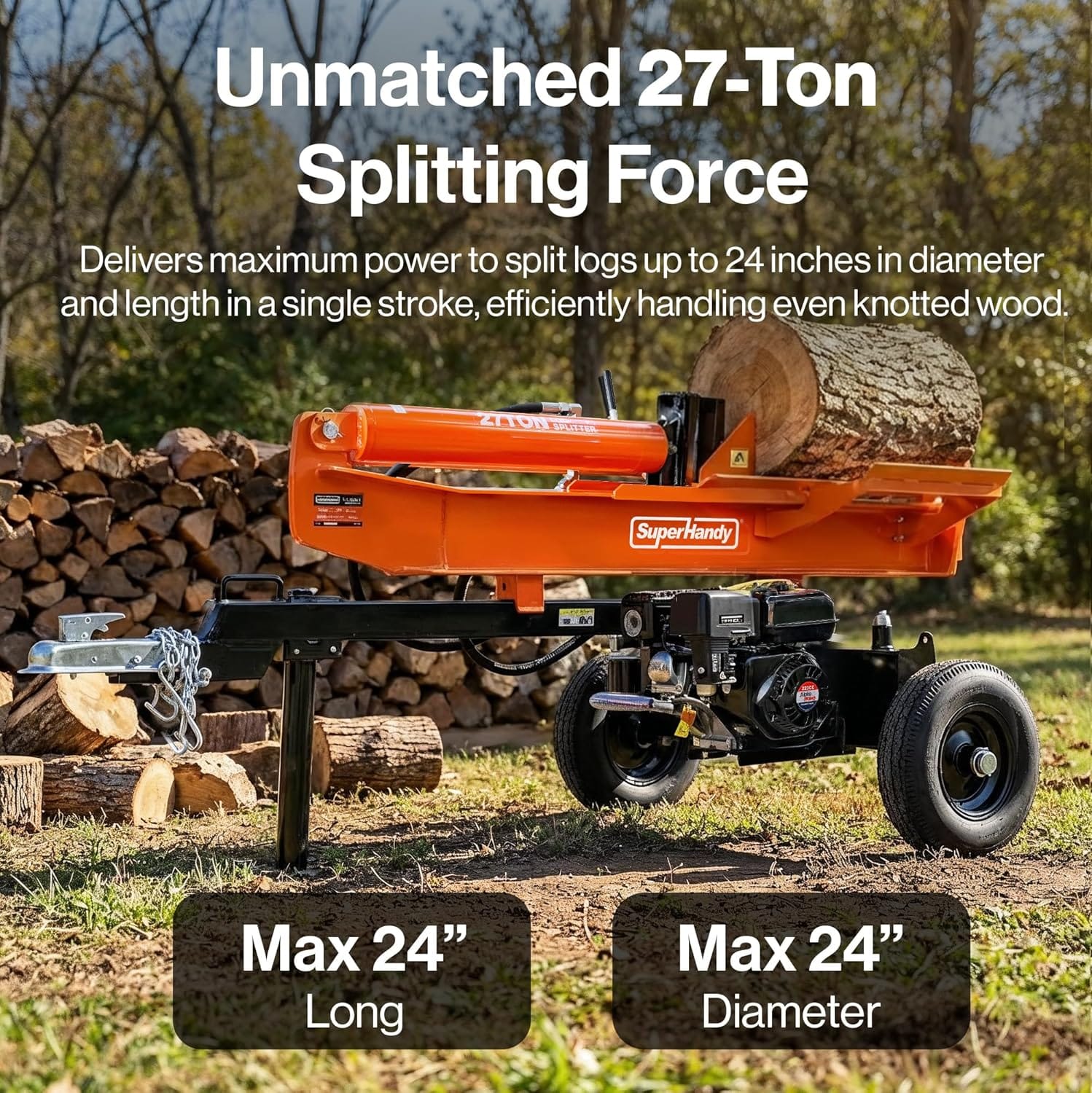
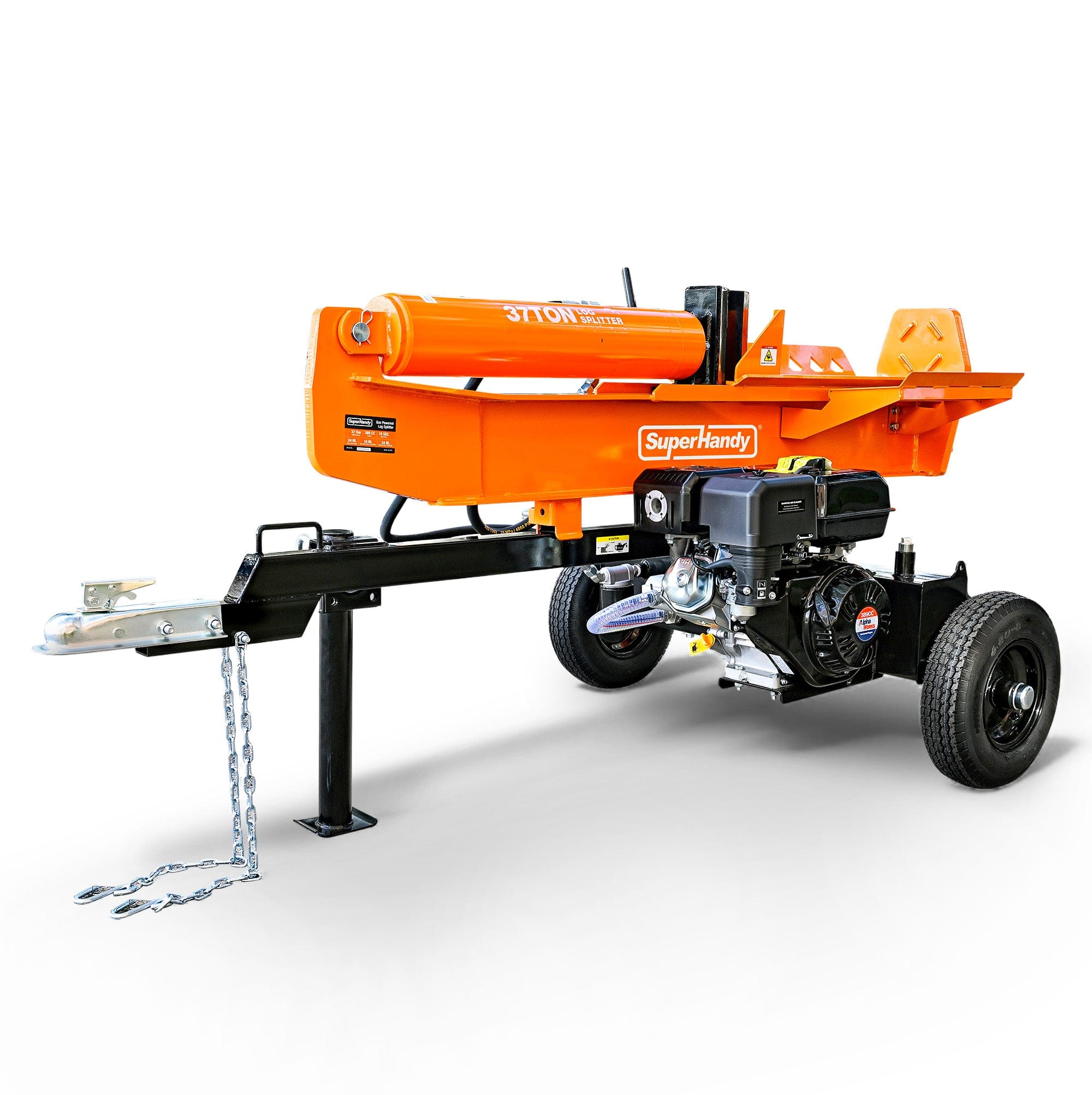
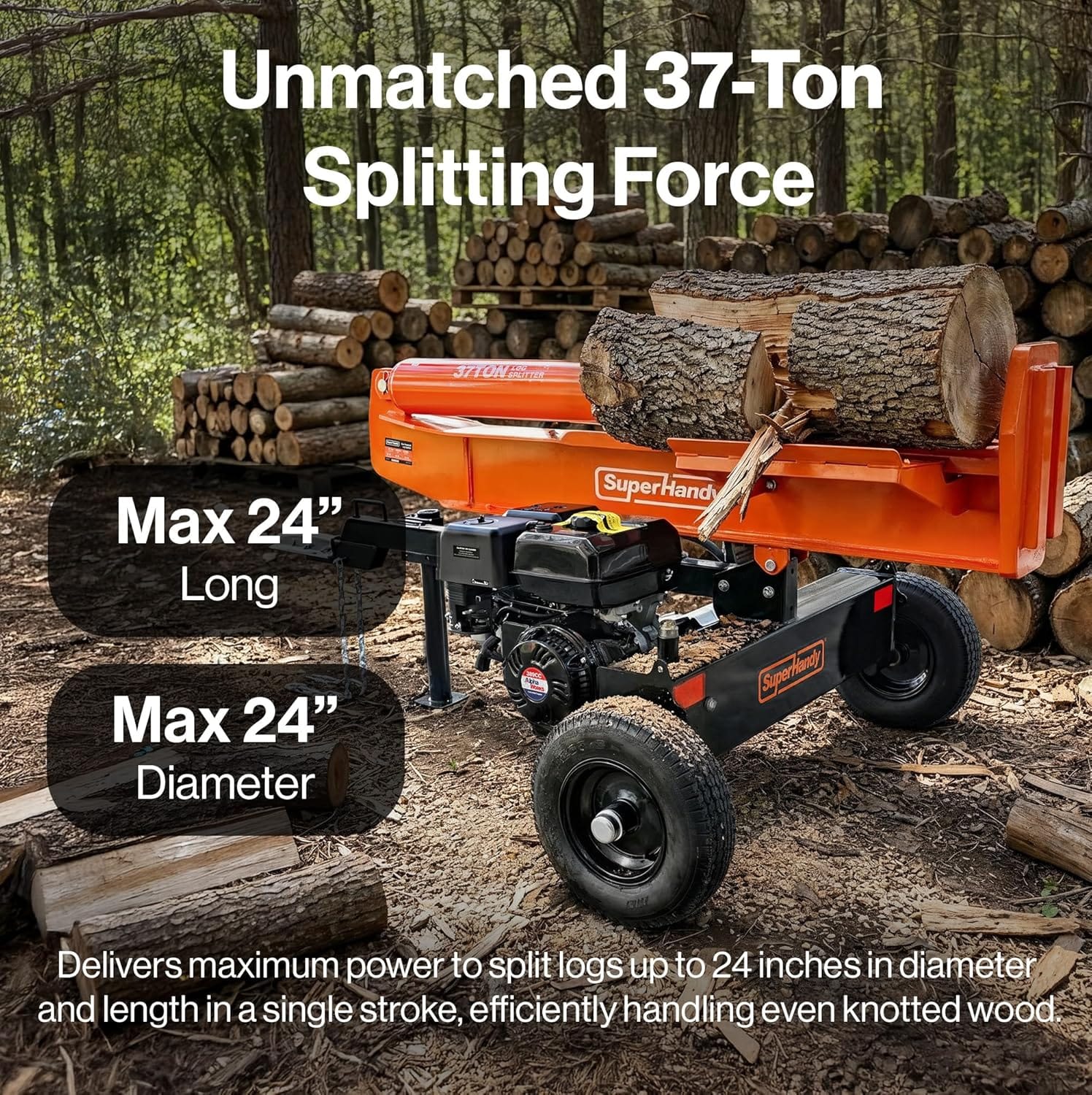
- For heavy-duty tasks involving large-diameter, dense hardwoods like oak, maple, or tough, stringy elm, you’ll need significant force. A high-tonnage machine, such as a 27Ton log splitter or a powerful 37Ton log splitter, will muscle through the most challenging rounds without hesitation.
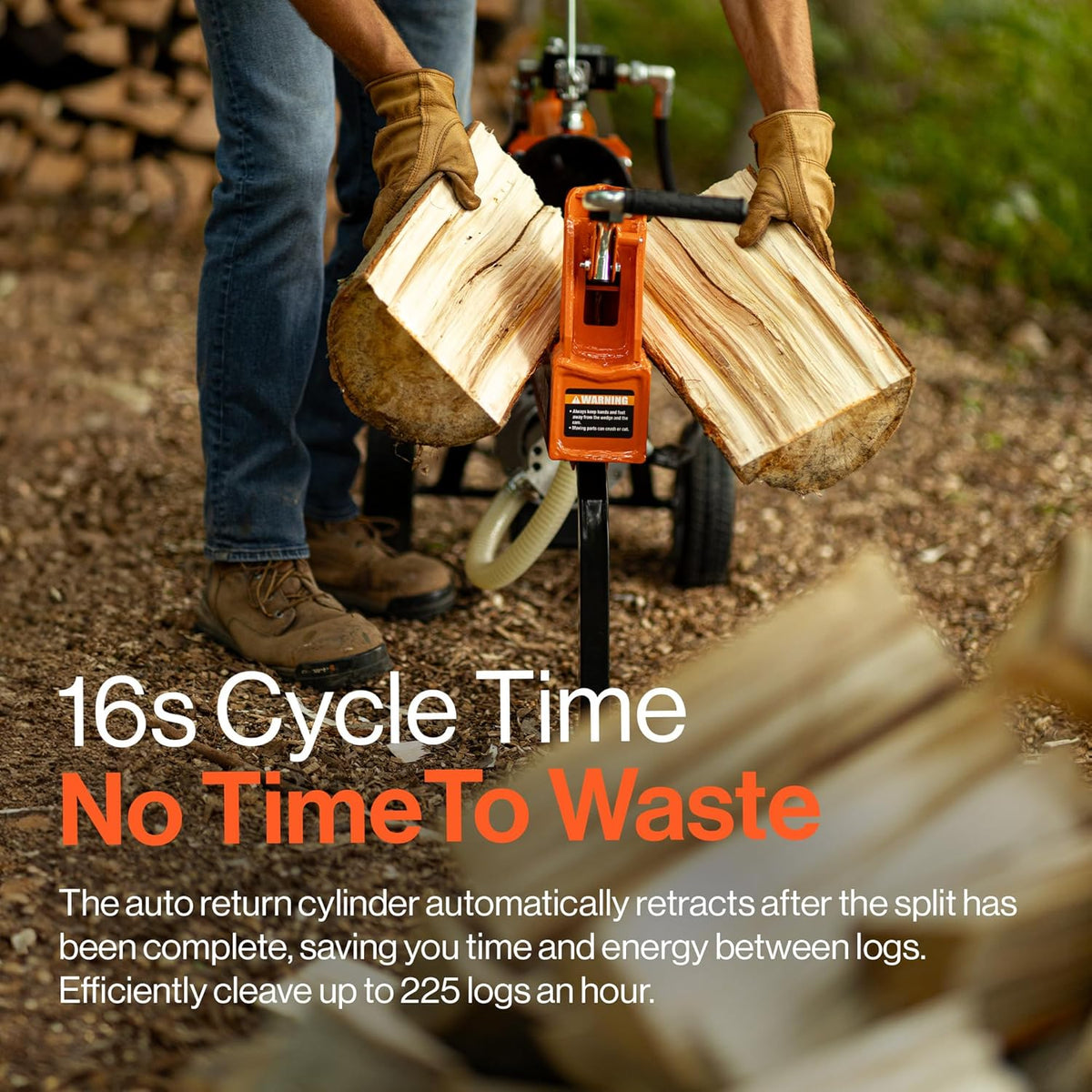
Also, pay attention to cycle time—the time it takes for the splitting ram to extend and retract. A shorter cycle time directly translates to more logs split per hour.
Understanding Your Gas Log Splitter's Components and How They Work
Familiarizing yourself with your log splitter’s anatomy will help you operate it more effectively and troubleshoot minor issues. While models vary, they all share these core components:
- Engine: The gas-powered engine is the heart of the machine, driving the hydraulic system.
- Hydraulic Pump: The engine powers this pump, which pressurizes hydraulic fluid to create immense force.
- Cylinder and Ram: The pump forces fluid into the cylinder, which pushes the ram (piston) forward to drive the log.
- Wedge: This is the sharp, fixed blade that the log is pushed against. The force of the ram against the wedge is what splits the wood.
- Control Valve: The lever or handle that engages the hydraulic system, allowing you to control the ram's movement.
- Beam: The main steel frame where the log rests during the splitting process.
In essence, the engine creates power, the pump turns it into hydraulic pressure, and the ram uses that pressure to force a log onto the wedge.

Essential Safety Precautions Before You Start Splitting Wood
Efficiency should never come at the expense of safety. A gas log splitter
Optimizing Your Splitting Technique: Stroke, Grip, and Stance
How you operate your gas log splitter has a huge impact on your speed and safety. Moving with purpose and efficiency not only gets the job done faster but also reduces fatigue and the risk of injury.
- Find Your Stance: Stand with your feet shoulder-width apart on stable, level ground. You should be in a balanced position that allows you to operate the controls without reaching or leaning awkwardly. Never operate the splitter from an unbalanced or slippery surface.
- Perfect Your Grip: Always use two hands to operate the controls. This is a critical safety feature on modern log splitters, ensuring your hands are clear of the ram and wedge during operation. Place the log securely on the beam against the endplate. Make sure it’s stable before engaging the hydraulic lever.
- Maximize the Stroke (Intelligently): While letting the ram complete its full cycle works, you can significantly speed up your work by using a shorter stroke for shorter logs. Many splitters have an adjustable return stop or detent that allows you to set the ram to retract just enough to fit the next log. This simple adjustment can shave seconds off every cycle, adding up to major time savings over a full cord of wood.
Mastering the Art of Splitting Different Wood Types and Sizes
Not all wood is created equal. Understanding how to approach different types and conditions will transform you from a novice operator into a splitting expert.
- Hardwood vs. Softwood: Softwoods like pine and fir are generally straight-grained and split easily. Hardwoods such as oak, hickory, and maple are denser and require more force. For these tougher jobs, a high-tonnage machine like a 37Ton log splitter provides the necessary power to slice through dense wood without bogging down.
- Grain, Knots, and Crotches: The easiest logs to split are straight-grained and free of knots. When you encounter a log with large knots or a "Y" shape (a crotch), it will be significantly harder to split. Position the log so the wedge strikes it along its most direct grain line, avoiding the knot if possible. If you must split through a knot, do so from the top down.
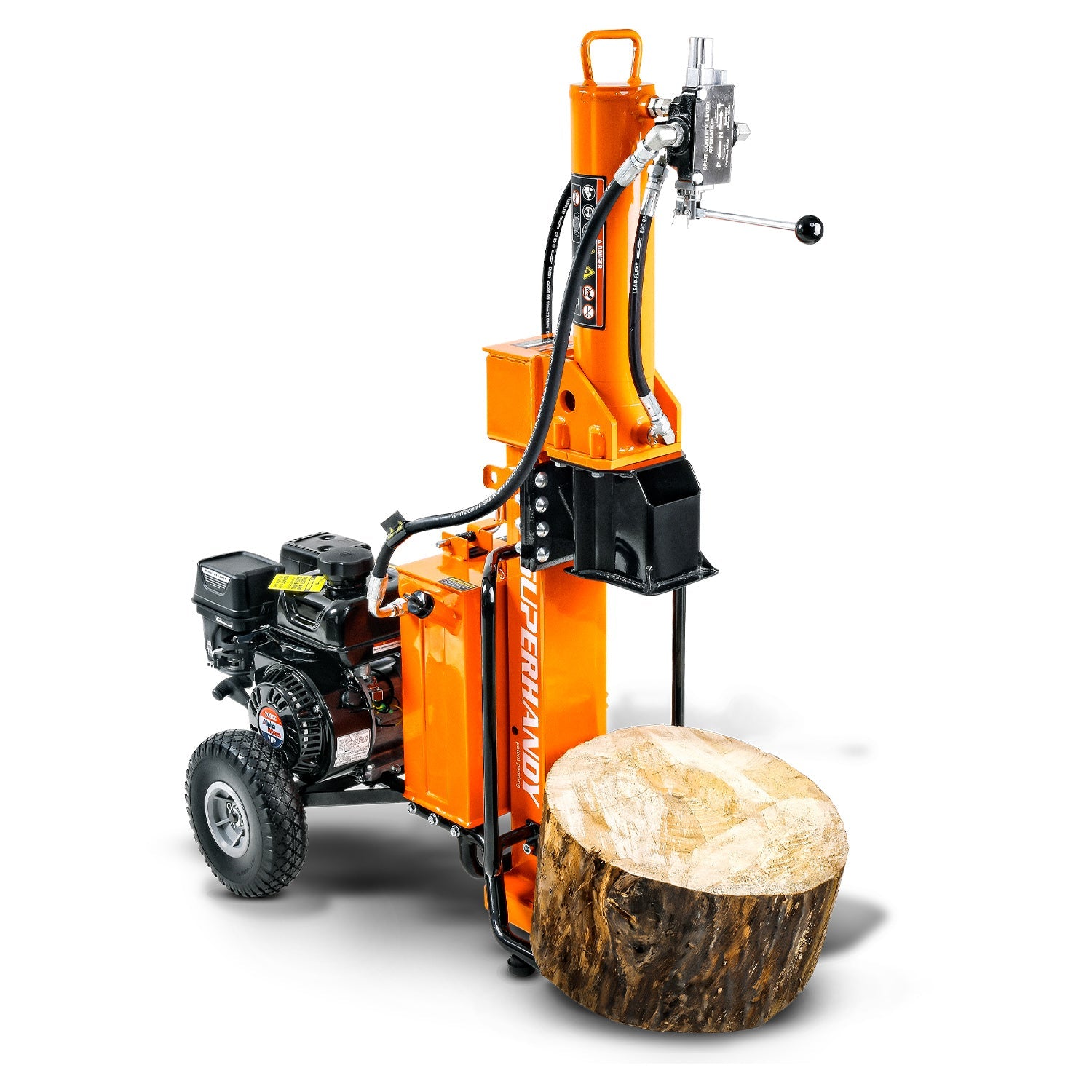
- Large and Heavy Logs: Lifting massive rounds onto a horizontal splitter beam is exhausting and dangerous. This is where a model with vertical splitting capability shines. Machines like the 27Ton log splitter can be easily converted to a vertical position, allowing you to roll a heavy log into place and split it on the ground.
Routine Maintenance for Peak Performance: Keeping Your Splitter Running Smoothly
A well-maintained log splitter is a fast and reliable log splitter. Neglecting basic upkeep leads to poor performance, increased wear, and unexpected breakdowns. Before each use, perform a quick check, and follow a regular maintenance schedule.
- Hydraulic System: This is the heart of your splitter. Regularly check the hydraulic fluid level and top it off as needed with the manufacturer-recommended fluid. Inspect all hoses and fittings for cracks, abrasions, or leaks. A small leak can quickly become a major failure.
- Engine Care: The gas engine requires the same care as any other piece of outdoor power equipment. According to the University of Georgia Extension, proper small engine maintenance includes regularly checking the oil level, keeping the fuel fresh (using a stabilizer for storage), and cleaning or replacing the air filter. A clean engine runs cooler and more efficiently.
- The Wedge: A dull wedge crushes wood rather than splitting it, which slows you down and puts immense strain on the hydraulic system. Periodically inspect the wedge for nicks or a blunted edge. Sharpen it with a file or grinder as needed, maintaining the original angle.
- General Inspection: Before firing up your 25Ton log splitter or any model, check that all nuts and bolts are tight, tires are properly inflated, and the beam is free of debris.

Troubleshooting Common Gas Log Splitter Issues for Uninterrupted Splitting
Even with perfect maintenance, you might occasionally run into a problem. Knowing how to quickly diagnose and fix common issues will keep your downtime to a minimum.
-
Problem: The engine won't start.
- Solution: Check the basics first. Is the fuel tank full? Is the fuel valve on? Is the choke in the correct position? Is the ignition switch on? If it still won't start, check for a fouled spark plug or a clogged fuel filter.
-
Problem: The ram moves slowly, chatters, or won't split wood.
- Solution: This is almost always a hydraulic issue. The most common cause is low hydraulic fluid. Check the level and refill if necessary. If the fluid level is fine, you may have air in the system. Cycle the ram back and forth several times without a load to purge any trapped air. A severely dull wedge can also cause these symptoms.
Maximizing Throughput: Strategies for Continuous and Faster Splitting
Once your gas log splitter is running and your wood is prepped, the real work begins. The difference between a long, grueling day and a short, productive one often comes down to your workflow. To split wood faster, you need to think like an assembly line.
- Establish a Work Zone: Create an efficient "work triangle" with your pile of unsplit rounds, your log splitter, and your stacking area. Position everything within a few steps to minimize wasted motion. You should be able to grab a round, place it on the splitter, and toss the split pieces toward your stacking pile without taking more than a step or two.
- Work with a Partner: A two-person team can dramatically increase output. One person can operate the log splitter controls while the other loads new rounds and clears the split pieces. This creates a continuous, safe rhythm that keeps the machine constantly working.
- Use Log Cradles and Tables: Constantly bending over to pick up split halves is a major drain on your energy and time. Many splitters come with log cradles that catch the pieces after they're split, keeping them at a convenient working height for a second split if needed.
- Batch Your Tasks: Focus on one job at a time. Split your entire pile of rounds first, letting the split pieces accumulate nearby. Once all the wood is split, switch gears and focus on stacking. This "batching" method keeps you in a groove and is much more efficient than splitting one log and immediately stacking it.
- Leverage Your Splitter's Features: Modern gas log splitters have features designed for speed. An auto-return valve, for example, automatically retracts the splitting wedge after it completes its stroke. This frees you up to position the next log while the ram is returning, effectively cutting cycle time and keeping the momentum going.
Storing Your Firewood Effectively After Splitting
Splitting wood is only half the battle; proper storage is essential for creating high-quality, ready-to-burn firewood. Freshly split "green" wood is full of moisture and needs to dry out, a process called seasoning. Burning unseasoned wood is inefficient, produces excessive smoke, and can lead to a dangerous buildup of creosote in your chimney.
To season your wood effectively, focus on three key factors: keeping it dry, elevated, and exposed to air.
- Get it Off the Ground: Never stack firewood directly on the dirt. Ground moisture will wick up into the bottom layer, promoting rot and preventing the wood from drying. Use pallets, concrete blocks, or a dedicated firewood rack to create a raised platform.
- Ensure Maximum Airflow: Stack your wood in single rows with the split side facing down, leaving space between rows for air to circulate. According to the University of New Hampshire Extension, good airflow is the most critical factor in drying wood. Avoid packing the wood into a tight, dense cube.
-
Cover the Top, Not the Sides: Use a tarp or a simple roof structure to protect the top of your pile from rain and snow. However, it's crucial to leave the sides of the stack open to the air. Covering the entire pile traps moisture and can lead to mold and decay. Place your stack in a sunny and breezy location to further accelerate the drying process. Most hardwoods will require at least six months to a year to season properly.

When to Consider Upgrading Your Gas Log Splitter
Your trusty log splitter has served you well, but there may come a time when it's no longer the right tool for the job. An upgrade isn't just about getting a newer machine; it's about reclaiming your time and reducing physical strain. Here are a few signs that it might be time to consider a more powerful model.
- Your Firewood Needs Have Increased: If you're heating a larger space or simply burning more wood, you might find yourself spending entire weekends just to keep up. Upgrading to a splitter with a faster cycle time or more tonnage, like a capable 20Ton log splitter, can significantly cut down your splitting time.
- You're Splitting Tougher Wood: Are you struggling with large-diameter rounds or dense, knotty hardwoods like oak, hickory, or elm? If your current splitter frequently stalls or fails to split logs in a single pass, you need more power. Moving up to a 25Ton log splitter or a robust 27Ton log splitter provides the force needed to power through challenging wood with ease.
- You Want More Efficient Features: Older models may lack the features that make modern splitting so efficient. If you’re tired of wrestling massive, heavy rounds onto a horizontal beam, a model with vertical/horizontal operation is a game-changer. For the highest volume and toughest jobs, a commercial-grade machine like a 37Ton log splitter offers maximum power, durability, and features like towability to handle any task you throw at it.
Frequently Asked Questions About Faster Firewood Splitting
Q: Will a more powerful (higher tonnage) gas log splitter always be faster?
A: Not necessarily. Speed in a log splitter is determined by two main factors: tonnage (splitting force) and cycle time (the time it takes for the ram to extend and retract). While a higher-tonnage machine like a 37Ton log splitter is essential for tackling large, dense, or knotty hardwoods, it might have a slightly longer cycle time than a smaller model. If you primarily split smaller, seasoned softwood, a 20Ton log splitter or a 25Ton log splitter could be faster overall due to a quicker cycle. The key to speed is matching the splitter's power to your typical wood supply. For a versatile option that balances power and efficiency for varied logs, a model like the 27Ton log splitter is often an excellent choice.
Q: How can I set up my work area to split wood faster?
A: An efficient workspace is crucial for maximizing throughput. Instead of a single, chaotic pile, organize your area to minimize movement and handling. A popular method is the three-zone system:
- Unsplit Logs: Place your pile of rounds within easy reach of the log splitter's operator station. You shouldn't have to take more than a step or two to grab the next log.
- Split Firewood: Position your wheelbarrow, truck bed, or stacking area on the opposite side, where the split pieces will naturally fall or can be easily tossed.
- Re-Splits: Keep a small area right next to the splitter for pieces that are too large and need a second pass.
This ergonomic setup creates a flow, turning the process into a smooth, repeatable rhythm. You spend more time splitting and less time walking, bending, and rearranging logs.
Q: Does the type and condition of the wood affect splitting speed?
A: Absolutely. Seasoned (dried) wood splits significantly faster and more cleanly than green or wet wood. Green wood is stringy and fibrous, often resisting a clean split and requiring you to tear the pieces apart manually. Seasoned wood, on the other hand, is brittle and tends to crack apart with minimal effort. According to the University of New Hampshire Extension, properly seasoned firewood not only splits easier but also burns hotter and cleaner. While it requires patience to let wood season for 6-12 months, the time you save during splitting is substantial. Similarly, straight-grained woods like ash or red oak are much faster to split than woods with interlocking grain or lots of knots, such as elm or sweetgum.
Q: How does routine maintenance help me split faster?
A: A well-maintained gas log splitter is a fast log splitter. Neglecting maintenance introduces inefficiencies that slow you down. Key areas to focus on for speed include:
- Wedge Sharpness: A dull splitting wedge requires more hydraulic force and time to push through a log. It crushes the wood fibers instead of slicing them. Keep your wedge sharp for clean, quick splits.
- Hydraulic System: Ensure your hydraulic fluid is at the correct level and is clean. Old, contaminated fluid can cause the system to operate sluggishly and reduce ram speed.
- Engine Performance: A properly tuned engine with a clean air filter and fresh spark plug will start easily and run at the optimal RPM, providing consistent power to the hydraulic pump. A sputtering engine means an inconsistent and slow splitting cycle.
Related Products

Leave a comment
All comments are moderated before being published.
This site is protected by hCaptcha and the hCaptcha Privacy Policy and Terms of Service apply.