



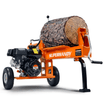






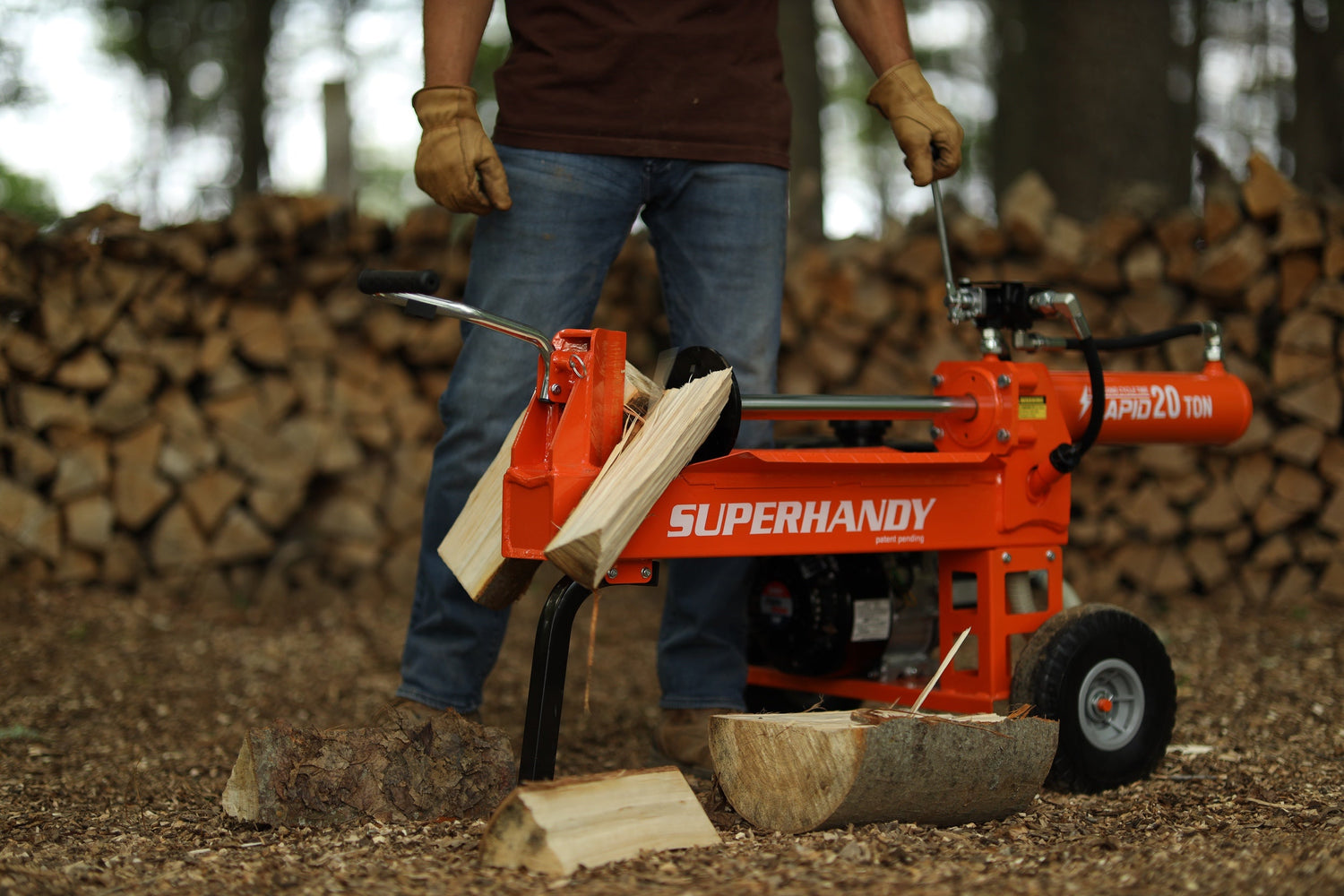
Selecting the right log splitter can save you both time and effort. You might notice that horizontal log splitter models let you load logs easily but require some bending, while vertical log splitter designs keep you in a comfortable position and are great for handling shorter logs. Consider your typical log size, how much wood you split, and what feels best for your back when choosing a log splitter.
Key Takeaways
Choose a vertical log splitter for heavy logs. It allows you to roll logs into place, reducing back strain and increasing safety.
Opt for a horizontal log splitter if you need portability. These models are lighter and easier to move, making them ideal for small to medium logs.
Consider your wood splitting needs carefully. Match the log splitter type to the size and frequency of logs you split to save time and effort.
Comparison Table
Vertical vs Horizontal Log Splitter
Are you trying to find the best log splitter for you? Let’s check how vertical and horizontal models are different. The table below lists key features to think about before you buy. These facts help you decide which type matches your wood splitting needs.
Metric |
Vertical Log Splitter |
Horizontal Log Splitter |
|---|---|---|
Handles big logs with high force (up to 30+ tons) |
Good for small to medium logs (4–20 tons) |
|
Stroke Length |
Works with longer logs (up to 24 inches) |
Usually handles logs up to 16–20 inches |
Power Source |
Often gas-powered for tough jobs |
Electric or gas options for flexibility |
Weight & Portability |
Heavy, less portable, but stable on rough ground |
Lighter, easier to move around your yard |
Safety Features |
Two-hand controls, shields, emergency shut-off |
Safety switches, shields, easy access controls |
Maintenance |
Needs oil changes and hydraulic checks |
Electric models need less upkeep |
Tip: If you split wood in more than one place or need to move your log splitter a lot, a horizontal log splitter might be easier for you to use.
Each log splitter has its own strong points. Vertical models are good for big logs and rough ground. Horizontal log splitter units are better if you want something light and easy to move. Think about how much wood you split and where you do it. This table lets you compare the main features side by side.
Vertical Log Splitter Overview
Pros
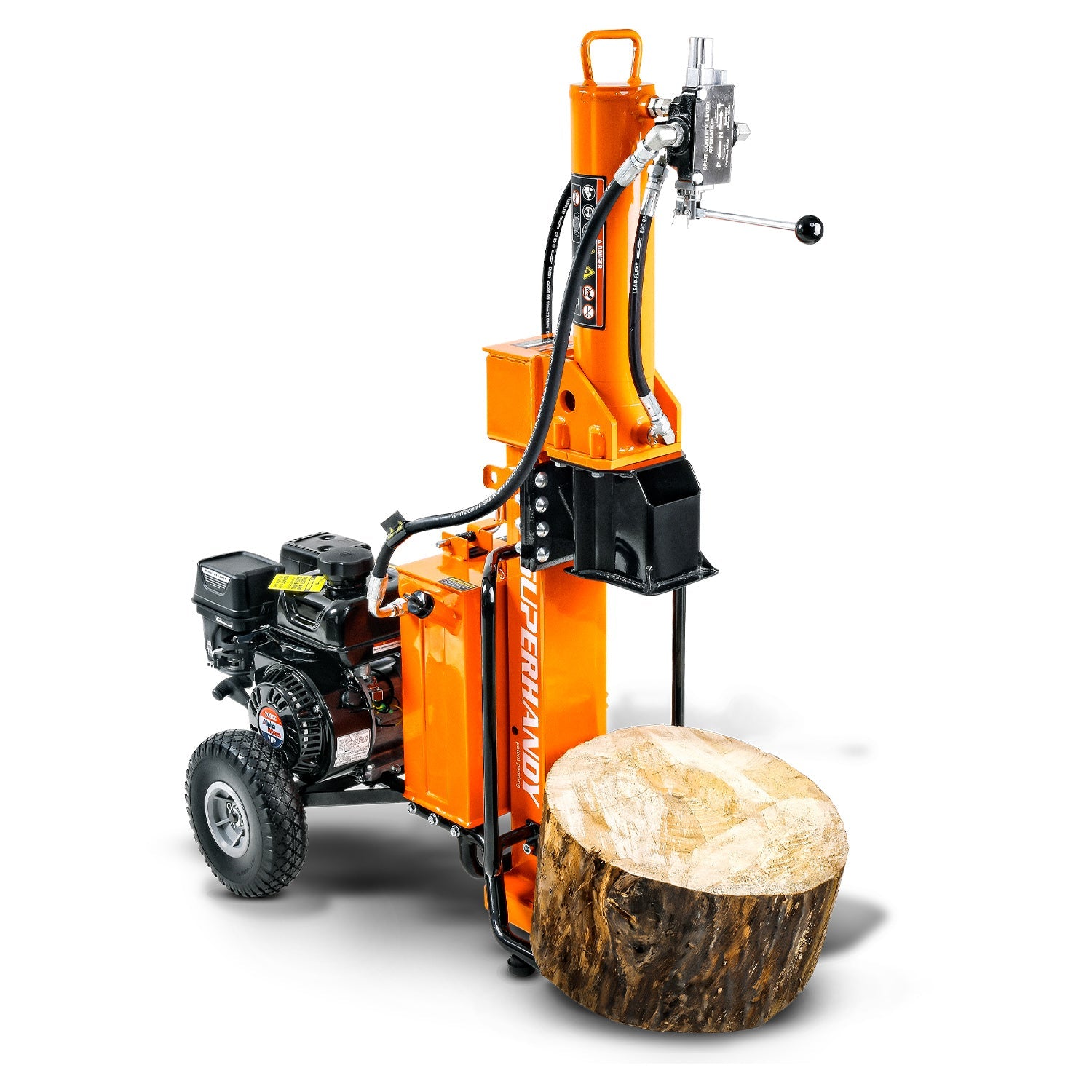
You might love using a vertical log splitter if you often deal with big, heavy logs. This type of log splitter lets you roll large rounds into place instead of lifting them. That means less strain on your back and arms. Many users say they split wood vertically most of the time because it feels easier and safer, especially with tough hardwoods.
Here are some reasons you might choose a vertical log splitter:
You can split large-diameter logs that would be hard to lift onto a horizontal log splitter.
You get more control over where the wedge hits, which helps with knotty or uneven wood.
You reduce the risk of injury because you do not have to lift heavy pieces.
You can work longer without getting tired since you do not need to bend or strain as much.
Tip: If you have ever struggled to move a heavy log, you will appreciate how a vertical log splitter lets you roll it right into place.
The table below shows how a vertical log splitter helps you avoid fatigue during long splitting sessions:
Advantage |
Description |
|---|---|
You can roll logs into place instead of lifting them, reducing strain. |
|
Precision Splitting |
You can position the wedge exactly where you want, making splitting easier. |
Safety with Heavy Wood |
You lower your chance of injury from lifting awkward and heavy logs. |
Cons
A vertical log splitter is not perfect for every job. You might find some drawbacks, especially if you only split small logs or want to move your machine around a lot.
Here are some common issues:
Some people do not like working in a vertical position and prefer the feel of a horizontal log splitter.
Vertical models can be heavy and hard to move, especially on uneven ground.
You might run into mechanical problems if you split a lot of knotty or uneven wood.
Check out this table for the most common mechanical issues:
Mechanical Issue |
Description |
|---|---|
Jamming |
Knotty or uneven logs, a dull or misaligned wedge, or not enough splitting force can cause jams. |
Overheating |
Using the splitter for a long time, low fluid levels, or dirty hydraulic fluid can cause this. |
Slow operation |
A weak motor, dull wedge, or low voltage can make the splitter run slowly. |
Note: If you plan to split wood in different places, you might find a vertical log splitter less portable than a horizontal one.
Use Cases
You will see vertical log splitters most often in places where people need to split big, tough logs. Commercial firewood producers like them because they make it easier to handle large-diameter wood. These machines help you work faster and safer, especially when you need to process storm-damaged trees or turn timber waste into firewood. If you care about sustainable firewood production, a vertical log splitter can help you get the job done with less effort.
You might choose a vertical log splitter if:
You split large rounds that are too heavy to lift.
You want to avoid back strain and work longer without getting tired.
You need to process a lot of wood after storms or from tree removal jobs.
You want a tool that helps you split wood safely and efficiently.
If you mostly split small logs or need to move your log splitter around your yard, you might want to look at other options. But if you deal with big wood and want to save your energy, a vertical log splitter could be your best friend.
Horizontal Log Splitter Overview
Pros
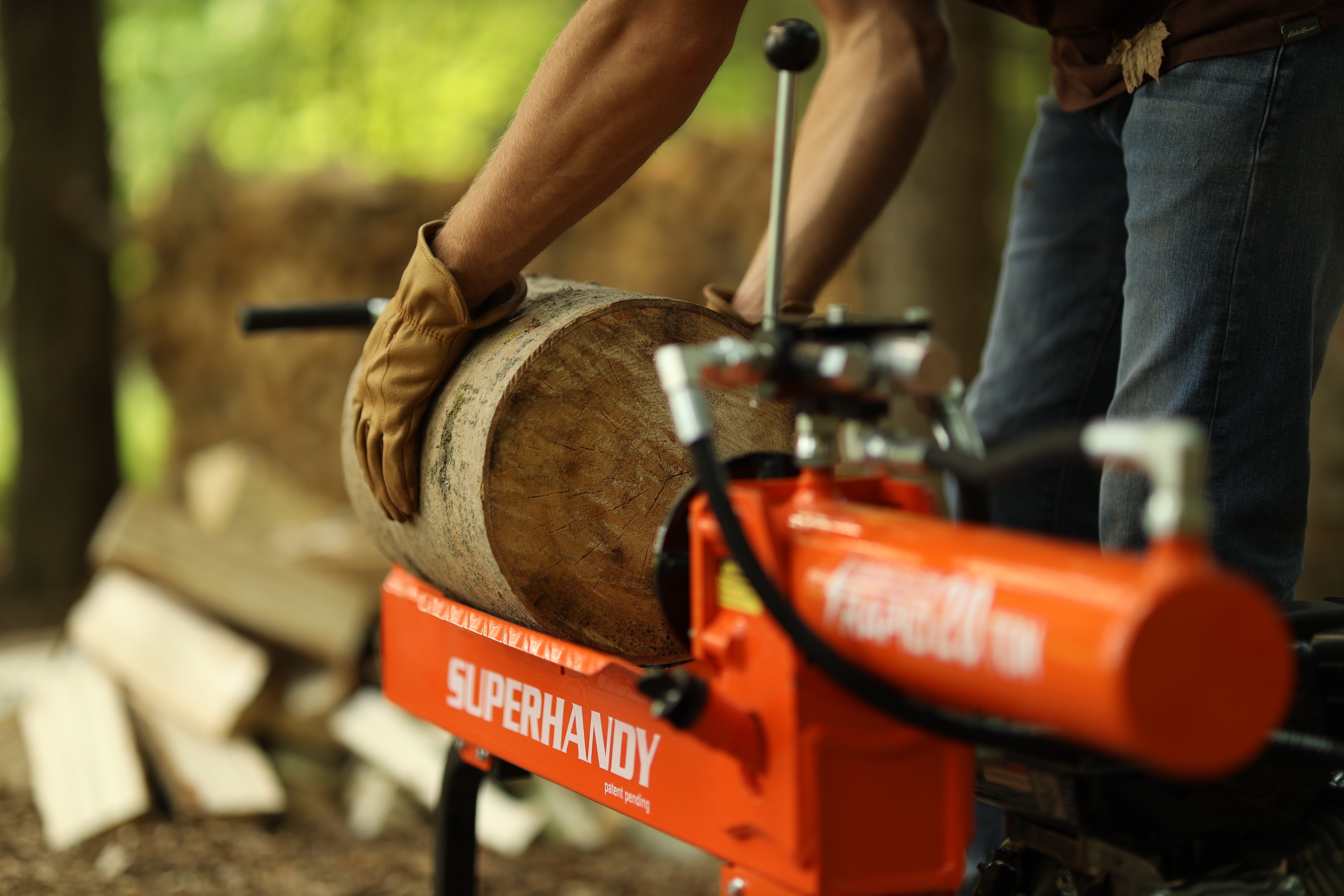
You might find a horizontal log splitter perfect for your home if you want something easy to use and move. These machines usually weigh less than vertical models. You can roll them around your yard or garage without much trouble. Many horizontal splitters come with wheels, so you do not have to drag or lift them.
Here are some big advantages:
Safety First: You lower your risk of injury compared to swinging an axe. The log splitter keeps your hands away from the blade and does most of the hard work.
Saves Time: You can split a pile of wood much faster than by hand. This gives you more time for other chores or relaxing.
Less Tiring: You do not get as tired because the machine does the heavy lifting. You just load the log and push a button or pull a lever.
Easy to Move: Most horizontal splitters are compact and light. You can store them in a shed or move them to different spots in your yard.
Tip: If you split wood for a fireplace or a small wood stove, a horizontal log splitter can make your job quick and easy.
You might wonder about the cost. Prices for horizontal log splitters can start around $400 for small electric models. If you want a professional-grade machine, you could pay over $3,000. Here is a quick look at the price range:
Price Range |
Number of Items |
|---|---|
$1,500.00 - $1,999.99 |
1 |
$2,000.00 - $2,499.99 |
1 |
$3,000.00 - $3,499.99 |
2 |
$3,500.00 - $3,999.99 |
1 |
$4,000.00 - $4,499.99 |
3 |
$4,500.00 - $4,999.99 |
3 |
$5,000.00 and above |
2 |
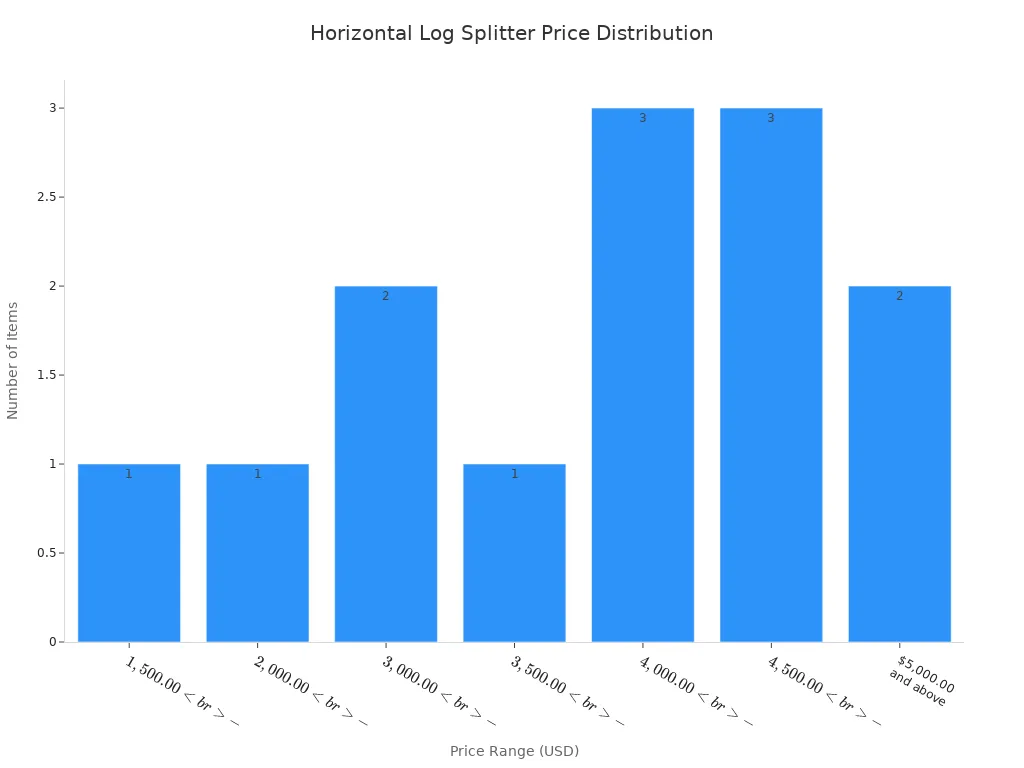
You can see that there is a wide range of choices. Entry-level models start around $1,500, but high-end options can go over $5,000.
Cons
Horizontal log splitters are not perfect for every job. You might run into a few problems, especially if you need to split big, heavy logs.
You have to lift each log onto the machine. This can get tiring if you split a lot of wood or work with large rounds.
If you try to split logs that are too big, you might strain your back or arms.
Some models do not have as much splitting force as vertical splitters, so they may struggle with very hard or knotty wood.
Here is a quick table comparing portability and ergonomics:
Feature |
Horizontal Splitters |
Vertical Splitters |
|---|---|---|
Portability |
More compact and lighter |
Heavier and bulkier |
Transport |
Wheels for easy movement |
Less nimble to move |
Ergonomics |
Easy for small logs, lifting needed |
Roll heavy logs, less lifting |
Note: Always follow safety rules. Keep your hands away from moving parts. Stay in the operator zone and never reach into the splitting area when the machine is on. Only one person should use the log splitter at a time.
You should also remember these safety tips:
Wear safety glasses and boots.
Never let children under 16 use the machine.
Keep pets and bystanders at least 20 feet away.
Check for leaks before you start.
Know how to stop the machine quickly.
Serious injuries can happen if you do not pay attention. People have broken wrists, crushed hands, or lost fingers. Most injuries happen when the machine tips over or if you reach into the splitting area.
Use Cases
A horizontal log splitter works best for small to medium logs. If you split wood for your home, this type of machine is a great choice. You can use it for firewood, camping trips, or backyard bonfires.
Here is a table to help you see what kind of wood fits best:
Log Size |
Description |
|---|---|
Smaller Logs |
|
Medium Logs |
Handles various sizes, but large logs are harder to lift |
Ideal Use |
Great for firewood splitting for home use |
You can split softwoods and most hardwoods, as long as the logs are not too big or heavy. If you have a lot of small rounds, you will finish the job quickly. You can also move the machine around your property, so you do not have to carry logs far.
If you want a tool that is easy to use, safe, and portable, a horizontal log splitter could be just what you need.
Choosing a Log Splitter
Log Size & Type
You want a log splitter that matches the size of your wood. If you split small logs, an electric log splitter works well. For bigger rounds, you need more power. Check out this table to see what fits your needs:
Log Splitter Type |
Tonnage |
Recommended Log Size (Diameter) |
Recommended Log Size (Height) |
|---|---|---|---|
Electric Log Splitter |
10-12 |
Up to 60 cm |
Up to 67 cm |
Hydraulic Log Splitter |
20 |
Up to 100 cm |
Up to 110 cm |
If you split hardwood or logs over 60 cm, a gas log splitter or a professional log splitter gives you the force you need.
Ergonomics & Safety
No one wants pain in the back after splitting wood. Look for features that help you stay comfortable and safe. Here are some important ones:
Ergonomic Feature |
Description |
|---|---|
Comfortable working position |
Decreases downtime and boosts motivation |
Low-profile frame |
Easier to load heavier logs |
Smartly designed joysticks |
Gives you full control and precision |
Simple user interface |
A residential log splitter with these features makes splitting wood easier and safer.
Storage & Cost
Think about where you will keep your log splitter. Horizontal models are compact and fit in small spaces. Vertical models take up more room. If your garage is tight, a horizontal log splitter is a smart pick. Prices range from budget-friendly to high-end, so set your budget before you shop.
Volume & Frequency
If you split more than five cords of wood each year, you need a heavy-duty machine. Choose a log splitter with over 20 tons of force. Brands like Huskee, Troy Built, and Iron and Oak work well for big jobs. For smaller jobs, a lighter model saves money and space.
Tip: Match your log splitter to your wood pile and how often you split. You will save time and avoid frustration.
Decision Guide
Checklist
You want to pick the best log splitter for your needs. Use this simple checklist to help you decide:
Think about the size and type of wood you will split most often.
Check if the log splitter is made from strong materials. You want it to last for years.
Look for safety features like two-handed controls and shields.
Decide if you want electric, gas, or manual power. Pick what fits your work style and location.
Compare the features and price. Make sure you get good value for your money.
Tip: Write down your answers to these points. This will make your choice much easier.
Final Tips
Here are some final tips to help you feel confident about your choice:
Choose the right power source. Gas models work well for big jobs, while electric ones are quiet and easy to use.
Check the splitting force. Make sure the machine has enough power for the logs you plan to split.
Look at the log size capacity. Pick a model that can handle the biggest logs you will use.
Go for a little extra power. A stronger machine will not struggle and will last longer.
If you have limited space, pick a compact model for easy storage.
Remember: The best log splitter is the one that matches your wood pile, your space, and your comfort.
You now know the key differences between vertical and horizontal log splitter models. Think about your log size, how often you split wood, and your yard’s layout. Use the decision guide above to pick the best fit. The right choice will make your wood splitting easier and safer.
FAQ
What size logs can you split with a horizontal log splitter?
You can split logs up to 16–20 inches long. Most horizontal splitters work best for small or medium logs. Check your model’s manual for exact limits.
Is a vertical log splitter safer for your back?
Yes! You can roll heavy logs into place. You do not need to lift them. This helps protect your back and keeps you comfortable.
Can you use a log splitter indoors?
No, you should not use gas-powered splitters inside. Electric models are safer indoors, but always make sure you have good airflow.
Related Products



Leave a comment
All comments are moderated before being published.
This site is protected by hCaptcha and the hCaptcha Privacy Policy and Terms of Service apply.