









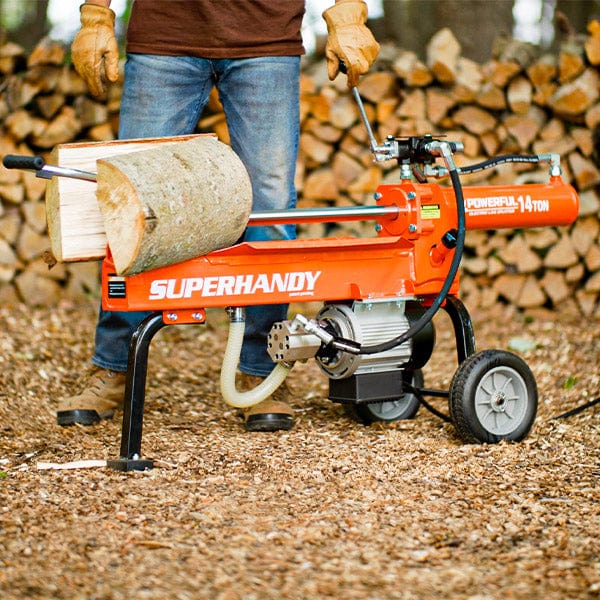
Safety First: Disconnecting Power Before Inspection
Before you touch a single component on your log splitter, the absolute first step is to ensure your safety. An electric motor that is humming is energized and could start unexpectedly if the issue is resolved or a component is moved, posing a serious risk of injury.
Always unplug the electric log splitter from the power outlet before performing any inspection, cleaning, or maintenance.
Make sure the cord is fully disconnected and cannot be accidentally plugged back in while you are working. Additionally, wear appropriate personal protective equipment (PPE), including heavy-duty gloves to protect your hands from sharp edges and pinch points, and safety glasses to shield your eyes from debris or hydraulic fluid.
Is the Splitting Wedge Stuck? Common Obstructions to Check
One of the most frequent reasons a motor hums without any action is a simple physical jam. The motor is trying to power the hydraulic pump, but the ram is mechanically blocked and cannot move, placing the motor under a "stalled" load.
Start your inspection at the splitting beam. Carefully examine the splitting wedge, the push plate, and the entire track for any obstructions. Look for:
- A Jammed Log: A tough, stringy, or knotty piece of wood may have become wedged on the splitter without fully splitting. The ram may be stuck against this log, unable to advance or retract.
- Wood Debris: Small chips, bark, and other wood fragments can become compacted in the channel where the ram slides or around the wedge itself. Over time, this buildup can be enough to bind the mechanism.
- Bent or Damaged Components: Inspect the wedge and the beam. A bent push plate or a misaligned wedge can create immense friction and prevent movement.
If you find a stuck log, do not use your hands to try and pull it free. With the power disconnected, you can try to gently tap the log from the side with a mallet or another piece of wood to dislodge it. Once any obstructions are cleared, clean the beam and track thoroughly before attempting to operate the splitter again.

Troubleshooting the Hydraulic System: Low Fluid Levels and Leaks
Your electric motor’s job is to run a pump that pressurizes hydraulic fluid. This pressurized fluid is what drives the ram and creates the immense force needed to split logs. If there's an issue with the hydraulic system, the pump can't build pressure, and the motor will strain against it, causing a hum.
First, check the hydraulic fluid level. A low fluid level is a primary cause of splitting problems. When the fluid is too low, the pump can draw in air instead of oil. This aerates the fluid, preventing it from pressurizing correctly and often creating a whining or buzzing sound from the pump. Insufficient fluid can lead to a range of issues; as noted in industry repair guides, a low hydraulic fluid level can cause the log splitter’s wedge to move slowly, and if the level is critically low, it may stop movement entirely. Consult your owner’s manual to find the dipstick or sight glass and check the level according to the manufacturer’s instructions.
If the fluid is low, the next logical question is: where did it go? Carefully inspect the entire machine for hydraulic fluid leaks. Check all hose connections, fittings, and the seals at both ends of the hydraulic cylinder. Look for wet, oily patches, dirt collecting on oily surfaces, or active drips. A small leak might not seem like a big deal, but over time it can drain enough fluid to disable your splitter. Tighten any loose fittings and replace any cracked or damaged hoses before refilling the fluid to the correct level.
Checking the Hydraulic Pump: Signs of Wear or Failure
The heart of your electric log splitter's power is its hydraulic system, and the pump is the engine of that system. The electric motor’s job is to run the hydraulic pump, which in turn pressurizes the fluid that drives the splitting wedge. If the motor is humming but the pump isn't working correctly, you'll get no splitting action. The hum you hear could be the motor straining to turn a seized or failing pump.
A common point of failure is the pump itself. According to experts, the hydraulic pump generates the hydraulic pressure to extend the hydraulic cylinder and wedge, and over time, the hydraulic pump can start to leak fluid through worn seals when pumping hydraulic fluid. This loss of fluid leads to a loss of pressure, rendering the splitter ineffective.
Look for these signs of a worn or failing hydraulic pump:
- Visible Fluid Leaks: Inspect the pump body and the hoses connected to it. Puddles of hydraulic fluid or wet, grimy areas around the pump are clear indicators of a leak.
- Grinding or Whining Noises: A healthy system is relatively quiet, aside from the motor hum. If you hear grinding, whining, or high-pitched squealing coming from the pump area, its internal components may be damaged.
- Broken Coupler: There is a small component called a coupler that connects the motor shaft to the pump shaft. If this piece breaks, the motor will spin and hum, but it won't be able to turn the pump. You may need to remove a protective cover to inspect it.
Examining the Control Valve: Is it Responding Correctly?
The control valve is the traffic cop for the hydraulic fluid. When you move the control handle, the valve directs the high-pressure fluid to one side of the cylinder piston to extend the ram, or to the other side to retract it. If this valve is stuck or not fully engaging, the fluid has nowhere to go. This creates a "dead end" in the system, causing the pump to work against immense pressure, which overloads the motor and results in a loud hum.
To troubleshoot the control valve:
- Check the Handle's Range of Motion: With the power disconnected, move the control handle back and forth. Does it travel smoothly through its full range? It should move into a forward (split), neutral, and reverse (retract) position.
- Feel for Engagement: As you move the lever, you should feel a distinct "click" or detent as the valve engages in the forward and reverse positions. If the handle feels mushy, loose, or won't lock into position, the valve or its linkage may be damaged or clogged.
- Inspect for Obstructions: Look for wood chips, dirt, or other debris that might be physically blocking the control handle or the external linkage connected to the valve. Clean the area thoroughly.
A stuck valve can sometimes be freed by working the handle back and forth, but if it feels disconnected or remains stuck, the valve itself may need to be inspected internally or replaced.
 Motor Overload Protection: Resetting the Breaker or Fuse
Nearly all electric log splitters have a built-in motor overload protector. This is a crucial safety feature, usually a small button, that automatically cuts power to the motor if it draws too much current. This prevents the motor from overheating and burning out. An overload can be triggered by a jammed log, a failing hydraulic component, or even an extension cord that is too long or too thin.
The humming you hear might be the motor trying to start right before the overload trips again. Finding and resetting this is a simple but essential troubleshooting step.
- Locate the Reset Button: Look for a small, often red or black, button on the motor's housing. It may be labeled "Reset" or "Overload."
- Press to Reset: Before pressing it, ensure the cause of the overload (like a stuck log) is cleared. Press the button firmly; you should feel or hear a click. Wait a few minutes for the motor to cool down before attempting to start it again.
- Check for a Fuse: Some older or different models might use a fuse instead of a reset button. You will need to locate the fuse holder, remove the fuse, and visually inspect it to see if the thin wire inside is broken.
If the reset button or fuse trips repeatedly, do not continue using the log splitter. This indicates a persistent underlying problem—like a failing pump or bad capacitor—that needs to be fixed. Continually resetting the breaker will eventually lead to permanent motor damage. Proper maintenance of all your yard tools, from your splitter to a compact wood chipper, is the best way to prevent these issues.
Electrical Connections: Loose Wires and Corroded Terminals
A solid, uninterrupted flow of electricity is necessary for your motor's starter components to kick it into full operation. If the connection is weak, the motor may not get the surge of power it needs to start spinning, causing it to stall and hum. This is like trying to start a car with a nearly dead battery.
With the log splitter completely unplugged from the power source, carefully inspect all electrical points from the wall to the motor:
- Power Cord and Plug: Check the entire length of the power cord for frays, cuts, or damage. Examine the prongs on the plug for signs of corrosion or bending.
- Extension Cord: Ensure you are using a heavy-gauge extension cord that is rated for the amperage of your splitter and is as short as possible. A long, light-duty cord can cause a voltage drop that prevents the motor from starting properly.
- Motor Terminals: For those comfortable with basic electrical work, you can remove the electrical cover plate on the motor. Inside, look for wires with corroded terminals, loose wire nuts, or any signs of burning or melting plastic.
Gently tighten any loose connections you find. You can clean light corrosion from terminals with a small wire brush. However, if you see any burnt wires or melted insulation, this signals a serious electrical fault that should be addressed by a qualified professional.
Capacitor Issues: The Silent Killer of Electric Motors
If your electric motor hums but the shaft doesn't turn, a faulty start capacitor is one of the most common culprits. Think of the capacitor as a small, temporary battery that gives the motor a powerful initial jolt of energy to overcome inertia and start spinning. Without this "kick," the motor receives power and tries to move—producing the characteristic hum—but lacks the torque to begin its rotation.
You can usually find the capacitor housed in a cylindrical or oval-shaped bulge on the side of the motor casing. Before you even think about touching it, unplug the log splitter from its power source. Capacitors can hold a dangerous electrical charge even when the unit is off.
Signs of a failed capacitor include:
- A visible bulge or swelling on the capacitor's casing.
- Fluid leaking from the capacitor.
- A burnt plastic smell coming from the motor area.
Testing a capacitor requires a multimeter with a capacitance setting, and replacing one involves handling electrical components. While it's often an inexpensive part and a straightforward swap for those comfortable with such repairs, the risk of electric shock is real. If you see any signs of capacitor failure but are hesitant to proceed, this is a good time to consider professional service.

Motor Bearings: Signs of Seizure or Damage
Inside your electric motor, bearings allow the central shaft (the rotor) to spin smoothly and effortlessly. Over time, these bearings can wear out from friction, lose their lubrication, or become contaminated with dirt and debris. When they fail, they can seize up completely.
A seized bearing will physically lock the motor's shaft in place. When you turn on the power, the motor will receive electricity and attempt to spin, but the seized bearing prevents any movement. The result is a loud, strained hum as the motor fights against a force it cannot overcome. This can quickly lead to the motor overheating and burning out its internal windings if left on.
To check for a seized bearing:
- Disconnect all power to the log splitter.
- If you can safely access the end of the motor shaft or a connected fan blade, try to turn it by hand.
- If the shaft is impossible to move or feels extremely stiff and gritty, the bearings have likely failed.
In some cases, you may hear a high-pitched squealing or a low grinding noise during operation for weeks or months before a total seizure. These sounds are the bearings crying for help. Replacing motor bearings is a complex job that requires disassembling the motor and using specialized tools like a bearing puller. This repair is typically best left to a qualified technician.
When to Call a Professional: Recognizing Complex Problems
While many issues with an electric log splitter can be resolved with basic troubleshooting, it’s crucial to know when to put the tools down and call a professional. Attempting a complex repair without the right knowledge or equipment can lead to further damage or serious personal injury.
Consider calling for professional help if:
- You have checked the simple fixes (reset button, hydraulic fluid, power cord, stuck wedge) and the motor still only hums.
- You suspect a bad capacitor or other electrical component but are not comfortable or trained to work with high-voltage parts.
- The motor shaft is seized and won't turn by hand, pointing to failed bearings or internal motor damage.
- You see significant hydraulic fluid leaking from the pump or valve assembly, not just a loose fitting.
- The motor produces a strong electrical burning smell, which often indicates that the motor windings have shorted out and the motor is likely ruined.
- The repair requires complete disassembly of the hydraulic pump or motor.
A professional has the diagnostic tools, such as hydraulic pressure gauges and advanced electrical meters, to pinpoint the exact cause of the failure quickly and safely. They can determine if a repair is cost-effective or if it's time to invest in a new machine.

Preventative Maintenance for Your Electric Log Splitter
The best way to deal with a humming motor is to prevent the problem from ever happening. A consistent maintenance routine will extend the life of your log splitter and ensure it’s ready to work when you are. Just as you would care for a mini wood chipper or a larger compact wood chipper, your log splitter needs regular attention.
Follow this simple checklist to keep your machine in top condition:
- Check Hydraulic Fluid: Before each use, check the hydraulic fluid level. Low fluid can cause the pump to cavitate and strain the motor. Change the fluid according to the manufacturer's recommended schedule.
- Inspect Hoses: Look for cracks, bulges, or abrasions on all hydraulic hoses. A failed hose can stop your machine instantly.
- Keep it Clean: Debris, sawdust, and dirt can clog the motor's cooling vents, leading to overheating. A clean machine also makes it easier to spot oil leaks.
- Sharpen the Wedge: A dull splitting wedge forces the entire system to work much harder, putting unnecessary stress on the motor, pump, and hydraulic components.
- Proper Storage: When not in use, store your log splitter in a clean, dry place like a garage or shed. This prevents rust and corrosion on the frame, motor, and electrical connections.
Maintaining your yard equipment, from a powerful 4 inch wood chipper to the smallest hand tool, is key to reliability. A few minutes of prevention can save you hours of troubleshooting and costly repairs down the road.
Frequently Asked Questions About Humming Electric Log Splitters
We get it—when you're ready to split a pile of wood, the last thing you want to hear is a frustrating hum from your machine. Here are answers to some of the most common questions we receive about humming electric log splitters.
Why is my electric log splitter motor humming but not splitting?
A humming sound without any movement is a classic sign that your electric motor is receiving power but is physically unable to turn. This is often called a "locked rotor" state. The most common culprits include:
- A Jammed Ram or Wedge: The splitting mechanism is physically stuck on a tough log or debris.
- Low Voltage: The motor isn't getting enough power, often due to a long or thin extension cord.
- Failed Start Capacitor: The capacitor provides the initial electrical jolt to get the motor spinning, and if it fails, the motor can't overcome its own inertia.
- Hydraulic System Issues: Extremely low hydraulic fluid or a seized hydraulic pump can put too much load on the motor, preventing it from starting.
- Tripped Overload Protector: The motor's internal safety has been tripped and needs to be reset.
Always start with the simplest checks, like ensuring the wedge isn't stuck and that you're using a proper extension cord, before moving on to more complex diagnostics.
Can using the wrong extension cord really stop my log splitter from working?
Absolutely. This is one of the most frequently overlooked causes of a humming motor. Electric log splitters have powerful motors that draw a significant amount of current, especially on startup. If you use an extension cord that is too long or has a wire gauge that is too thin (a higher gauge number means a thinner wire), it creates significant electrical resistance. This resistance causes a "voltage drop," meaning the motor at the end of the cord receives less voltage than it needs to operate. Without sufficient voltage, the motor doesn't have the torque to start turning the hydraulic pump, so it just sits there and hums. Always use a heavy-duty, outdoor-rated extension cord (typically 12-gauge or 10-gauge) that is as short as possible for the job.
How do I know if the motor's start capacitor is bad?
The start capacitor is a small, cylindrical component mounted on the side of the motor. Its job is to give the motor a powerful "kick" to get it spinning from a dead stop. If it fails, the motor will hum but won't be able to start turning. The classic signs of a bad capacitor are:
- A loud buzzing or humming sound when you try to start the splitter.
- The motor attempts to start but can't, or starts very slowly.
- Visible damage to the capacitor, such as bulging, cracking, or leaking an oily substance.
Warning: Capacitors can store a dangerous electrical charge even when the unit is unplugged. You should never touch the terminals without safely discharging it first. If you suspect a bad capacitor and are not experienced with electrical components, this is a job best left to a qualified technician.
Can cold weather cause my electric log splitter to hum?
Yes, cold weather can have a significant impact. The hydraulic fluid in your log splitter becomes much thicker (more viscous) as the temperature drops. When you try to start the machine in freezing conditions, the motor has to work extra hard to push this thick, cold fluid through the pump and hoses. If the fluid is too thick, the resistance can be so great that the motor cannot turn the pump at all. It will receive power and try to spin, resulting in a loud hum. To avoid this, store your splitter in a garage or shed above freezing temperatures if possible. If you must operate it in the cold, give the machine time to "warm-up" by letting it run for a few minutes without splitting any logs.
Related Products


Leave a comment
All comments are moderated before being published.
This site is protected by hCaptcha and the hCaptcha Privacy Policy and Terms of Service apply.