












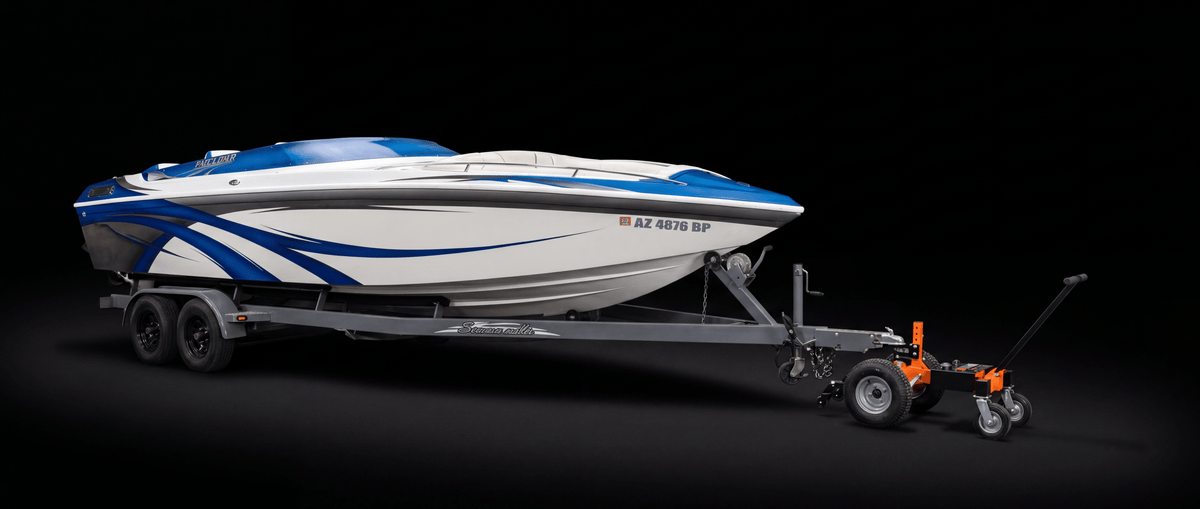
Understanding Your Boat Trailer Dolly: Key Components and Their Function
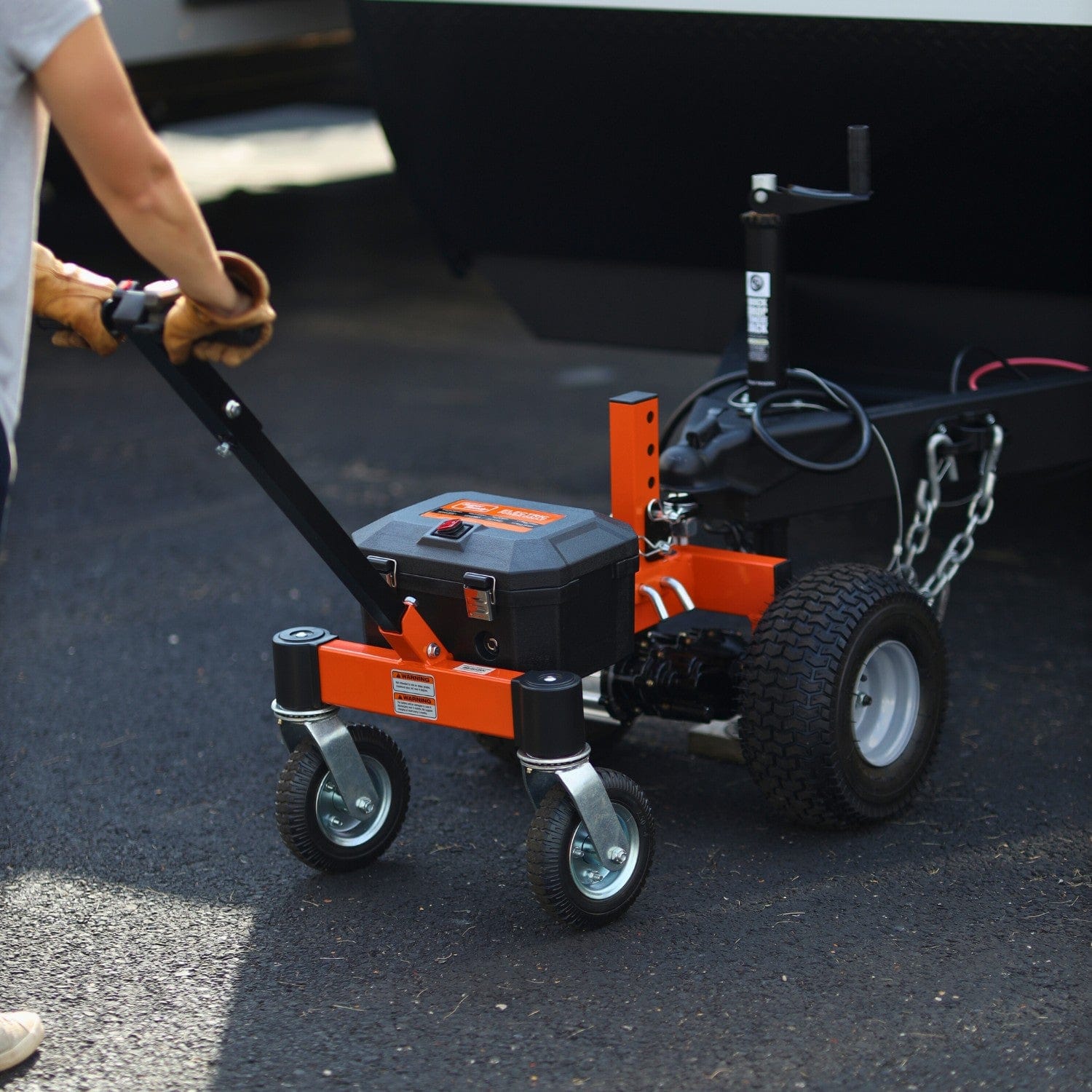
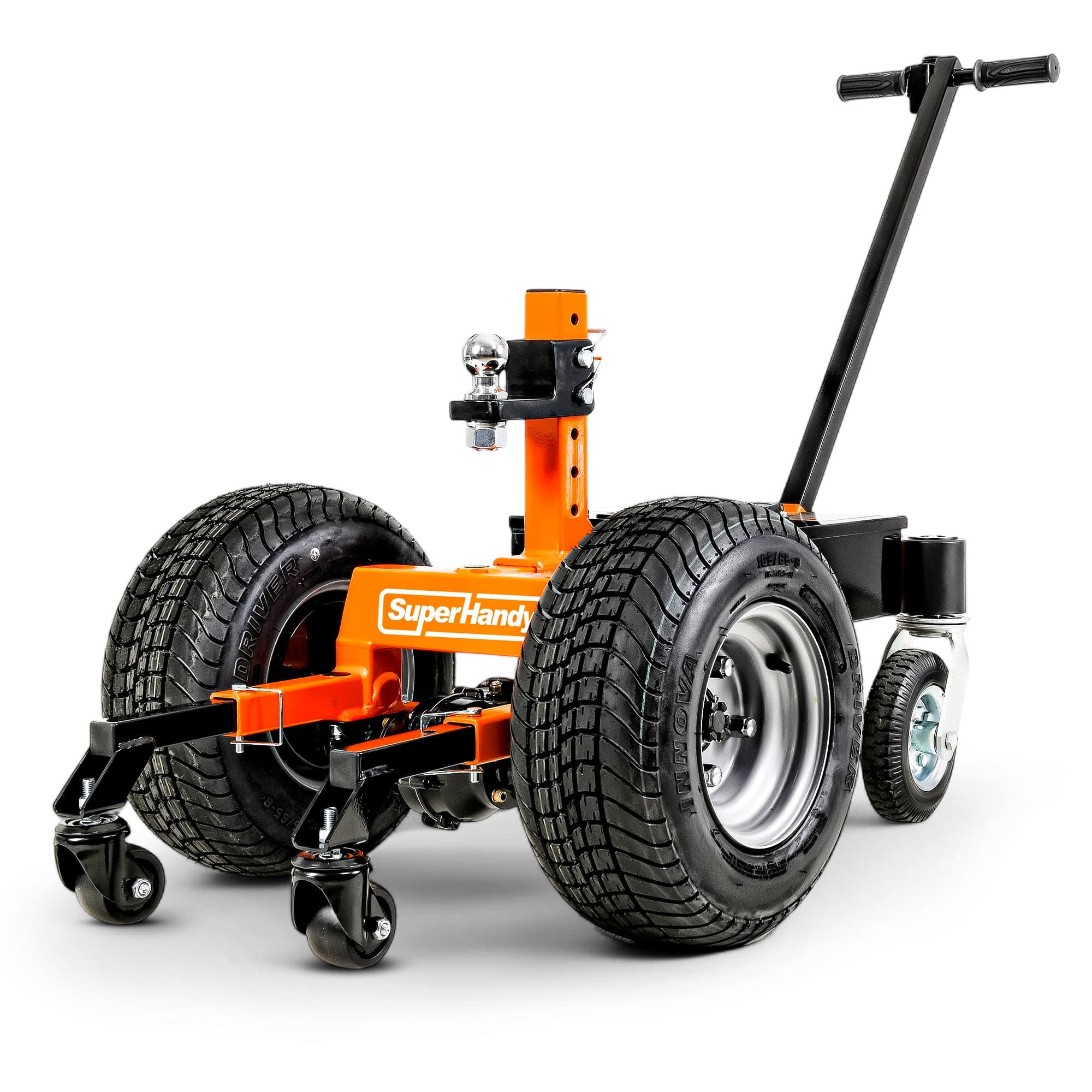
Before you can master the maneuver, you need to know your tool. A TRAILER DOLLY is a simple yet powerful device designed to move unhitched trailers by hand. While designs vary, most share a few core components that work together to give you the mechanical advantage you need.
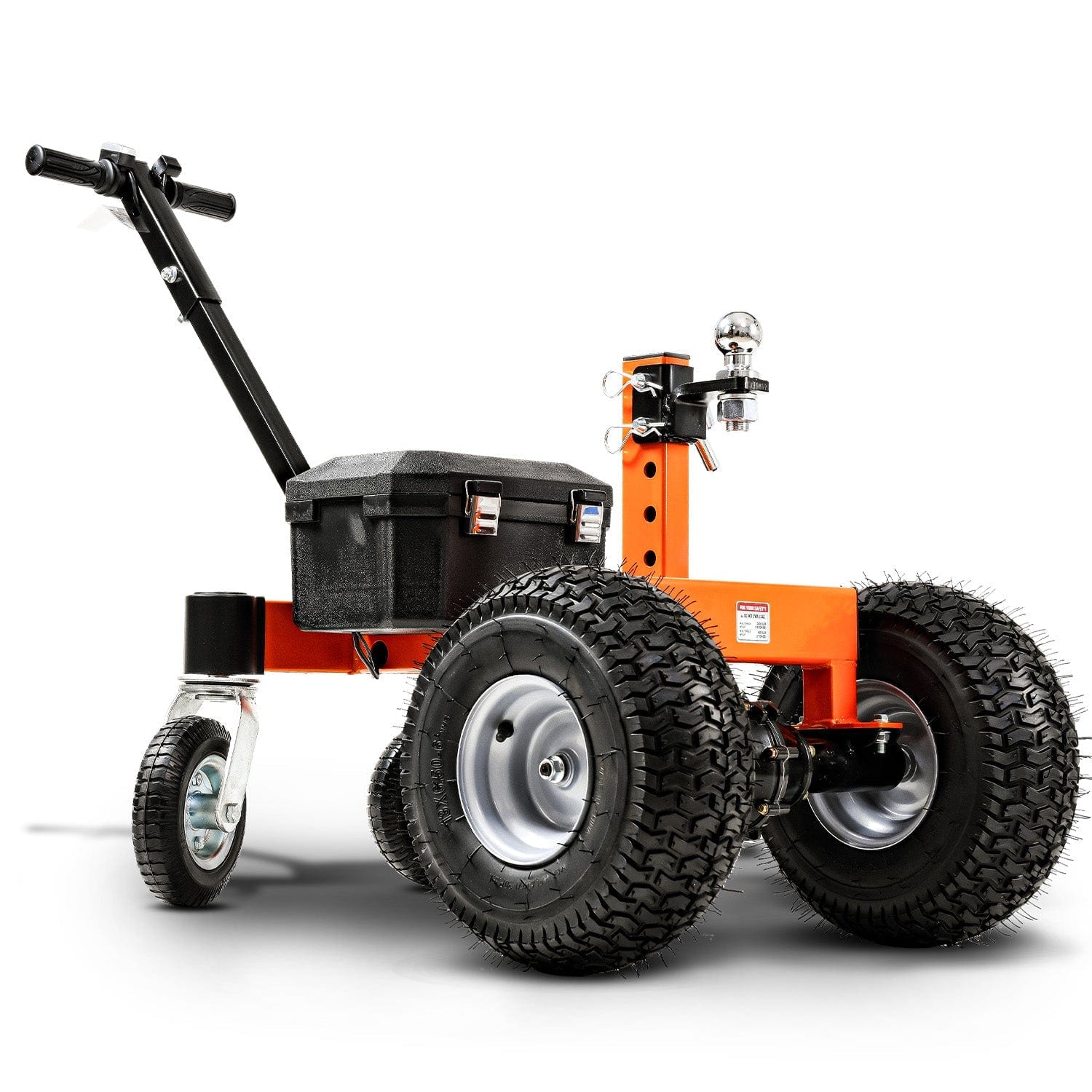
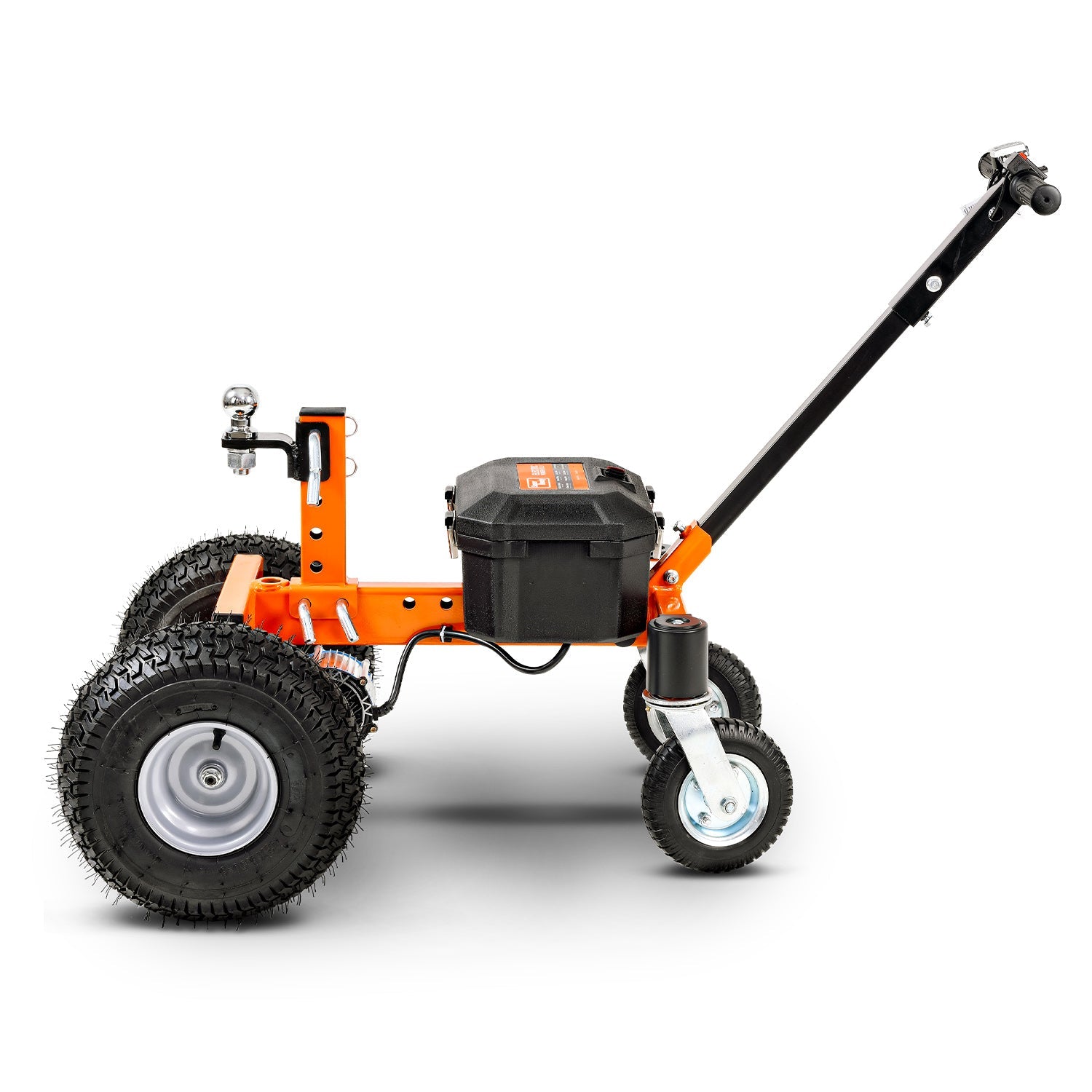
- Handle: This is your primary point of contact. A long handle provides leverage, making it easier to lift the trailer tongue and push or pull the entire load.
- Hitch Ball/Coupler Mount: This is where the dolly connects to your trailer. A properly sized hitch ball ensures a secure connection, allowing you to pivot the trailer smoothly.
- Wheels/Tires: The dolly's wheels bear the tongue weight of the trailer. They are typically either pneumatic (air-filled) for better shock absorption on uneven ground or solid rubber for maintenance-free use on smooth surfaces like concrete.
- Frame: The frame is the steel skeleton that connects everything. A robust, well-welded frame is crucial for safely handling the significant weight of a boat trailer.

Assessing Your Garage Space: Measuring and Identifying Obstacles
The old carpenter's adage, "measure twice, cut once," applies perfectly to parking a trailer. Before you even attach your BOAT TRAILER DOLLY, take a thorough assessment of your garage.
First, get your measurements. You'll need:
- The width and height of your garage door opening.
- The total length of your boat and trailer, from the tip of the propeller to the trailer coupler.
- The dimensions of the final parking spot in the corner.
Next, identify every potential obstacle along the path. Look for low-hanging garage door tracks, workbenches, storage shelves, support pillars, or even a slight slope in the concrete. A floor drain or uneven seam can easily stop a wheel and throw off your momentum. Consider using masking tape on the floor to outline the trailer's path and its final resting position. This simple visual guide can help you anticipate turns and avoid costly bumps and scrapes.
Choosing the Right Boat Trailer Dolly for Your Needs
Not all dollies are created equal. Selecting the right one is critical for both safety and ease of use. The most critical factor when selecting a trailer dolly is ensuring it can handle your trailer's tongue weight safely. Tongue weight is the downward force your trailer tongue exerts on the hitch, typically 10-15% of the total trailer weight. Exceeding a dolly's capacity can lead to equipment failure.
Next, consider the handle and tires. A well-designed handle reduces strain and provides better control when moving heavy trailers. Look for longer handles that offer superior leverage. For tires, pneumatic options are great for navigating cracks or moving over a small lip at the garage entrance, while solid tires are ideal for smooth, flat concrete floors.
Manual models are a popular and effective choice for most boat owners. The SuperHandy Trailer Dolly offers excellent maneuverability for standard boat trailers, while our Heavy-Duty Pro model provides extra leverage and capacity for larger setups.
Pre-Maneuver Checklist: Essential Preparations Before You Begin
A few minutes of preparation can prevent hours of frustration. Run through this quick checklist before you start moving your trailer.
- Clear the Path: Move cars, bikes, trash cans, and any other loose items out of the planned route.
- Check Tire Pressures: Ensure the tires on both the trailer and the TRAILER DOLLY are properly inflated. A soft tire can make movement incredibly difficult.
- Chock the Trailer Wheels: Before unhitching from your vehicle, securely place wheel chocks behind the trailer’s main wheels to prevent it from rolling unexpectedly.
- Attach the Dolly Securely: Lower the trailer tongue onto the dolly’s hitch ball and lock the coupler. Give it a slight tug to confirm it’s firmly seated.
- Do a Final Walk-Through: Take one last look at your path and the area around the trailer to ensure everything is clear.
Step-by-Step Guide: Safely Positioning Your Boat Trailer Dolly
Once you've unhitched your boat trailer from your vehicle, the real work of garage storage begins. Using a TRAILER DOLLY transforms this task from a frustrating struggle into a manageable process. Follow these fundamental steps to guide your boat trailer into its corner spot safely.
- Connect and Secure: Align the ball on your BOAT TRAILER DOLLY with the trailer's coupler. Lower the coupler onto the ball and lock the latch securely. Double-check that it’s fully engaged before moving.
- Find Your Starting Point: Pull the trailer into a clear, open area inside your garage. This gives you ample room to orient the trailer and plan your route without being immediately constrained by walls or obstacles.
- Plan Your Path of Travel: Take a moment to visualize the entire maneuver. Identify the tightest point of the turn and where you need the trailer to end up. Note any floor drains, cracks, or slopes that might affect your movement.
- Execute the Maneuver: Begin moving the trailer slowly. Use the techniques detailed below—the "Pivot and Push" for sharp turns or the "Gentle Roll and Steer" for wider arcs—to navigate your planned path.
- Final Placement: As you approach the final corner, slow down even more. Make small, precise adjustments to push the trailer snugly into its designated spot.
- Secure the Trailer: Once positioned, place wheel chocks behind the trailer's tires to prevent any rolling. Disengage and remove the trailer dolly.
Technique 1: The Pivot and Push Method for Sharp Turns
When you need to make a tight, 90-degree turn to tuck your trailer into a corner, the Pivot and Push is your go-to technique. It uses one of the trailer's own wheels as a pivot point, allowing you to swing the trailer around with surprising ease.
- Position for the Pivot: Push the trailer forward until the wheel on the inside of the turn is near the corner's apex.
- Brace the Dolly: Keep the TRAILER DOLLY handle straight and use your body to hold it steady. You want the dolly to act as a stable control point, not the pivot itself.
- Push the Trailer: Walk to the outside corner of the trailer (farthest from the turn) and apply firm, steady pressure to push it sideways. The trailer will begin to pivot around its inside wheel, swinging the tongue and the attached dolly around the corner. A sturdy manual trailer dolly provides the necessary leverage and stability for this maneuver.
- Straighten and Finish: Once the trailer has cleared the corner, return to the dolly handle and push it straight back into its final position.
Technique 2: The Gentle Roll and Steer for Gradual Adjustments
For more gradual curves or making small corrections to your path, the Gentle Roll and Steer method provides maximum control. This technique relies on finesse rather than force.
The key is to keep the trailer in slow, continuous motion while making small steering inputs with the dolly handle. Remember that steering a trailer this way is like steering a tiller on a boat—pushing the handle to the left will cause the rear of the trailer to swing out to the right. To make the process nearly effortless, an electric trailer dolly provides the forward and reverse power, allowing you to focus solely on steering the handle. Often, you'll need to make a slight "S" turn: steer one way to initiate the turn and then gently steer the other way to straighten out and align the trailer with its target.
Overcoming Common Challenges: Hitting Walls, Uneven Surfaces, and More
Even with the best technique, you can run into issues. Here’s how to handle the most common ones.
- Getting Too Close to Walls: The number one rule is to move slowly. Speed is your enemy in tight spaces. If you find yourself about to hit a wall or another obstacle, stop immediately. Don't try to force the turn. It's almost always better to pull the trailer forward a few feet to reset and try the turn again with a better angle. Having a spotter to call out distances can be invaluable.
-
Uneven Surfaces: Most garage floors aren't perfectly flat.
- Slopes: If your garage floor slopes, always stay on the uphill side of the BOAT TRAILER DOLLY. This ensures that if you lose your grip, the trailer rolls away from you, not over you.
- Cracks and Expansion Joints: A small crack can feel like a canyon when you're pushing a heavy trailer. Try to approach cracks and bumps head-on rather than at an angle to prevent the dolly's wheels from getting jerked sideways. A little extra push is often needed to get over the lip.
- Losing Leverage: If you're struggling to move the trailer, check your footing and make sure you have good, non-slip shoes on. Ensure the tires on your dolly are properly inflated for the best traction and lowest rolling resistance. A quality dolly with a long handle provides superior leverage, making the job significantly easier.
Utilizing Helper Tools: Ramps, Wheel Chocks, and Locking Mechanisms
Even the most powerful TRAILER DOLLY can benefit from a little help, especially in challenging environments. Using a few simple helper tools can transform a difficult maneuver into a smooth, controlled process. These tools are all about increasing safety and reducing physical effort.
Small Ramps for Smooth Transitions Does your garage have a concrete lip at the entrance? Or perhaps a slight dip or crack in the floor? These seemingly minor obstacles can stop a BOAT TRAILER DOLLY in its tracks, forcing you to use excessive and potentially unsafe force. A pair of small, sturdy ramps creates a gentle slope, allowing you to roll over these hurdles with minimal effort. This maintains your momentum and, more importantly, your control over the trailer's path.
Wheel Chocks: Your Essential Safety Net Wheel chocks are non-negotiable safety equipment. Maneuvering a heavy boat trailer, even with a dolly, requires moments to pause, reassess your angle, and catch your breath. This is where chocks are invaluable. Before you let go of the dolly handle, securely place a chock against the trailer's main wheels to prevent any unexpected rolling. This simple action provides a stable "save point," allowing you to adjust your strategy or rest without the risk of the trailer moving on its own.
Locking Mechanisms and Brakes Many modern trailer dollies come equipped with built-in safety features. Some manual models have locking caster wheels, which can be engaged to prevent the dolly from swiveling or rolling during a pivot. More advanced electric models, like the SuperHandy Electric Trailer Dolly, often feature an automatic brake and lock function. When you release the throttle or switch, the drive wheel locks, holding the trailer firmly in place. Familiarize yourself with your dolly's specific braking system and use it in tandem with wheel chocks for maximum security.
Post-Maneuver: Securing Your Boat Trailer Dolly in the Corner
You’ve successfully navigated the trailer into its tight corner—great job! But the task isn't complete until everything is properly secured for long-term storage. A securely parked trailer is a safe trailer.
-
Final Placement & Primary Chocking: With the trailer in its final resting spot, your first and most important action is to chock the main trailer wheels. Don't rely on the dolly alone to hold it. Place heavy-duty wheel chocks on both the front and back of at least one tire, preferably on both sides of the axle, to eliminate any possibility of forward or backward movement.
-
Engage Dolly Brakes: Engage any and all locking mechanisms on your TRAILER DOLLY. Whether it’s a locking caster or an automatic electric brake, activate it as a secondary safety measure.
-
Lower the Tongue Jack: Lower the trailer's own tongue jack until it is firmly on the ground and supporting the weight of the tongue. This is a critical step. It takes the full load off the BOAT TRAILER DOLLY, preventing stress on its frame and tires over time.
-
Disconnect the Dolly: Once the trailer's tongue jack is supporting the load and the main wheels are chocked, you can safely unlatch and remove the dolly from the trailer coupler.
-
Store the Dolly: Roll your dolly away and store it in a designated spot. This prevents it from being a trip hazard and keeps it protected.
Maintenance Tips for Your Boat Trailer Dolly to Ensure Longevity
Your TRAILER DOLLY works hard, so a little preventative maintenance will go a long way in ensuring it's ready to perform whenever you need it. A well-maintained dolly is a safer, more reliable tool.
-
Check Tire Pressure: This is the single most important maintenance task. Just like on your car or trailer, the tires on your dolly need to be properly inflated. Underinflated tires create immense drag, making maneuvering difficult and putting strain on the dolly's motor (if electric) and your body. Check the PSI before each major use and inflate to the level recommended on the tire's sidewall.
-
Inspect Hardware: Before you move, do a quick visual inspection. Look for any loose nuts, bolts, or cotter pins, especially around the wheels, axle, and handle assembly. Tighten as necessary.
-
Lubricate Moving Parts: Keep pivot points and wheel axles moving freely with a shot of quality grease or lubricating spray a few times a year. This prevents squeaking, reduces friction, and fights corrosion. Don't forget the hitch ball—a light coat of grease will protect it from rust and ensure a smooth connection.
-
Keep it Clean: After use, wipe down the dolly frame to remove dirt, grime, and moisture. This simple step is your best defense against rust and corrosion, preserving the structural integrity of the dolly.
-
Store Properly: When not in use, store your dolly in a dry place away from the elements. UV rays from the sun can degrade tires over time, and moisture is the enemy of all metal components. Simple, robust manual dollies like the SuperHandy Trailer Dolly are easy to hang on a wall or tuck under a workbench, keeping your garage floor clear.
Frequently Asked Questions
What's the maximum weight a TRAILER DOLLY can handle?
The maximum weight capacity is one of the most critical factors and varies significantly between models. Every TRAILER DOLLY has two key weight ratings you must check: tongue weight capacity and gross trailer weight (GTW) capacity. Tongue weight is the downward force the trailer's tongue exerts on the hitch ball, which is the weight you'll be physically lifting and maneuvering. GTW is the total weight of your boat, trailer, and all gear combined. Always ensure your trailer's tongue weight is well below the dolly's specified limit. For example, a standard manual dolly might handle up to 600 pounds of tongue weight, which is sufficient for many smaller boats. For heavier setups, you may need a more robust, heavy-duty electric model designed for much larger loads. Exceeding the weight limit is a major safety hazard and can lead to equipment failure.
Can I use a BOAT TRAILER DOLLY on a sloped driveway or uneven ground?
Extreme caution is advised. Most manual trailer dollies are designed for use on hard, flat, and level surfaces like concrete garage floors or paved driveways. Introducing a slope creates a significant risk, as gravity will work against you, making the trailer much harder to control and stop. If you must navigate a slight incline, always have a helper and use wheel chocks immediately if you need to stop. Never attempt to maneuver a heavy trailer down a steep grade with a manual dolly. Uneven surfaces like gravel or grass can also be problematic, as the dolly's wheels can sink in, making movement nearly impossible. For these challenging terrains, a motorized BOAT TRAILER DOLLY with larger, all-terrain pneumatic tires and an automatic braking system is a much safer and more effective option.
How do I determine the correct ball size for my BOAT TRAILER DOLLY?
This is essential for a secure connection. The required hitch ball size is determined by your trailer's coupler—the part that fits over the ball. Look closely at the top of your trailer's coupler; the size is almost always stamped directly into the metal. Common sizes are 1-7/8", 2", and 2-5/16". Your TRAILER DOLLY must have a hitch ball that exactly matches this size. Using the wrong size ball is extremely dangerous, as the coupler could pop off during movement, leading to a runaway trailer. Many dollies come equipped with a standard 2" ball, but it's crucial to verify it's the right one for your specific trailer before you ever try to connect it.
Is it better to push or pull the TRAILER DOLLY?
While both are possible, pulling the dolly is generally recommended for better control and visibility. When you pull the handle, you can walk backward and easily look over your shoulder to see where the trailer's wheels and fenders are going. This position makes it easier to steer and make fine adjustments as you navigate into a tight corner. Pushing can feel more powerful for getting the trailer started from a standstill, but it severely limits your view of the trailer's rear, increasing the risk of hitting a wall, a car, or another obstacle. For the best results, use a pulling motion for steering and maneuvering, and only use a pushing motion for short, straight-line adjustments where your path is completely clear.
What if my boat trailer is too heavy for me to move manually even with a dolly?
If you're struggling to move the trailer, stop immediately and reassess. First, double-check that your dolly's tires are fully inflated to the recommended PSI; underinflated tires dramatically increase rolling resistance. Second, ensure you are on a smooth, hard surface. If those factors are fine, the trailer's tongue weight may simply be too much for one person to handle safely with a manual dolly. Your best option is to invest in a motorized or electric BOAT TRAILER DOLLY. These powered units do the hard work for you, allowing you to simply steer the trailer into place with a thumb controller. They are the ideal solution for very heavy boat trailers or for anyone who needs to move their trailer without physical strain.
Can I leave my boat trailer attached to the dolly for long-term storage?
It is not recommended to leave your trailer's weight resting on a TRAILER DOLLY for extended periods. These devices are designed for maneuvering, not for long-term static support. Leaving the full tongue weight on the dolly for weeks or months can create flat spots on the dolly's tires and may put undue stress on its frame and axle. The proper procedure is to use the dolly to move the trailer into its final parking spot, place wheel chocks behind the trailer's main wheels, and then use the trailer's own tongue jack or a separate jack stand to support the tongue. Once the tongue is securely supported, you can remove the dolly and store it separately.
Related Products


Leave a comment
All comments are moderated before being published.
This site is protected by hCaptcha and the hCaptcha Privacy Policy and Terms of Service apply.