









The Allure of the Outdoors: More Than Just a Hobby
There’s a primal satisfaction that comes from gathering around a crackling fire, whether it’s a campfire under the stars or the warmth of a wood stove on a cold night. For any outdoor enthusiast or homeowner with a fireplace, a steady supply of firewood is essential. However, the traditional method of splitting logs with an axe is strenuous and time-consuming. This is where a modern firewood splitter transforms a demanding chore into a manageable task.
Understanding the Log Wood Splitter: What It Is and How It Works
A log wood splitter is a powerful machine designed to split logs into firewood with minimal physical effort. It uses a hydraulic system where an engine powers a pump, forcing fluid into a cylinder. This action drives a piston and a steel wedge with immense force, splitting even tough, knotted logs in seconds. This powerful, labor-saving operation makes it an indispensable tool for anyone who processes wood regularly.

Types of Log Splitters: Finding the Right Fit for Your Needs
Log splitters are primarily categorized by their power source: manual, electric, and gas. Manual splitters are suited for very light, occasional use. Electric models are suitable for household settings, offering quiet, emission-free operation near a power source. For maximum power and off-grid capability, gas-powered splitters are the go-to choice for farm owners and serious outdoor workers who need to tackle large volumes of wood in various locations.
Electric vs. Gas-Powered Splitters: Which Engine Drives Your Decision?
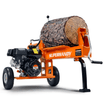
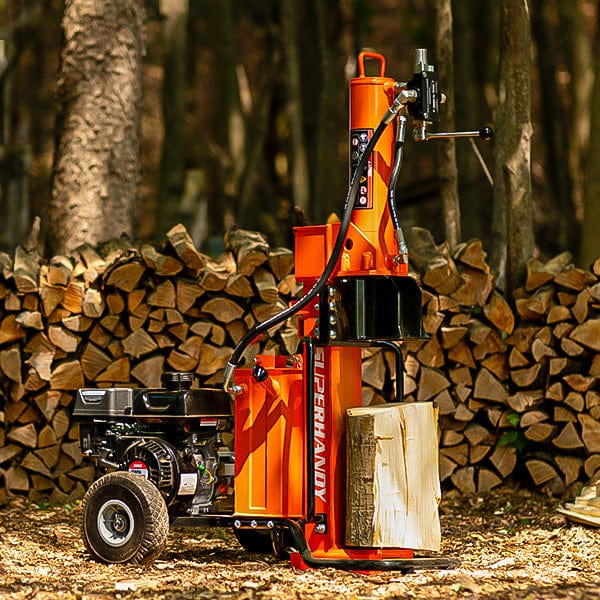
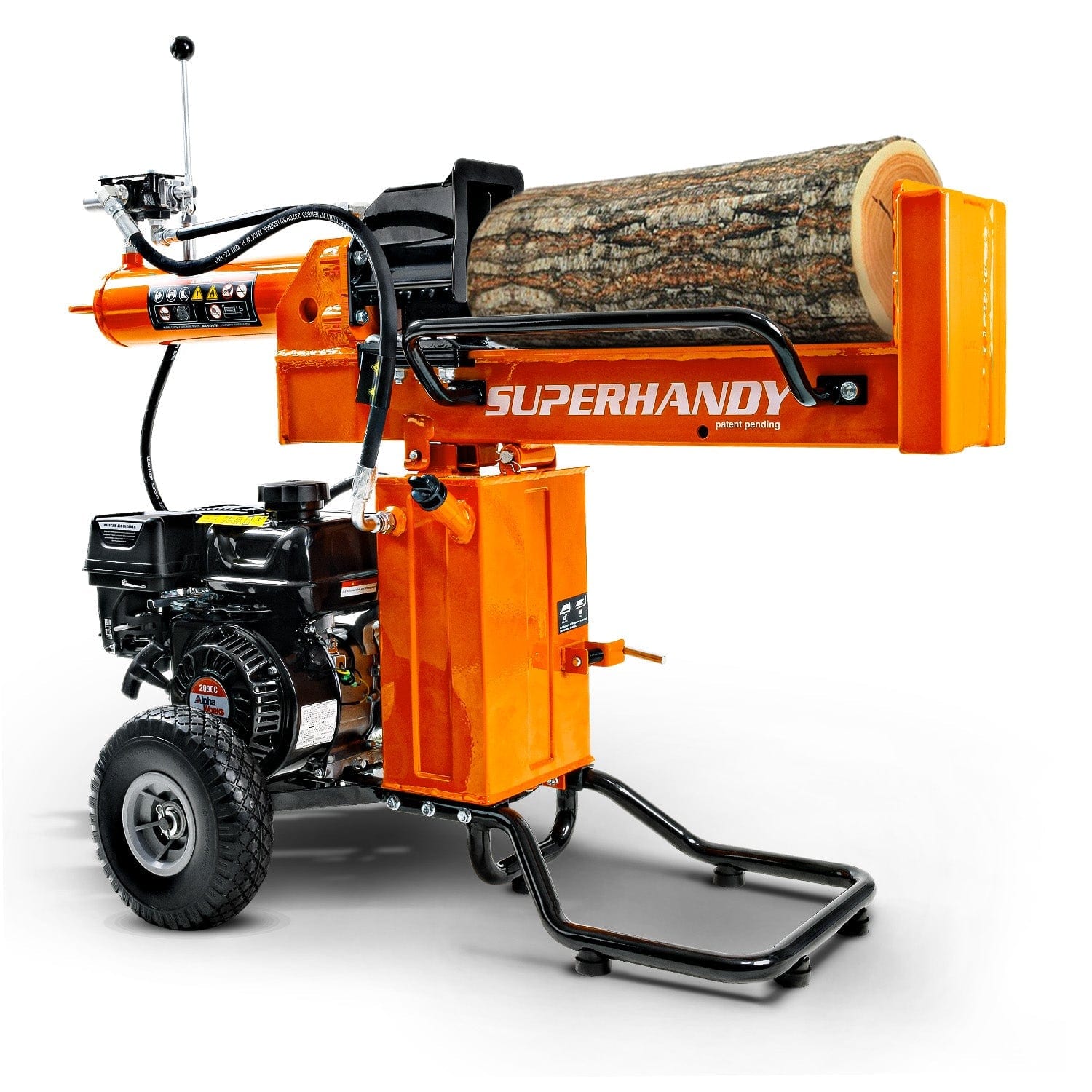
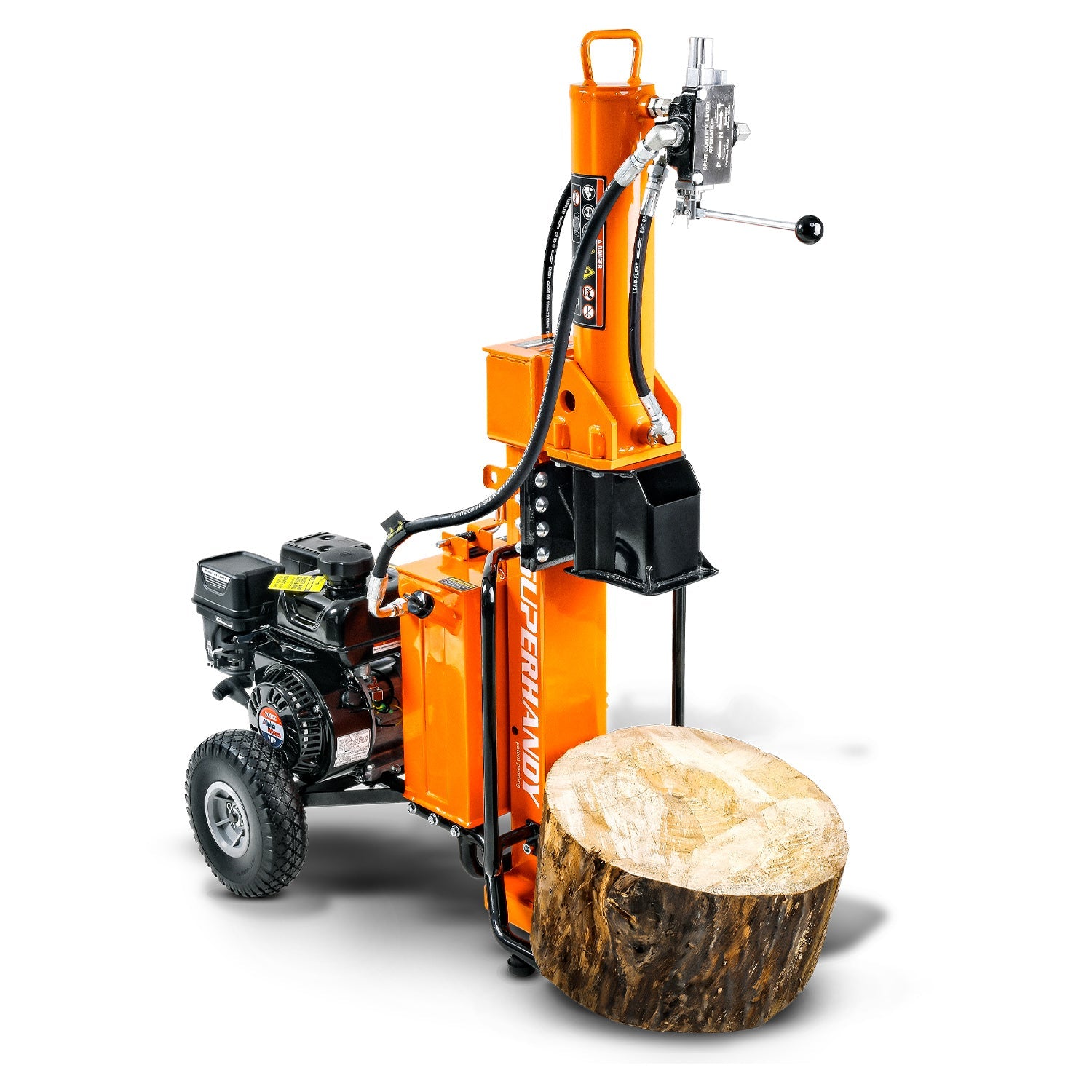
Your choice depends on workload and location. Electric splitters are user-friendly for preparing firewood in a suburban backyard, capably handling logs up to 12 inches in diameter. When you need raw power and portability, a gas-powered log splitter is useful. These heavy-duty machines deliver superior splitting force for larger, tougher logs. For example, a robust model like the SuperHandy 25 Ton Gas Log Splitter can handle logs up to 20 inches long, making it ideal for clearing land or preparing a winter’s worth of fuel in remote locations. Its stable structure and easy-to-move design ensure both safety and convenience.
Manual Splitting vs. Log Splitters: The Real Difference in Effort and Time
The traditional image of splitting wood with an axe is romantic, but the reality is hours of strenuous, back-breaking labor. A manual swing is inconsistent and physically demanding. In contrast, a modern log wood splitter transforms this chore into a quick and efficient task. What might take a full day of manual labor can often be accomplished in just an hour or two. This immense saving in time and physical effort allows you to process large quantities of firewood with minimal fatigue, making it a practical choice for anyone who regularly needs to prepare wood.
Beyond the Campfire: Unexpected Uses for a Log Splitter
While a firewood splitter is invaluable for campers and homeowners with fireplaces, its utility extends far beyond recreational use. For farm owners and those with large properties, a log splitter is a powerful tool for land management. It can help process fallen trees after a storm, clear land for new projects, or even assist in creating rustic fence posts from suitable timber. This versatility makes it an essential piece of equipment for property maintenance, turning large, unmanageable logs into usable wood for various applications around your home or farm.

Safety First: Essential Precautions When Operating a Log Splitter
The power that makes a log splitter so effective also demands respect and caution. Safe operation is non-negotiable. Always operate your machine on level, stable ground to prevent it from tipping. Before you begin, clear the area of any tripping hazards. It is crucial to wear appropriate personal protective equipment (PPE), including safety glasses and durable gloves. Keeping your hands clear of the ram and wedge during operation is one of the most important rules. Never allow more than one person to operate the controls at a time.
Choosing the Right Log Splitter: Key Features to Consider
Selecting the right log splitter depends on your specific needs. The most critical factor is splitting force, measured in tons. Higher tonnage allows you to split larger, harder, or greener woods with ease. Also, consider the log capacity—both in length and diameter. For example, a heavy-duty model like the SuperHandy 25 Ton Gas Log Splitter - 7HP 209CC, 20" Max Log Length can handle logs up to 20 inches long, making it suitable for substantial jobs. Finally, look for features that enhance practicality, such as durable wheels for easy movement around your property and a stable, robust frame that ensures safe, reliable performance for years to come.
Maintenance Essentials: Keeping Your Log Splitter in Peak Condition
A reliable firewood splitter is built for durability, but consistent performance depends on proper care. Regular maintenance ensures your machine operates safely and efficiently for years. Before each use, perform a quick visual inspection of hoses, the splitting wedge, and tire pressure. Periodically check and top off the hydraulic fluid and engine oil according to the manufacturer's guidelines. Keeping the wedge sharp and the engine free of debris not only extends the life of your splitter but is also crucial for safe operation.
The Investment Factor: Cost vs. Long-Term Value of a Log Splitter
While the initial purchase of a log wood splitter is a significant investment, its long-term value quickly becomes apparent. Consider the hours of grueling labor saved compared to swinging an axe. This machine transforms a weekend-long chore into a task of a few hours, freeing up your time and saving your back from strain. The ability to process large quantities of wood efficiently means you can stock up for the entire winter, prepare for multiple camping trips, or manage storm debris without the recurring cost and effort of buying pre-split firewood or hiring help. It’s an investment in self-sufficiency and physical well-being.

Real-World Scenarios: How Log Splitters Empower Outdoor Adventures
Imagine these common situations. A farm owner needs to clear a fallen oak and turn it into a winter's worth of fuel. A heavy-duty splitter can handle logs up to 20 inches in length, turning a massive job into a manageable one. An avid camper wants to prepare a season's worth of perfect-sized firewood for their trips; a portable splitter makes it easy to process wood at home and be ready for any adventure. Even for a suburban homeowner, a household wood splitter is invaluable for cleaning up after a storm or managing trees on their property, providing a ready supply of firewood for the backyard fire pit.
Testimonials: Voices from the Field on Log Splitter Benefits
Don't just take our word for it. Here’s what users are saying:
"As a homesteader, processing firewood was my most dreaded task. The SuperHandy 25 Ton Gas Log Splitter - 7HP 209CC, 20" Max Log Length changed everything. What used to take me a full week with a maul, I now finish in a single afternoon. Its power and stable design handle tough, knotted hardwood without a problem." – John D., Farm Owner
"I bought a splitter for our family cabin. Now, everyone can safely help make firewood. It's easy to operate and the labor-saving aspect is incredible. We have more time to actually enjoy the outdoors." – Maria S., Casual Camper
Frequently Asked Questions
Is a Log Splitter Worth the Investment for Casual Campers?
For the occasional camper who buys pre-cut firewood, a log splitter may not be necessary. However, for anyone who camps regularly, maintains a property with trees, or uses a wood stove or fire pit at home, a firewood splitter is a game-changing tool. It transforms a labor-intensive chore into a fast, efficient task. Instead of risking injury and exhaustion swinging an axe, you can safely and quickly produce a large, consistent supply of firewood. This not only saves you valuable time that can be better spent outdoors but can also offer a significant return on investment. By processing your own logs—often available for free or at a low cost—you eliminate the recurring expense of buying small, overpriced firewood bundles.

What Size Logs Can Most Log Splitters Handle?
A log splitter's capacity is defined by two key specifications: maximum log length and splitting force (tonnage). Most consumer-grade splitters can handle logs up to 20-25 inches in length. The maximum diameter a machine can split is directly related to its tonnage. For example, a compact electric splitter might be rated for logs up to 10 inches in diameter, which is suitable for processing softer woods or smaller rounds for a backyard fire.
However, for larger logs or dense hardwoods like oak, hickory, or maple, more power is required. This is where a heavy-duty gas log wood splitter shines. A model with high tonnage, such as the SuperHandy 25 Ton Gas Log Splitter, can effortlessly split logs over 16 inches in diameter and up to 20 inches long. Its powerful engine provides the force needed to bust through tough, knotty, or unseasoned wood, ensuring you can process nearly any log on your property.
Is a Log Splitter Worth the Investment for Casual Campers?
For the occasional camper who buys pre-cut firewood, a log splitter may not be necessary. However, for anyone who camps regularly, maintains a property with trees, or uses a wood stove or fire pit at home, a firewood splitter is a game-changing tool. It transforms a labor-intensive chore into a fast, efficient task. Instead of risking injury and exhaustion swinging an axe, you can safely and quickly produce a large, consistent supply of firewood. This not only saves you valuable time that can be better spent outdoors but can also offer a significant return on investment. By processing your own logs—often available for free or at a low cost—you eliminate the recurring expense of buying small, overpriced firewood bundles.

What Size Logs Can Most Log Splitters Handle?
A log splitter's capacity is defined by two key specifications: maximum log length and splitting force (tonnage). Most consumer-grade splitters can handle logs up to 20-25 inches in length. The maximum diameter a machine can split is directly related to its tonnage. For example, a compact electric splitter might be rated for logs up to 10 inches in diameter, which is suitable for processing softer woods or smaller rounds for a backyard fire.
However, for larger logs or dense hardwoods like oak, hickory, or maple, more power is required. This is where a heavy-duty gas log wood splitter shines. A model with high tonnage, such as the SuperHandy 25 Ton Gas Log Splitter, can effortlessly split logs over 16 inches in diameter and up to 20 inches long. Its powerful engine provides the force needed to bust through tough, knotty, or unseasoned wood, ensuring you can process nearly any log on your property.
Related Products

Leave a comment
All comments are moderated before being published.
This site is protected by hCaptcha and the hCaptcha Privacy Policy and Terms of Service apply.