










Why Splitting Your Own Firewood is Rewarding (and Economical)
There’s a unique satisfaction that comes from stacking a cord of wood you’ve split yourself. Beyond the rewarding feeling of self-reliance, processing your own firewood is a smart financial move. Pre-split, seasoned firewood can be expensive, and costs add up quickly. By sourcing your own logs—whether from your property or a local supplier—and splitting them with a log splitter, you can significantly reduce your fuel costs for the year. You also gain complete control over the final product, ensuring each piece is perfectly sized for your fire pit, fireplace, or wood stove.
Choosing the Right Log Splitter for Your Needs
With a clear understanding of the benefits, the next step is selecting the right tool for the job. The best wood splitter for you depends entirely on your specific circumstances. Before you buy, consider a few key questions:
- Volume: How much wood do you plan to split each season? A few cozy fires, or heating your home?
- Wood Type: Will you be splitting softer woods like pine, or dense hardwoods like oak and hickory?
- Power & Location: Do you have easy access to an electrical outlet, or do you need the freedom to work in a remote part of your yard?
Answering these questions will help you narrow down your options and find a machine that matches your workload and environment.
Types of Log Splitters: Electric vs. Gas
Powered log splitters primarily come in two varieties: electric and gas. Each has distinct advantages.
-
Electric Log Splitters: These models are quieter, produce no exhaust fumes, and are generally lighter and easier to store. They are an excellent choice for homeowners with smaller splitting jobs, working in a garage or close to the house where an outlet is available. They handle most common softwoods and smaller-diameter hardwoods with ease.
-
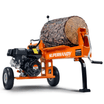
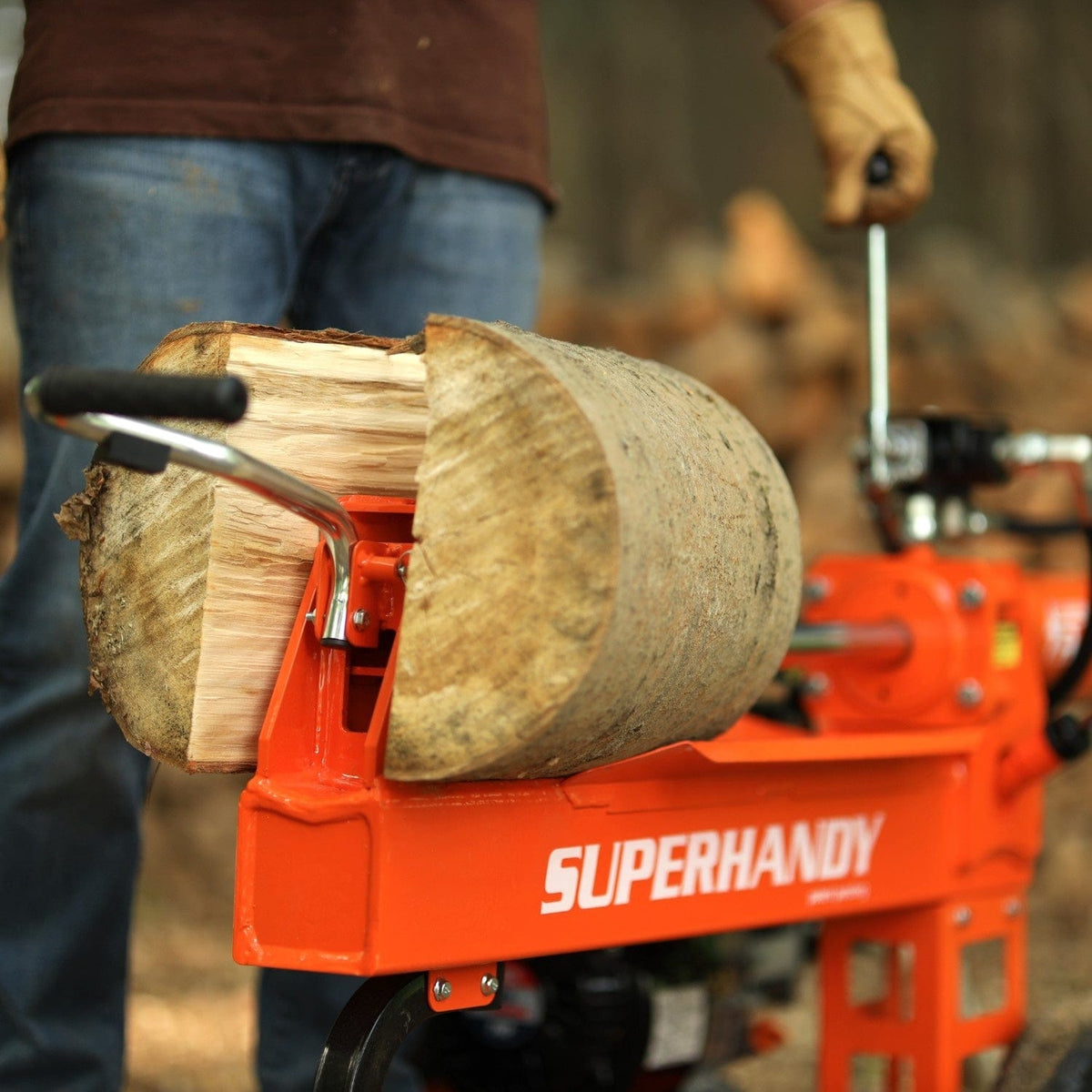
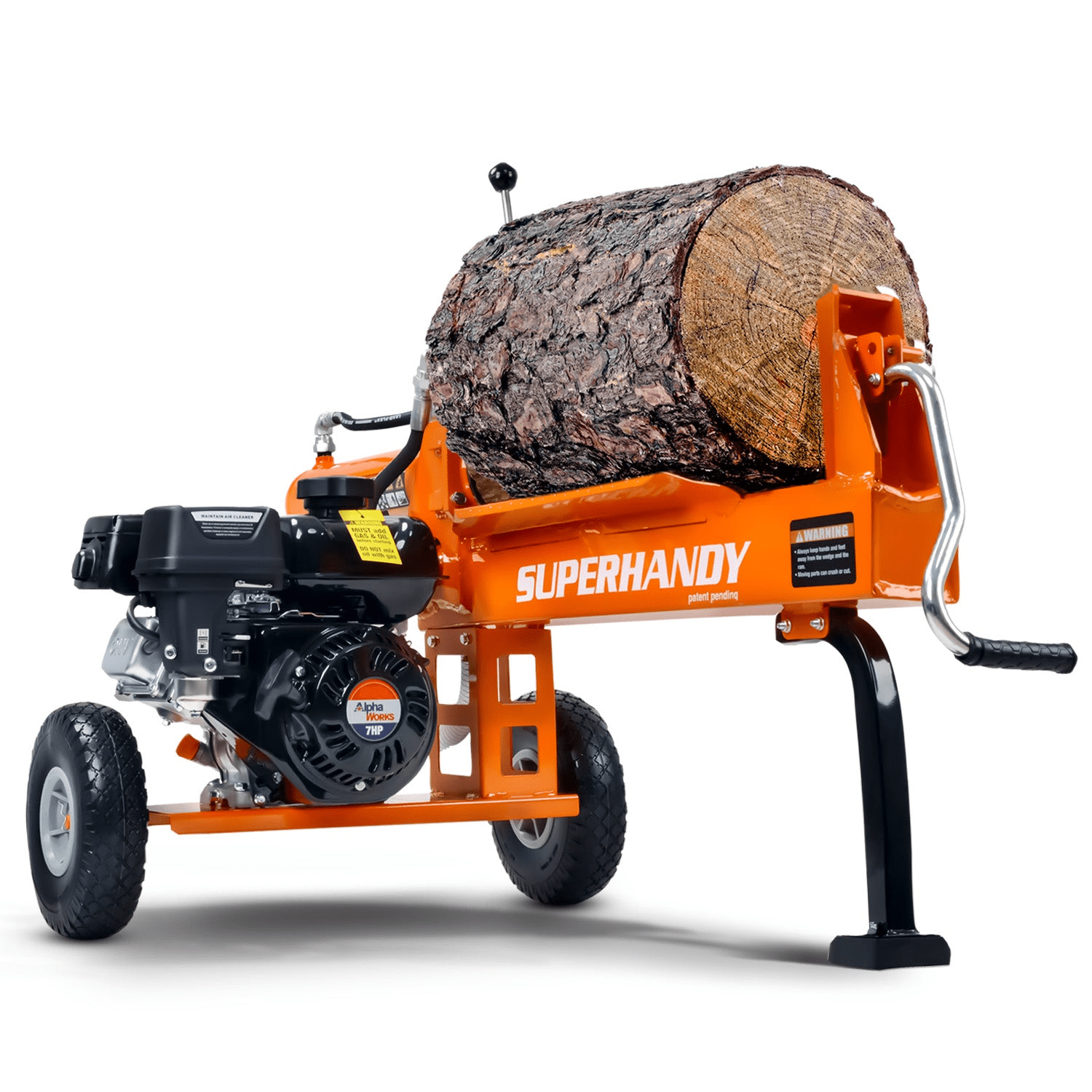
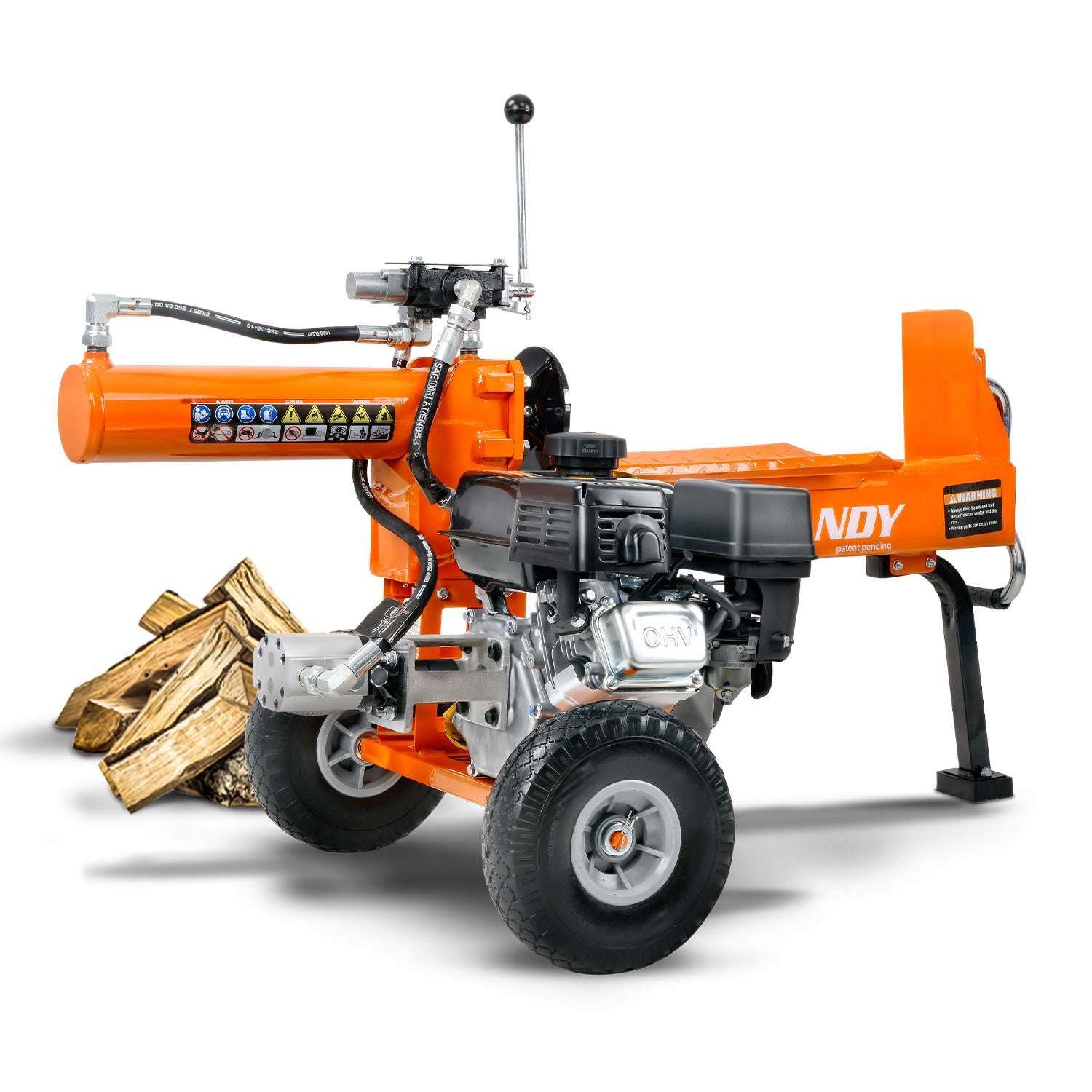
Gas Log Splitters: For sheer power and portability, nothing beats a gas-powered model. A machine like the SuperHandy 20 Ton Gas Log Splitter can tackle large, tough, and knotty hardwood logs without hesitation. Because they aren’t tied to a cord, you can take them anywhere on your property, making them ideal for high-volume splitting and serious workloads.
Manual vs. Powered Splitting: What's Best for You?
The final major choice is between manual effort and machine power. While a traditional splitting axe or maul is a timeless tool, it requires significant physical effort, time, and proper technique to be used safely and effectively.
A powered log splitter transforms the task entirely. It replaces strenuous, repetitive swinging with hydraulic force, allowing you to split an entire cord of wood in a fraction of the time it would take by hand. This not only saves your back and shoulders but also dramatically increases your productivity. For anyone who needs to split more than just a handful of logs per year, investing in a powered wood splitter is a practical decision that makes the work faster, safer, and far less physically demanding.

Key Features to Consider When Buying a Log Splitter
When you're ready to invest in a wood splitter, a few key specifications will guide you to the right machine.
- Tonnage: This measures the splitting force. For smaller softwoods, 4-7 tons may suffice. For larger, denser hardwoods like oak or hickory, you’ll want 20 tons or more. A versatile model like our SuperHandy 20 Ton Gas Log Splitter - 7HP 209CC, 20" Max Log Length handles most homeowner needs.
- Cycle Time: This is the time it takes for the ram to split a log and return to its starting position. A shorter cycle time (e.g., 10-15 seconds) means you can process more wood, faster.
- Log Capacity: Check the maximum log length and diameter the splitter can handle. Measure the wood you typically work with to ensure a good fit.
- Portability: If you need to move your splitter around your property, look for features like large tires and a tow hitch.
Safety First: Essential Precautions for Operating a Log Splitter
A log splitter is a powerful tool that demands respect. Always prioritize safety to prevent injury.
- Read the Manual: Your first step should always be to thoroughly read and understand the operator's manual. As experts from Penn State Extension advise, you should always "[f]ollow instructions in the operator's manual when using a chain saw or log splitter."
- Wear Proper PPE: Protect yourself from flying debris and potential accidents. According to safety specialists at Purdue University, "[w]hen splitting, wear safety goggles and stay clear of moving parts and pinch-points." We also recommend sturdy gloves, long pants, and steel-toed boots.
- Create a Safe Zone: Operate your splitter on level ground, clear of tripping hazards. Keep children, pets, and any bystanders at a safe distance.

Setting Up Your Log Splitter for Optimal Performance
A proper setup ensures your wood splitter operates efficiently and safely.
- Choose a Stable Location: Find a flat, dry spot with plenty of space. This provides a stable base for the machine and gives you room to manage your unsplit logs and stacking your finished firewood.
- Perform a Pre-Start Check: Before every use, inspect the machine. Check the hydraulic fluid and engine oil levels, look for any leaks in the hoses, and make sure all guards and safety features are in place.
- Fuel Up Safely: If you have a gas-powered model, fill the fuel tank while the engine is cool and in a well-ventilated area, away from any open flames or sparks.
The Art of Splitting: Technique for Efficient Wood Splitting
Using the right technique makes the job easier and safer.
- Position the Log Correctly: Place the log securely on the beam. The end of the log should be flush against the end plate to ensure a clean, stable split. Never attempt to split a log at an angle or hold it with your hands during operation.
- Split with the Grain: Always split logs lengthwise. The wedge is designed to separate the wood fibers along their natural grain. Splitting across the grain is ineffective and can put unnecessary stress on your machine.
- Work Smart: Let the machine do the work. Engage the controls and step back. Never try to force a log that is too large or knotty. If the wedge gets stuck, retract the ram fully before safely removing the log.
Splitting Different Types of Wood: Hardwood vs. Softwood
Not all wood splits the same. The type of wood you’re working with will determine how much effort and power your log splitter needs.
- Hardwoods: Woods like oak, maple, and hickory are dense and have interlocking grain, making them challenging to split by hand. They burn longer and hotter, making them ideal for firewood. A powerful gas log splitter, like a SuperHandy 20 Ton Gas Log Splitter - 7HP 209CC, 20" Max Log Length, provides the necessary force to efficiently process these tough logs.
- Softwoods: Pine, fir, and cedar are less dense and typically split much more easily. While they ignite quickly, they burn faster than hardwoods. Be aware that some softwoods can be stringy or full of knots, which may require repositioning the log for a clean split.
Troubleshooting Common Log Splitter Issues
Even the best machines can encounter hiccups. Here are solutions to a few common issues:
- Engine won't start: Before diving into major repairs, check the basics. Is there fresh fuel in the tank? Is the engine oil at the correct level? Is the choke in the right position for starting?
- Ram moves slowly or seems weak: This is often a sign of low hydraulic fluid. Check the fluid level and top it off if necessary. If the fluid is full, you may have air in the system. Extend and retract the ram several times without a log to help purge the air.
- Wedge gets stuck or won’t split a log: Never force the machine. The log may be oversized, unusually dense, or have a complex, twisted grain. Try repositioning the log or splitting from the other end.
Maintaining Your Log Splitter for Longevity
Proper maintenance is key to keeping your wood splitter running safely and efficiently for years.
- Before Each Use: Perform a quick visual inspection. Check the engine oil and hydraulic fluid levels.
- After Each Use: Clean off wood debris, especially from around the wedge, beam, and engine.
- Periodically: Keep the splitting wedge sharp. A dull wedge crushes wood instead of splitting it, putting unnecessary strain on the machine. Check your owner's manual for the engine service schedule, including oil changes and air filter cleaning.

Storing Your Split Firewood Effectively
Splitting the wood is only half the job. Proper storage is crucial for creating good, seasoned firewood.
- Elevate: Stack your wood off the bare ground. Use pallets, a dedicated firewood rack, or simple 2x4s to prevent ground moisture from seeping into your bottom layer.
- Promote Airflow: Don't stack your wood in a tight, massive block. Create rows with a few inches of space between them to allow air to circulate freely.
- Cover the Top: Use a tarp or a dedicated cover to protect the top of the pile from rain and snow. However, leave the sides open to the air so moisture can evaporate.
Frequently Asked Questions about Log Splitters
Have a few more questions before you get splitting? Here are answers to some of the most common queries we receive about log splitters.
Q1: How much wood can a log splitter process in an hour?
The amount of wood you can split in an hour depends on several key factors, not just the machine itself. While there isn't a single magic number, here’s what influences your productivity:
- Cycle Time: This is the time it takes for the splitter’s ram to extend and retract. A shorter cycle time (e.g., 10-15 seconds) means you can split logs more rapidly than with a longer cycle time (e.g., 20-25 seconds).
- Operator Efficiency: Your speed at loading new logs and clearing away split pieces is crucial. Having your unsplit rounds within easy reach and a clear area for the split firewood will dramatically increase your hourly output.
- Wood Type and Size: Splitting smaller, straight-grained softwood logs will be much faster than tackling large, knotty hardwood rounds that may require re-positioning or multiple splits.
- Splitter Power: A properly powered wood splitter will push through tough logs without stalling, saving you time and frustration.
A dedicated operator with a well-organized workspace using a capable gas log splitter can realistically process anywhere from a half cord to a full cord of wood per hour. For more casual use, a quarter cord is a more typical expectation.

Q2: What is the difference between a horizontal and a vertical log splitter?
This question comes down to how the log is oriented during splitting, which directly impacts ergonomics and the size of wood you can handle.
Horizontal Log Splitters: On these models, you lift a log and place it lengthwise on a beam. The hydraulic ram then pushes the log horizontally into a stationary wedge. This is the most common design, especially for electric and smaller gas-powered splitters. They are excellent for logs that are of a manageable weight and size to lift to waist height.
Vertical Log Splitters: With a vertical wood splitter, the log stands on its end on a plate at the base of the machine, and the wedge drives down from above to split it. The major advantage here is that you don’t have to lift heavy, large-diameter rounds. You can simply roll them into position, making this design ideal for processing very large and heavy pieces of wood with less physical strain.
For maximum versatility, some powerful gas-powered units, like the SuperHandy 20 Ton Gas Log Splitter, are convertible. They can be used in the standard horizontal position for quick work on smaller logs and then easily pivoted into a vertical position to tackle those massive rounds you can’t lift.
Related Products

Leave a comment
All comments are moderated before being published.
This site is protected by hCaptcha and the hCaptcha Privacy Policy and Terms of Service apply.