









Understanding Your Seasonal Wood Splitting Demands
For small farm owners, firewood is a year-round resource, but splitting it is a seasonal task. Planning is key. According to Penn State Extension, the best time to harvest trees for firewood is late winter, when cold temperatures make logs more brittle and easier to split. Aligning your splitting work with this season means you need a reliable log splitter ready to go when the time is right.
How Much Wood Do You Need to Split Annually?
Estimate your annual firewood needs in cords (a stacked pile measuring 4x4x8 feet). Do you need 2-3 cords for supplemental heat, or 5-10 cords as a primary heating source? A larger volume demands a more powerful and efficient firewood splitter to save you time and back-breaking labor. The goal is to finish the job quickly, not make it a summer-long project.

Assessing Your Typical Log Size and Type
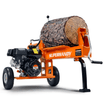
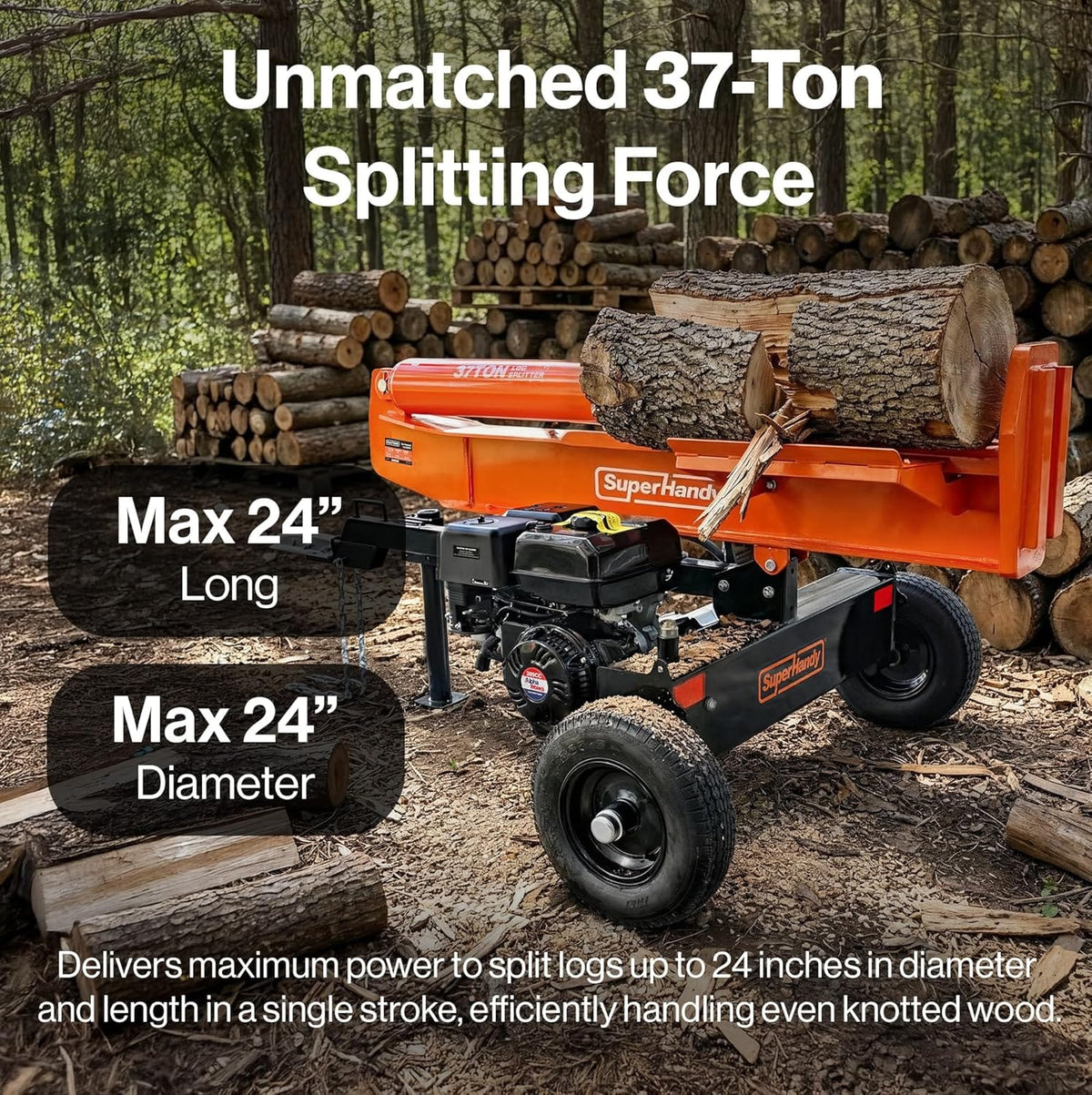
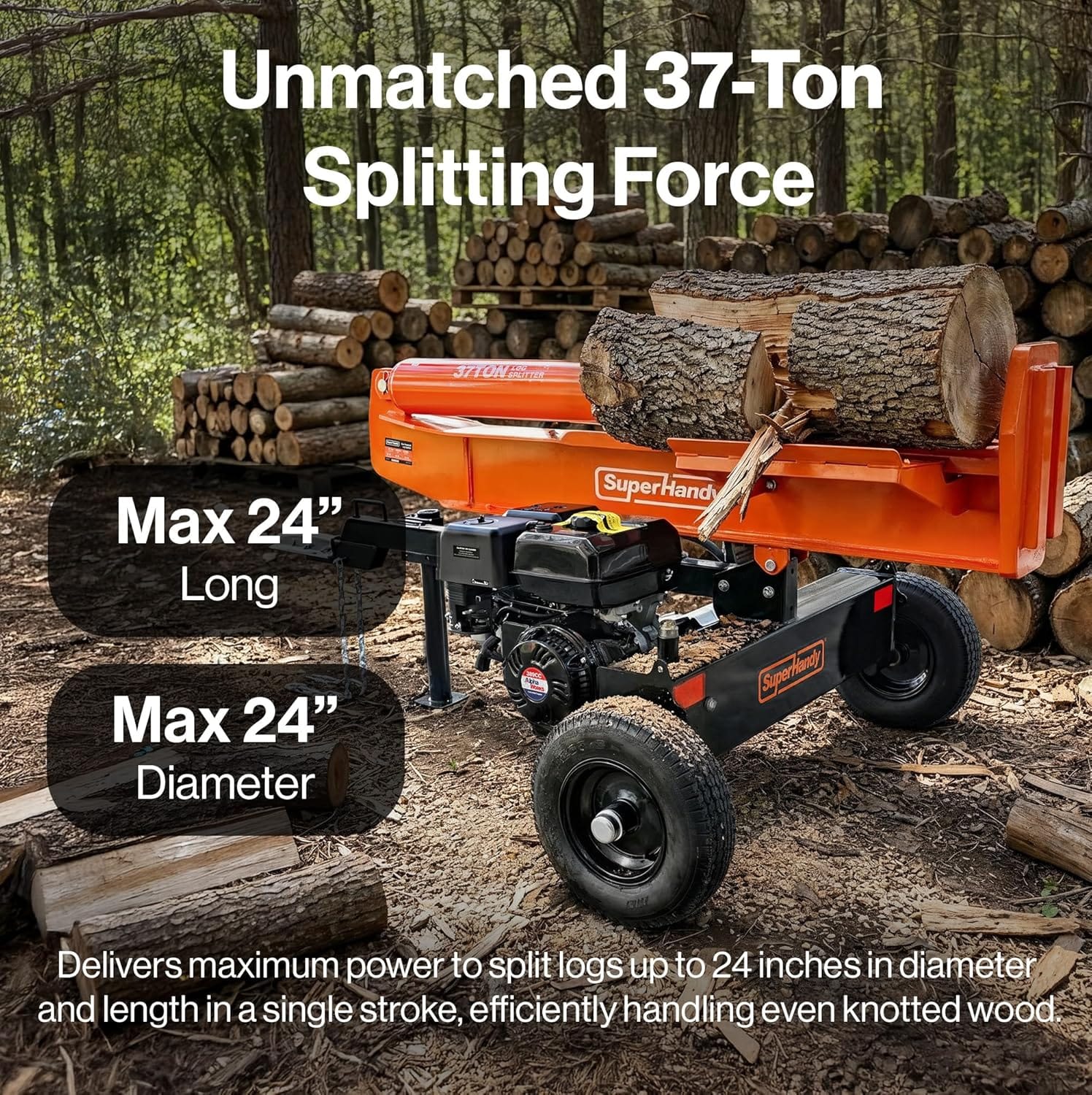
The wood you split dictates the machine you need. Consider the maximum diameter and length of your typical logs. Are you splitting softer pine or dense, knotty hardwoods like oak and hickory? Hardwoods require significantly more splitting force (tonnage). For large rounds and tough wood, a heavy-duty model like the SuperHandy 37 Ton Log Splitter provides the power to handle logs up to 24 inches long.
Manual vs. Powered Log Splitters: Which is Right for You?
While a splitting maul has its place, it’s not practical for processing cords of wood. For farm-scale needs, a powered log splitter is essential. These machines use hydraulic power to split logs safely and with minimal effort. Choosing a powered model is the first step toward transforming your wood splitting from a strenuous chore into an efficient, manageable task.
Electric Log Splitters: Pros, Cons, and Best Use Cases
Electric log splitters are a practical choice for homeowners with lighter wood-splitting needs. They are quieter, produce no fumes, and can be used in a garage or shed, making them ideal for residential areas. While they are less powerful than gas models—typically offering 4 to 10 tons of force—they are perfect for splitting smaller, seasoned logs up to 12 inches in diameter for a fireplace or wood stove. Their main limitation is the need for a nearby electrical outlet.
Gas-Powered Log Splitters: Power, Portability, and Considerations
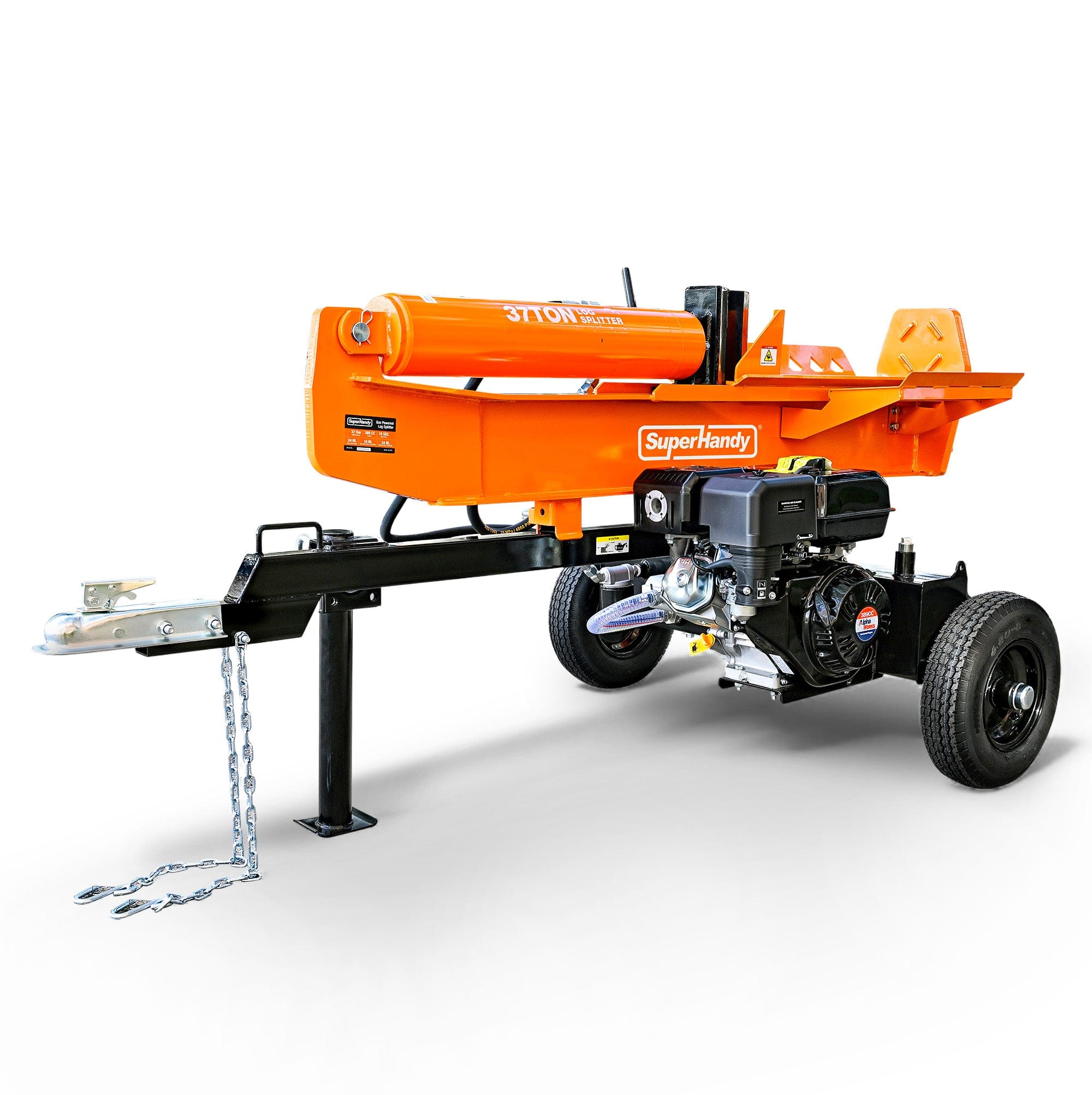
For small farm owners who need to split larger quantities of wood, a gas-powered firewood splitter is the go-to solution. These machines offer superior power and complete portability, allowing you to work anywhere on your property. They can handle large-diameter, knotted, and unseasoned hardwood with ease. Models like the SuperHandy 37 Ton Log Splitter provide the heavy-duty performance needed for seasonal firewood processing. The trade-offs are engine noise, emissions, and regular maintenance.

PTO-Driven Log Splitters: For Tractors and Heavy-Duty Needs
If you already own a tractor, a PTO (Power Take-Off) log splitter is the most powerful option available. These splitters attach to your tractor's three-point hitch and use its hydraulic system for immense splitting force. They are designed for high-volume, demanding work on large farms or for commercial firewood operations, capable of splitting the largest and toughest logs efficiently.
Key Log Splitter Specifications to Compare
When choosing a firewood splitter, focus on three core specifications. Tonnage measures the splitting force; higher tonnage is needed for larger, harder, or knotted wood. Cycle time is how long the ram takes to split a log and return, indicating working speed. Log capacity defines the maximum log diameter and length the machine can handle. The tonnage you need also depends on wood condition; as the University of Missouri Extension notes, wood splits easier when green.
Tonnage: What It Means and How Much You Actually Need
Tonnage measures the amount of force a log splitter can exert. This powerful splitting force is crucial for handling different types of wood. For seasonal needs involving softwoods like pine or seasoned hardwoods like oak, a 20-25 ton splitter is often sufficient. However, if you frequently split large, green, or knotty hardwoods, investing in a model with 30 tons or more ensures you have the power to tackle any log without bogging down.
Cycle Time: How Fast Can You Split Your Wood?
Cycle time is the total time it takes for the splitting wedge to extend, split the wood, and retract to its starting position. A shorter cycle time means higher working efficiency and less time spent processing your woodpile. For farm owners with significant amounts of firewood to prepare, a cycle time of 15 seconds or less is a key feature. This rapid, labor-saving operation allows you to get through large jobs quickly.

Log Capacity: Maximum Diameter and Length Your Splitter Can Handle
Before choosing a firewood splitter, measure the typical length and diameter of the logs you'll be splitting. Log capacity specs tell you the maximum size a machine can handle. Most splitters accommodate logs up to 24 inches long, a standard size for many wood stoves and fireplaces. Models like the SuperHandy 37 Ton Log Splitter are built for this common size, offering a versatile solution for most farm applications.
Portability and Storage: Making Room for Your Splitter
On a farm, you may need to move your splitter from the barn to a woodpile across the property. Look for features that make this easy, such as a tow-hitch for attaching to an ATV or tractor and large, durable tires. This easy movement is a practical advantage. Also, consider the splitter's footprint. Some models offer vertical operation and storage, which can save valuable space in a crowded shed or barn when the splitter is not in use.
Safety Features: Essential Considerations for Injury Prevention
A powerful firewood splitter is a huge time-saver, but its operation demands respect. Modern log splitters are designed with user protection as a priority. The most crucial safety feature is two-handed operation, which requires both of your hands to be on the controls, far away from the splitting wedge and ram during a cycle.
Look for models with an auto-return valve. This feature automatically retracts the ram after a split, which not only speeds up your workflow but also minimizes the time your hands are near the machine. Additionally, integrated log cradles or trays are essential for catching the split pieces, preventing them from falling on your feet and reducing the need to bend over.

Maintenance and Durability: Investing in Long-Term Performance
For a small farm, a log splitter is a long-term investment. Durability starts with a stable, heavy-duty steel frame that can withstand the immense pressure of splitting and resist twisting when tackling large, knotty rounds. A robust build ensures consistent performance season after season.
Routine maintenance is simple but critical for longevity. Before each use, check the hydraulic fluid level and inspect hoses for any signs of wear. For gas-powered models, regular engine care is key. Keeping the splitting wedge sharp ensures clean, efficient cuts and reduces strain on the machine's engine and hydraulic system. A well-maintained machine like the SuperHandy 37 Ton - Log Splitter - 389CC 24" Max Log Length is built for demanding work, combining a powerful engine with a durable, towable frame ideal for farm use.
Frequently Asked Questions About Log Splitters for Small Farms
What tonnage do I really need for my farm?
For a small farm with varied seasonal needs, the type of wood is your best guide. Softwoods like pine or fir split easily and may only require 15-20 tons of force. However, for dense hardwoods like oak, hickory, or maple—especially when it's green or knotty—you’ll want a log splitter with 25 tons of force or more. A higher-tonnage unit ensures you have the power to handle any log you encounter without stalling.
Can a single firewood splitter handle both green and seasoned wood?
Yes, but this is where having adequate power is crucial. Green wood is full of moisture and has stringy fibers, making it much tougher to split than dry, seasoned wood. While a lower-tonnage electric splitter might handle seasoned logs, it will struggle with green ones. For the versatility to process freshly cut trees, a robust gas-powered model is a better investment. A powerful machine like the SuperHandy 37 Ton - Log Splitter - 389CC 24" Max Log Length provides the force needed for any type of wood.

What is the advantage of a splitter that works in both horizontal and vertical positions?
This feature is a back-saver and a huge boost to efficiency. The horizontal position is ideal for lifting and splitting standard-sized logs at a comfortable working height. For those massive, heavy rounds that are too difficult to lift onto the beam, you simply pivot the splitter into its vertical position. This allows you to roll the log into place and split it on the ground, making heavy-duty work far more manageable.
What are the most important safety tips for operation?
Always operate your log splitter on stable, level ground. Wear appropriate safety gear, including durable gloves, eye protection, and steel-toed boots. Keep hands clear of the wedge and ram during operation, and never allow others to stand nearby while the machine is running. Follow the manufacturer’s instructions for two-handed operation to ensure your hands are safely on the controls and away from moving parts.
Related Products


Leave a comment
All comments are moderated before being published.
This site is protected by hCaptcha and the hCaptcha Privacy Policy and Terms of Service apply.