













Understanding Your Mobility Needs: The First Crucial Step
Choosing a mobility scooter is a significant step towards regaining freedom and independence. With so many options available when you search for "mobility scooters near me," it’s easy to feel overwhelmed. The key is to start not by looking at scooters, but by looking at yourself. The best scooter is the one that fits seamlessly into your life. This process begins with a thoughtful self-assessment of your daily routines, physical abilities, and personal goals. Properly chosen, these devices are more than just transportation; they are essential mobility aids that can dramatically improve your quality of life by helping you stay active and engaged in your community.
Assessing Your Daily Activities and Travel Distances
Before you can pick the right model, you need a clear picture of how you’ll use it. Take a moment to think about your typical week.
- Where will you be riding? Your primary environment is a major factor. Will you mainly use the scooter indoors to navigate your home or tight grocery store aisles? Or will you be exploring the great outdoors on park paths, sidewalks, and uneven terrain? Many users need a versatile scooter that can handle both.
- How far do you need to go? Consider the length of your most common trips. Are you just going to the end of the driveway to get the mail, or do you plan on full-day outings at a local festival, theme park, or downtown shopping district? The answer will help determine the battery range you need, which can vary from a few miles to over 20 miles on a single charge.

Considering Your Physical Capabilities and Comfort Requirements
Your personal comfort and physical abilities are just as important as the scooter’s technical specifications. Be realistic about your current and future needs. Do you have the upper body strength and dexterity to operate the tiller and controls? Consider your balance and ability to get on and off the scooter safely.
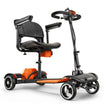
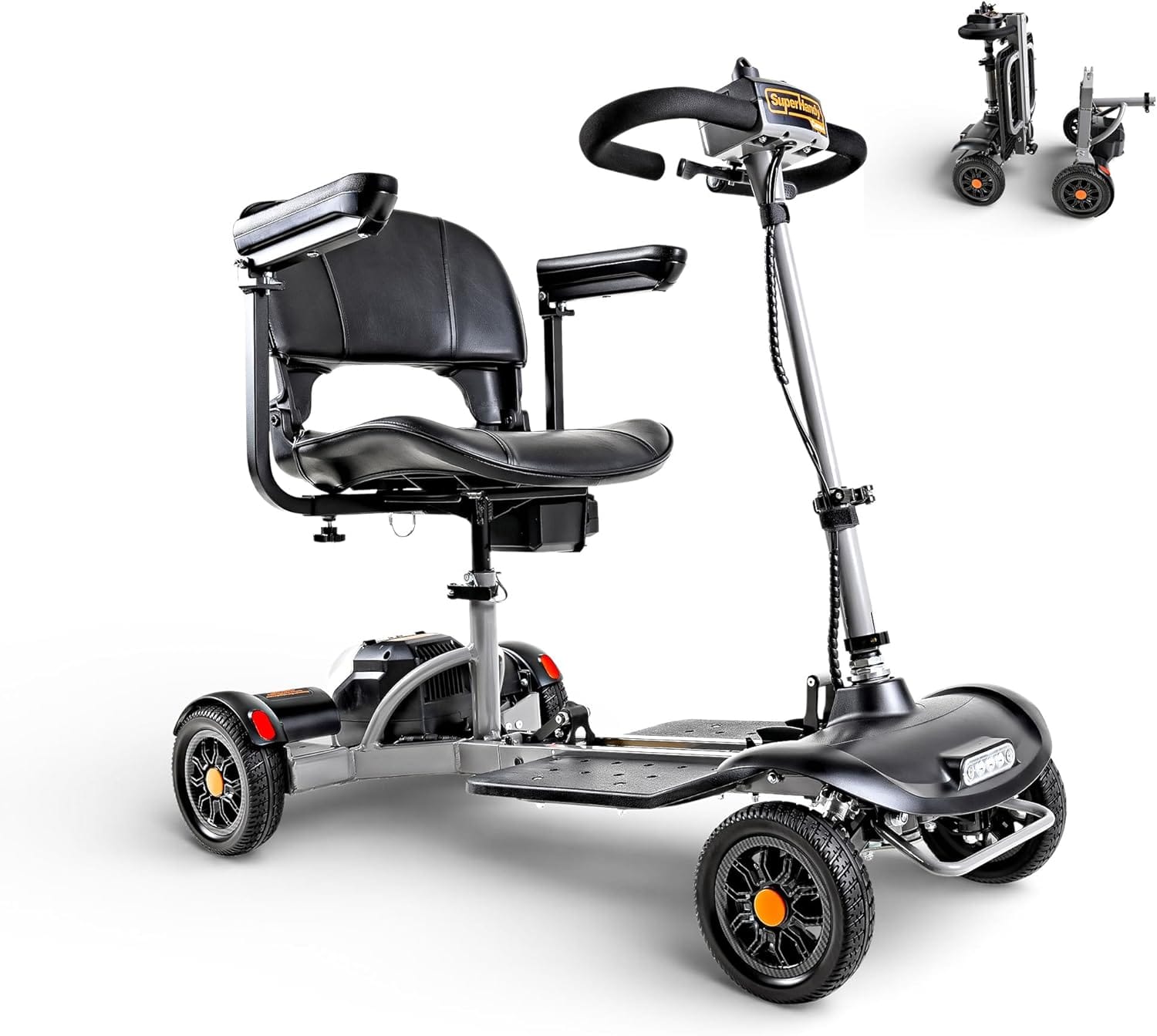
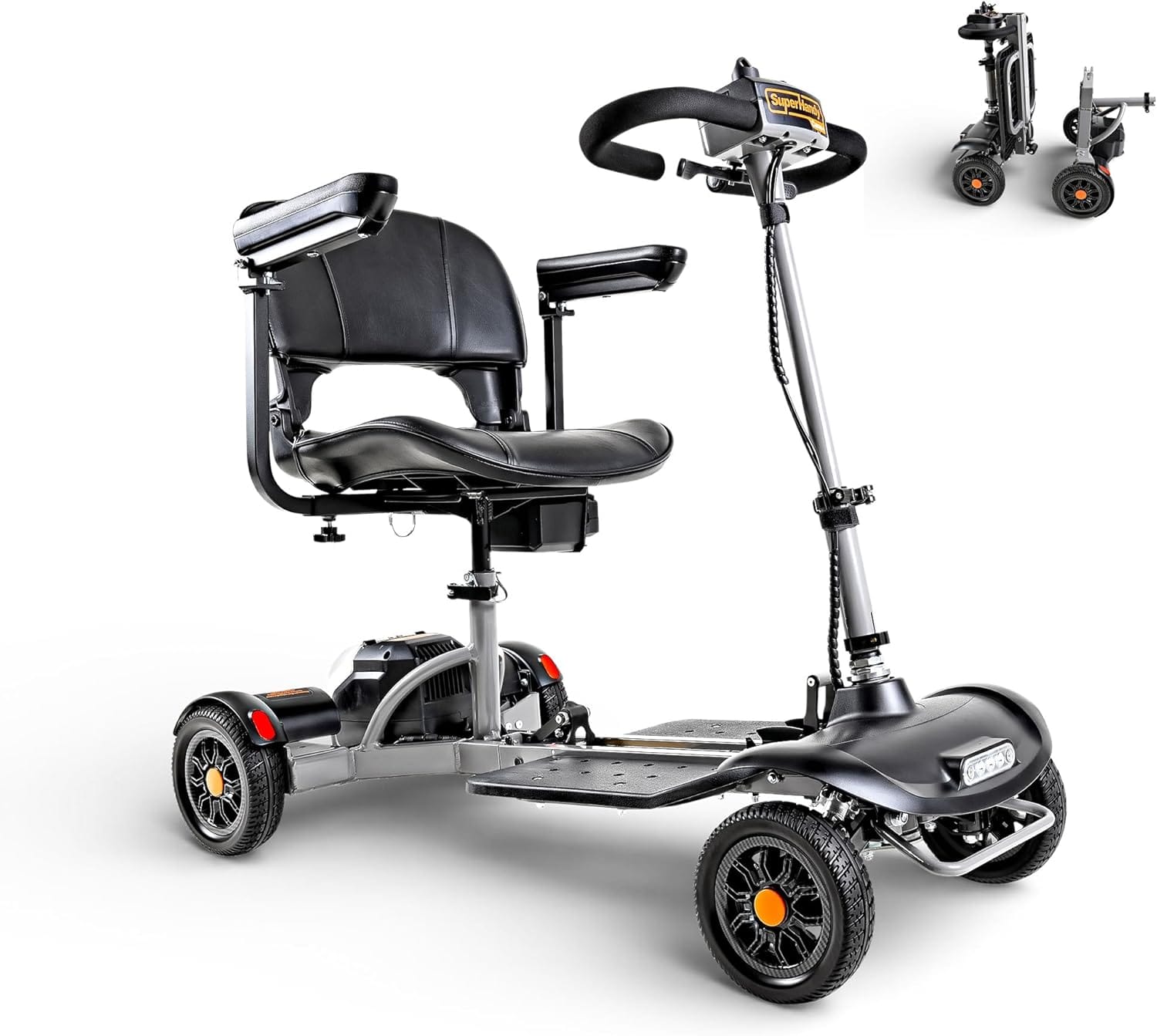
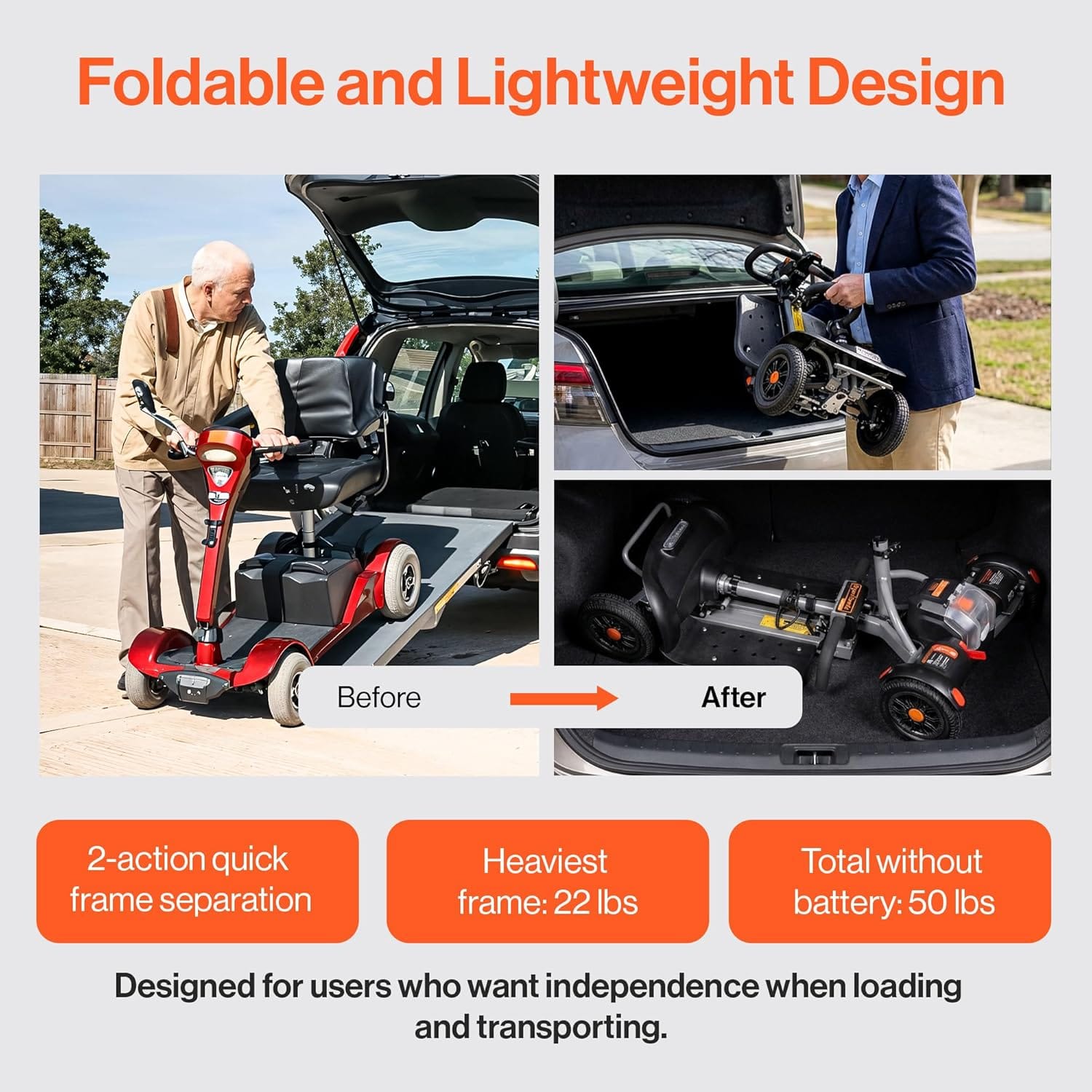
Transporting the scooter is another critical consideration. If you plan to take it with you in a car, you must be able to manage its weight and size. Some models are designed for easy transport, like the SuperHandy Passport Flex 4 Wheel Power Mobility Scooter – Quick-Disassembly Aluminum Frame, Foldable & Compact, 48V Li-Ion Battery, which can be quickly taken apart to fit in a trunk. If you or a caregiver cannot lift 20-30 pounds, a heavier, non-folding model might be difficult to manage without a vehicle lift. Finally, don’t forget comfort—especially if you’ll be using the scooter for extended periods. Pay attention to seat size, cushioning, armrest adjustability, and legroom.
Assessing Your Daily Activities and Travel Distances
Before you can pick the right model, you need a clear picture of how you’ll use it. Take a moment to think about your typical week.
- Where will you be riding? Your primary environment is a major factor. Will you mainly use the scooter indoors to navigate your home or tight grocery store aisles? Or will you be exploring the great outdoors on park paths, sidewalks, and uneven terrain? Many users need a versatile scooter that can handle both.
- How far do you need to go? Consider the length of your most common trips. Are you just going to the end of the driveway to get the mail, or do you plan on full-day outings at a local festival, theme park, or downtown shopping district? The answer will help determine the battery range you need, which can vary from a few miles to over 20 miles on a single charge.

Considering Your Physical Capabilities and Comfort Requirements
Your personal comfort and physical abilities are just as important as the scooter’s technical specifications. Be realistic about your current and future needs. Do you have the upper body strength and dexterity to operate the tiller and controls? Consider your balance and ability to get on and off the scooter safely.
Transporting the scooter is another critical consideration. If you plan to take it with you in a car, you must be able to manage its weight and size. Some models are designed for easy transport, like the SuperHandy Passport Flex 4 Wheel Power Mobility Scooter – Quick-Disassembly Aluminum Frame, Foldable & Compact, 48V Li-Ion Battery, which can be quickly taken apart to fit in a trunk. If you or a caregiver cannot lift 20-30 pounds, a heavier, non-folding model might be difficult to manage without a vehicle lift. Finally, don’t forget comfort—especially if you’ll be using the scooter for extended periods. Pay attention to seat size, cushioning, armrest adjustability, and legroom.
Exploring Different Types of Mobility Scooters: A Comprehensive Overview
Once you have a clear understanding of your needs, you can begin to explore the different categories of mobility scooters. While there are many variations, most fall into one of four main types, each designed to meet a specific set of priorities. In the following sections, we will dive deeper into these categories to help you match your personal requirements to the perfect scooter type. From nimble 3-wheelers ideal for indoor use to robust heavy-duty models built for outdoor adventure, there is a design for every lifestyle.
3-Wheel Scooters: Maneuverability and Tight Spaces
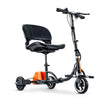
If your primary use for a mobility scooter will be indoors—navigating grocery store aisles, moving through the hallways of your home, or visiting shopping centers—a 3-wheel scooter is an excellent choice. Their defining feature is a single front wheel, which gives them a significantly tighter turning radius compared to other models. This exceptional maneuverability allows you to easily navigate sharp corners and confined areas where a larger scooter might struggle.
While they excel in agility, the three-wheel design offers slightly less stability on uneven or rough outdoor terrain. They are suitable for smooth, flat surfaces but may not be the best option if you plan to frequently travel over bumpy sidewalks, grassy parks, or unpaved paths. For users prioritizing indoor accessibility and nimble handling, the 3-wheel mobility scooter is a top contender.

4-Wheel Scooters: Stability and Outdoor Performance
When stability and outdoor capability are your main concerns, a 4-wheel mobility scooter is the gold standard. With a wider base and a wheel at each corner, these scooters provide a secure and balanced ride, making them ideal for a wide range of outdoor activities. From a leisurely trip around the neighborhood to a day at a local park, the 4-wheel design instills confidence when traveling over varied terrain like cracked pavement, gentle slopes, and grassy areas.
This added stability comes with a trade-off: a larger turning radius. While still manageable, they aren't as nimble in tight indoor spaces as their 3-wheel counterparts. However, for many users, the enhanced feeling of security is well worth it. When you begin looking for mobility scooters near me, you will find that 4-wheel models are one of the most popular and versatile options available, balancing everyday comfort with reliable performance.

Heavy-Duty Scooters: Power and Long-Range Capabilities
For users who require maximum performance, durability, and a higher weight capacity, heavy-duty scooters are the answer. Also known as bariatric scooters, these robust machines are built with reinforced frames, more powerful motors, and larger batteries. This combination allows them to support higher weight capacities—often up to 500 pounds or more—and travel longer distances on a single charge.
Heavy-duty scooters are equipped with rugged tires and advanced suspension systems, making them capable of handling more challenging terrain with ease. They are the ideal choice for extensive outdoor use, especially in hilly areas or on unpaved surfaces. Due to their size and weight, they are not easily portable and are best suited for users who do not need to transport their scooter in a vehicle frequently.

Portable and Folding Scooters: Convenience for Travel
If an active, on-the-go lifestyle is important to you, a portable or folding mobility scooter offers unparalleled convenience. These models are specifically designed to be easily transported in the trunk of a car, making them suitable for day trips, vacations, and running errands. Portability is typically achieved in one of two ways: through a folding frame that collapses into a compact unit or a disassembly design that breaks down into several lighter, more manageable pieces. The SuperHandy Passport Flex 4 Wheel Power Mobility Scooter – Quick-Disassembly Aluminum Frame, Foldable & Compact, 48V Li-Ion Battery is a great example of a versatile model that combines a foldable frame with quick-disassembly features.
These travel-friendly scooters are also a great option for air travel, though it’s crucial to check with your airline beforehand. Battery type and size are key considerations, and you should always be familiar with the current FAA PackSafe wheelchair and mobility-device battery rules to ensure a smooth journey. While they may not have the high-end power of heavy-duty models, their lightweight design and ease of transport provide a liberating sense of freedom.
Key Features to Look For When Buying a Mobility Scooter
Once you have a general idea of the type of mobility scooter that fits your lifestyle—be it a portable travel model or a heavy-duty outdoor machine—it’s time to zoom in on the specific features that will define your daily experience. The right combination of battery power, comfort, and control can make all the difference in your freedom and independence.
Understanding Battery Life and Charging Options
The battery is the heart of your mobility scooter, determining how far you can go on a single charge. This is often referred to as the scooter's "range," typically measured in miles. Consider your daily travel needs. Will you be making short trips around the neighborhood or do you need a scooter that can last for a full day of activities at a theme park or shopping center?
Scooters primarily use two types of batteries:
- Sealed Lead-Acid (SLA): These are the traditional, more affordable option. They are heavier and may require longer charging times, but they are reliable and widely available.
- Lithium-ion: These are lighter, charge faster, and have a longer overall lifespan. Their lighter weight also makes them ideal for portable and folding scooters.
If you plan to travel by air, the type of battery is crucial. Airlines have strict regulations for transporting powered mobility devices. Most scooters use non-spillable batteries that are permitted for air travel, but you must check with your airline beforehand. According to the FAA PackSafe wheelchair and mobility-device battery rules, while non-spillable batteries can typically remain in the device, there are specific rules for carrying spare lithium-ion batteries.

Evaluating Weight Capacity and Seat Comfort
For your safety and the longevity of the scooter, you must choose a model with an appropriate weight capacity. This figure represents the maximum weight the scooter can safely support. When calculating this, remember to include your own body weight plus the weight of any personal items you typically carry, such as shopping bags, an oxygen tank, or a heavy purse. Standard scooters usually support between 250 and 350 pounds, while heavy-duty models can accommodate up to 500 pounds or more.
Just as important as capacity is comfort, especially if you’ll be using the scooter for several hours a day. Look for a well-padded, supportive seat. Key seating features to evaluate include:
- Adjustability: Check for adjustable seat height, backrest angle, and armrest width. A customizable fit prevents fatigue and promotes better posture.
- Size: Ensure the seat width and depth are adequate for your body size.
Assessing Maneuverability, Turning Radius, and Controls
A scooter’s maneuverability is determined by its turning radius—the smallest amount of space it needs to make a U-turn. A smaller turning radius is essential for indoor use, allowing you to easily navigate narrow hallways, store aisles, and tight corners in your home. Three-wheel scooters generally offer a tighter turning radius than their four-wheel counterparts.
The control system, located on the tiller (the steering column), is your dashboard. Most scooters use a simple lever system: one lever to go forward and another for reverse. Consider a delta tiller, which has a wraparound handle that allows you to operate the scooter with either hand or by resting your wrists on the handle. This is an excellent feature for users with arthritis or limited hand strength. When searching for "mobility scooters near me," it's a great idea to visit a showroom to test the controls yourself. For example, the SuperHandy Passport Flex 4 Wheel Power Mobility Scooter – Quick-Disassembly Aluminum Frame, Foldable & Compact, 48V Li-Ion Battery combines the stability of four wheels with a compact design and intuitive controls, making it a versatile option. Also, check for an easy-to-read battery gauge, a speed control dial, and an accessible horn.
Where to Buy and What to Expect: The Purchasing Process
Once you’ve narrowed down the type of mobility scooter that fits your lifestyle, the next step is deciding where to make your purchase. You generally have two main options: online retailers and local, brick-and-mortar durable medical equipment (DME) suppliers. Online stores, like SuperHandy, often provide a wider selection, competitive pricing, and the convenience of direct-to-your-door shipping. This route is excellent if you have a clear idea of what you need and are comfortable assembling the scooter, which is often minimal.
The purchasing process itself typically involves a few key stages. After your initial research, you may need to consult with a doctor or physical therapist, especially if you plan to seek insurance coverage. Some insurance plans, including Medicare Part B (Medical Insurance), may cover a portion of the cost for a mobility scooter if it's deemed medically necessary by your doctor. After confirming your choice and handling payment, your scooter will be delivered. Expect it to arrive in a large box with instructions for final assembly, which usually involves attaching the seat, basket, and connecting the battery.

Frequently Asked Questions About Choosing a Mobility Scooter
Navigating the world of mobility scooters can bring up many questions. Here, we answer one of the most common concerns to help you make a confident and informed decision.
How do I determine the right size mobility scooter for my home and vehicle?
Choosing the right size mobility scooter is critical for ensuring it integrates seamlessly into your daily life. An improperly sized scooter can become a source of frustration, limiting your access rather than expanding it. To avoid this, take a practical, measurement-based approach for both your home and your vehicle.
Sizing for Your Home: Start by getting out a tape measure. Measure the width of all your doorways, especially those leading to essential rooms like the bedroom and bathroom, which are often narrower. Next, measure the width of your main hallways. Compare these numbers to the "overall width" listed in a scooter’s specifications. Also, consider the "turning radius." This measurement tells you the smallest circular turn the scooter can make. A smaller turning radius is better for navigating tight corners and smaller rooms. 3-wheel scooters typically offer a superior turning radius, while 4-wheel models provide more stability.
Sizing for Your Vehicle: If you plan to transport your scooter, vehicle compatibility is just as important. Measure the opening and interior space of your car’s trunk or your SUV’s/van's cargo area (width, depth, and height). Compare these dimensions to the scooter's length, width, and height when folded or disassembled. Pay close attention to the weight of the scooter and its individual parts. If you'll be lifting it yourself, ensure the weight is manageable. This is where portable models excel. For example, a travel-friendly option like the SuperHandy Passport Flex 4 Wheel Power Mobility Scooter – Quick-Disassembly Aluminum Frame, Foldable & Compact, 48V Li-Ion Battery is specifically designed to be lightweight and easy to break down, making it a practical choice for frequent travelers.
How do I determine the right size mobility scooter for my home and vehicle?
Choosing the right size mobility scooter is critical for ensuring it integrates seamlessly into your daily life. An improperly sized scooter can become a source of frustration, limiting your access rather than expanding it. To avoid this, take a practical, measurement-based approach for both your home and your vehicle.
Sizing for Your Home: Start by getting out a tape measure. Measure the width of all your doorways, especially those leading to essential rooms like the bedroom and bathroom, which are often narrower. Next, measure the width of your main hallways. Compare these numbers to the "overall width" listed in a scooter’s specifications. Also, consider the "turning radius." This measurement tells you the smallest circular turn the scooter can make. A smaller turning radius is better for navigating tight corners and smaller rooms. 3-wheel scooters typically offer a superior turning radius, while 4-wheel models provide more stability.
Sizing for Your Vehicle: If you plan to transport your scooter, vehicle compatibility is just as important. Measure the opening and interior space of your car’s trunk or your SUV’s/van's cargo area (width, depth, and height). Compare these dimensions to the scooter's length, width, and height when folded or disassembled. Pay close attention to the weight of the scooter and its individual parts. If you'll be lifting it yourself, ensure the weight is manageable. This is where portable models excel. For example, a travel-friendly option like the SuperHandy Passport Flex 4 Wheel Power Mobility Scooter – Quick-Disassembly Aluminum Frame, Foldable & Compact, 48V Li-Ion Battery is specifically designed to be lightweight and easy to break down, making it a practical choice for frequent travelers.
Related Products


Leave a comment
All comments are moderated before being published.
This site is protected by hCaptcha and the hCaptcha Privacy Policy and Terms of Service apply.