










When to Invest in an Electric Powered Trailer Dolly: Signs You Need One
Are You Struggling to Maneuver Your Trailer?
It’s a familiar scene for many trailer owners: the frustrating back-and-forth dance with your tow vehicle, trying to perfectly align your camper, boat, or utility trailer into a tight spot. You inch forward, turn the wheel, reverse, and get out to check your progress, only to realize you’re still a few feet off. If this struggle to park or position your trailer sounds all too familiar, it’s the clearest sign that your current method isn’t working. This constant hassle is more than just an annoyance; it’s a time-waster and a source of stress that can be eliminated.
The Physical Strain of Manual Trailer Handling
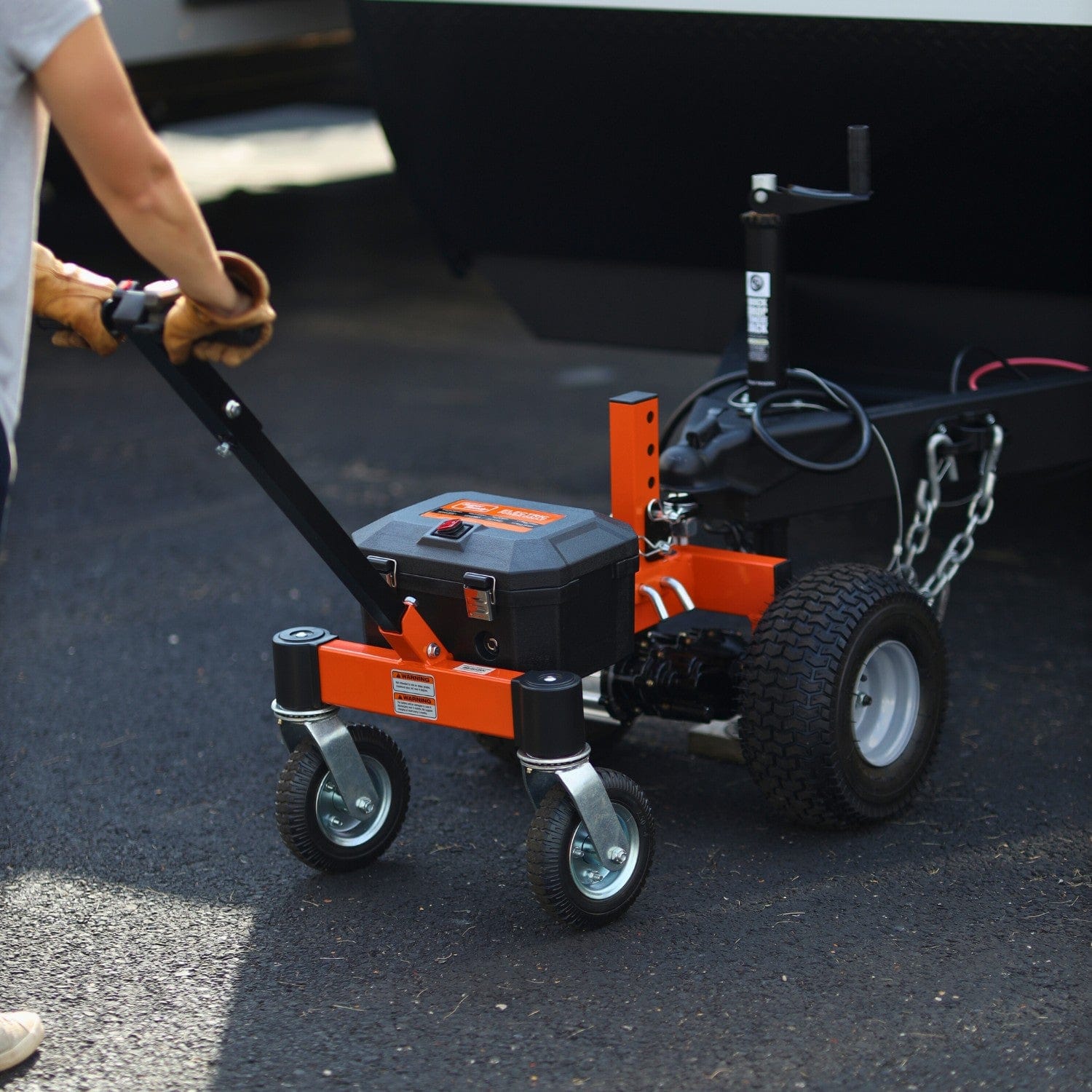
Even if you can unhitch your trailer, moving it by hand is another story. Pushing and pulling hundreds or thousands of pounds puts immense strain on your back, shoulders, and knees. This exertion can lead to sore muscles or, worse, serious injury. While a basic manual trailer dolly can help, it still relies on your physical strength to get the job done. An electric powered trailer dolly functions as a powerful assistive device for the task, much like personal mobility aids help individuals manage daily physical challenges. It takes the strain off your body, letting the motor do the heavy work.

When Your Trailer's Weight Becomes a Major Hurdle
There's a simple threshold where manual effort is no longer an option. A small jet ski trailer might be manageable, but a 5,000-pound travel trailer is an immovable object without mechanical assistance. As your trailer's gross weight increases, the force required to move it grows exponentially. This is where the distinction between a manual and an electric powered trailer dolly becomes critical. If you are physically unable to budge your trailer by hand, or doing so feels unsafe, its weight has become a major hurdle that only a motorized solution can overcome.
Navigating Tight Spaces: The Trailer Dolly Advantage
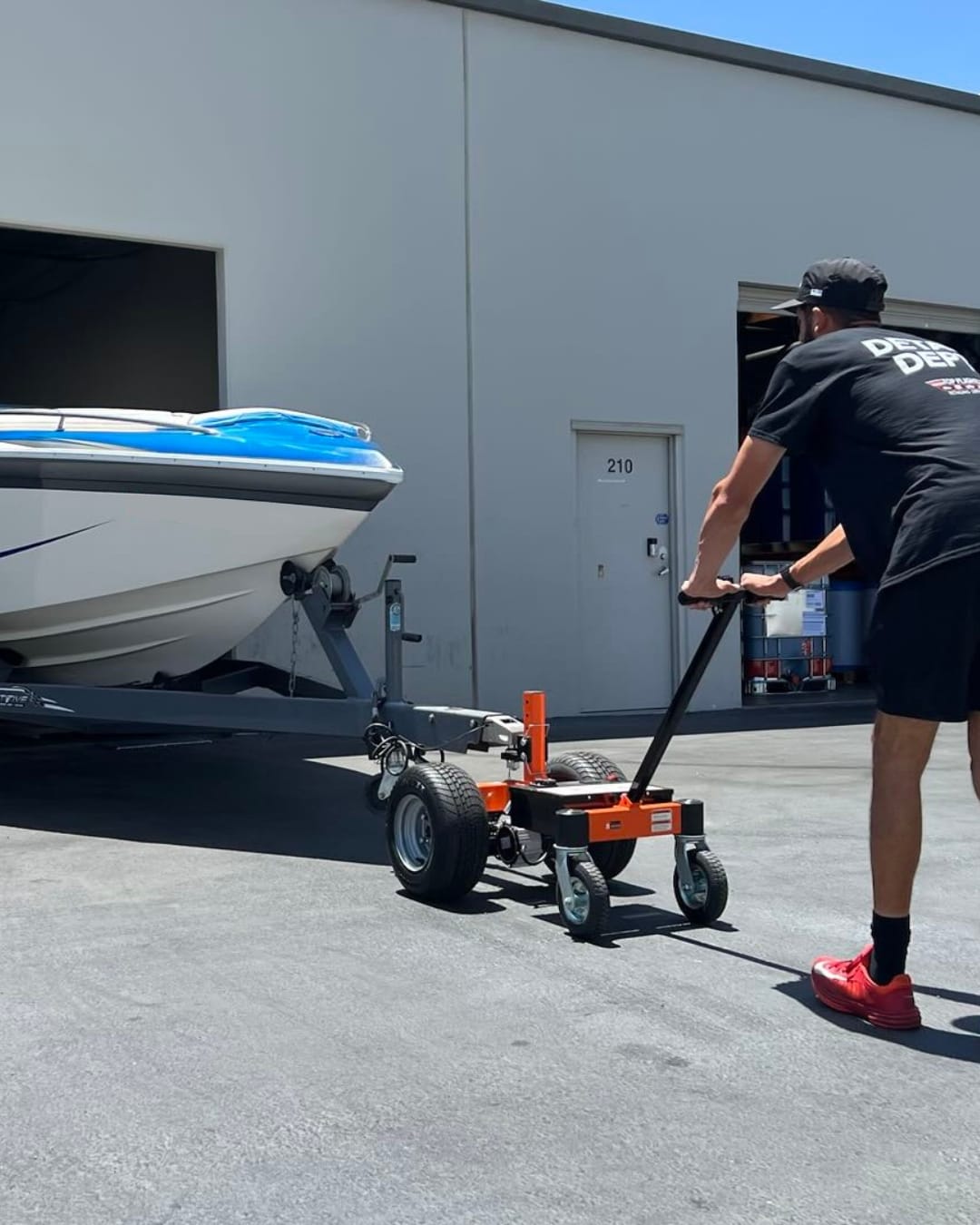
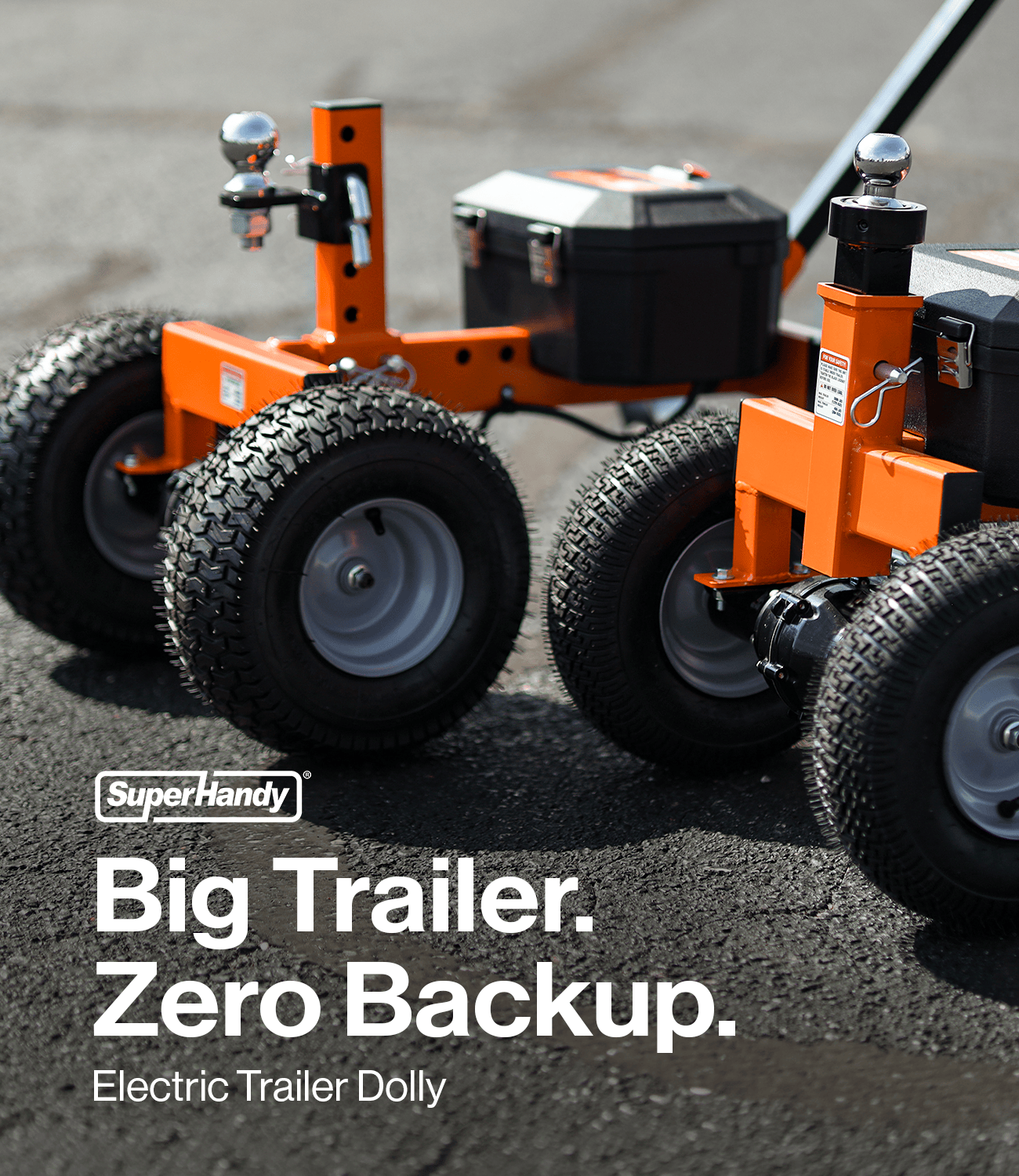
Modern homes often have narrow side yards, and storage facilities pack units closely together. Trying to reverse a trailer into these confined areas with a truck or SUV is a recipe for scraped paint, dented fenders, and damaged property. A tow vehicle’s wide turning radius and blind spots make precision parking nearly impossible. A trailer dolly offers a significant advantage by detaching the maneuverability of the trailer from the bulk of the tow vehicle. It allows you to make sharp, zero-degree turns and place your trailer with millimeter-perfect accuracy, effortlessly navigating spots your truck could never reach.
Understanding Trailer Dolly Power Options: Electric vs. Manual
When choosing a trailer dolly, the primary decision is between manual and electric power. A manual dolly is the simplest option, operating entirely on your physical strength. You push, pull, and steer it by hand. This can be a cost-effective solution for very small, lightweight trailers (like jet ski or small utility trailers) on perfectly flat, paved surfaces.
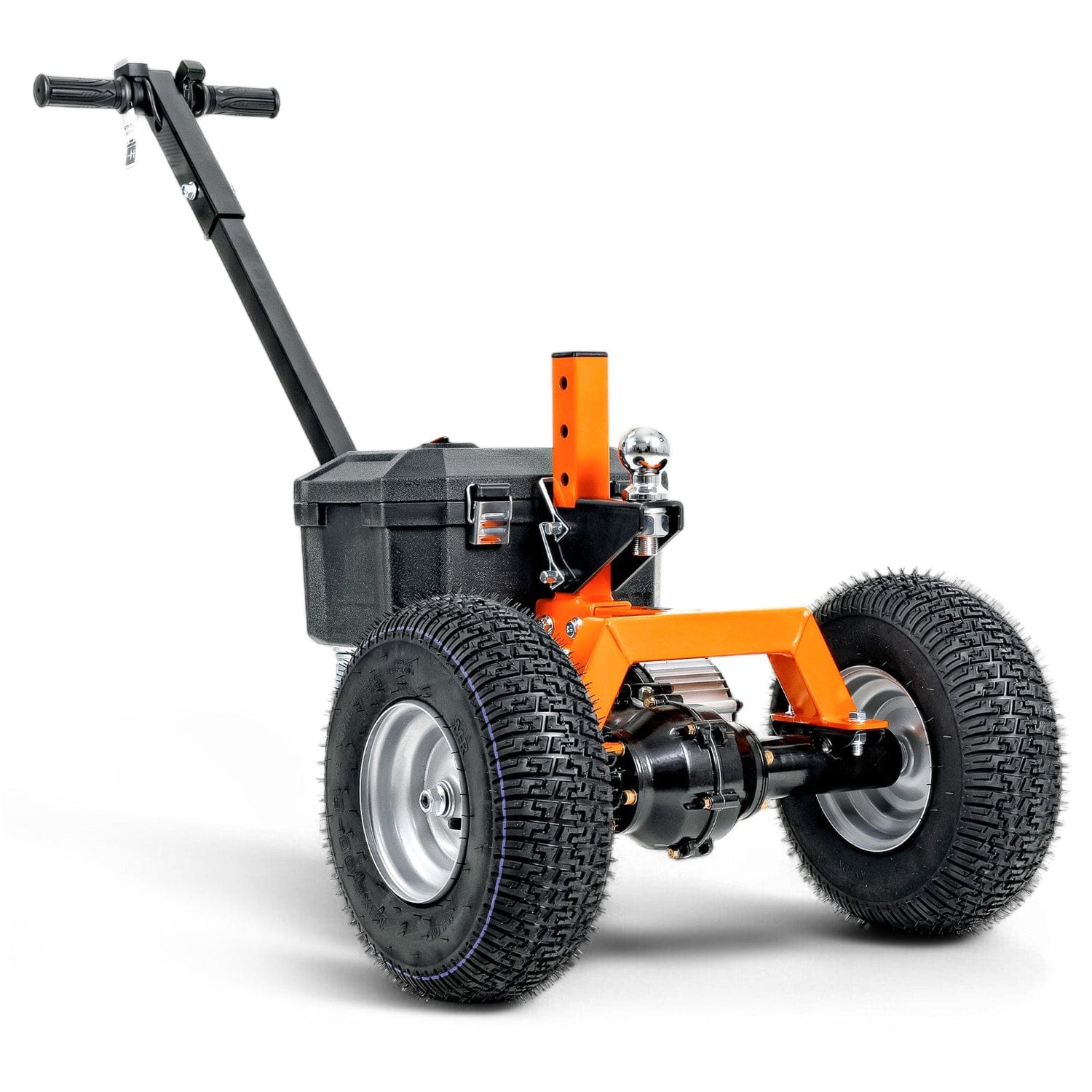
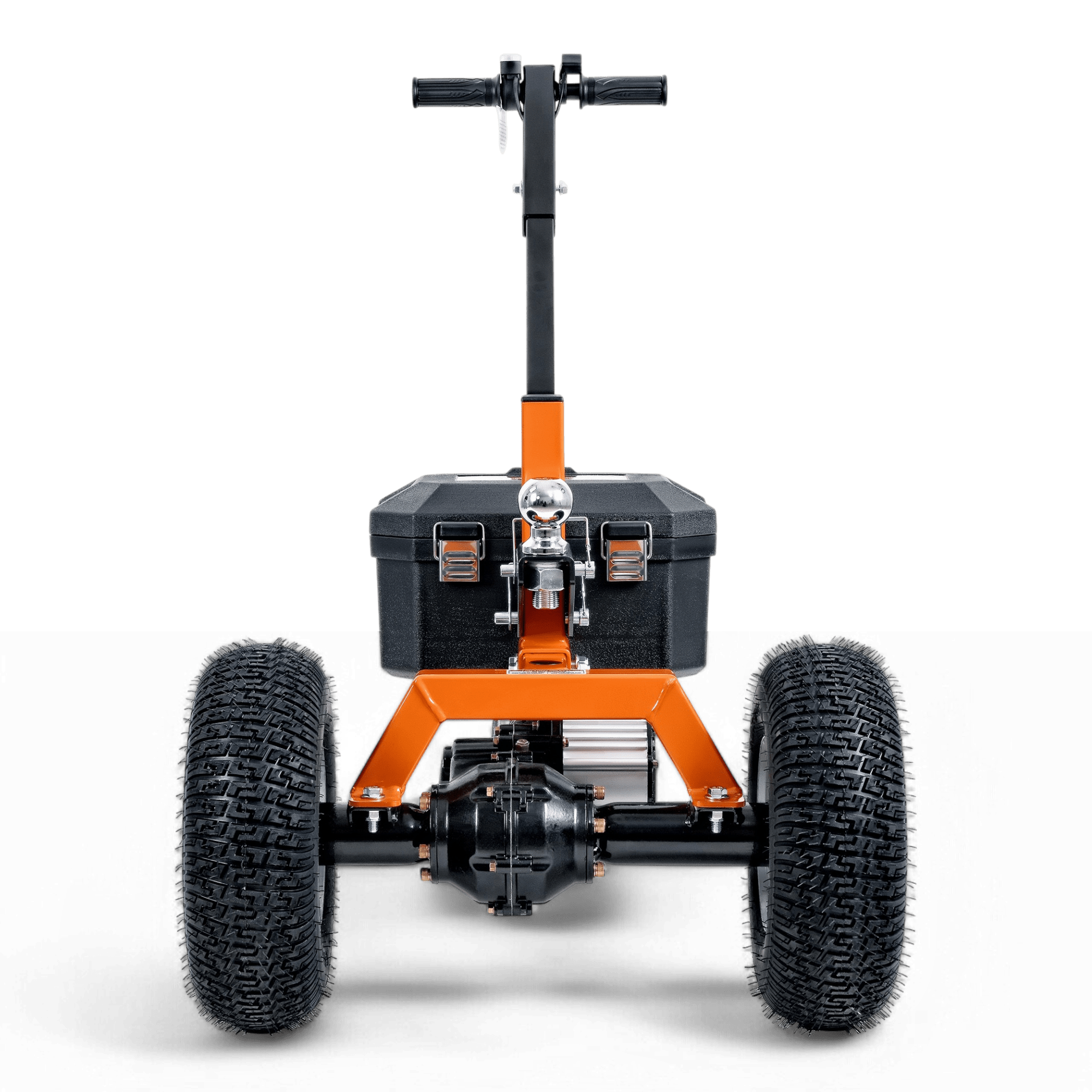
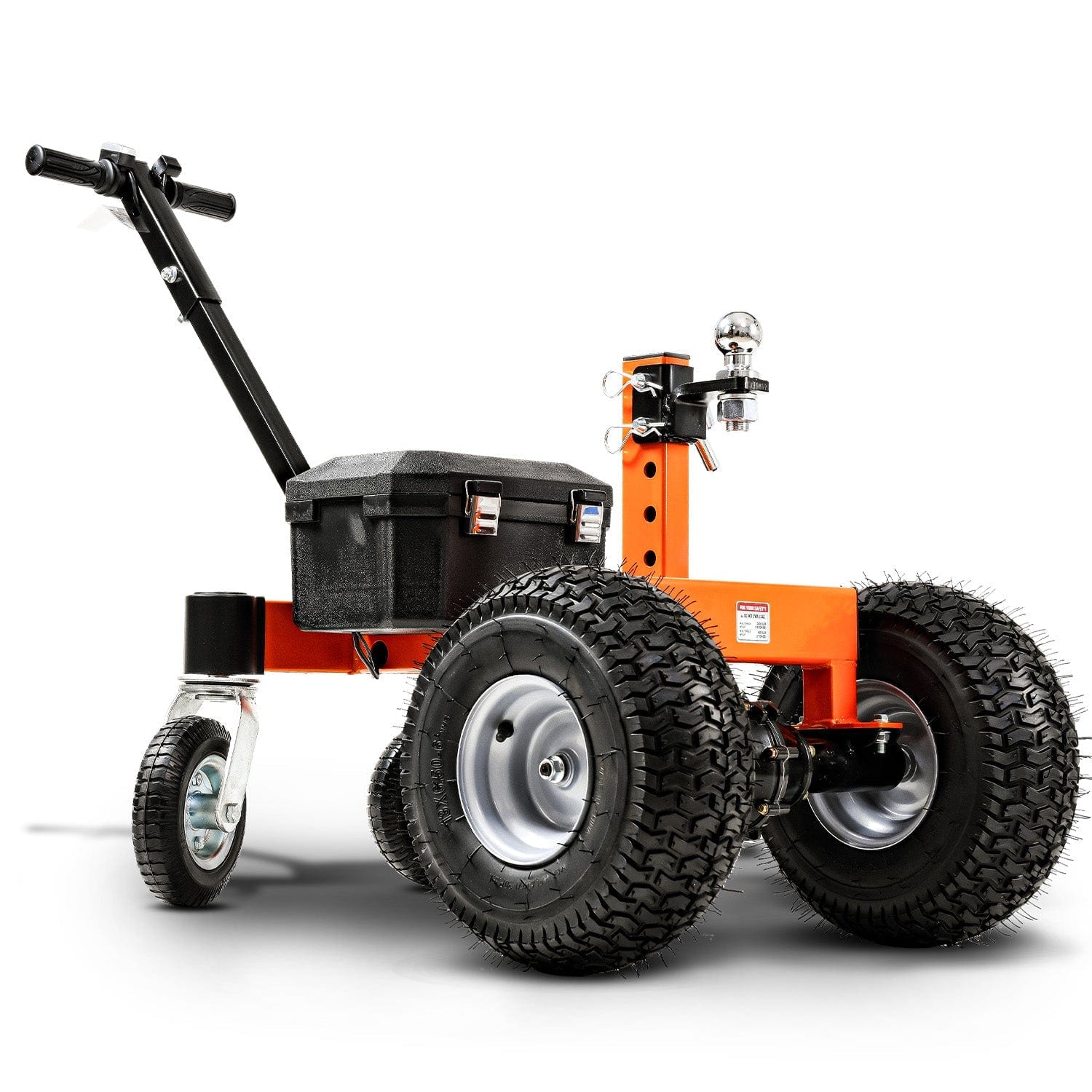
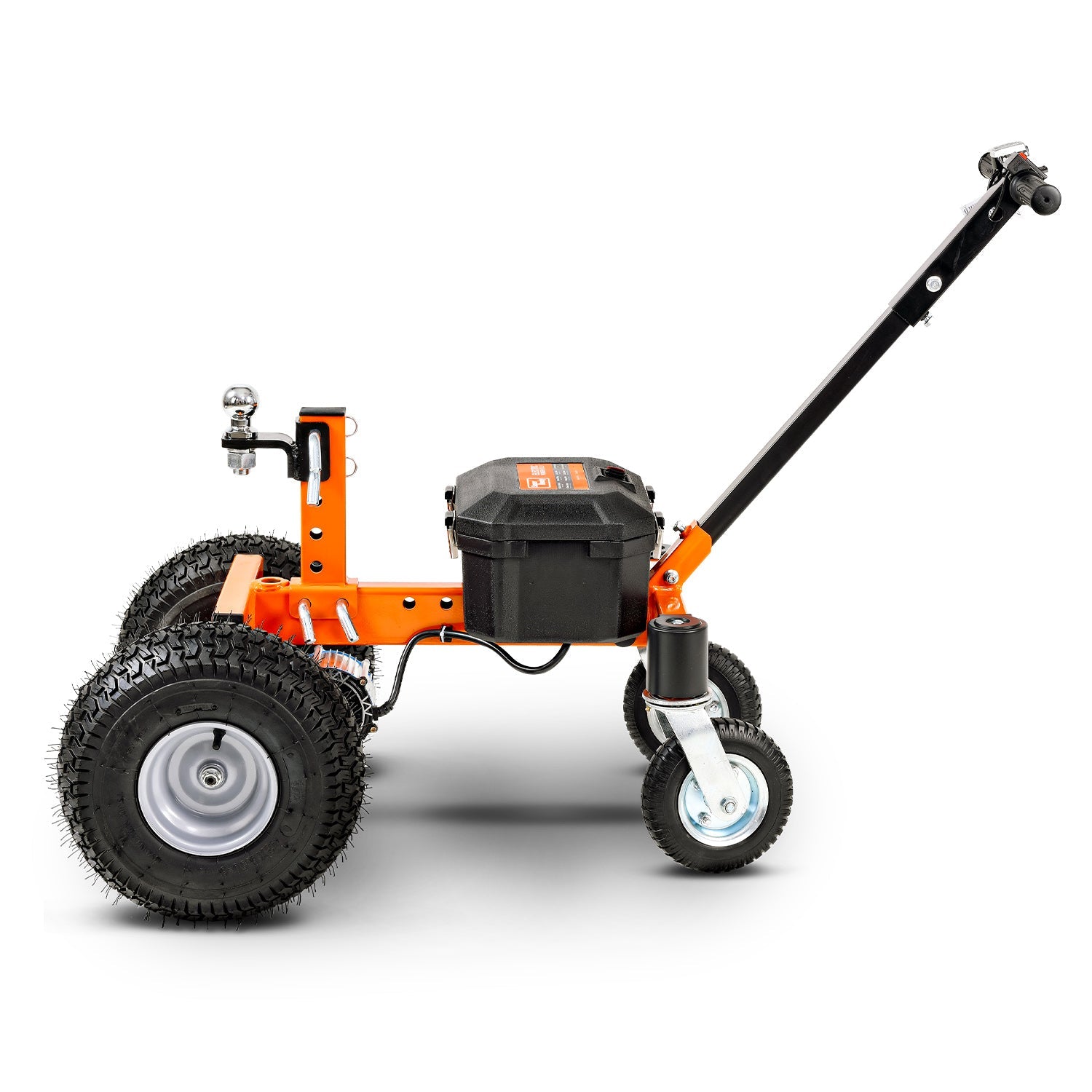
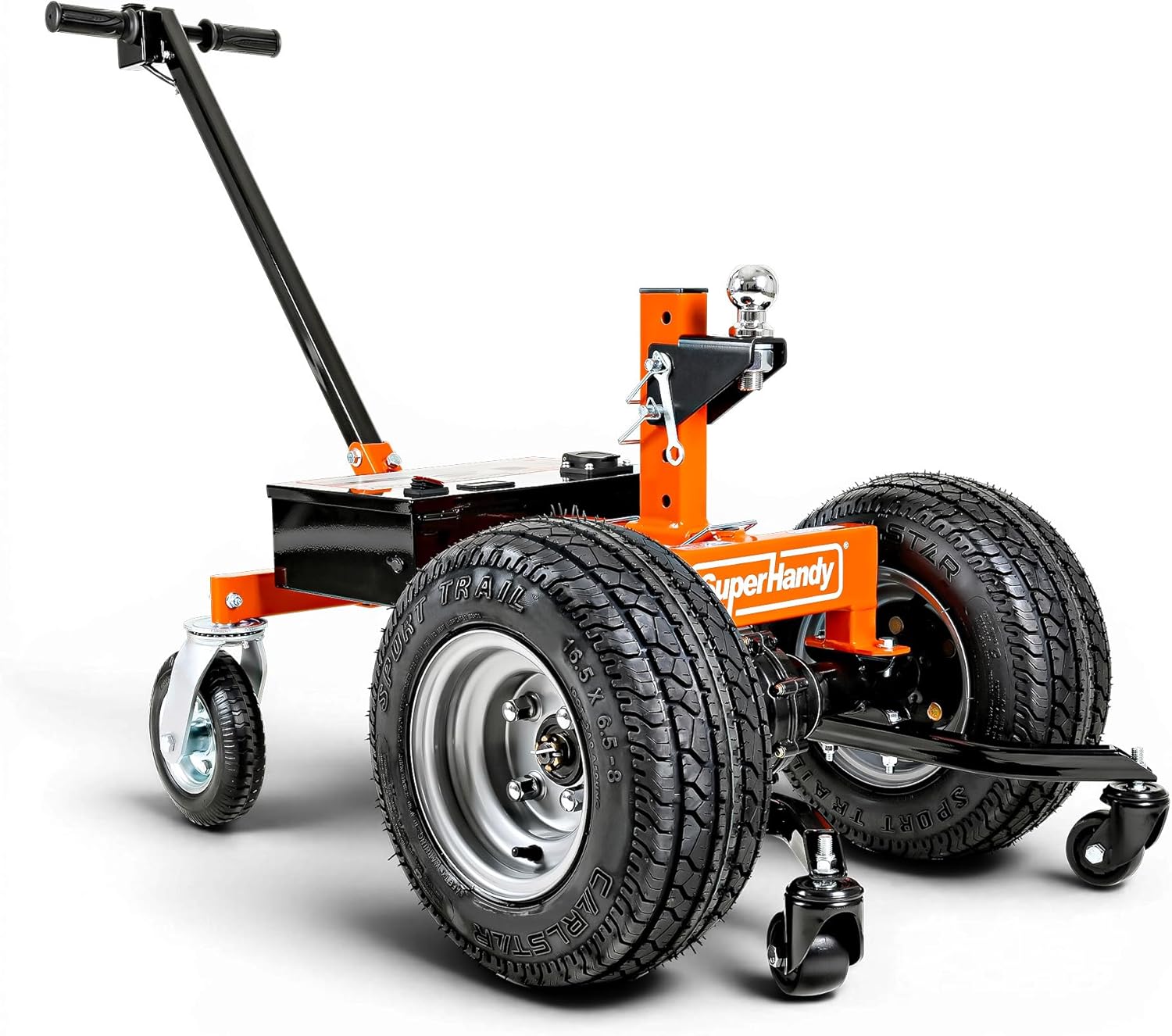
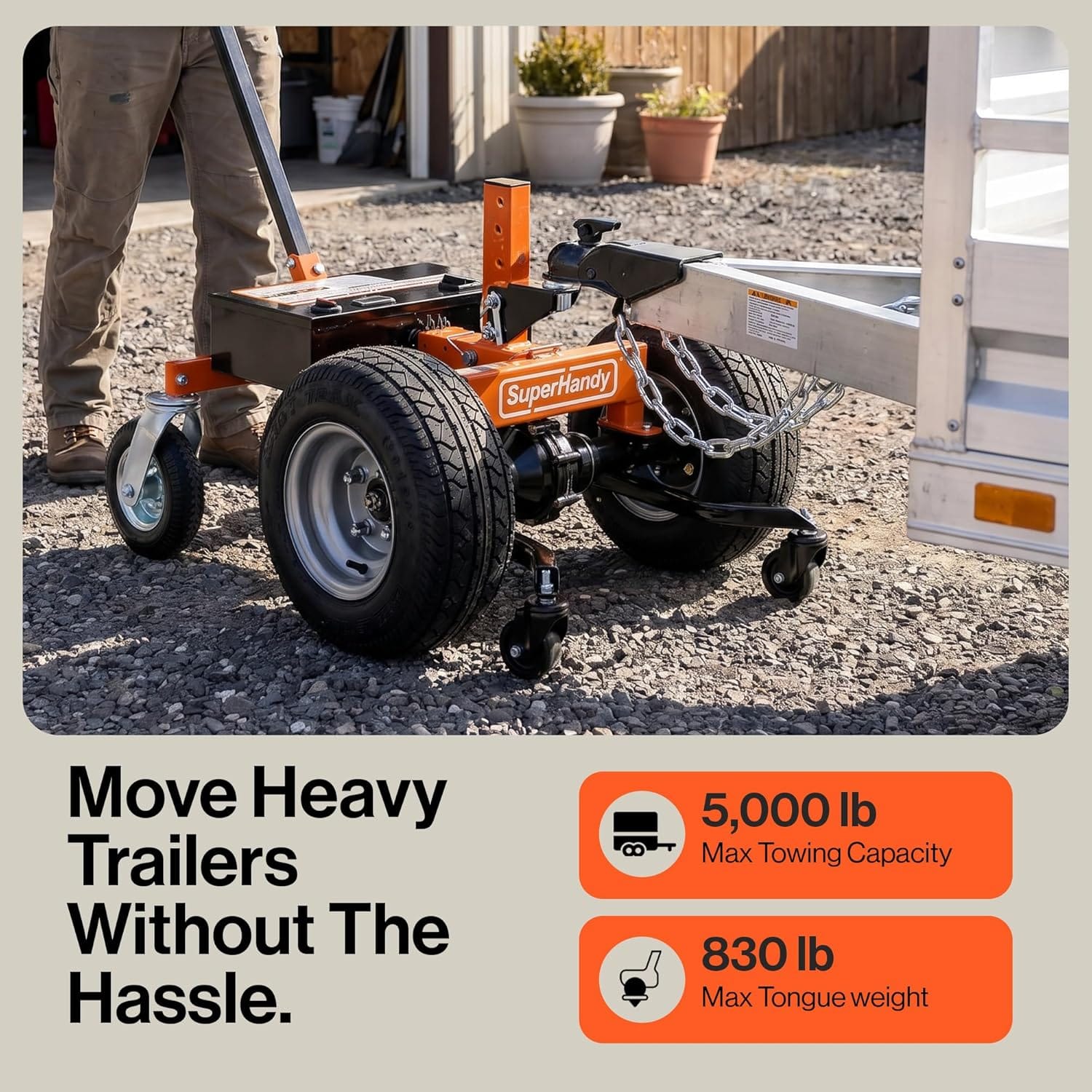
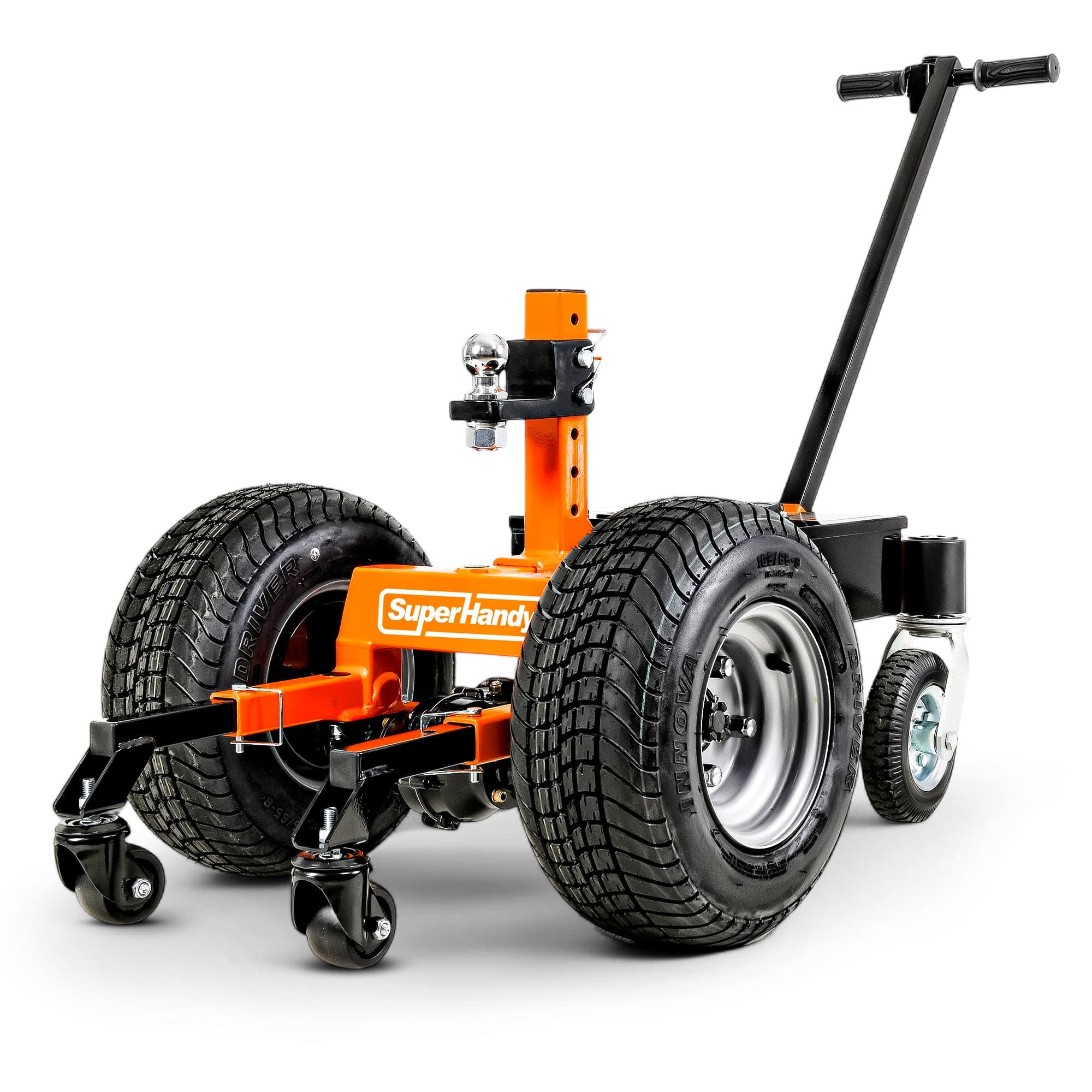
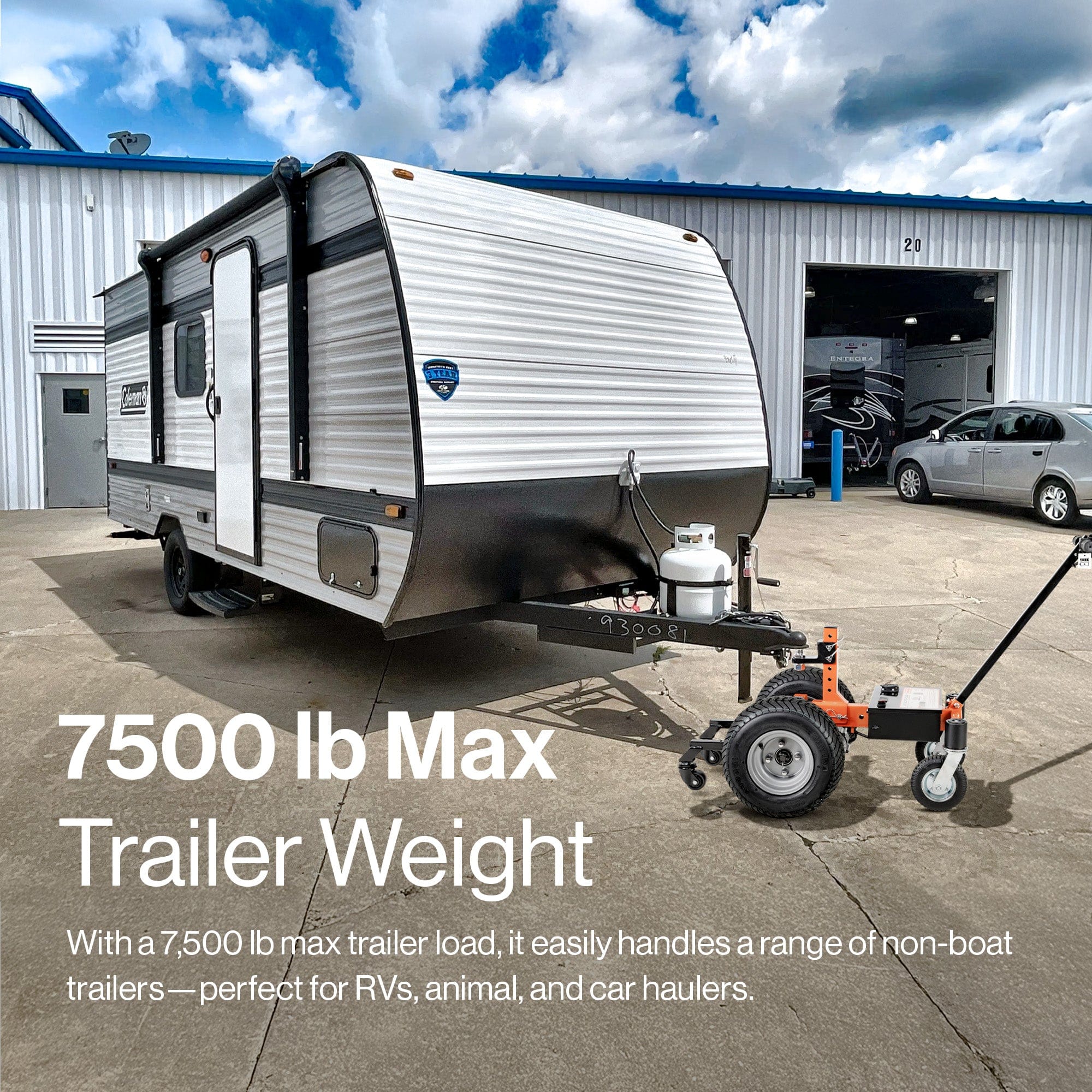
An electric powered trailer dolly, on the other hand, uses a battery-powered motor to provide forward and reverse momentum. You simply guide it with a handlebar-mounted throttle. This makes moving significantly heavier trailers—such as campers, boats, and large equipment haulers—nearly effortless. The powered assistance is a game-changer for maneuvering on slight inclines, grass, or gravel where a manual dolly would be impossible to use.
Recognizing the Limitations of Your Current Towing Setup
Are you constantly asking a family member or neighbor to act as a spotter? Do you dread hitching up because it takes multiple attempts to align the ball and coupler? These are clear signs your current setup isn't working. Relying solely on your tow vehicle has major limitations, especially in confined areas. A large truck can’t make the tight turns needed to pivot a trailer into a narrow garage, a specific spot in a storage facility, or a tight campsite. This often leads to a frustrating cycle of pulling forward and backing up, increasing the risk of jackknifing or colliding with obstacles.
The Cost-Benefit Analysis: Is an Electric Dolly Worth It?
While an electric trailer dolly has a higher upfront cost than a manual one, its long-term value is significant. The primary benefit is the preservation of your physical health by eliminating the immense strain of pushing and pulling hundreds or thousands of pounds. Much like other mobility aids are designed to enhance safety and independence, an electric dolly prevents back, shoulder, and knee injuries associated with manually wrestling a heavy trailer. Consider the cost of a single injury or property damage incident, and the investment in a powered dolly quickly makes financial sense. It grants you the independence to move your trailer anytime, without needing a helper.
Assessing Your Trailer Size and Weight Capacity Needs
Before you purchase any trailer dolly, you must know your trailer's specific weight ratings. The two most critical numbers are the Gross Vehicle Weight Rating (GVWR)—the maximum total weight of the trailer when fully loaded—and the tongue weight. A dolly’s specifications must list a maximum capacity that safely exceeds both of these figures. Using an underpowered dolly is a major safety hazard that can lead to equipment failure and loss of control. Always check the compliance sticker on your trailer's frame or consult its manual to confirm its weight before you start shopping for a solution.
Evaluating Your Frequently Used Parking and Storage Locations
Where you park your trailer is a major factor. Are you trying to wedge it into a tight spot in your backyard, a narrow side yard, or a crowded storage facility? Manual pushing and pulling on anything other than a perfectly flat, paved surface is a recipe for frustration. An electric powered trailer dolly excels on varied terrains like gravel, grass, and slight inclines where manual dollies lose traction and become nearly impossible to use. If your storage spot requires navigating sharp turns or fitting into a space with only inches to spare, the precise, motorized control of an electric dolly is a game-changer.

Considering Accessibility and Mobility Concerns
For many, the decision to get an electric dolly is about more than just convenience—it's about accessibility. Pushing a multi-thousand-pound trailer by hand requires significant physical strength and puts immense strain on your back, shoulders, and joints. If you have mobility limitations, a chronic injury, or simply want to avoid the risk of overexertion, manual trailer handling may not be a safe or viable option. An electric dolly acts as a powerful assistant, enabling you to move your trailer independently without physical struggle. It functions as one of many helpful mobility aids that can preserve your body and allow you to continue enjoying your hobbies without assistance.
The Safety Benefits of Using an Electric Trailer Dolly
Manually moving a trailer is inherently risky. A slight, unseen slope can cause the trailer to get away from you, leading to property damage or serious injury. The physical effort can easily lead to muscle strains or back injuries. An electric trailer dolly drastically improves safety by giving you complete control over the trailer's movement. With variable speed controls and automatic braking systems, the dolly ensures the trailer moves only when you want it to and stops securely the moment you release the controls. This eliminates the danger of a runaway trailer and reduces your risk of personal injury to virtually zero.
How an Electric Dolly Simplifies Loading and Unloading
Hitching a trailer is often the most frustrating part of the process. It involves painstakingly aligning the coupler directly over the tow vehicle's ball hitch, which can take multiple attempts, a patient spotter, and a lot of shouting. An electric dolly transforms this into a simple, one-person job. You can stand beside the hitch and make micro-adjustments with your thumb, raising, lowering, and steering the trailer tongue with pinpoint accuracy. This eliminates the guesswork and makes for a perfect, stress-free connection every single time.
Frequently Asked Questions About Electric Trailer Dollies
Even after seeing the benefits, you might still have a few questions about how an electric powered trailer dolly works in the real world. Let's tackle some of the most common inquiries to help you make an informed decision.
What is the typical weight capacity of an electric trailer dolly?
The weight capacity of an electric trailer dolly can vary significantly, so it’s crucial to match the dolly to your specific trailer. Models are designed for a wide spectrum of needs, from smaller units capable of handling around 3,500 pounds—suitable for small boat trailers or jet skis—to heavy-duty versions rated for 10,000 pounds, 15,000 pounds, or even more. These more powerful dollies are built to move large travel trailers, toy haulers, and substantial equipment trailers. For air travel, FAA PackSafe lists battery and handling rules for wheelchairs and mobility devices.
When choosing a model, you must consider two key figures: the trailer's Gross Trailer Weight (GTW) and its tongue weight. An electric dolly will have a maximum rating for both. Exceeding either of these can lead to poor performance and potential safety hazards. Always select a dolly with a capacity that comfortably exceeds your trailer's fully loaded weight to ensure safe and effortless operation.
How much maintenance do electric trailer dollies require?
One of the great advantages of an electric powered trailer dolly is its minimal maintenance requirements, especially when compared to a tow vehicle. They are designed for durability and simplicity. The most important maintenance task is battery care. This involves keeping the battery charged, especially during long periods of storage, to prolong its life. Periodically, you should check the battery terminals for corrosion and clean them if necessary.
Beyond the battery, routine upkeep is simple. You'll want to regularly check the tire pressure to ensure smooth rolling and inspect the tires for wear and tear. Occasionally, you may need to lubricate moving parts like the chain drive or the ball hitch mechanism, depending on your model's design. Finally, keeping the unit clean and storing it in a dry, protected location will prevent rust and keep it in top working condition for years to come.
Related Products

Leave a comment
All comments are moderated before being published.
This site is protected by hCaptcha and the hCaptcha Privacy Policy and Terms of Service apply.