











Why a Trailer Dolly is Essential for RV Storage
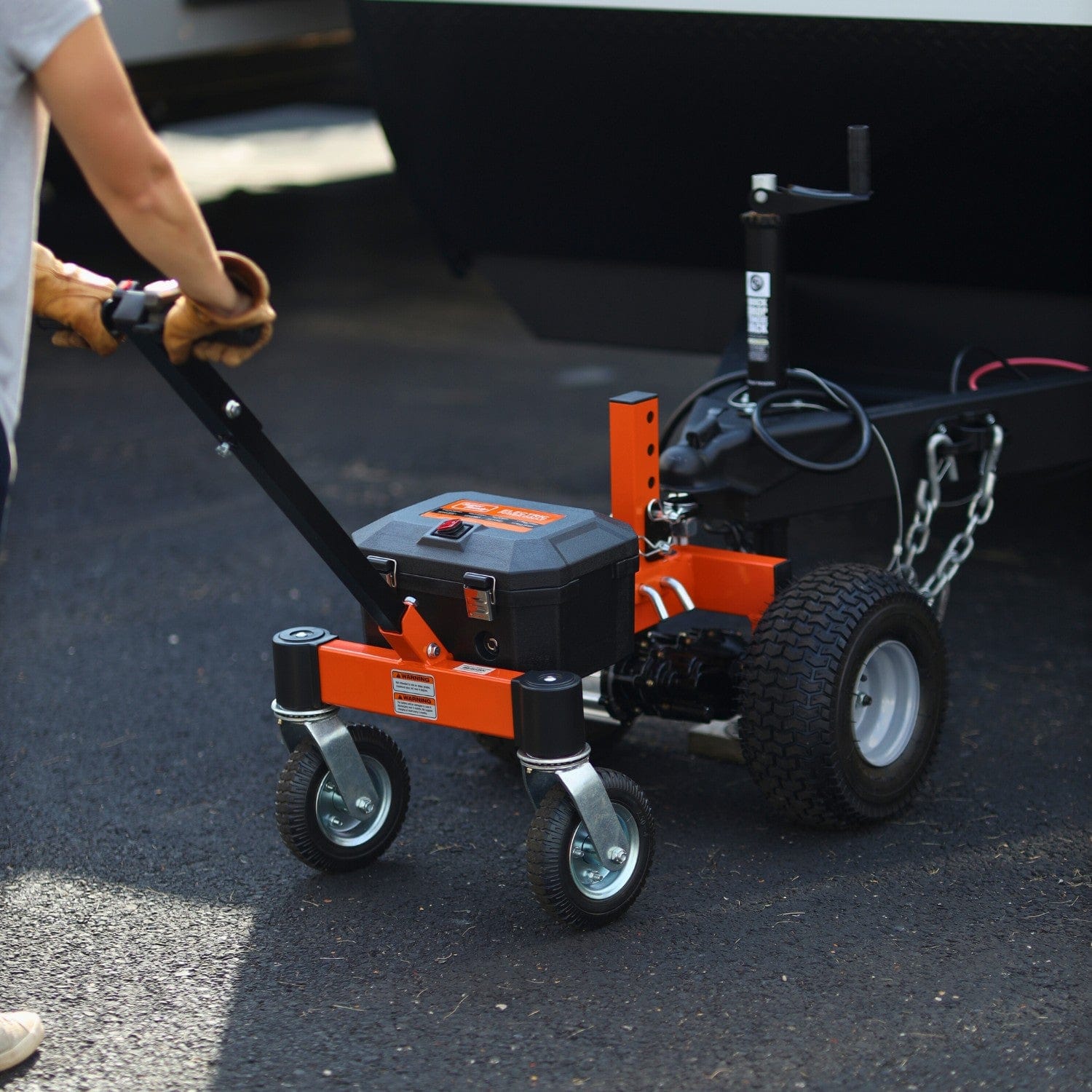
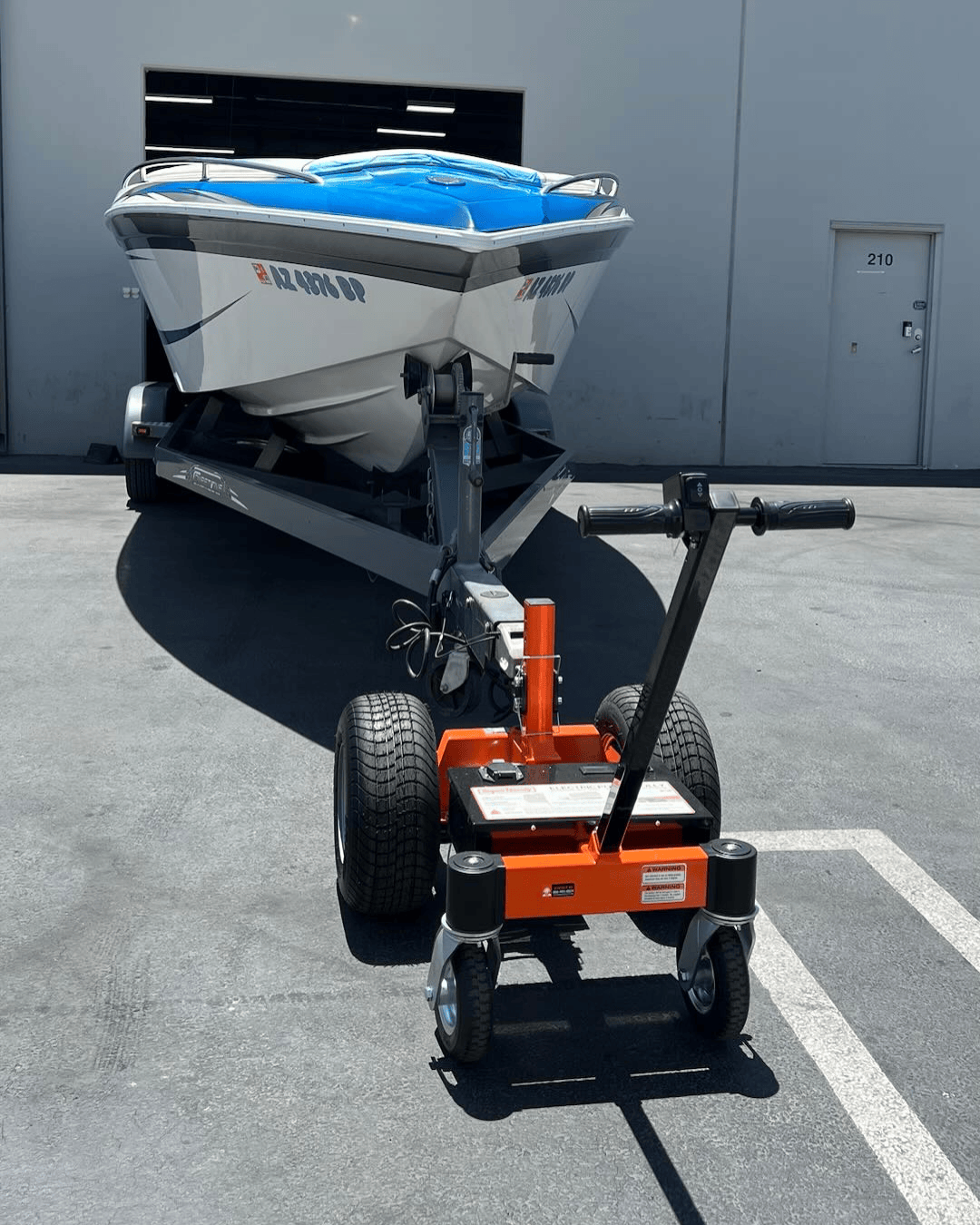
A trailer dolly is a compact, powerful device designed to connect to your RV’s tongue, allowing you to maneuver it with precision without being attached to a tow vehicle. Think of it as a remote-controlled powerhouse that transforms a two-person, high-stress job into a simple, one-person task.
The primary advantage is control. Instead of making wide, clumsy adjustments with your truck, you can make micro-adjustments on foot, guiding your RV perfectly into place. This significantly reduces the risk of costly collisions with garage walls, fences, or other stored vehicles. For anyone dealing with a tight fit, a 90-degree turn into a bay, or a sloped driveway, a dolly provides the accuracy and power needed to navigate the challenge safely. This process of dolly moving not only saves you from potential repair bills but also maximizes your usable storage space by allowing for tighter placement.
Understanding Different Types of Trailer Dollies for RVs
Not all dollies are created equal. The right type for you depends on your RV's size, the storage terrain, and your budget.
- Manual Trailer Dollies: These are the simplest form, relying on your physical strength and leverage to move the trailer. They typically feature a long handle and sturdy wheels. Manual dollies are a great, affordable option for very small, lightweight campers or utility trailers on perfectly flat, paved surfaces. However, they are generally not suitable for the weight and bulk of most travel trailers or RVs.
- Powered Trailer Dollies: For the majority of RV owners, a powered or Electric Trailer Dolly is the way to go. These units use a battery-powered motor to do the heavy work. With simple forward/reverse controls, you can effortlessly guide thousands of pounds into position. They are designed to handle heavier loads and can often manage slight inclines and less-than-perfect surfaces like firm grass or gravel.
- Car Dolly / Tow Dolly: It's important to clarify a common point of confusion. A "car dolly" is a different piece of equipment used for towing a vehicle behind your RV. It lifts the front two wheels of your car for transport. It is not used for parking or storing your RV.
Key Features to Look for in an RV Trailer Dolly
When comparing powered trailer dollies, certain features separate the best from the rest. Look for a combination of power, durability, and user-friendly design.
- Motor and Drive System: A robust motor is crucial. Look for details on its power output and a reliable drive system that provides consistent torque.
- Tires: Heavy-duty, all-terrain pneumatic tires are ideal. They provide better traction and cushioning than solid plastic wheels, making it easier to move across various surfaces like concrete, asphalt, and even hard-packed dirt.
- Adjustable Hitch Ball: Your dolly must be compatible with your RV’s coupler. A high-quality dolly will feature an adjustable-height hitch ball mount and often comes with a standard 2-inch ball, with the ability to swap to other sizes if needed.
- Ergonomic Controls: The handle and control interface should be intuitive. Look for a simple forward/reverse switch and a variable speed throttle that allows you to move at a comfortable and safe pace.
- Safety Features: An automatic braking system is non-negotiable. This feature ensures the dolly and your RV will hold their position the moment you release the throttle, preventing dangerous runaway situations, especially on slopes.
Assessing Your RV's Weight and Size for Dolly Compatibility
Choosing a dolly with the wrong capacity is a costly and dangerous mistake. Before you buy, you must know two key weight figures for your RV.
First and most important is the tongue weight (or hitch weight). This is the downward force that the trailer tongue exerts on the hitch. A trailer dolly lifts and supports this weight directly, so its capacity must exceed your RV’s tongue weight. You can typically find this number in your RV’s owner’s manual or on the manufacturer’s website. For a precise measurement, you can use a dedicated tongue weight scale. As a rule of thumb, always choose a dolly with a max tongue weight rating that provides a comfortable safety margin—at least 15-20% above your measured weight.
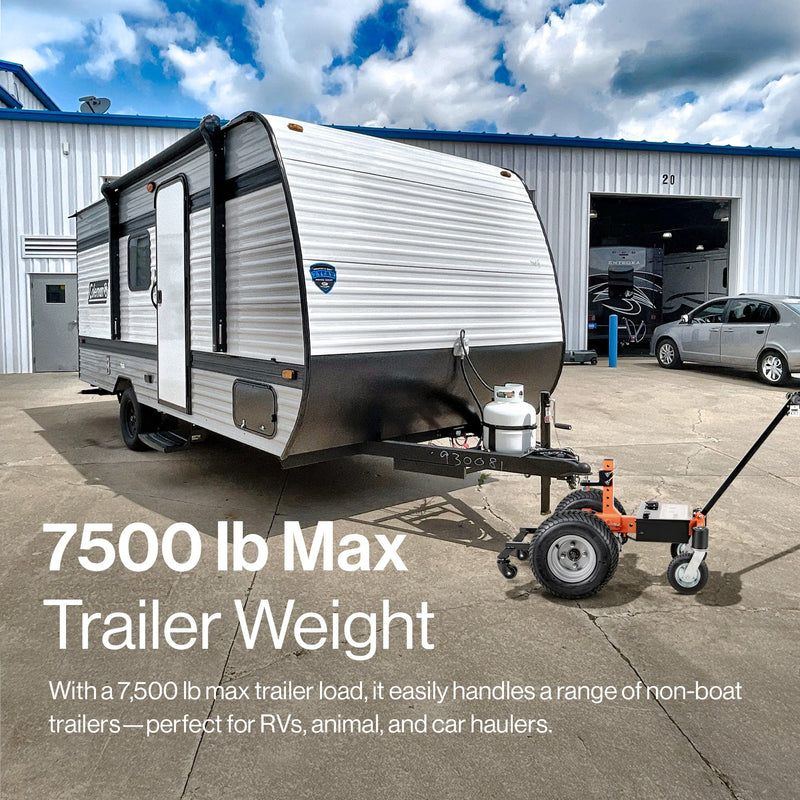
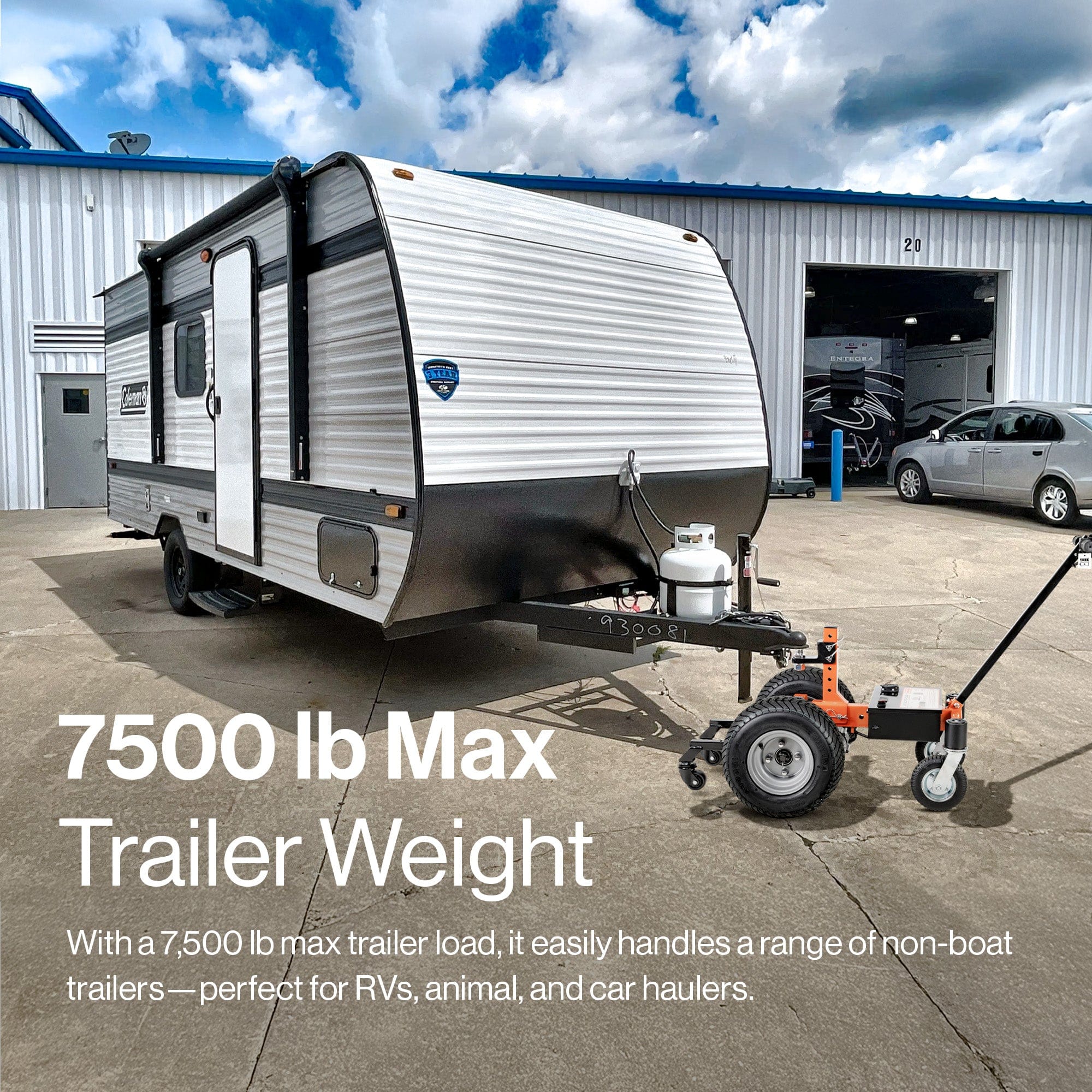
Second is the max trailer weight or Gross Vehicle Weight Rating (GVWR). While the dolly only lifts the tongue weight, its motor and drivetrain must be powerful enough to push or pull the entire weight of the trailer. An Electric Trailer Dolly will list both a maximum tongue weight and a maximum trailer weight it can move. Exceeding this can overwork the motor and compromise control, especially on anything other than a perfectly level surface.
Manual vs. Powered Trailer Dollies: Which is Right for Your Needs?
Choosing between a manual and a powered trailer dolly is one of the most critical decisions in your selection process. The right choice depends on your RV's weight, the terrain of your storage area, and your physical ability.
Manual Trailer Dollies are the simplest and most affordable option. They operate using leverage and your own strength. You crank a handle to lift the trailer tongue and then push or pull the dolly to move your RV.
- Pros: Lower cost, no batteries to charge, simple mechanics with fewer points of failure.
- Cons: Requires significant physical effort, not suitable for heavy RVs or steep inclines, and can be difficult to control precisely.
Powered Trailer Dollies, on the other hand, use an electric motor to do the heavy lifting and moving. These models make the process of dolly moving nearly effortless. An Electric Trailer Dolly is ideal for heavier travel trailers, boat trailers, and anyone who wants to avoid the physical strain of maneuvering a multi-ton vehicle. Unlike a car dolly, which is built for towing a vehicle behind another, a trailer dolly is a specialized tool for precise, low-speed parking.
- Pros: Minimal physical effort required, excellent control and precision, can handle heavy loads and slight inclines with ease.
- Cons: Higher initial cost, requires a power source, and involves more complex components like batteries and motors.
For most RV owners, especially those with trailers over 2,000 lbs or who need to navigate tight spaces, the benefits of a powered model far outweigh the extra cost.
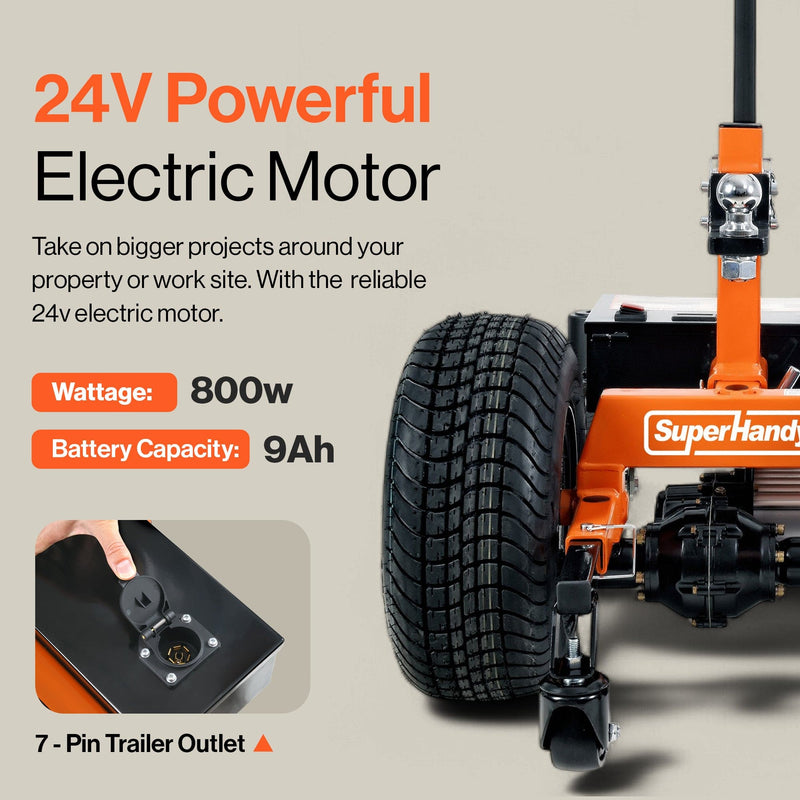
Evaluating Dolly Maneuverability in Tight Storage Spaces
The primary reason to own a trailer dolly is to gain maneuverability where your tow vehicle can't operate. When evaluating a dolly, consider how it will perform in the close quarters of a storage unit, a narrow driveway, or a packed RV lot.
Look for a compact design with a tight turning radius. The dolly's ability to pivot sharply is essential for inch-perfect placement. Handle design is also crucial; an ergonomic, easy-to-grip handle gives you better leverage and control, allowing for subtle adjustments without over-steering. An Electric Trailer Dolly with variable speed control offers the ultimate precision, letting you creep the trailer into place slowly and safely.
Considering Tire Type and Durability for Various Surfaces
The tires on your trailer dolly are its connection to the ground, and their type and quality directly impact performance. The two main options are pneumatic (air-filled) and solid tires.
- Pneumatic Tires: These are similar to car tires and provide excellent traction and shock absorption. They are the best choice for moving your RV over uneven surfaces like gravel, grass, or cracked pavement. The downside is that they can go flat and require you to monitor their air pressure.
- Solid Tires: Made from solid rubber or a composite material, these tires are maintenance-free. You never have to worry about punctures or low pressure. However, they offer less cushioning and can struggle for traction on loose or very uneven ground. They perform best on smooth, hard surfaces like concrete or asphalt.
Consider your storage environment. If it's a smooth, paved indoor or outdoor lot, solid tires are a reliable, hassle-free option. If you have to cross a gravel path or a lumpy lawn to get your RV into its spot, the cushioning and grip of pneumatic tires will make the job much easier.
Power Source Options: Battery Life and Charging Considerations
For a powered dolly, the battery is its heart. Understanding the power source is key to ensuring your dolly is ready when you need it. Most electric dollies use sealed lead-acid (SLA) or lithium-ion batteries.
Battery life, often measured in continuous runtime, determines how long you can operate the dolly on a single charge. For most storage tasks, even 15-20 minutes of continuous power is more than enough to position your RV perfectly. Look for a model with a clear battery life indicator so you're never caught by surprise.
Charging is just as important. How long does it take to fully recharge the battery? A quality Electric Trailer Dolly will come with an efficient charger that can top off the battery in a few hours. This ensures that after a long trip, you can quickly charge the dolly and put your RV away without a long wait.
Safety Features to Prioritize When Choosing an RV Dolly
When you're maneuvering an RV that weighs several thousand pounds, safety is non-negotiable. A high-quality trailer dolly is designed with this in mind, but features can vary. Unlike a car dolly, which is built for towing a vehicle on the road, a trailer dolly is a specialized tool for precise, low-speed positioning in tight spaces. Here are the critical safety features to look for:
- Automatic Braking System: This is arguably the most important safety feature. An electric dolly should have a system that automatically engages the brakes the moment you release the throttle or handle. This prevents your valuable RV from rolling away unexpectedly, especially on slight inclines.
- Overload Protection: A built-in circuit breaker or overload switch protects the dolly’s motor from damage. If you accidentally try to move a load that exceeds the dolly's capacity, this feature will shut it down, preventing motor burnout and potential failure during a move.
- Robust Frame and Construction: Look for a dolly built from heavy-duty, powder-coated steel. A solid frame ensures the unit can handle the immense tongue weight of your RV without bending or breaking under stress.
- Secure Ball Mount and Locking Mechanism: The connection point is critical. Ensure the trailer dolly has a patented ball mount that allows for quick and secure attachment. The locking mechanism should be robust and easy to engage, providing a solid link between the dolly and your trailer.
Budgeting for Your Trailer Dolly: Understanding Price Ranges
A trailer dolly is an investment in protecting your RV and making your life easier. Prices can range significantly based on power, capacity, and features.
- Manual Dollies ($100 - $400): These are the most budget-friendly option. They are suitable for very small, lightweight trailers (like jet ski or small utility trailers) on perfectly flat, smooth surfaces. For most RVs, a manual dolly will not provide enough leverage or control.
- Entry-Level Powered Dollies ($500 - $1,500): This range typically includes electric dollies designed for RVs and trailers with tongue weights up to about 500-600 lbs and gross weights up to 5,000-7,000 lbs. They are a great choice for smaller travel trailers and pop-up campers.
- Heavy-Duty Powered Dollies ($1,500+): For larger travel trailers, fifth wheels, and toy haulers, you’ll need a more powerful unit. These dollies can handle tongue weights of 1,000 lbs or more and have powerful motors and robust drivetrains for superior dolly moving capability. The higher price reflects increased power, advanced braking, and more durable construction.
Where to Buy Your RV Trailer Dolly: Retailers and Online Options
Once you know what you're looking for, you have several options for making a purchase.
- RV Dealerships and Supply Stores: These brick-and-mortar locations offer the benefit of in-person advice from staff who understand RVs. However, their selection may be limited to a few brands, and prices might be higher.
- Online Marketplaces and Manufacturer Websites: Shopping online typically provides the widest selection and most competitive pricing. Direct-from-manufacturer sites are an excellent resource, offering detailed specifications, videos, and customer support. You can explore a full range of Electric Trailer Dolly models and find the perfect fit for your RV's specific needs. Pages dedicated to explaining the technology behind an Electric Trailer Dolly can help you make an informed decision. For example, you can dive deep into the specs of a specific Electric Trailer Dolly to ensure it matches your trailer's weight and coupler size before you buy.
Essential Accessories and Maintenance for Your Trailer Dolly
To maximize the performance and lifespan of your
Frequently Asked Questions
Navigating the world of trailer dollies can bring up a few questions. We've compiled answers to some of the most common inquiries to help you make a confident and informed decision for your RV storage needs.
How much weight can a trailer dolly support?
The weight capacity of a trailer dolly varies significantly from one model to another, making it crucial to match the dolly to your specific RV. There are two primary weight ratings you must pay close attention to:
-
Tongue Weight Capacity: This is the most critical number for a dolly. It refers to the maximum downward force that the trailer's tongue can exert on the dolly's ball hitch. As a general rule, your RV's tongue weight should be about 10-15% of its total loaded weight. A manual dolly might handle a few hundred pounds of tongue weight, while a heavy-duty Electric Trailer Dolly can often manage 600 pounds or more. Exceeding this limit can cause equipment failure and is a major safety risk.
-
Max Trailer Weight (or Gross Trailer Weight - GTW): This rating indicates the total weight of the trailer (including all gear, water, and supplies) that the dolly is designed to move across the ground. While the dolly only supports the tongue weight directly, its motor, frame, and wheels must be robust enough to initiate and control the movement of the entire trailer. For example, a dolly might have a 600-pound tongue weight capacity but be rated for moving a trailer up to 5,000 pounds.
Always check the manufacturer's specifications for both tongue weight and maximum trailer weight before purchasing. Weigh your RV's tongue specifically to ensure you have an accurate number, as factory-listed "dry weights" can be misleading.

Are trailer dollies difficult to use for RVs?
Modern trailer dollies, especially powered models, are designed to be surprisingly user-friendly and are often far easier than using a large tow vehicle for precise positioning. The difficulty of the dolly moving process largely depends on the type of dolly you choose and your specific storage environment.
-
Manual Dollies: These require significant physical effort from the operator. You are responsible for providing all the force to push, pull, and steer the trailer. For a small, lightweight travel trailer on a flat, smooth concrete surface, this can be manageable. However, trying to move a heavier RV, even on a slight incline or on a soft surface like grass or gravel, can be extremely difficult and potentially unsafe.
-
Powered Dollies: An Electric Trailer Dolly transforms the task from a strenuous workout into a simple guidance operation. These units use a battery-powered motor to do all the heavy work. Your job is simply to operate the forward/reverse controls and steer the handle. This makes it possible for one person to effortlessly move a multi-ton RV into a tight garage, around a sharp corner, or up a modest driveway incline. While there is a small learning curve to get a feel for the controls and pivot dynamics, most users find them intuitive within minutes.
Ultimately, a powered trailer dolly is not difficult to use; in fact, it's a tool that makes a difficult task easy. It provides superior maneuverability and visibility compared to a truck or SUV, giving you the confidence to park your RV perfectly every time. If you're looking for the right tool for the job, exploring a collection of different Electric Trailer Dolly options will show you the range of capabilities available to simplify your RV life.
Related Products

Leave a comment
All comments are moderated before being published.
This site is protected by hCaptcha and the hCaptcha Privacy Policy and Terms of Service apply.