











Understanding the Different Types of Trailer Dollies
Before you can choose the right mover for your RV, it’s important to understand the fundamental differences between the main types available. Trailer dollies fall into two primary categories: manual and powered. The best choice for you will depend on several key factors, including your trailer's weight, the surfaces you'll be moving it on, your physical ability, and your budget. Let's break down each type to see how they compare.
Manual Trailer Dollies: Simplicity and Affordability
For owners of smaller, lighter trailers, a manual trailer dolly offers a straightforward and budget-friendly solution. These dollies operate on the principle of leverage, featuring a long handle that gives you the mechanical advantage needed to push, pull, and steer your trailer by hand. They are designed for simplicity, with a sturdy frame, durable tires, and a ball mount that connects directly to your trailer's coupler.
The biggest advantage of manual trailer dollies is their cost-effectiveness and lack of complexity. There are no motors to maintain or batteries to charge, making them a reliable, grab-and-go option. However, they do require physical effort and are best suited for flat, paved surfaces like concrete or asphalt. Moving a trailer on a significant incline or across soft ground like grass or gravel can be very challenging with a manual model. They are an excellent choice for pop-up campers, small utility trailers, and jet ski trailers. For public access decisions, ADA.gov explains how covered entities evaluate wheelchairs and other power-driven mobility devices.
Powered Trailer Dollies: Effortless Maneuvering
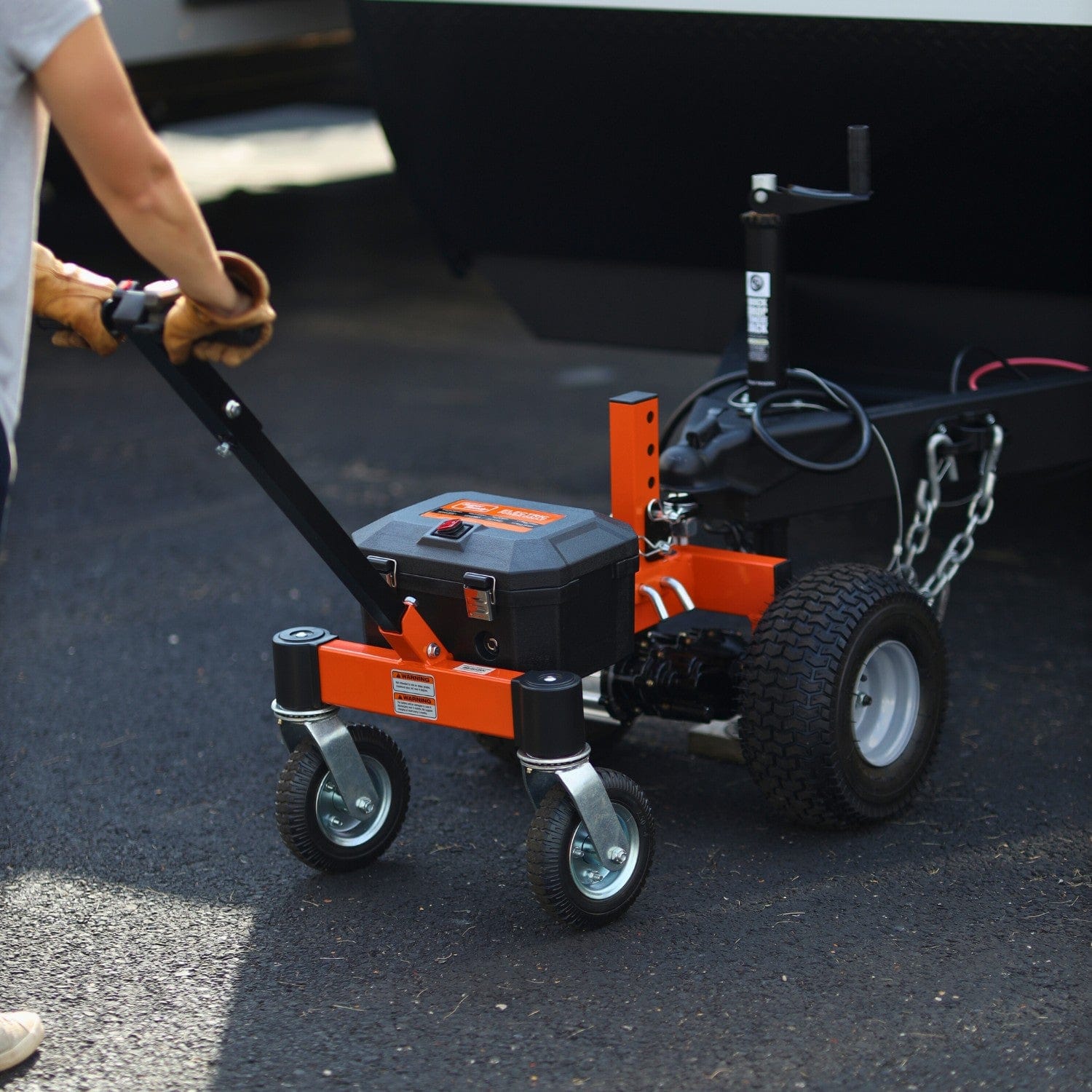
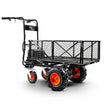
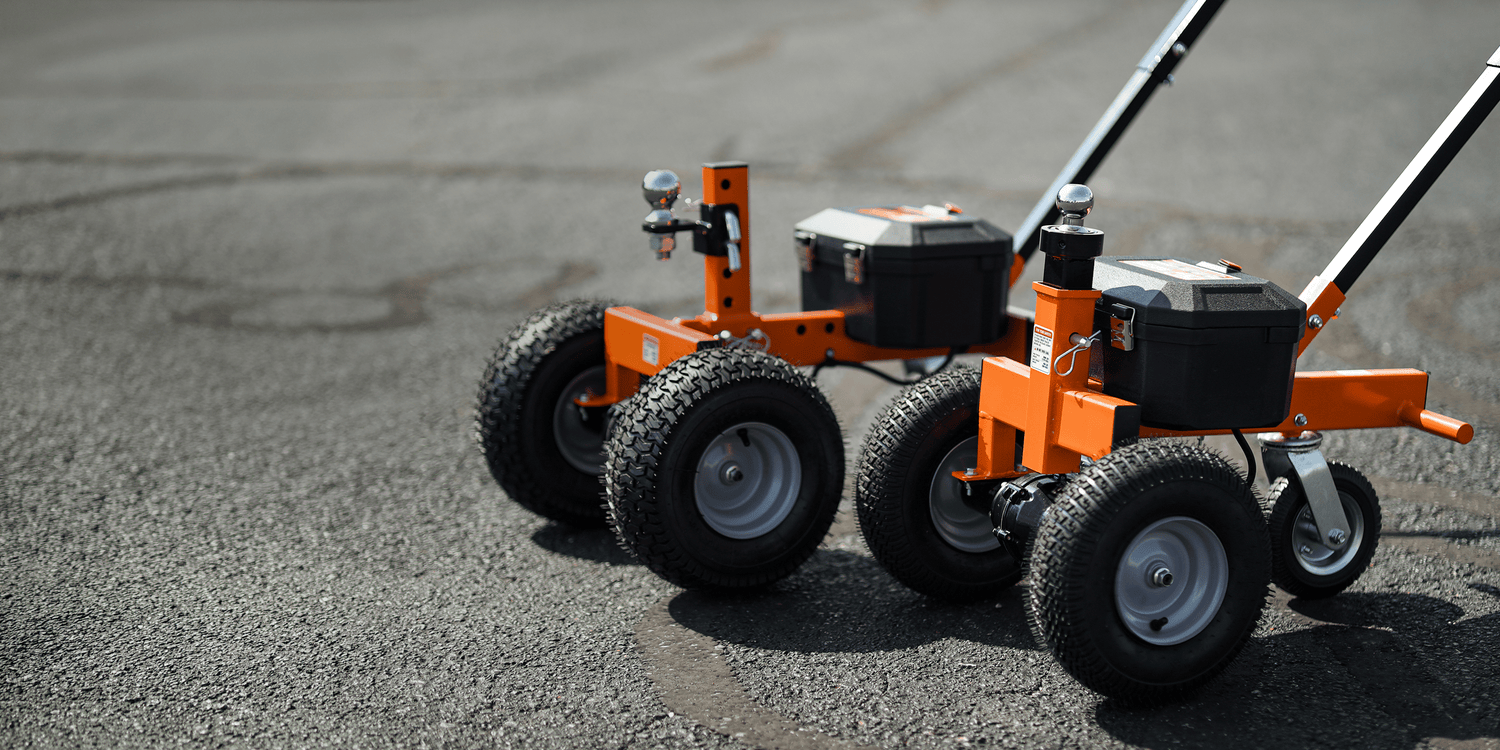
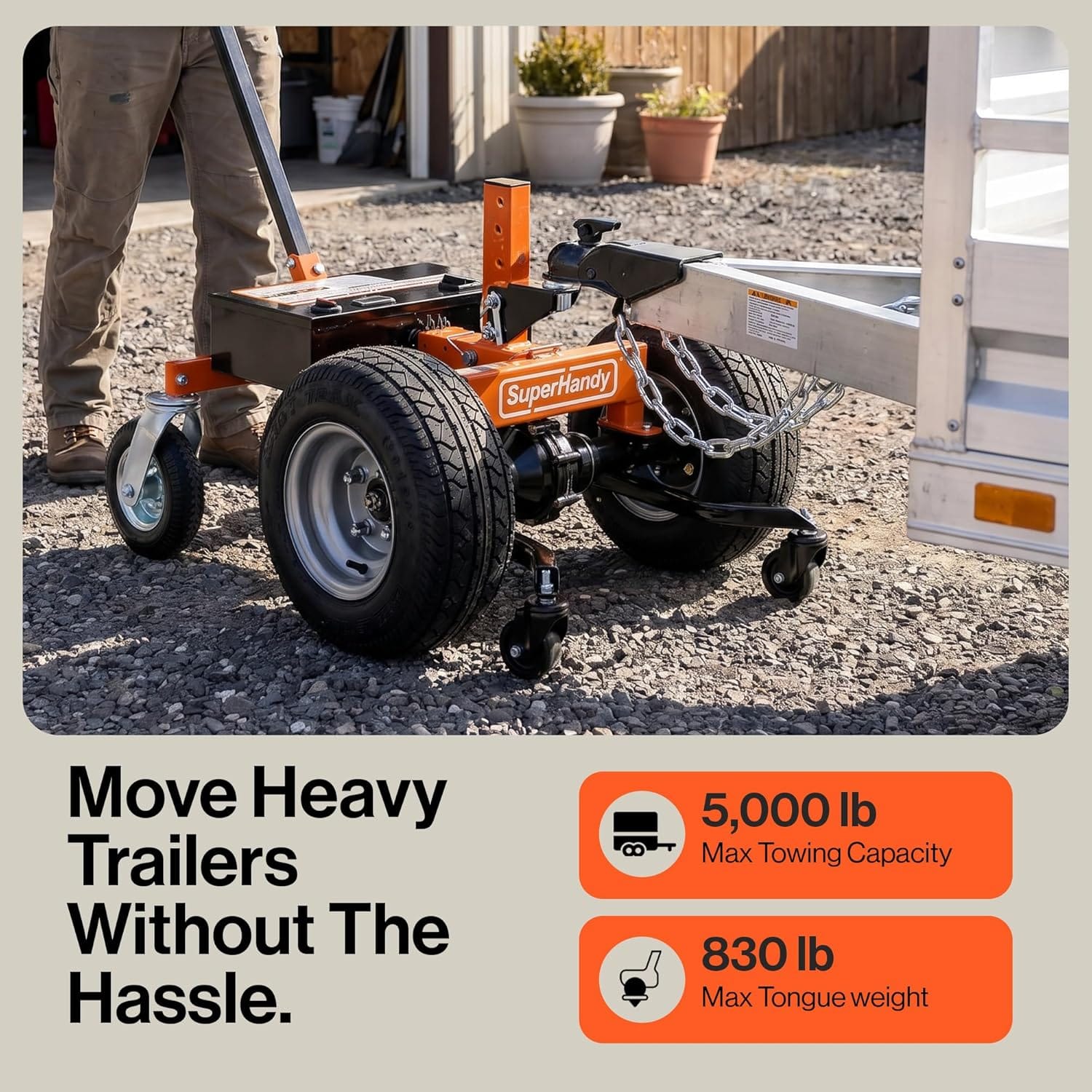
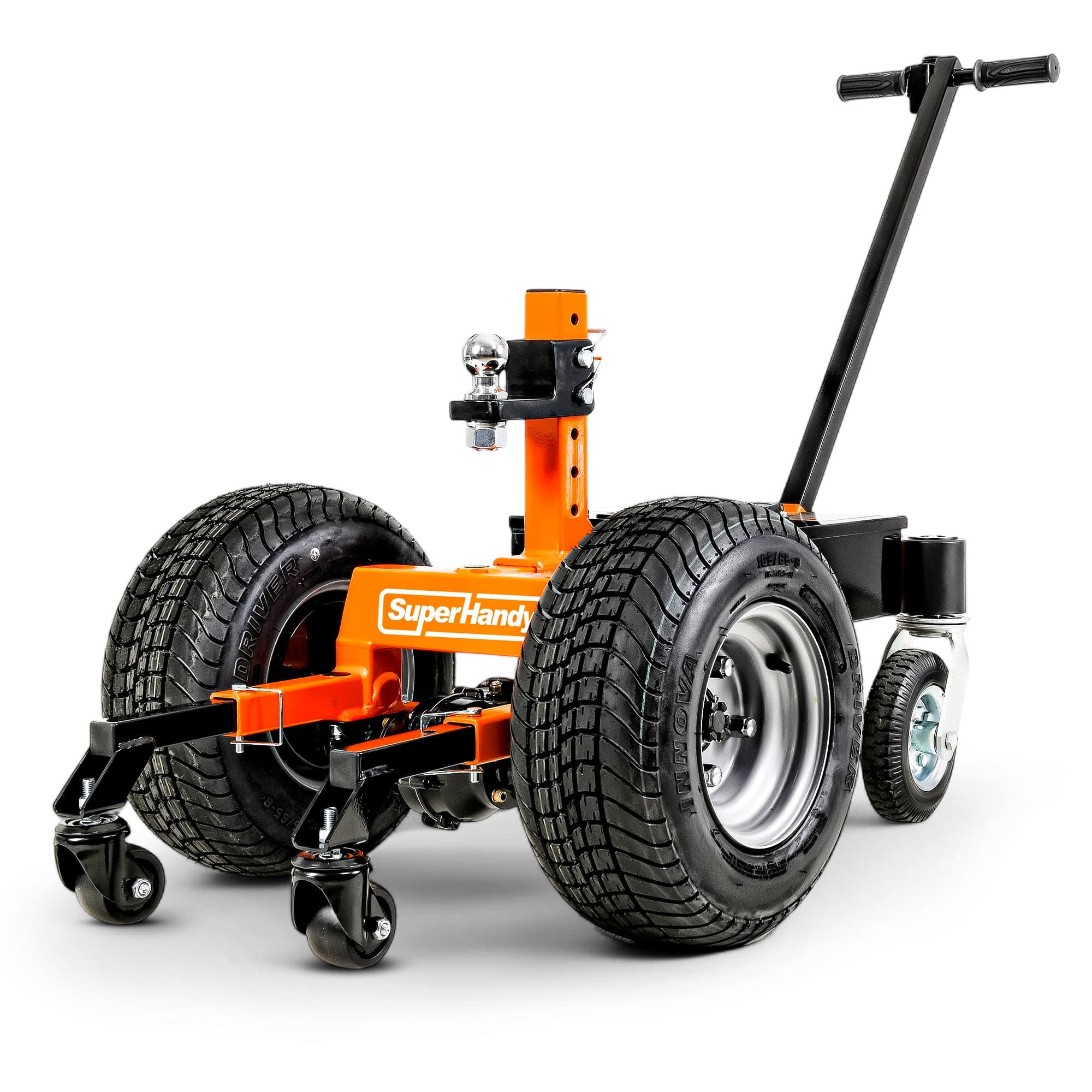
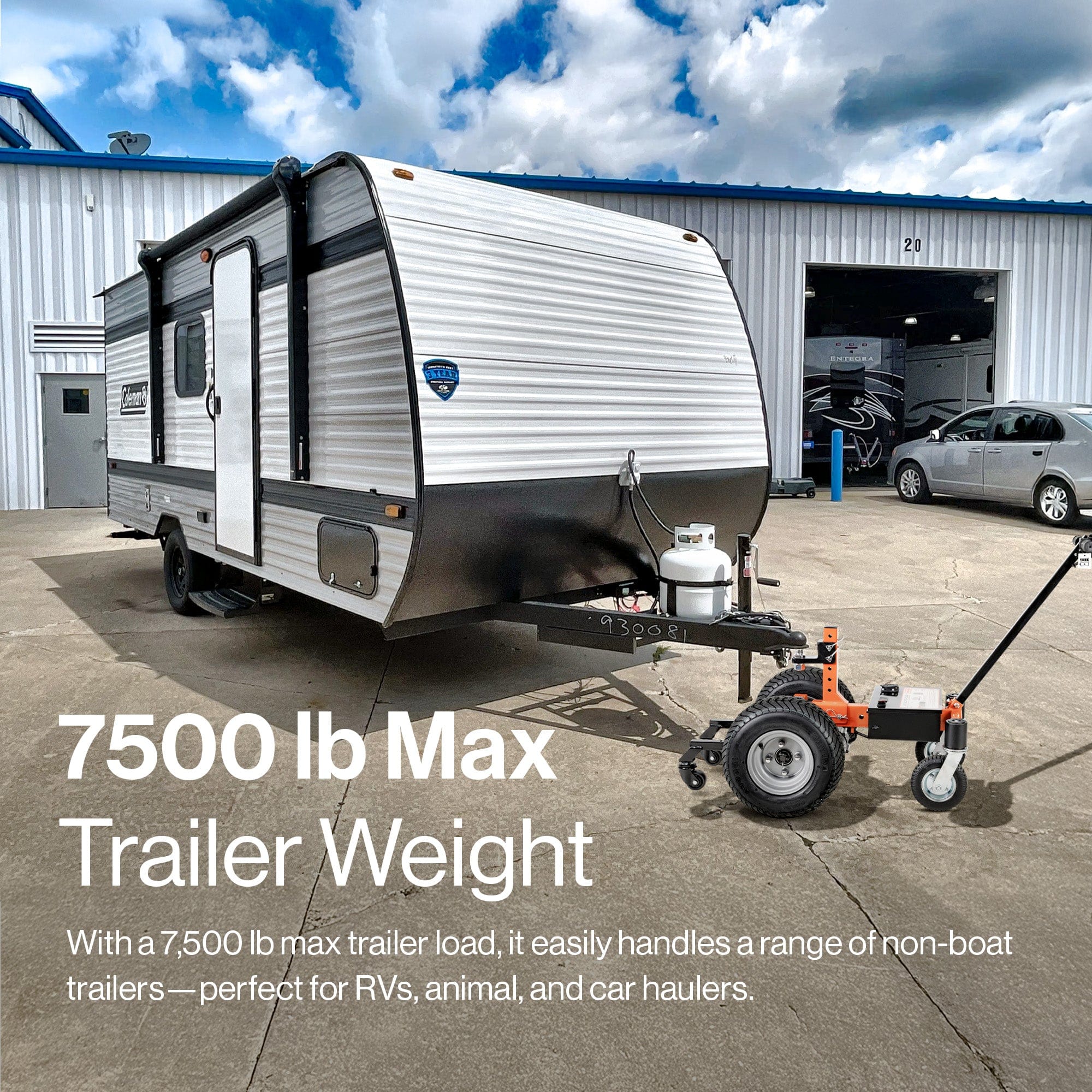
When you're dealing with a heavy travel trailer, a fifth-wheel, or a large boat, a powered trailer dolly is the ultimate tool for the job. These powerful machines use an electric motor to do all the heavy lifting for you, allowing you to move thousands of pounds with just the touch of a button or the turn of a handle. An electric trailer dolly transforms the difficult task of parking your RV into a smooth, one-person operation.

This type of trailer mover provides exceptional control and can handle significant weight with ease. The motor and robust tires work together to navigate slight inclines and uneven surfaces that would be impossible for a manual dolly. While they represent a larger initial investment and require a power source—either a built-in rechargeable battery or a connection to an AC outlet—the convenience and safety they provide are useful. If you need to frequently move a heavy RV in tight quarters, a powered dolly is a game-changing investment that will save you time, effort, and potential stress.
Choosing the Right Trailer Dolly Capacity for Your RV
One of the most critical factors in selecting a trailer dolly is its weight capacity. It's essential to understand that there are two key weights to consider: your RV's Gross Trailer Weight (GTW) and its tongue weight. A trailer dolly is rated by the tongue weight it can handle, not the total weight of the trailer. The tongue weight is the downward force that the trailer tongue exerts on the hitch. As a general rule, the tongue weight should be about 10-15% of your RV's total loaded weight. For coverage planning, Medicare.gov outlines when wheelchairs and scooters may qualify as durable medical equipment.
To choose the right capacity, you must first determine your RV's tongue weight. You can find this information in your owner's manual or by using a specialized tongue weight scale. Once you know this number, always choose a trailer mover with a capacity that exceeds your trailer's tongue weight. For example, if your RV has a tongue weight of 550 pounds, a manual trailer dolly rated for 600 pounds provides a safe margin. Overloading a dolly can lead to equipment failure and a dangerous loss of control.
Key Features to Look for in a Trailer Dolly
Beyond weight capacity, several features distinguish a great trailer dolly from a basic one. When comparing models, look for a combination of power, control, and durability that suits your specific needs.
- Motor and Power (for electric models): For effortless movement, a powerful electric trailer dolly is a game-changer. Look at the motor's wattage and the unit's maximum incline rating to ensure it can handle your terrain. Features like forward and reverse controls directly on the handle add significant convenience.
- Handle Design: A long, ergonomic handle provides better leverage and control, reducing strain on your back and shoulders, which is especially important for manual dollies.
- Braking System: On powered dollies, an automatic braking system is a crucial safety feature. It ensures the dolly and your RV stop immediately when you release the controls, preventing runaway situations on even slight slopes.
- Frame Construction: A heavy-duty, powder-coated steel frame resists rust and provides the structural integrity needed to manage heavy loads safely for years to come.
Ball Mount Compatibility: Ensuring a Secure Connection
Your trailer dolly is useless if it can't securely connect to your RV. This connection happens at the hitch ball, so compatibility is non-negotiable. Trailer couplers come in several standard sizes, with 2-inch and 2-5/16-inch balls being the most common for RVs. Before you buy a dolly, confirm the coupler size on your trailer's tongue.
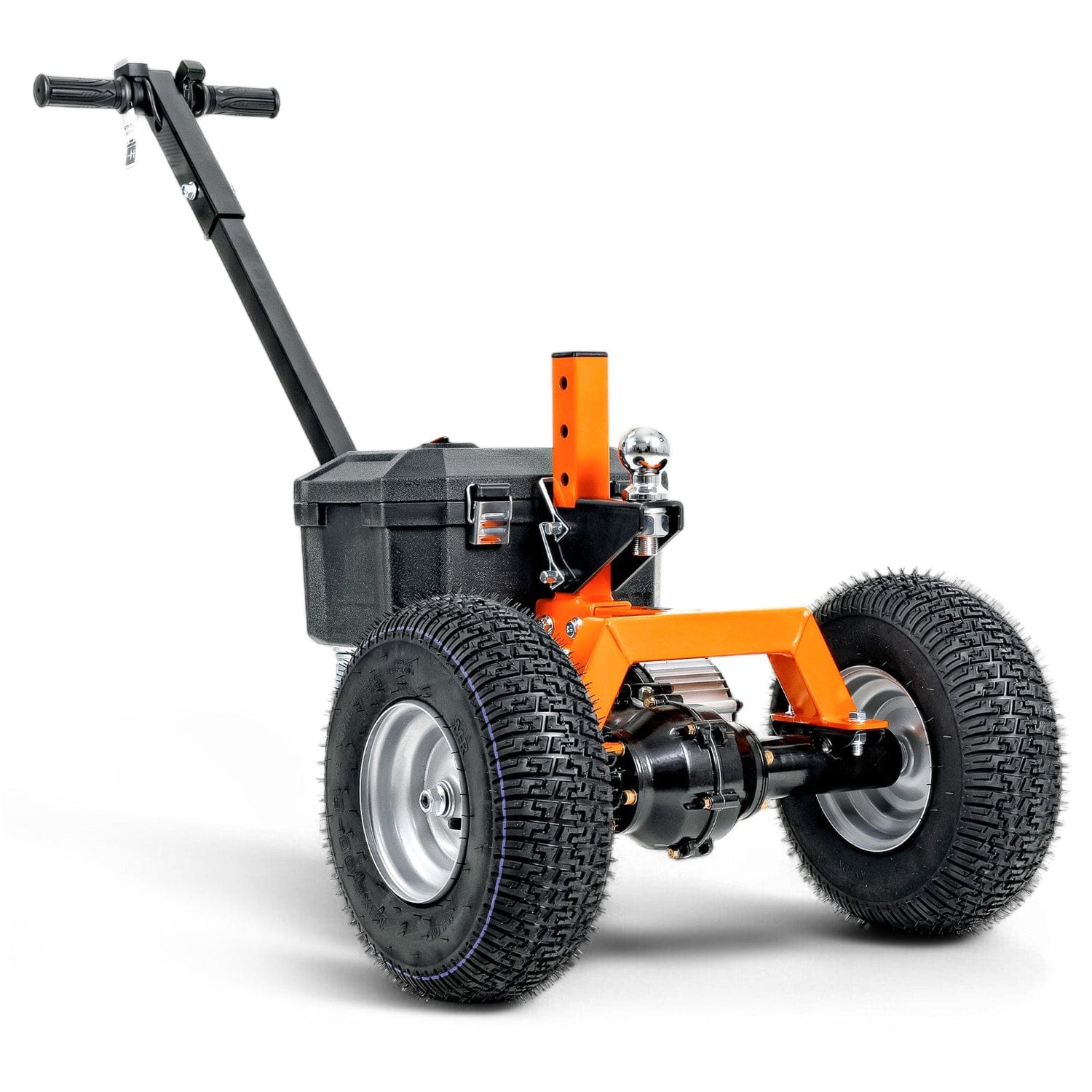
Many trailer dollies, like this heavy-duty 1,000-lb capacity mover, come equipped with a standard-sized hitch ball. Another key feature is an adjustable ball mount height. The ability to raise or lower the hitch ball allows you to create a level connection with your trailer, which is vital for stability and safe movement. An angled connection can put undue stress on both the dolly and the trailer tongue.
Tire Size and Terrain Considerations for Trailer Dollies
The ground you'll be moving your RV across will heavily influence the best type of trailer dolly for you. The dolly's tires are your primary point of contact with the terrain, and their size and type matter immensely. You'll generally choose between two types: solid rubber or pneumatic (air-filled) tires.
Solid rubber tires are excellent for smooth, hard surfaces like concrete or asphalt driveways. They are puncture-proof and require no maintenance. However, they offer little cushioning and can struggle on soft or uneven ground. Pneumatic tires, on the other hand, act as shock absorbers and perform much better on grass, packed dirt, or gravel. Their larger footprint provides superior traction and a smoother ride. When in doubt, larger, all-terrain pneumatic tires offer the most versatility for handling the varied surfaces you might encounter at home or at a campsite.
Power Source Options: Battery vs. Electric Trailer Dollies
When you upgrade from a manual trailer mover, you’ll find two primary power sources: battery-operated and corded electric. Your choice depends on your storage setup, convenience needs, and how far you need to move your RV.
Battery-Powered Trailer Dollies: The biggest advantage of a battery-powered trailer dolly is freedom. With no cords to trip over or limit your range, you can maneuver your trailer anywhere on your property. These models typically use rechargeable 12V or 24V lead-acid or lithium-ion batteries. A cordless electric trailer dolly offers the ultimate in convenience, allowing you to easily move your RV from a storage spot to your tow vehicle without needing to be near an outlet. Just remember to keep the battery charged so it’s always ready to go. For medical context, MedlinePlus summarizes common mobility aids such as canes, walkers, wheelchairs, and scooters.
Corded Electric Trailer Dollies: A corded electric trailer dolly provides consistent, uninterrupted power as long as it's plugged in. You’ll never have to worry about a battery dying mid-maneuver. This makes them a reliable choice if you’re always moving your trailer within range of a power outlet, such as inside a large garage or shop. The trade-off is the limited range and the need to manage the extension cord while you work. For those with a dedicated, powered storage space, a powerful AC-powered electric trailer dolly can be an excellent and worry-free solution.
Installation and Setup: Getting Your Trailer Dolly Ready
Getting your new trailer dolly operational is usually a straightforward process. While you should always follow the manufacturer's specific instructions, here are the general steps to expect:
- Assembly: Most dollies require minimal assembly. This typically involves attaching the handle, control unit, and ball mount to the main frame using the included hardware.
- Attach to Trailer: Lower your trailer’s tongue jack until the coupler is slightly above the dolly’s hitch ball. Roll the trailer dolly into position under the coupler. Lower the trailer tongue fully onto the hitch ball and secure the coupler latch, ensuring it’s locked in place.
- Power Up and Test: For a battery model, ensure the battery is fully charged and connected. For a corded model, plug it into a suitable power source.
- Final Check: Before moving, raise your trailer’s tongue jack completely so it doesn’t drag. Do one last walk-around to ensure a secure connection.
Trailer Dolly Maintenance: Keeping Your Mover in Top Shape
A trailer dolly is a powerful piece of equipment, and like any tool, it requires regular maintenance to perform safely and reliably. A simple maintenance routine will significantly extend the life of your trailer mover.
- Tires: Regularly check the tire pressure and inflate to the manufacturer's recommended PSI. Inspect the tires for cracks, excessive wear, or damage.
- Battery Care (for battery models): Follow the manufacturer's guidelines for charging. Avoid storing the battery for long periods in a discharged state. During the off-season, it’s a good practice to charge it periodically.
- Hardware and Frame: Before each use, give your dolly a quick inspection. Look for any loose nuts or bolts and tighten them as needed. Check all welds for signs of stress or cracking.
- Cleaning: Keep your dolly clean. Wipe away dirt, mud, and grime, especially from the drive chain and moving parts. This prevents corrosion and ensures smooth operation. A simple manual trailer dolly with fewer moving parts can be easier to maintain, but all dollies benefit from being kept clean.
Safety Precautions When Operating a Trailer Dolly
Your safety and the protection of your property are paramount. Operating a tow dolly for an RV is simple, but it requires your full attention. Always adhere to these safety rules:
- Know Your Limits: Never attempt to move a trailer that exceeds the dolly's maximum weight capacity. This includes both the gross trailer weight and the tongue weight.
- Work on Level Ground: Trailer dollies are designed for use on flat, firm surfaces. Attempting to operate on a significant slope or soft ground can cause the dolly to lose traction or you to lose control.
- Clear Your Path: Before you start moving, walk the entire path and remove any obstacles, tools, or debris. Make sure pets and people are safely out of the way.
- Use a Spotter: It’s always best to have a second person act as a spotter. They can watch the corners and rear of the RV that you can’t see, helping you avoid collisions.
- Go Slow: Operate the dolly at a slow, steady walking pace. Avoid abrupt starts and stops, which can put stress on the dolly and the trailer coupler.
- Always Chock the Wheels: Before you disconnect the dolly from your trailer, always place wheel chocks securely behind the trailer’s wheels. This is the most critical step to prevent your RV from rolling away unexpectedly.
Comparing Top Trailer Dolly Brands and Models
When you start shopping for a trailer mover, you'll find a few key brands dominating the market, each with its strengths. While names like Parkit360 and Trailer Valet offer robust solutions, SuperHandy has carved out a reputation for delivering exceptional quality, innovative features, and outstanding value. Our focus is on creating powerful, reliable dollies that make your life easier without breaking the bank. Whether you need to move a small camper or a large RV, there's a SuperHandy model designed for the job. For air travel, FAA PackSafe lists battery and handling rules for wheelchairs and mobility devices.
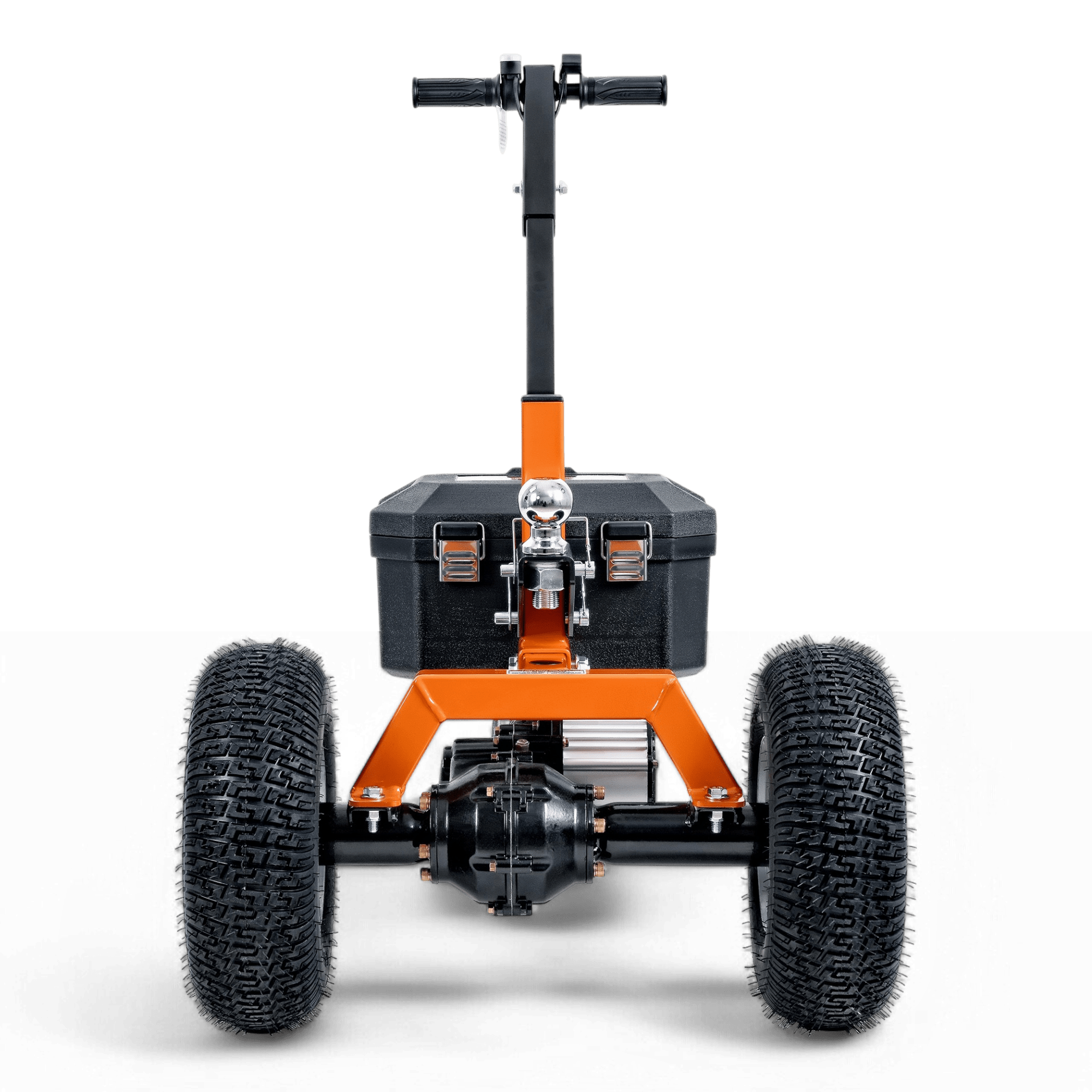
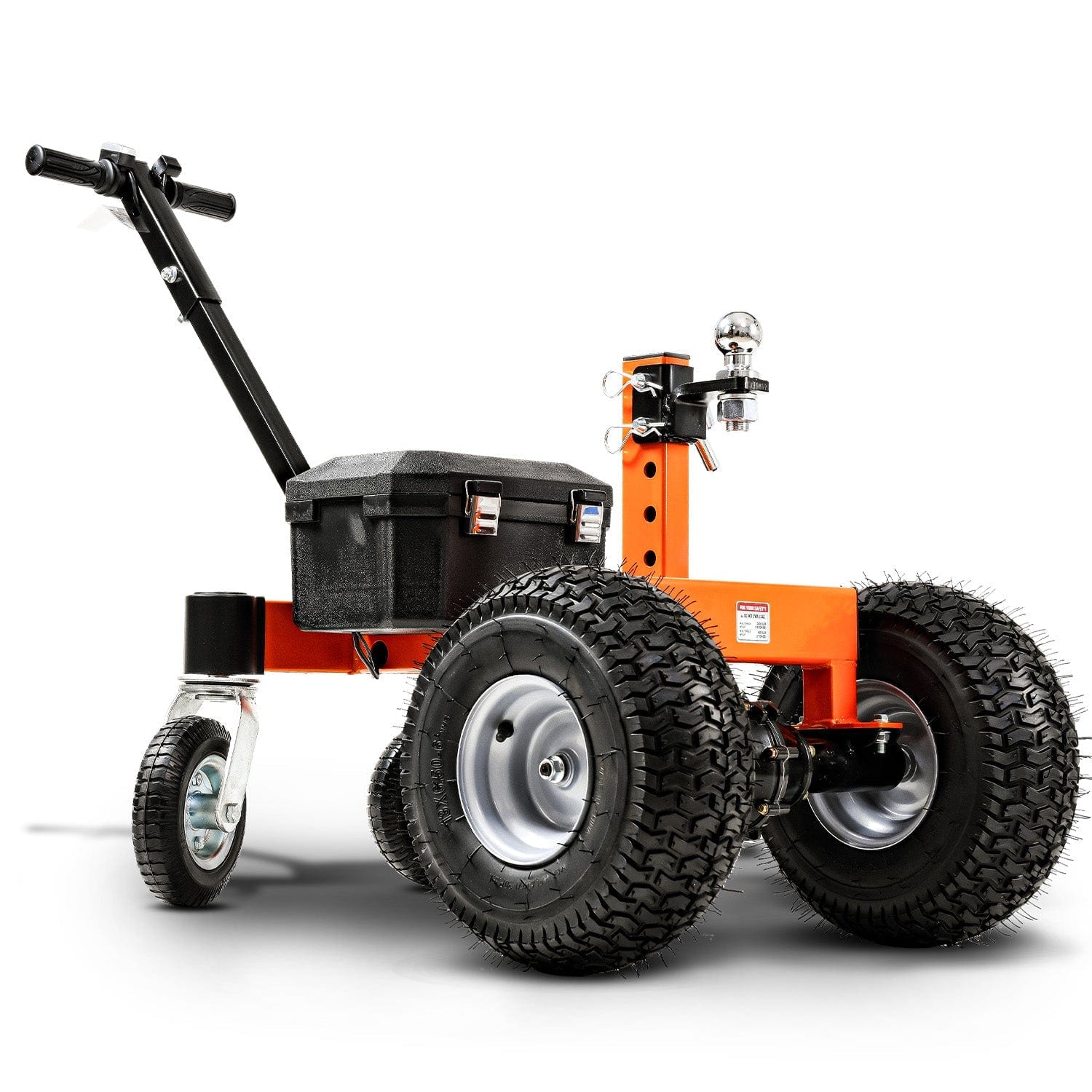
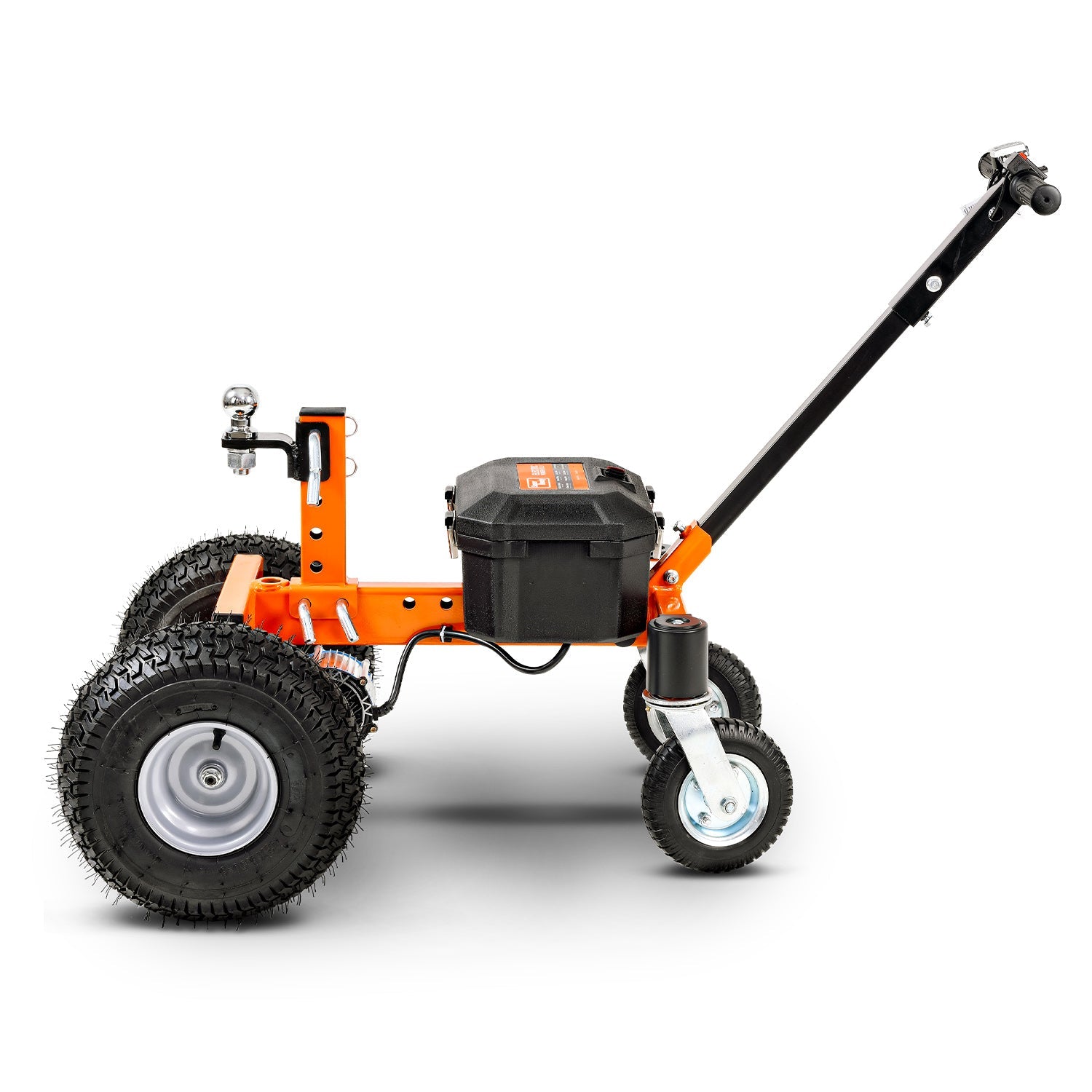
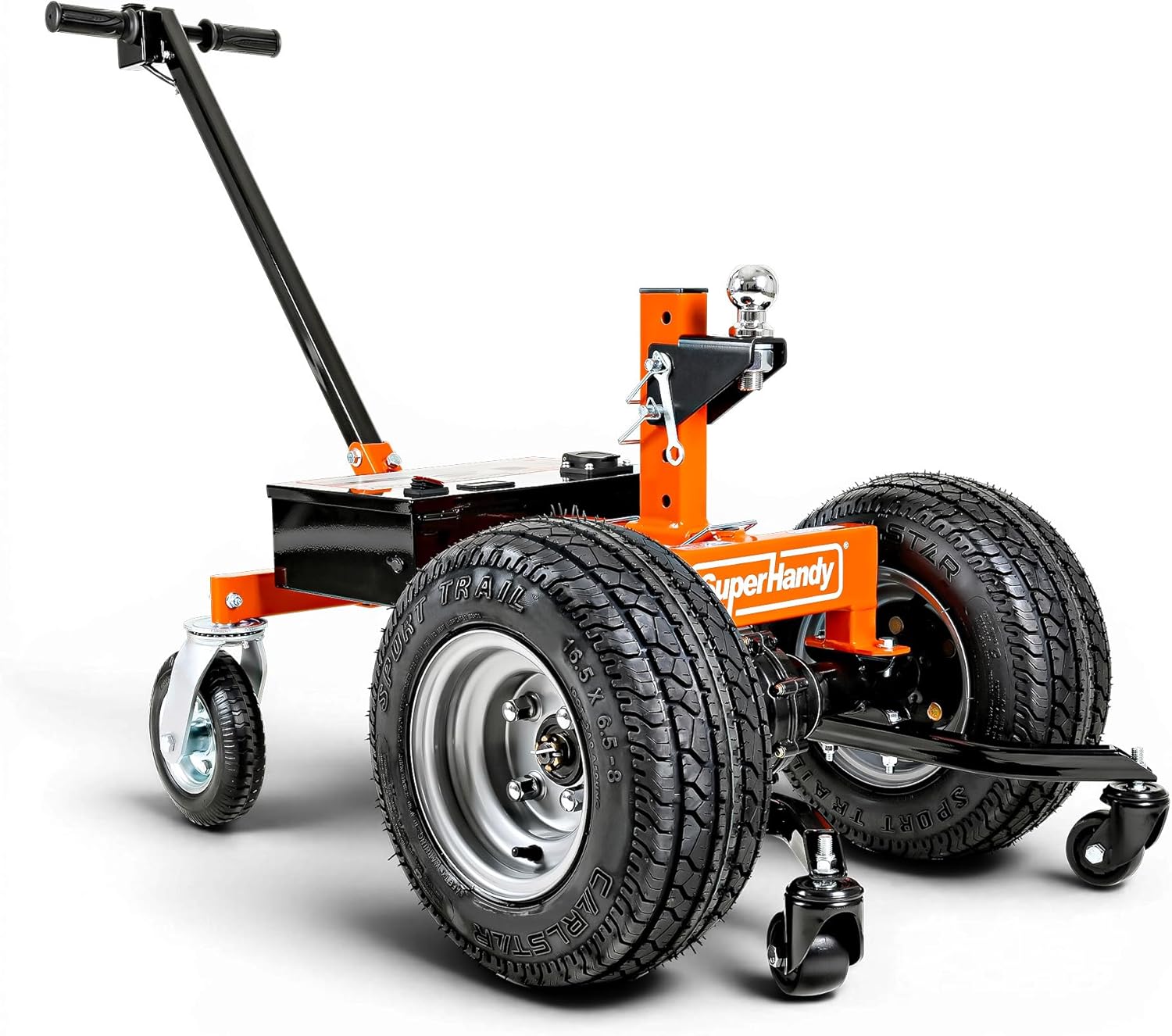
For those with heavier trailers who demand effortless control, the SuperHandy Electric Trailer Dolly is a game-changer. This powerful unit is driven by a DC motor, allowing you to maneuver your RV with just the push of a button, eliminating physical strain. If you're looking for a versatile and heavy-duty manual option, the SuperHandy 1000 lbs. Capacity Trailer Dolly provides excellent leverage and control with its durable construction and all-terrain tires. For everyday tasks and lighter trailers, the simplicity and strength of a model like the SuperHandy 600 lbs. Capacity Trailer Dolly make it an indispensable tool for quick and easy positioning.
Frequently Asked Questions About Trailer Dollies
Navigating the world of trailer dollies can bring up a few questions. Here are answers to some of the most common ones we hear.
-
Can I use a trailer dolly on a slope or incline? Most trailer dollies are designed for use on flat, level surfaces. Using one on a significant incline can be dangerous, as it may be difficult to control the trailer's momentum. Some heavy-duty powered models with robust braking systems can handle slight inclines, but you must always consult the manufacturer's specifications and prioritize safety.
-
How do I know what weight capacity I need? The most important number to know is your RV's tongue weight, not its total gross weight. The tongue weight is the downward force the trailer's tongue exerts on the hitch. Always choose a trailer dolly with a maximum capacity that is higher than your trailer's tongue weight to ensure a safe margin.
-
What's the difference between a trailer dolly and a tow dolly for an RV? This is a common point of confusion. A trailer dolly is a device used to manually or electrically move an unhitched trailer in tight spaces like a driveway or storage unit. A tow dolly for an RV, on the other hand, is a small, two-wheeled trailer used to tow a car behind your motorhome, with the car's front wheels resting on the dolly.
-
How difficult is it to assemble and set up a trailer dolly? Most trailer dollies are designed for easy assembly. Reputable brands provide clear instructions and require only basic hand tools. You can typically have your new trailer mover unboxed and ready to use in under an hour.
Making the Final Purchase: Tips for Buying Your Trailer Dolly
Ready to buy? Keep these final tips in mind to ensure you select the perfect trailer dolly for your needs and make a purchase you'll be happy with for years to come.
- Confirm Your Tongue Weight: We can't say it enough. Before you click "buy," double-check your RV's tongue weight. This is the single most critical factor in choosing a safe and effective trailer mover.
- Evaluate Your Terrain: Take a hard look at the surface where you'll be using the dolly. Smooth, level concrete gives you many options. If you have gravel, grass, or uneven pavement, you must prioritize a model with large, pneumatic, all-terrain tires for proper traction.
- Choose the Right Power: Be realistic about your needs and physical ability. A manual dolly is a great, affordable tool for light trailers on flat ground. For heavier RVs, any kind of slope, or simply for maximum convenience, a powered electric trailer dolly is a worthwhile investment.
- Read Reviews and Check the Warranty: Look for customer reviews from people who own a trailer similar to yours. Their real-world experience is invaluable. Finally, confirm the warranty details to protect your investment and ensure you have support from the manufacturer if you need it.
Related Products

Leave a comment
All comments are moderated before being published.
This site is protected by hCaptcha and the hCaptcha Privacy Policy and Terms of Service apply.