












Understanding Your Mobility Needs: What to Consider Before You Buy
Before diving into models and features, take a moment to think about your daily life and how a scooter will fit into it. An electric mobility scooter is a powerful investment in your freedom, so matching it to your specific requirements is the first and most important step. Ask yourself a few key questions:
- Where will I use it most? Will you primarily be navigating the smooth, narrow hallways of your home, or will you be tackling grocery store aisles, park paths, and sidewalks? Indoor use favors maneuverability, while outdoor use requires more stability and power.
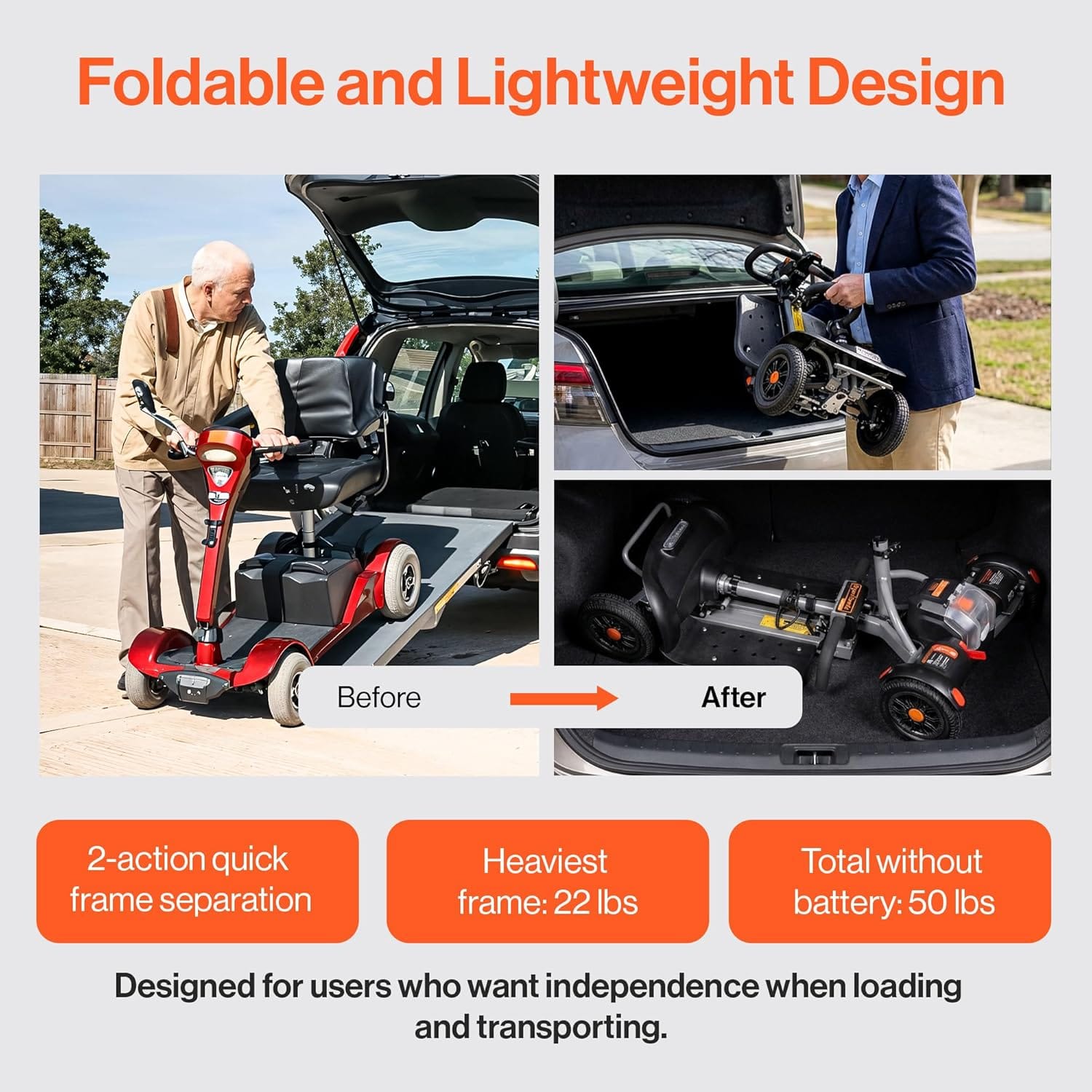
- How often will I travel with it? If you envision taking your scooter on vacation, to family gatherings, or even just in the car for errands, you’ll need a model that is lightweight and easy to transport. Consider if you can lift it yourself or if you'll have assistance.
- What is my physical endurance? Think about how long you'll be seated during a typical outing. This will influence the battery life, seat comfort, and ergonomic features you need.
An electric scooter is one of several types of mobility aids designed to help people who have trouble moving around on their own. By clearly defining your needs, you can narrow down your options and find a device that truly enhances your daily activities.

Types of Electric Mobility Scooters: Finding the Right Fit for Your Lifestyle
Mobility scooters generally fall into a few main categories, each designed for a different purpose. Understanding these types is key to finding your ideal match.
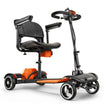
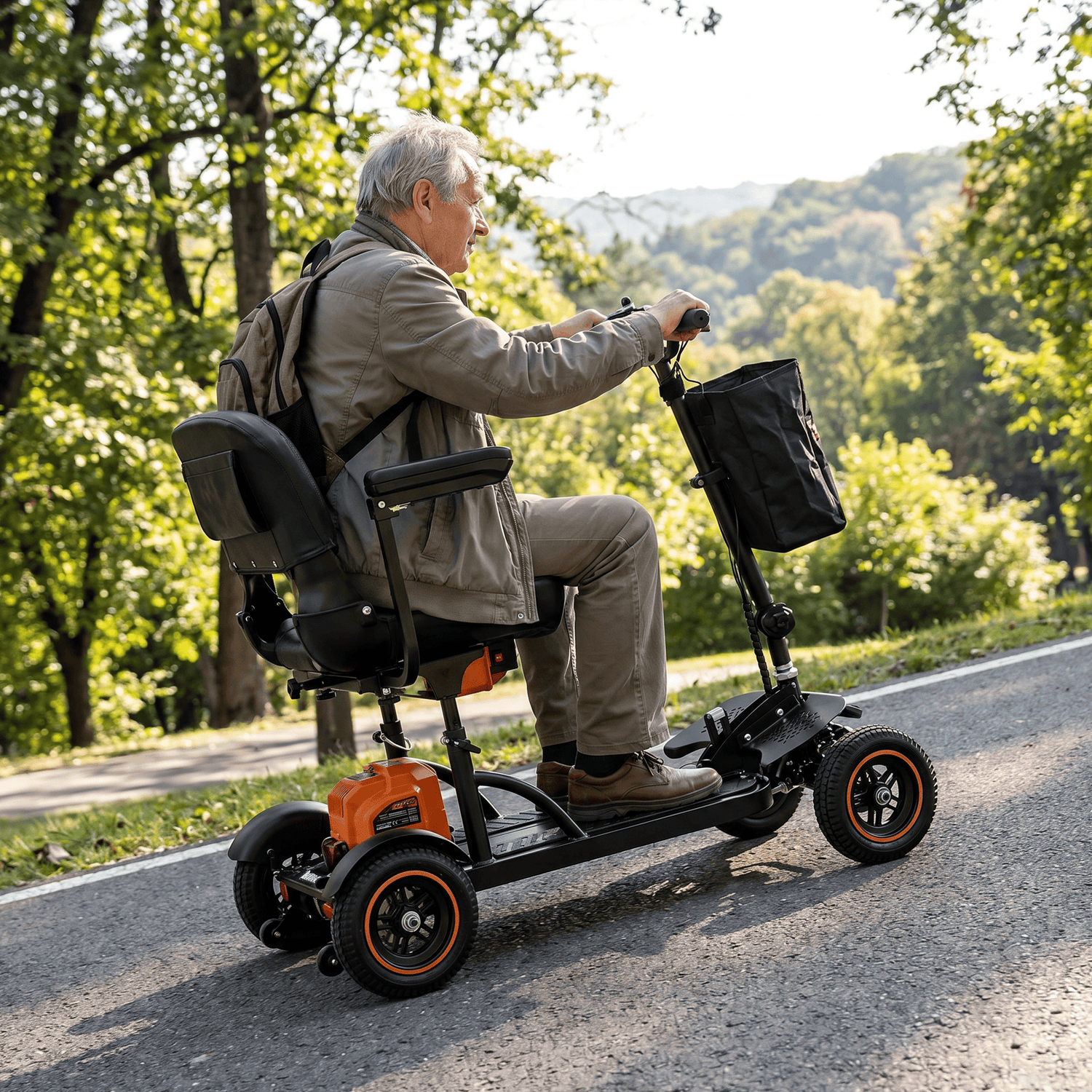
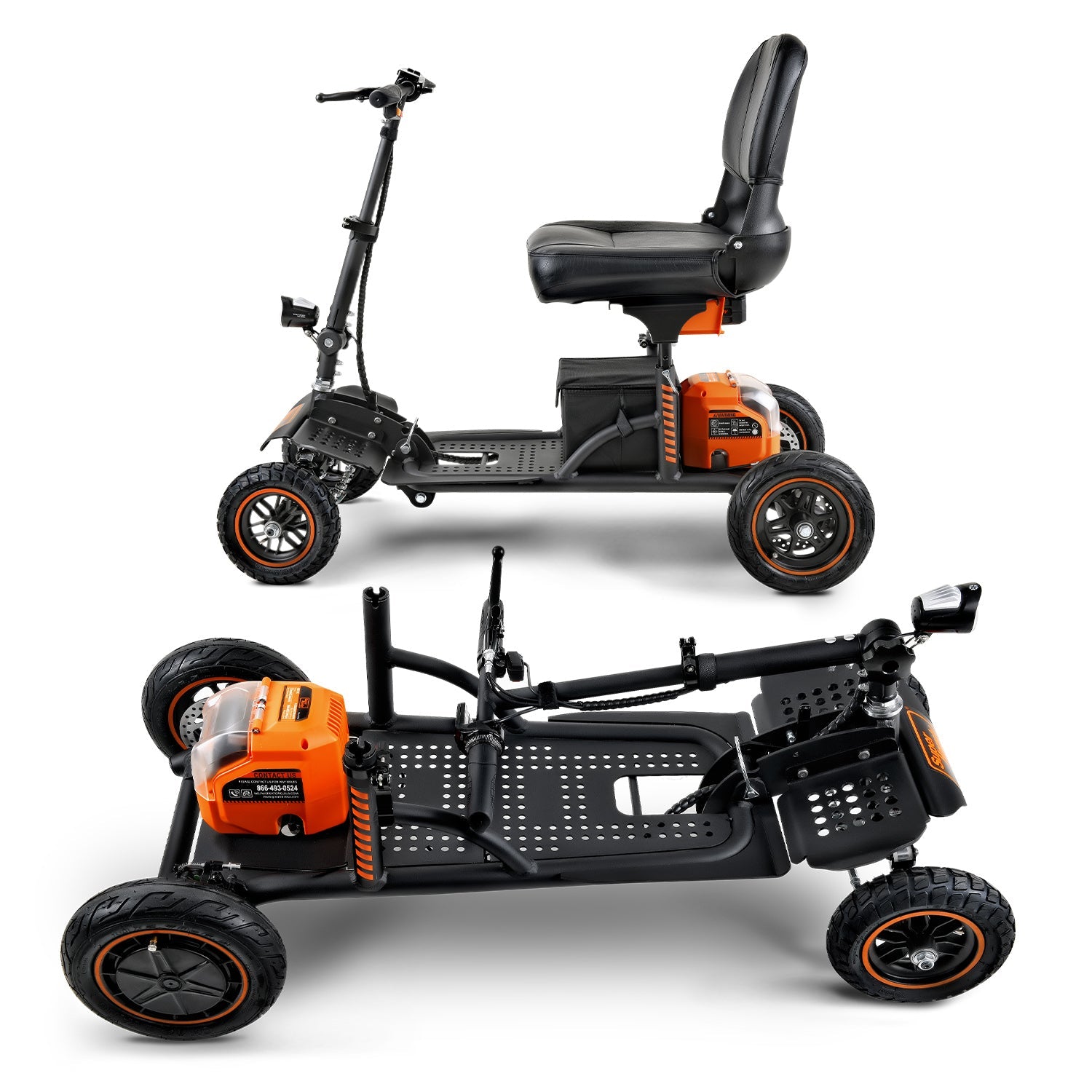
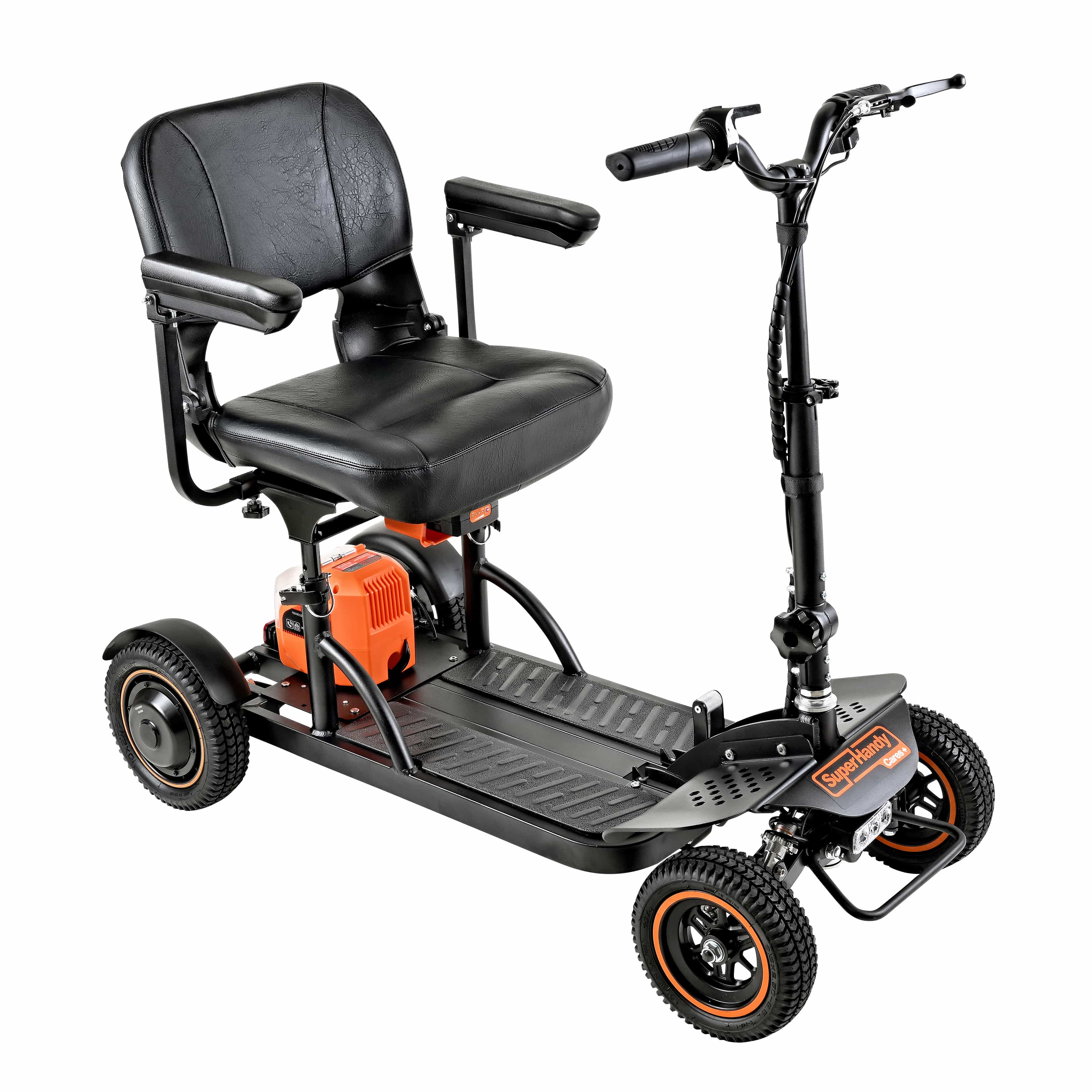
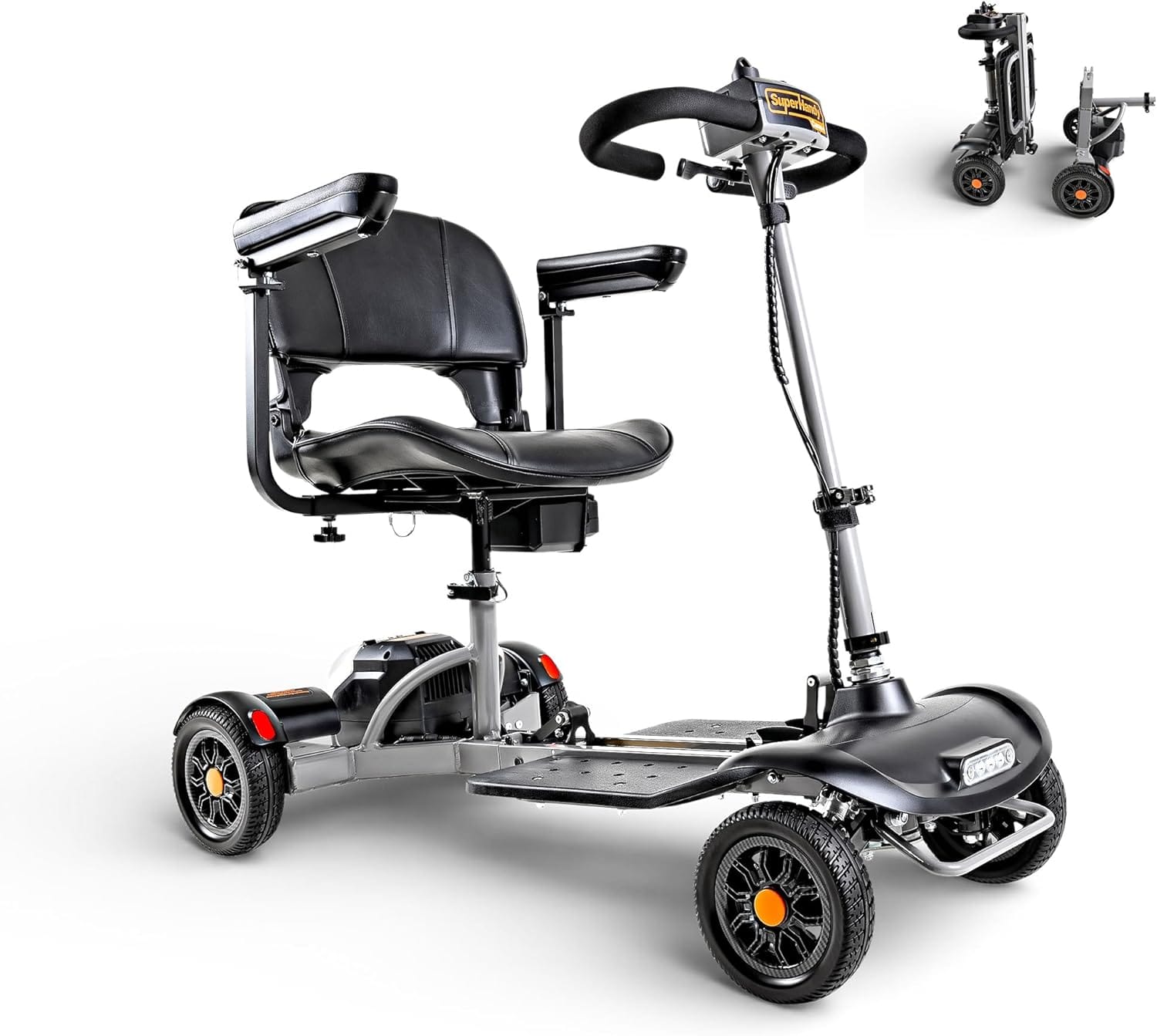
- Travel/Folding Scooters: These are the champions of portability. Designed to be lightweight and compact, they can be quickly disassembled or folded, making them suitable for storing in a car trunk or taking on a trip. A 4-wheel lightweight foldable scooter is an excellent choice for active users who are always on the go.
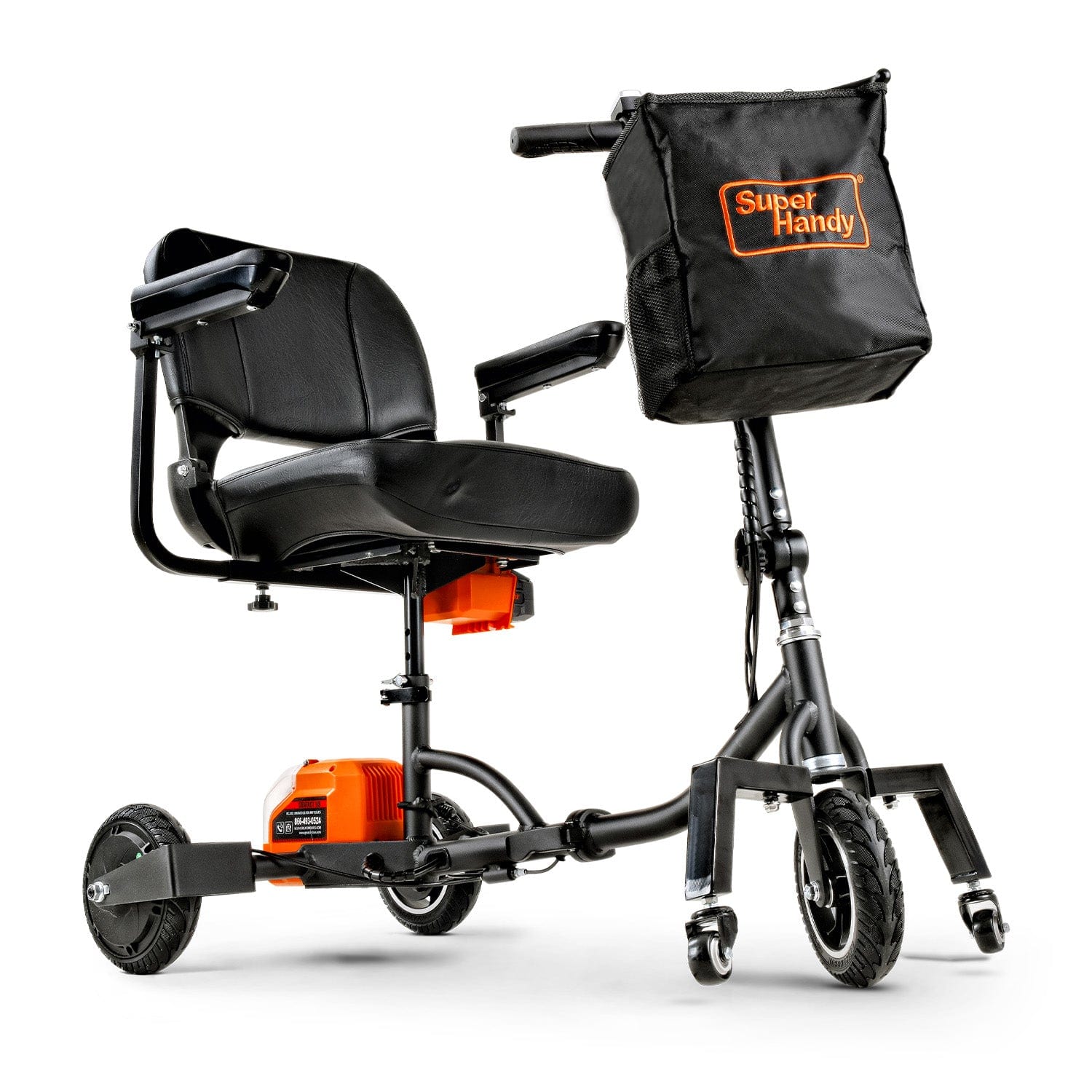
- 3-Wheel Scooters: The primary advantage of a 3-wheel scooter is its superior maneuverability. With a tighter turning radius, it excels at navigating indoor spaces, crowded stores, and tight corners. They also tend to offer more legroom.
- 4-Wheel Scooters: If stability is your top priority, a 4-wheel mobility scooter is the way to go. The wider wheelbase provides a secure and stable ride, making it the preferred choice for outdoor use on varied terrain like sidewalks, grass, and gravel paths.
Key Features to Look For: Performance, Comfort, and Safety Essentials
Once you’ve identified the right type of scooter for your lifestyle, you can start comparing specific features. While the list can be long, most essential features fall into three main groups: performance, comfort, and safety. Performance includes factors like top speed, battery range, and the motor’s power. Comfort covers everything from the seat design and suspension to the layout of the controls. Finally, safety essentials include lighting, brakes, and anti-tip wheels. We’ll explore these in more detail, but a well-rounded scooter should deliver a confident and pleasant experience in all three areas.
Weight Capacity and Size: Ensuring a Scooter That Can Handle Your Needs
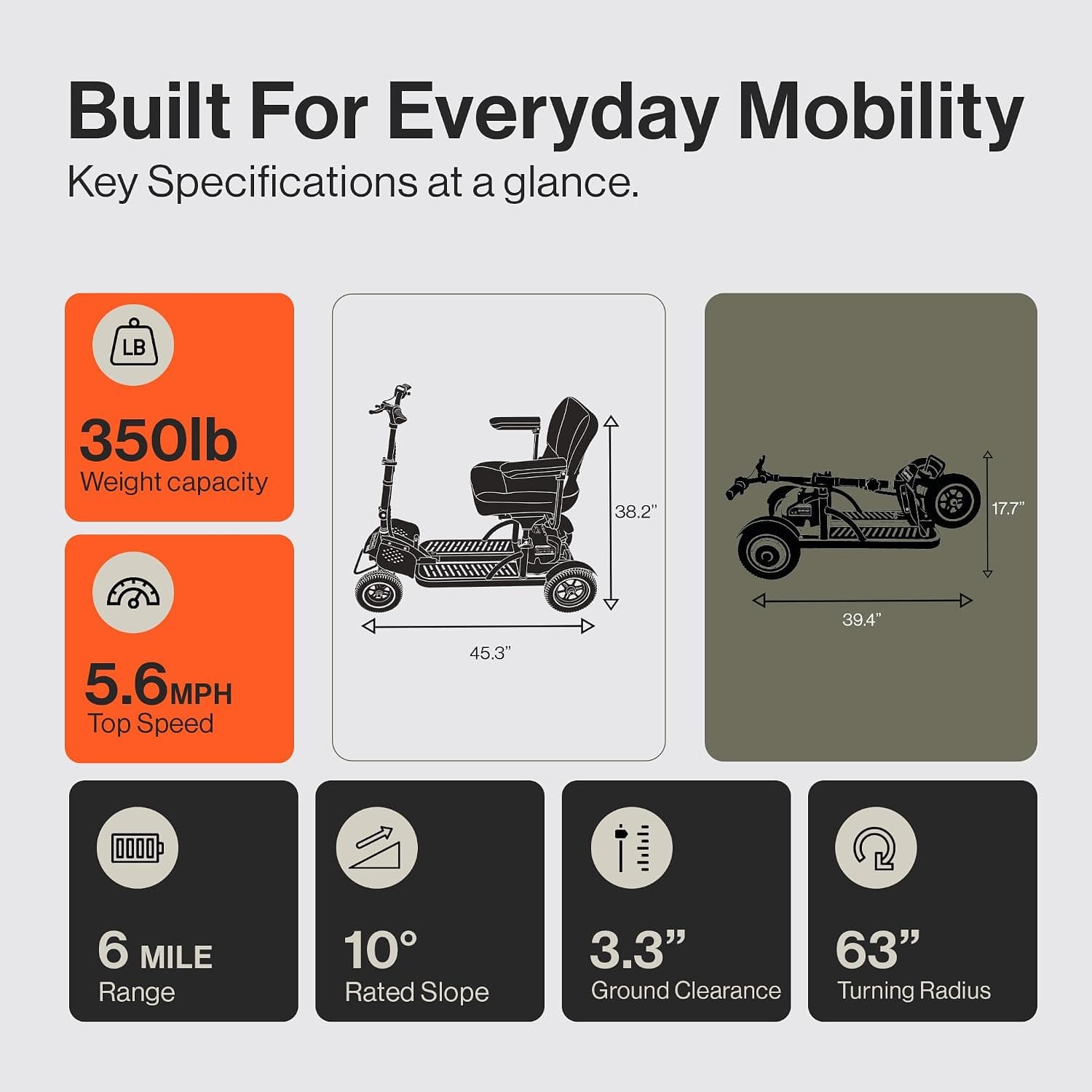
Two of the most critical, and often overlooked, specifications are the scooter’s weight capacity and its physical dimensions. For safety and performance, it is vital to choose a scooter with a weight capacity that comfortably exceeds your own body weight. Overloading a scooter can strain the motor, reduce battery life, and create an unsafe riding condition. Always check the manufacturer's recommended limit.
Equally important is the scooter's overall size. Before you buy, measure the doorways in your home, the dimensions of your vehicle's trunk, and any other tight spaces you’ll need to navigate. A compact model like the Passport Flex scooter is designed for easy transport and storage, but you must ensure any scooter you choose will fit into your world, not the other way around.
Battery Life and Charging: Powering Your Adventures
The battery is the heart of your electric mobility scooter, determining how far you can go on a single charge. This distance, known as the range, is one of the most critical specifications to check. Manufacturers typically list a maximum range in miles. Consider your daily routine: will you be making short trips to the corner store or embarking on all-day outings? Choose a scooter with a range that comfortably exceeds your typical daily mileage to avoid "range anxiety." Battery types also vary, with Sealed Lead-Acid (SLA) being a common, affordable option and Lithium-ion offering a lighter weight and often longer lifespan. If you plan to travel, especially by air, it's essential to check the battery type and size, as airlines have specific regulations. The FAA PackSafe wheelchair and mobility-device battery rules provide detailed guidance on what is permitted in carry-on or checked baggage.
Charging is another practical consideration. How long does the battery take to fully recharge? Most scooters recharge overnight in about 6-8 hours using a standard wall outlet. Some models feature removable battery packs, allowing you to bring the battery inside for charging while leaving the scooter in a garage or entryway. This is a convenient feature, especially for those living in apartments or without easy access to a power outlet where they store their Mobility scooter.
Tire Types and Suspension: Navigating Different Terrains with Ease
The tires on your electric mobility scooter are your connection to the ground, and they play a huge role in the quality of your ride. You'll generally encounter two main types:
- Solid/Foam-Filled Tires: These are puncture-proof and maintenance-free, which is a major advantage. You'll never have to worry about a flat tire leaving you stranded. They are ideal for smooth indoor surfaces like shopping malls and homes, as well as paved outdoor paths.
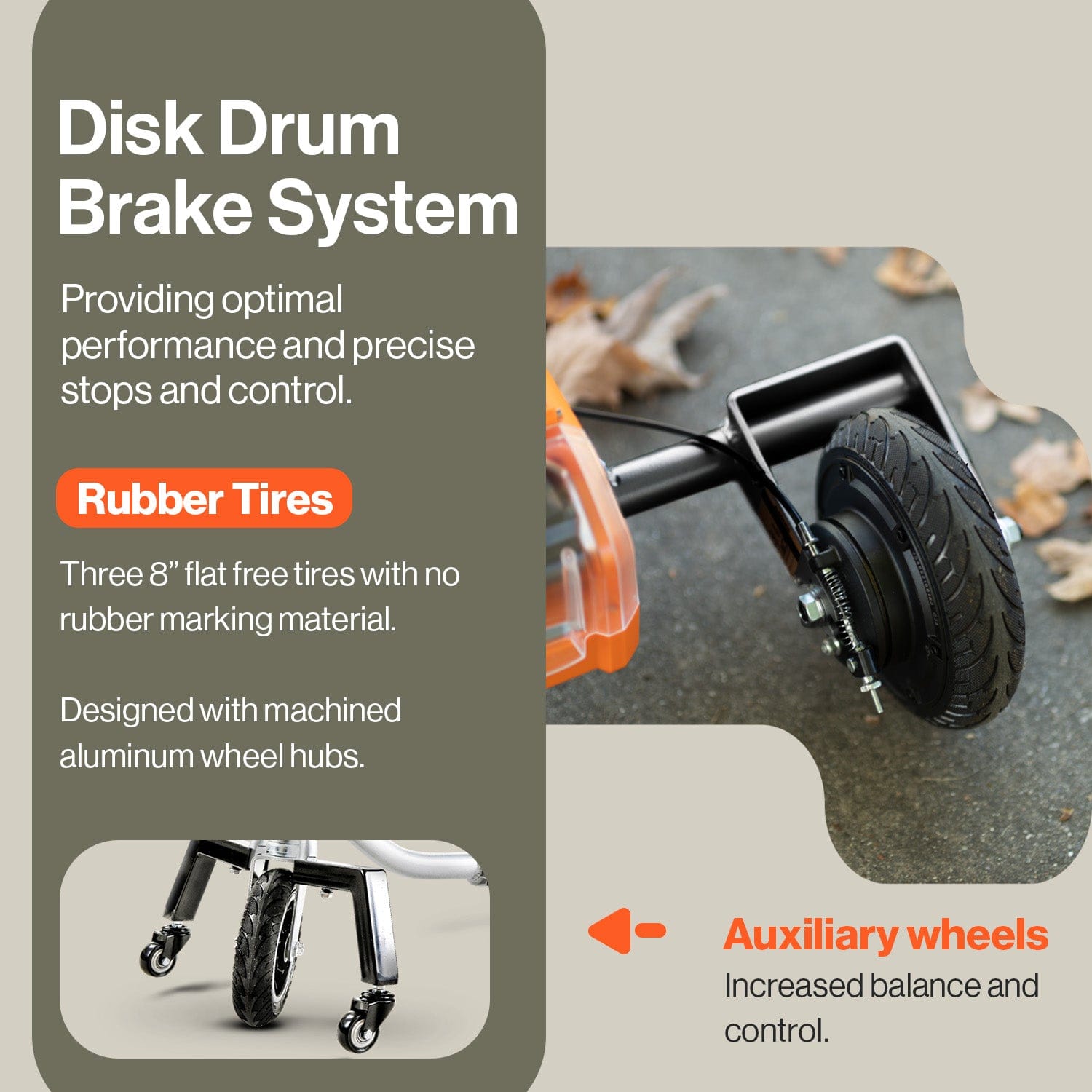
- Pneumatic (Air-Filled) Tires: Similar to car tires, these provide a more cushioned ride by absorbing more shock from bumps and uneven surfaces. They offer better traction on varied terrain, making them a great choice for outdoor adventurers. The trade-off is that they require regular air pressure checks and can be punctured.
Suspension works hand-in-hand with tires to create a smooth, stable experience. A scooter with a full suspension system will have shock absorbers on both the front and rear wheels, providing maximum comfort over cracked sidewalks, grassy parks, and gravel paths. For users who will primarily be on smooth, flat surfaces, a Mobility scooter without advanced suspension may be perfectly adequate and more affordable.

Turning Radius and Maneuverability: Getting Around Tight Spaces
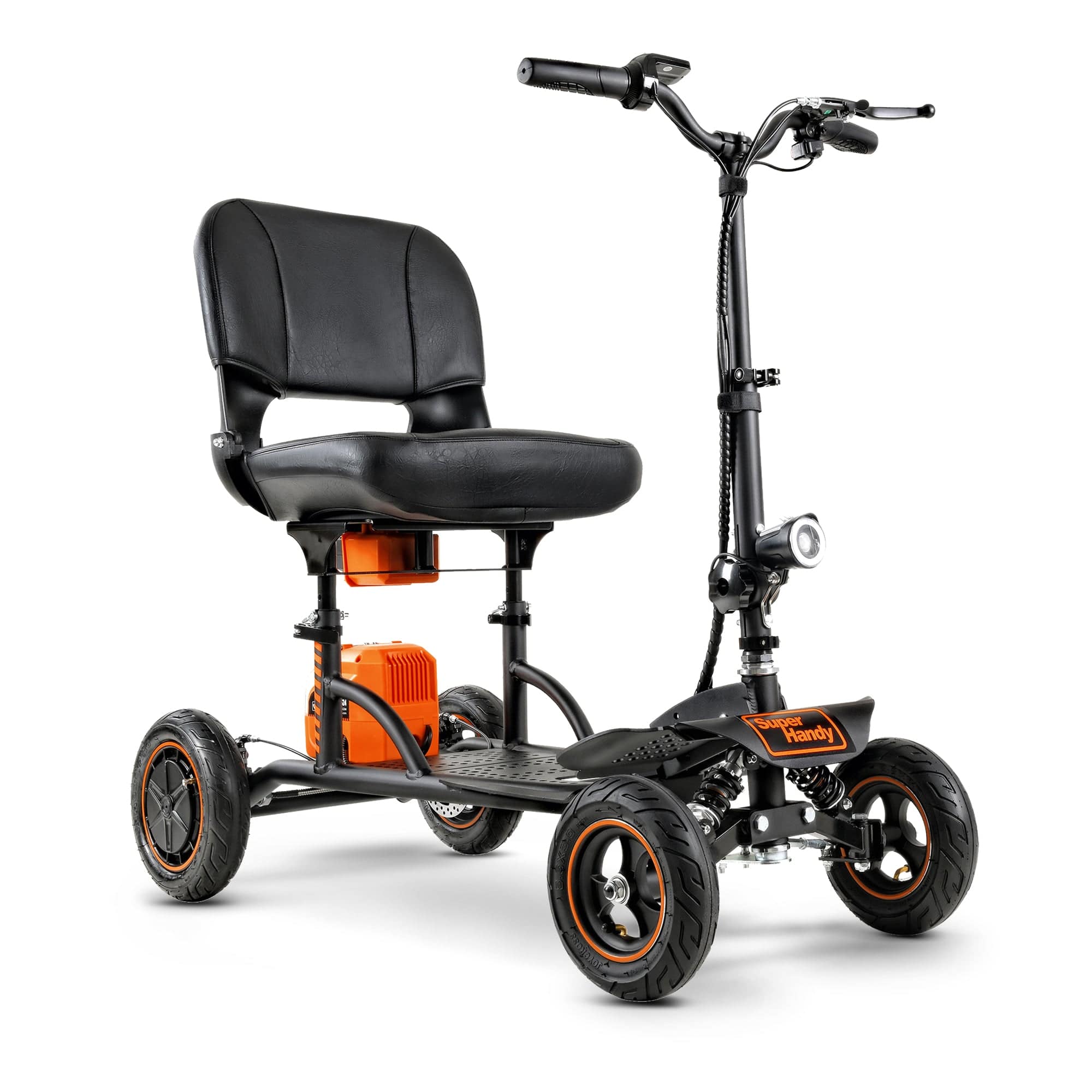
How easily can your scooter navigate a tight corner? The answer lies in its turning radius. This is the smallest circular turn the scooter can make. A smaller turning radius means greater maneuverability, which is essential for indoor use. If you plan to use your scooter to navigate narrow hallways, crowded store aisles, or small rooms in your home, look for a model with a turning radius under 45 inches. Three-wheel scooters typically offer the tightest turning radius, making them exceptionally nimble. However, many modern four-wheel scooters, like this compact Mobility scooter, are designed for impressive agility without sacrificing stability.
Comfort and Ergonomics: Seating, Controls, and User Experience
Since you’ll be spending a good amount of time in your scooter, comfort is non-negotiable. Key ergonomic features can make the difference between a pleasant ride and a fatiguing one. Start with the seat. Look for ample padding, supportive contouring, and adjustable height. A swivel seat is a fantastic feature that makes getting on and off the scooter much easier and safer, as you can turn to the side instead of twisting your body. Adjustable, flip-up armrests also enhance comfort and accessibility.
The control system, or tiller, is your dashboard. An adjustable tiller allows you to position the controls at a comfortable distance and angle, reducing strain on your arms and shoulders. Many people find a wraparound "delta" tiller easier to operate, as it can be controlled with either the left or right hand and is less tiring for those with limited hand strength or arthritis. A user-friendly control panel with clear battery indicators and an easy-to-reach horn is also important. Ultimately, a comfortable Mobility scooter is one you'll enjoy using, and features like a well-designed seat and intuitive controls on a Mobility scooter are what elevate the overall user experience.
Safety Features: Essential Considerations for Peace of Mind
When you rely on an electric mobility scooter for your independence, safety is non-negotiable. Modern scooters are equipped with a range of features designed to protect you on every journey. Look for comprehensive lighting packages, including bright LED headlights for seeing the path ahead and taillights and turn signals to ensure you are visible to others. Another critical feature is an automatic braking system. Most high-quality scooters have electromagnetic brakes that engage automatically when you release the throttle, providing a smooth, reliable stop without any extra effort. For added stability, especially when navigating inclines or uneven ground, anti-tip wheels are a must-have. Finally, don't overlook basics like a loud horn to alert pedestrians and rear-view mirrors to maintain awareness of your surroundings.

Understanding Weight Capacity and Size: Ensuring a Scooter That Can Handle Your Needs
Every Mobility scooter has a specific weight capacity, which is the maximum load it can safely support. This isn't just your body weight; you must also account for anything you'll carry, such as shopping bags, a portable oxygen tank, or a heavy purse. It's wise to choose a scooter with a weight capacity that is at least 20-30 lbs greater than your total expected load. This provides a safety buffer and ensures the motor and frame aren't over-stressed, which can improve performance and longevity. Equally important is the scooter's physical size. Before you buy, measure the doorways in your home, the hallways you'll navigate, and the space where you plan to store it. A compact, foldable Mobility scooter is ideal for smaller homes and travel, while a larger model might be better suited for outdoor use if you have ample storage.
Budgeting for Your Electric Mobility Scooter: What to Expect and Where to Find Value
The cost of an electric mobility scooter can range from several hundred to several thousand dollars, depending on its type, features, and brand. Lightweight travel scooters are typically the most affordable, while heavy-duty, all-terrain models with advanced suspension and long-range batteries sit at the higher end of the price spectrum. When budgeting, think about value over the initial price tag. A slightly more expensive model with a longer battery life, better suspension, and more robust safety features may be a wiser long-term investment.
It's also worth investigating potential financial assistance. In some cases, the cost of a scooter may be partially or fully covered if it is prescribed by a doctor and deemed medically necessary. For those who qualify, it's important to understand the specific Medicare.gov wheelchair and scooter coverage criteria to see if your purchase is eligible for reimbursement as durable medical equipment (DME). Always consult with your doctor and insurance provider to explore your options before making a final purchase.
Where to Buy: Online Retailers vs. Local Dealerships
You have two main options when purchasing a new Mobility scooter: an online retailer or a local brick-and-mortar dealership. Each has distinct advantages.
Online Retailers: Shopping online often provides a much wider selection and more competitive pricing due to lower overhead. You can easily compare models, read customer reviews, and have the scooter shipped directly to your door. Many scooters, especially travel models, are designed for easy, tool-free assembly. The primary downside is that you can't test-drive the scooter before you buy.
Local Dealerships: A local dealer allows you to see, touch, and test-drive different models. You can get personalized, in-person advice from a salesperson, and the purchase price often includes professional assembly, delivery, and a tutorial. However, this hands-on service typically comes at a cost, with prices being higher than online. The selection may also be limited to the brands the dealership carries.
Ultimately, the best choice depends on your priorities. If you value convenience and cost-effectiveness and are comfortable with minor assembly, an online retailer is an excellent option. If you prefer to try before you buy and want in-person service, a local dealer may be a better fit.
Maintaining Your Electric Mobility Scooter: Tips for Longevity
An electric mobility scooter is a significant investment in your freedom and independence. To ensure it serves you reliably for years to come, regular maintenance is key. By following a few simple steps, you can protect your scooter, prevent costly repairs, and enjoy a safe, smooth ride every time.
- Battery Care is Crucial: The battery is the heart of your scooter. To maximize its lifespan, charge it fully after each day of use, even if you only traveled a short distance. Avoid letting the battery drain completely, and store your scooter in a temperate, dry location, as extreme cold or heat can damage the battery cells.
- Check Your Tires: Before you head out, give your tires a quick inspection. If you have pneumatic (air-filled) tires, check the pressure regularly to ensure a smooth ride and prevent flats. For solid tires, look for significant wear and tear or any embedded debris that could affect performance.
- Keep It Clean: Regularly wipe down your mobility scooter with a damp cloth and a mild detergent. This not only keeps it looking great but also prevents dirt and grime from building up in moving parts. Avoid using a high-pressure hose, as this can force water into the electrical components and cause damage.
- Perform Regular Inspections: Once a month, do a quick walk-around. Test the brakes, check that all lights are working, sound the horn, and listen for any unusual squeaks or grinding noises. Addressing small issues early can prevent them from becoming major problems.
- Schedule Professional Service: Just like a car, an annual check-up with a qualified technician is a great idea. They can inspect the motor, brakes, transaxle, and electrical systems to ensure everything is in top working order.
[IMAGE PLACEHOLDER] A person gently wiping down the seat and tiller of their clean electric mobility scooter in a garage.
Frequently Asked Questions About Electric Mobility Scooters
As you explore your options, you'll likely have some questions. Here are answers to some of the most common ones we hear.
Can I take my mobility scooter on an airplane?
Yes, in most cases, you can travel with your electric mobility scooter. However, it requires planning. You must contact the airline well in advance to inform them you'll be traveling with a mobility device. The primary concern for airlines is the battery. According to the FAA, different rules apply depending on whether your scooter uses a non-spillable (like gel cell or AGM) or lithium-ion battery, and you may need to disconnect it for the flight. Always check the airline’s specific policy and the FAA PackSafe guidance for wheelchairs and mobility devices before your trip.
How often should I charge my scooter's battery?
The best practice is to charge your scooter's battery overnight after every day you use it. This ensures you start each day with a full charge and helps maintain the long-term health of the battery. Avoid the habit of "topping up" for short periods or letting the battery sit completely empty for an extended time.
What's the main difference between a 3-wheel and a 4-wheel scooter?
The primary difference lies in the balance between maneuverability and stability. A 3-wheel mobility scooter offers a tighter turning radius, making it ideal for navigating narrow indoor spaces like hallways and store aisles. A 4-wheel mobility scooter provides a wider base of support, offering superior stability on uneven outdoor terrain.

Making Your Final Decision: A Checklist for the Perfect Scooter
You’ve done the research and narrowed down your options. Before you make that final purchase, run through this checklist to ensure the mobility scooter you choose is the perfect match for your needs and lifestyle.
- Primary Use: Will you use it mostly indoors, outdoors, or a mix of both? This will guide your choice between a 3-wheel, 4-wheel, or travel model.
- Weight Capacity: Does the scooter's maximum weight capacity safely accommodate your body weight plus anything you plan to carry, like groceries or a personal bag?
- Battery Range: Will the scooter's maximum travel range per charge cover your typical daily adventures without causing range anxiety?
- Portability: If you plan to travel, is the scooter light enough for you or a loved one to lift? Does it fold or disassemble easily to fit in a vehicle?
- Comfort & Fit: Is the seat comfortable and adjustable? Can you easily reach and operate the tiller and controls without straining?
- Maneuverability: Will the turning radius work for your home’s layout and the places you frequent?
- Safety Features: Does the mobility scooter have the essential features you need, such as headlights, a horn, and anti-tip wheels?
- Budget: Does the final choice fit comfortably within your budget, including any desired accessories?
Answering these questions will give you the confidence that you’re not just buying a scooter—you’re choosing the right key to unlock a more active and independent life.
Related Products

Leave a comment
All comments are moderated before being published.
This site is protected by hCaptcha and the hCaptcha Privacy Policy and Terms of Service apply.