












Choosing the Right Trailer Dolly for Your Small Travel Trailer
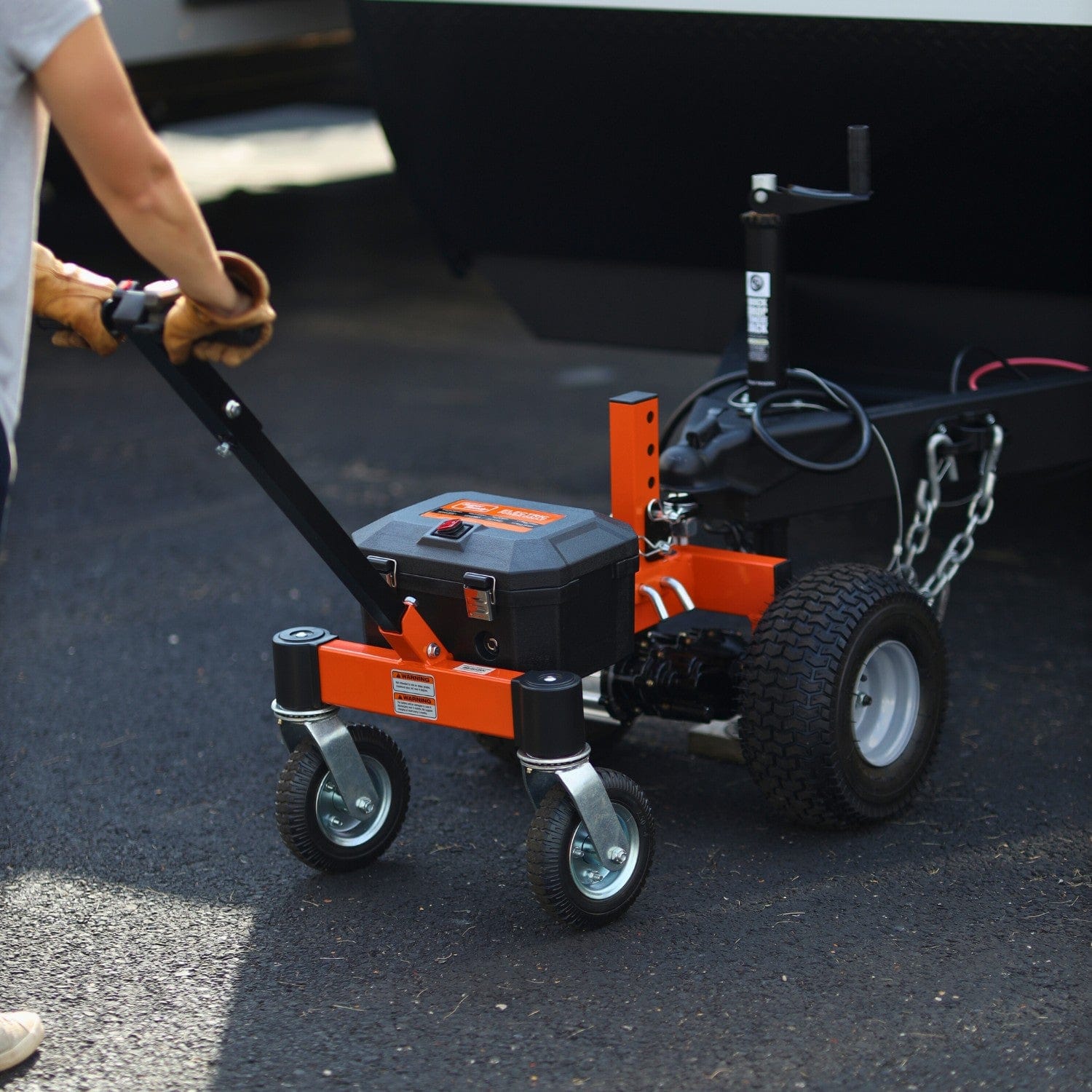
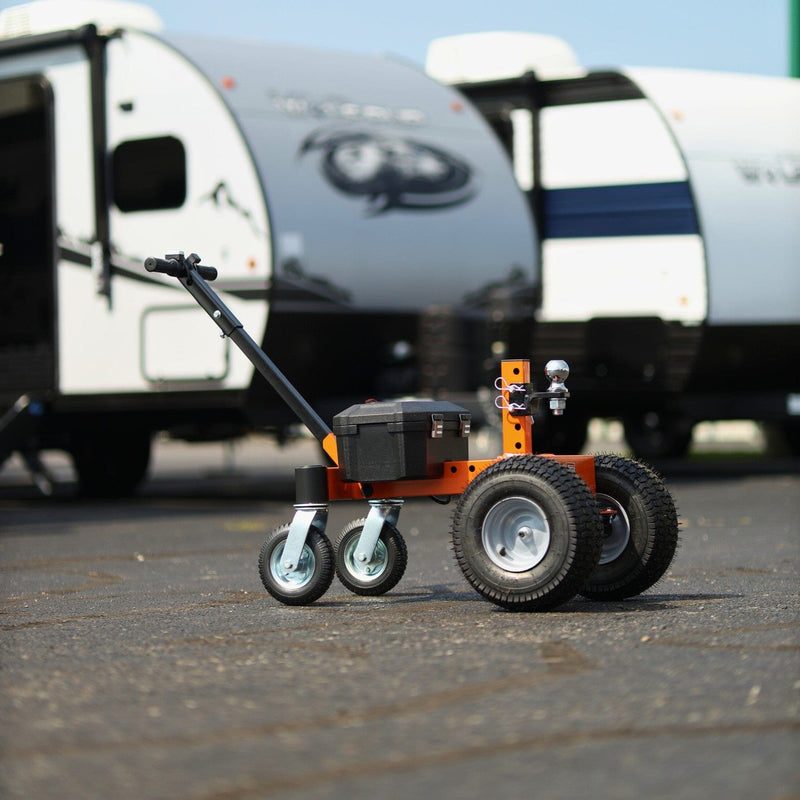
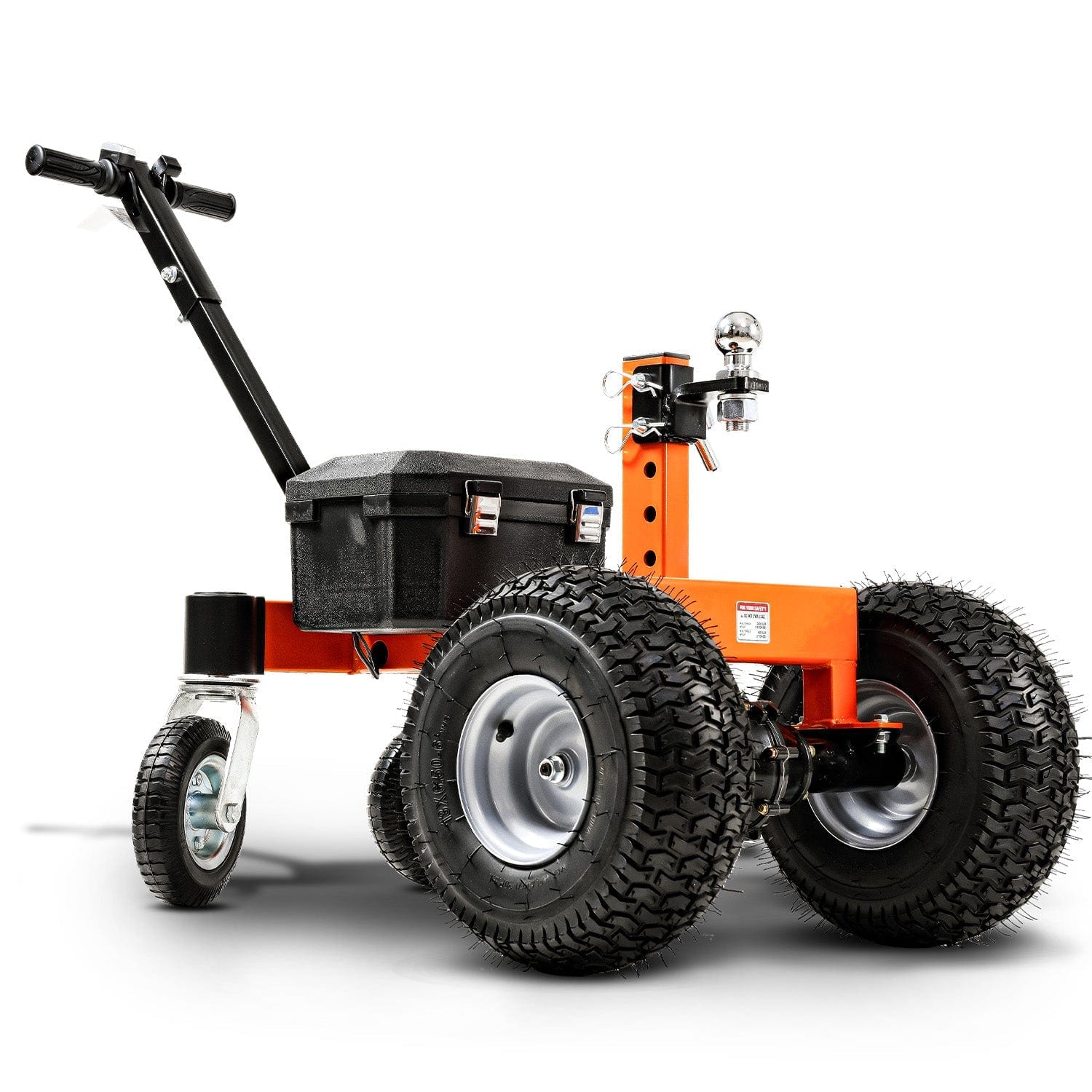
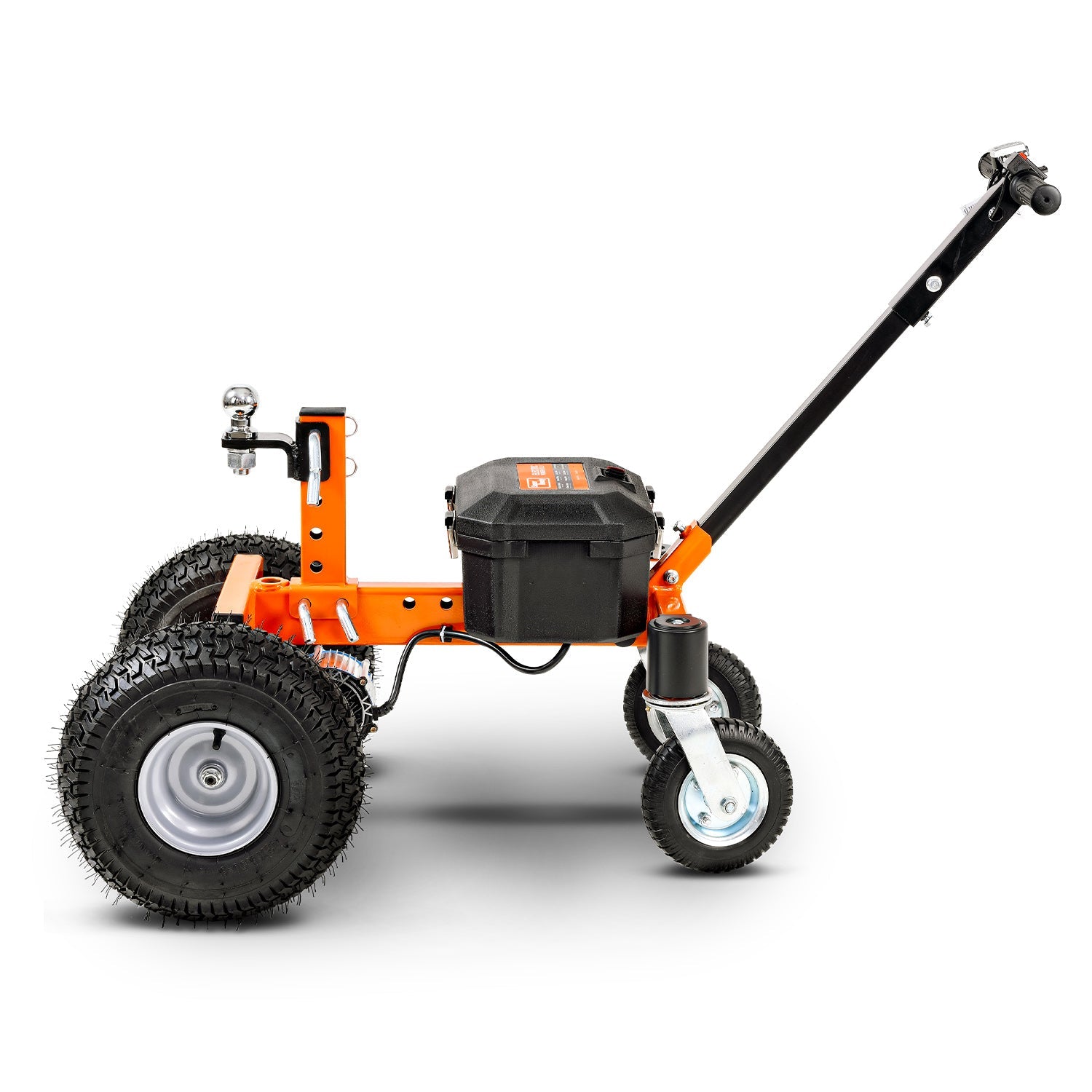
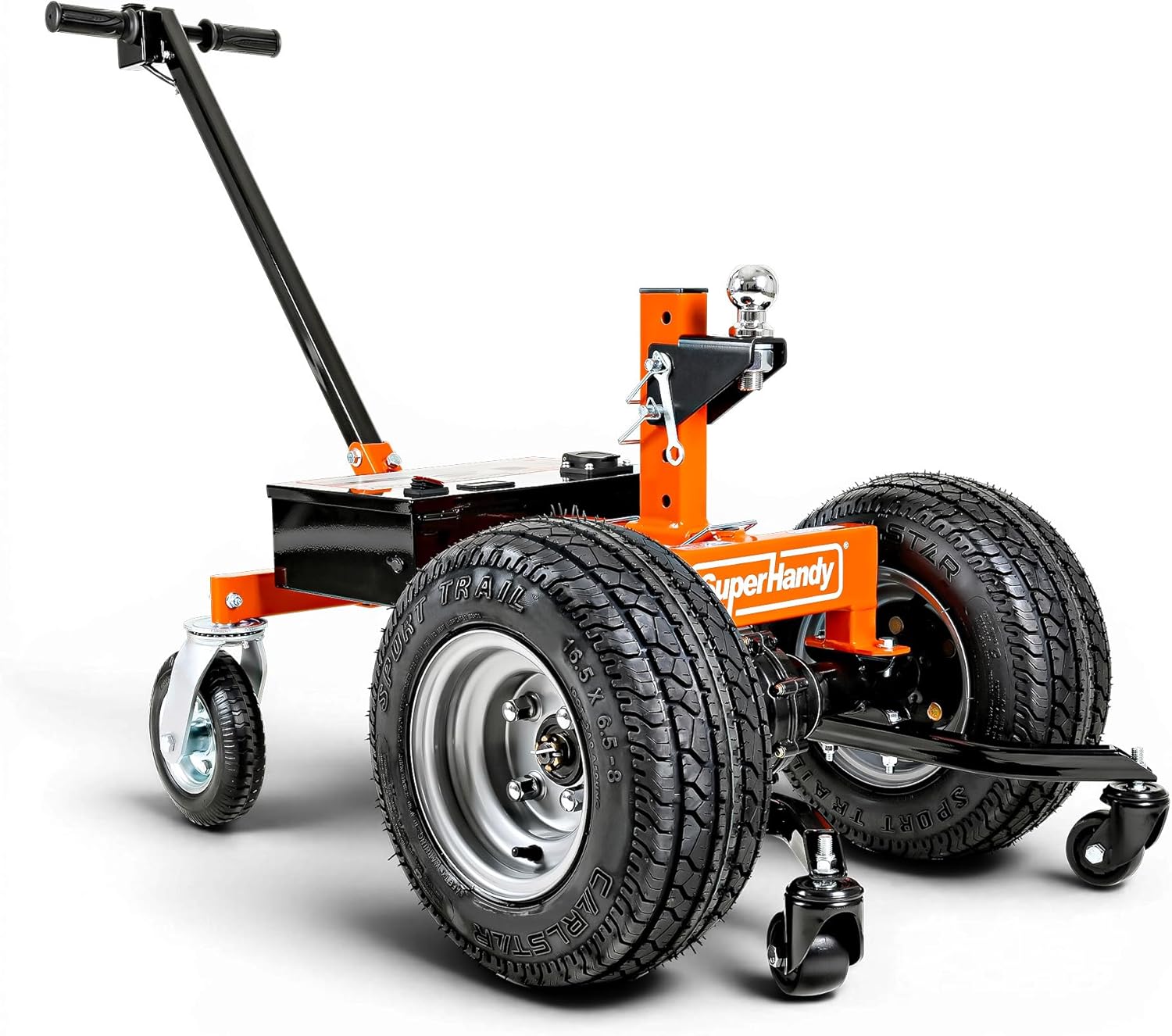
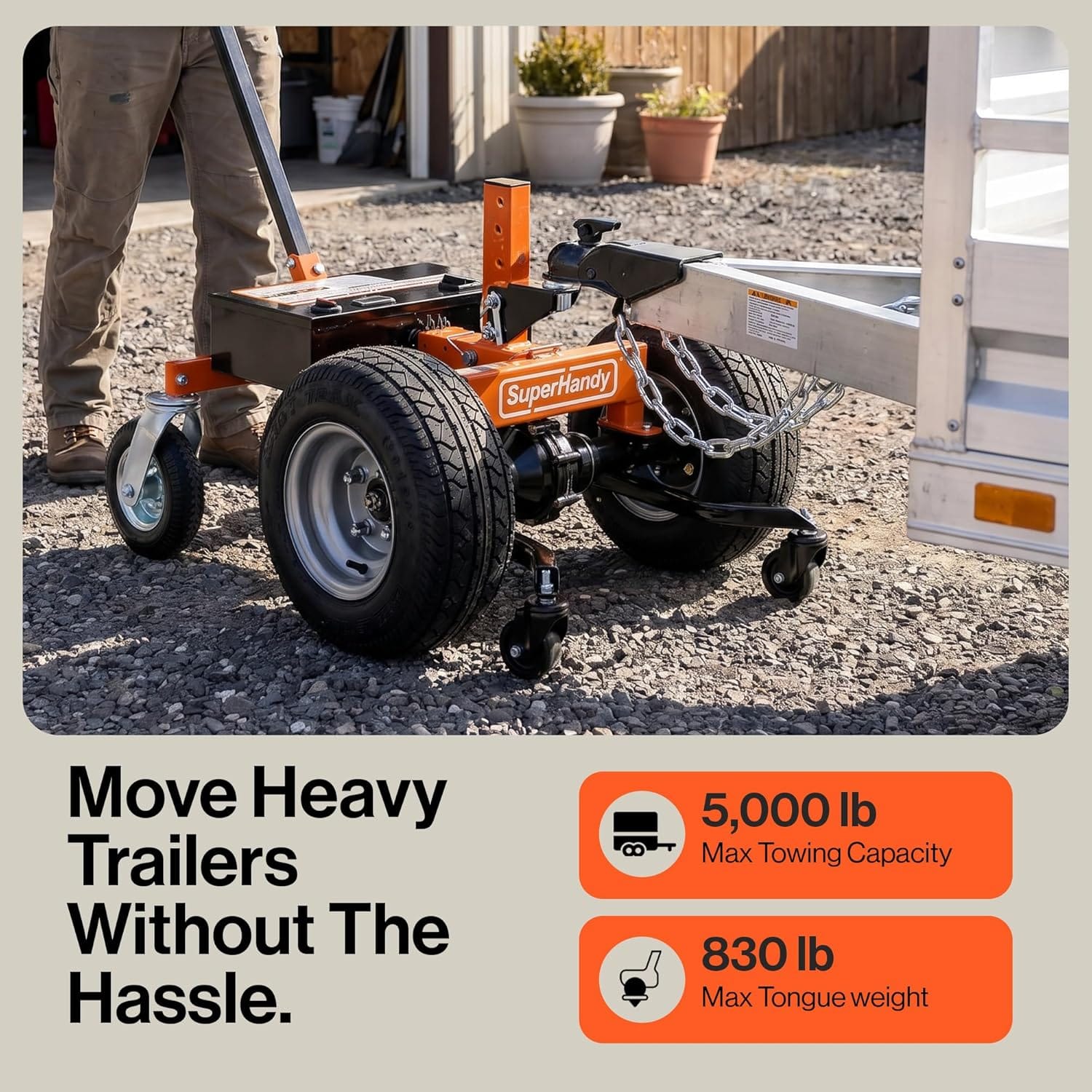
The first step is selecting a trailer dolly that matches your specific needs. A trailer dolly isn't a one-size-fits-all tool; it's a specialized piece of equipment designed to make your life easier. At its core, a trailer dolly provides a ball mount that hooks to the hitch, transferring the tongue weight to better wheels with better tires for greater traction. This simple mechanism gives you the power to pivot and guide your trailer with precision that’s impossible with a tow vehicle.
Dollies come in two main types:
- Manual Dollies: These are operated by hand and rely on your strength to push and pull the trailer into place. They are best suited for very lightweight trailers on perfectly flat, hard surfaces like concrete or asphalt. While trailer dollies are available in a variety of sizes and weight capacities, the maximum capacity for manual trailer dollies is typically approximately 600 lbs of tongue weight. Anything heavier, or on an incline, can become difficult and potentially unsafe to manage manually.
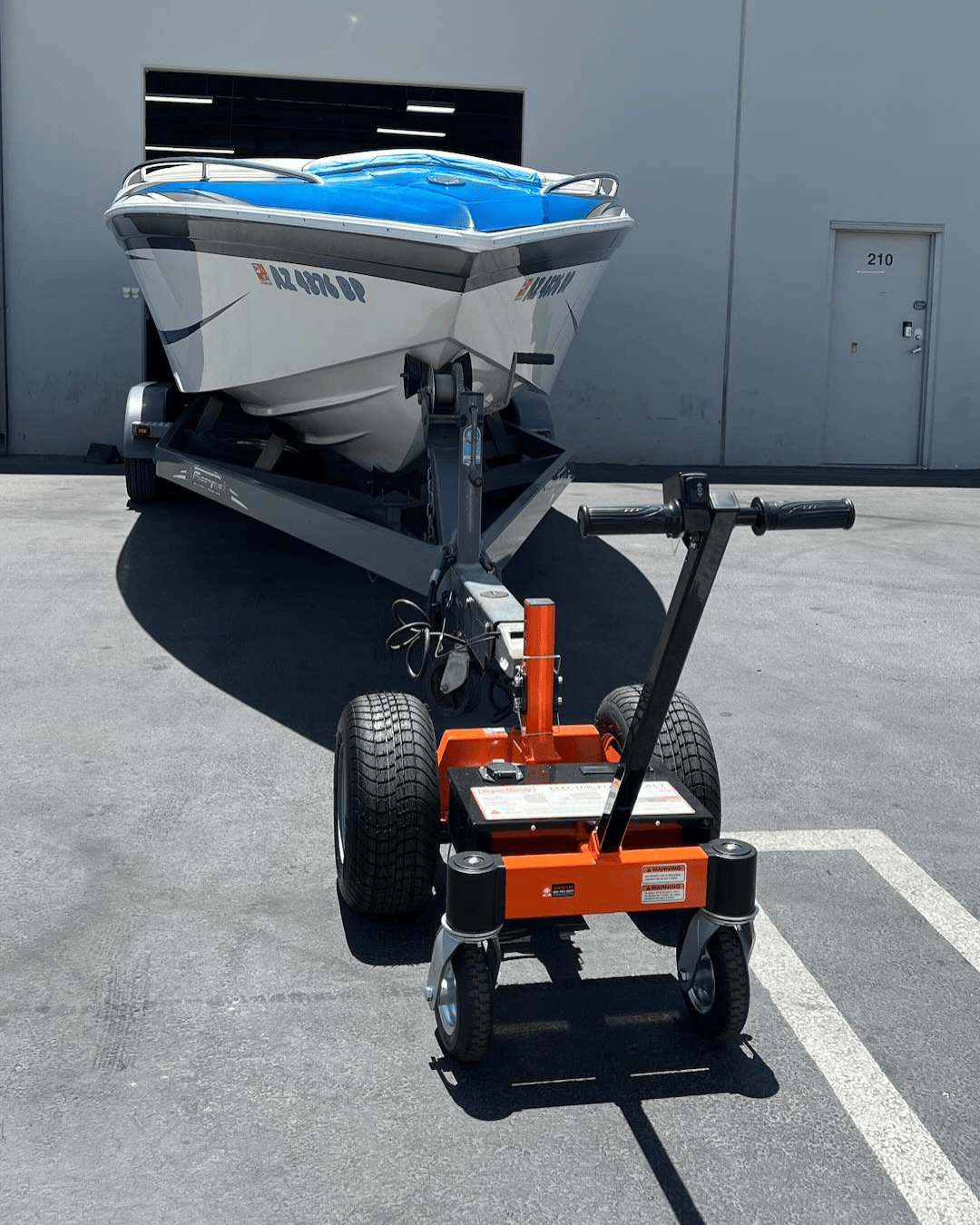
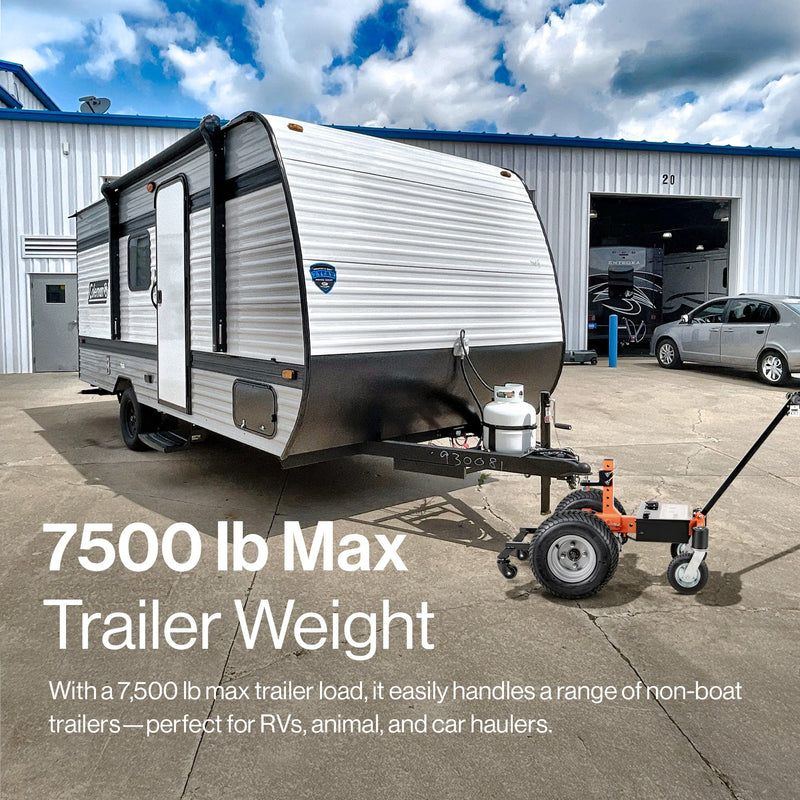
- Electric Trailer Dollies: For most small travel trailers, an Electric Trailer Dolly is the superior choice. These units are equipped with a DC motor, often powered by your trailer's own battery, that does all the heavy work for you. With simple forward and reverse controls, you can effortlessly guide your trailer over grass, gravel, and slight inclines. Models like the 3600 lb Electric Trailer Dolly or the more powerful 7500 lb Electric Trailer Dolly are rated for the total weight of the trailer, ensuring you have enough power to maneuver safely and without strain.
Understanding Your Small Travel Trailer's Dimensions and Weight
Before you can choose the right dolly or confidently maneuver your trailer, you need to know its vital statistics. These numbers are non-negotiable for safe and effective dolly moving.
- Tongue Weight (TW): This is the most important number for selecting a dolly. It’s the downward force that the trailer tongue exerts on the hitch ball. Your dolly must be rated to support this weight. You can typically find the tongue weight in your trailer’s owner’s manual or on a sticker located on the A-frame of the trailer.
- Gross Vehicle Weight (GVW): This is the total weight of your trailer when fully loaded with water, propane, and gear. While the dolly only supports the tongue weight, its motor and tires are responsible for moving the entire GVW. Ensure your electric dolly's capacity exceeds your trailer's GVW for reliable performance.
- Overall Dimensions: Know your trailer's exact length (from hitch to bumper), width, and height. These measurements are crucial when you’re assessing a tight spot and planning your path around obstacles like trees, posts, and overhanging branches.
Keep these numbers handy—perhaps on a notecard in your glove box—so you're always prepared.
Assessing the Tight Campsite: Obstacles and Angles
Once you arrive at your site, resist the urge to immediately back in. The most important move you can make is to get out of your vehicle and walk the site. This is your chance to create a game plan.
- Walk the Path: Trace the exact route you want your trailer to take, from where you'll unhitch to its final resting place.
- Identify Obstacles: Look for everything that could get in your way. Common culprits include the utility pedestal, low-hanging tree limbs, fire pits, picnic tables, and uneven terrain. Note their locations and plan to give them a wide berth.
- Analyze the Surface: Is the ground paved, gravel, grass, or dirt? Is it level, or does it have a slope? Softer surfaces and inclines require more effort and make a powerful electric dolly essential for control.
- Visualize the Angles: Think about the turns you'll need to make. A trailer dolly allows for an incredibly tight turning radius, letting you pivot the trailer in ways your tow vehicle can’t. This is your advantage. By planning your angles in advance, you can execute a smooth, one-shot parking maneuver.
Pre-Dolly Setup: Hitching and Powering Your Trailer
With your plan in place, it’s time to transition from towing to dolly moving. A methodical setup ensures safety and a smooth process.
- Position and Chock: Use your tow vehicle to get the trailer as close to the final area as is comfortable. Find a relatively level spot to perform the unhitching. Before doing anything else, securely chock the trailer’s wheels on both sides. This prevents any unexpected rolling and is the most critical safety step.
- Unhitch from Vehicle: Disconnect the safety chains and breakaway cable. Use your trailer’s tongue jack to lift the coupler off the tow vehicle's hitch ball. Pull your vehicle away.
- Connect the Dolly: Roll your trailer dolly underneath the raised coupler. Make sure the hitch ball on the dolly is the correct size for your trailer. Slowly lower the trailer tongue onto the dolly’s ball, then lock the coupler latch and insert the safety pin. Once secure, you can fully retract the trailer’s tongue jack.
- Power Up: If using an electric dolly, connect its power cables to your trailer’s 12V battery. This brings the dolly to life, giving you motorized control right at your fingertips.
- Final Check: Do one last walk-around. Confirm the trailer wheels are still chocked, the coupler is securely latched to the dolly, and your planned path is clear. Now you’re ready to remove the chocks and begin your precision parking.
Mastering the Trailer Dolly: Forward and Reverse Maneuvers
Once your trailer is hitched to the dolly, the real fun begins. Think of an Electric Trailer Dolly as a powered pallet jack for your camper. The controls are typically intuitive, often a thumb-operated switch or throttle on the handle for forward and reverse, along with variable speed control.
Our best advice: start slow. Before tackling that tricky back-in spot, find an open area in the campground or even your driveway to practice.
- Forward Movement: This is the easy part. Gently engage the forward throttle and guide the dolly with the handlebar. You’ll walk with it, steering the trailer’s tongue just like you’d push a heavy cart. The movement is direct and easy to control.
- Reverse Maneuvers: This is where a trailer dolly truly shines. Unlike backing with a tow vehicle, you are now facing your trailer and can see exactly where it's going. When you push the reverse control, you are essentially pushing the trailer backward. Small steering inputs with the dolly's handle create a pivot at the trailer's axle, swinging the back end with surprising precision. Remember that a small turn of the handle will result in a larger movement at the rear of the trailer.
Master these basic movements in an open space, and you’ll build the confidence needed for more complex situations.
Navigating Obstacles: Trees, Posts, and Other RVs
The primary advantage of dolly moving in a crowded campsite is unparalleled visibility. You’re not guessing based on mirror angles; you’re walking right beside your trailer, able to see every potential obstacle with your own eyes.

When you encounter a tree, utility post, or a neighbor's slide-out, stay calm and move deliberately.
- Walk the Path First: Before you move the trailer, walk the intended path of the trailer's wheels. Look for soft ground, hidden rocks, low-hanging branches, and the campsite’s utility connections.
- Use a Spotter (But Trust Your View): A spotter is always a good idea to watch the trailer's roofline and the off-side corner. However, as the dolly operator, you have the most critical view of the clearance between the trailer and the obstacle.
- Execute "S-Turns": To get around a post, you’ll perform a gentle S-turn. First, steer the dolly’s handle away from the obstacle. This will swing the trailer's tongue away and pivot the rear of the trailer towards the obstacle. Once the trailer's wheels have cleared the post, steer the handle back toward the obstacle to straighten out and complete the maneuver. The tight turning radius of a dolly makes this far simpler than with a truck.
Parking Your Small Travel Trailer Precisely
This is the moment of truth—placing your trailer exactly where you want it. Whether you have a lightweight camper perfect for a 3600 lb Electric Trailer Dolly or something a bit heavier, the principle is the same: slow, controlled movements are key.
- The Final Approach: As you near the final parking spot, slow to a crawl. Use small bursts of power to "creep" the trailer into position. This is where you can truly appreciate the fine control a dolly offers.
- Aligning Hookups: Tired of being a foot short of the sewer drain or stretching your power cord to its limit? A trailer dolly makes this a problem of the past. You can easily nudge the trailer a few inches left or right to perfectly align your connections without having to get back in the truck.
- Positioning on Levelers: If your spot is unlevel side-to-side, place your leveling blocks next to the tires on the low side. Then, use the dolly to pull or push the trailer straight onto the blocks on the very first try. No more overshooting or repeated attempts.
Securing Your Trailer After Positioning
You’ve done it! The trailer is perfectly placed. Now, it’s time to secure it safely before you unhitch the dolly and relax. Following this order of operations is crucial for safety.
- Chock the Wheels: Before doing anything else, securely chock the trailer’s wheels on both sides. This is the single most important step to prevent any rolling or shifting.
- Lower the Tongue Jack: Place a jack block or pad under your trailer's tongue jack. Lower the jack until it makes firm contact with the block and takes the full weight of the trailer tongue off the dolly’s ball hitch.
- Unhitch the Dolly: With the trailer's weight supported by its own jack and wheels, you can now safely unlatch the coupler and move your dolly out of the way. A powerful unit like a 7500 lb Electric Trailer Dolly can then be easily stored.
- Level and Stabilize: Use the tongue jack to level your trailer front-to-back. Finally, lower your four corner stabilizer jacks until they are snug against the ground or blocks. Remember, these are for stability to prevent rocking, not for lifting or leveling the entire trailer.
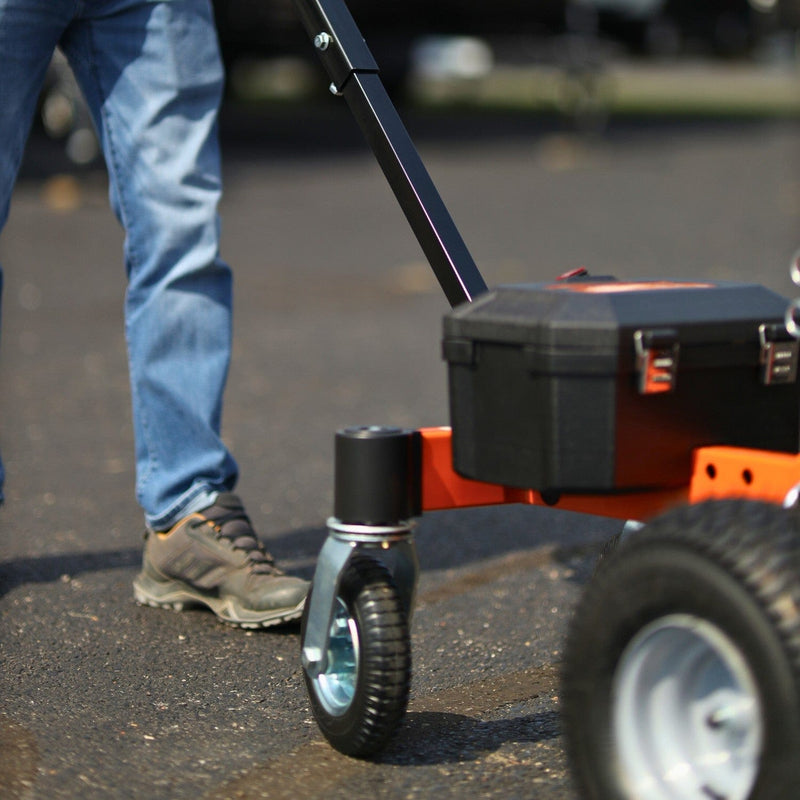
With your trailer secure, you're ready to hook up your utilities and start enjoying the perfectly positioned campsite you earned with ease.
Troubleshooting Common Trailer Dolly Challenges
Even the best tools can present challenges. If your trailer dolly isn't performing as expected, a few simple checks can often solve the problem. Here are some common issues and how to address them:
-
Dolly Struggles to Move or Loses Traction: This is the most frequent issue, especially on soft ground like wet grass, mud, or loose gravel.
- Check the Surface: An Electric Trailer Dolly needs a firm surface to grip. If the wheels are spinning, place plywood, traction mats, or even your trailer's leveling blocks in the dolly's path to create a solid runway.
- Verify Battery Power: A low battery will result in weak performance. Ensure your dolly’s battery is fully charged before you begin the dolly moving process.
- Confirm Your Weight: Double-check that your trailer's tongue weight is within your dolly's rated capacity. A lighter-duty model like a 3600 lb Electric Trailer Dolly is perfect for many small trailers, but if you're close to the limit, you might need a more robust unit like a 7500 lb Electric Trailer Dolly. Remember that full propane tanks and gear stored at the front of your trailer add to the tongue weight.
-
Steering Feels Difficult or Unresponsive: If the dolly is hard to turn, check the tire pressure. Underinflated tires can make steering sluggish. Also, try to keep the dolly on the most level ground possible, as maneuvering out of a dip or over a hump can be challenging.
-
The Hitch Connection Seems Loose: A secure connection is non-negotiable for safety. Always confirm you are using the correct hitch ball size for your trailer’s coupler. When you lower the coupler onto the ball, ensure the latch engages completely and is secured with its safety pin or clip.
Maintaining Your Trailer Dolly for Longevity
A trailer dolly is a powerful investment that makes campsite setup a breeze. To ensure it serves you well for years to come, a little routine maintenance goes a long way.
- Battery Care: For electric models, the battery is the heart of the machine. Charge it fully after each use and avoid storing it for long periods in a discharged state. During the off-season, store the battery in a climate-controlled space, as extreme cold can degrade its performance and lifespan.
- Tire Health: Just like on your trailer, the dolly's tires are critical. Keep them inflated to the manufacturer's recommended PSI. Before each trip, give them a quick inspection for cracks, wear, or damage.
- Keep It Clean: After maneuvering your trailer, especially in dusty or muddy conditions, wipe down the dolly. This prevents dirt from working its way into moving parts and helps prevent rust on the frame and hardware.
- Proper Storage: Protect your dolly from the elements by storing it in a dry, covered location like a garage, shed, or under a waterproof cover.
When to Consider Professional Help for Difficult Spots
A trailer dolly gives you incredible control, but it's also important to recognize its limitations and prioritize safety. There are certain situations where it’s wiser to seek assistance than to risk damage or injury.
Consider pausing and asking for help—from a seasoned campground host or an experienced RVer—in these scenarios:
- Steep Grades: Trailer dollies are designed for relatively level ground and slight inclines. A steep slope can allow the trailer's weight to overpower the dolly’s motor and braking ability, creating a dangerous runaway situation.
- Extremely Unstable Ground: If the ground is deep sand, thick mud, or a crumbling embankment, your dolly won't get the traction it needs. Forcing it could lead to the dolly digging in or the trailer becoming unstable.
- Zero Margin for Error: If you’re trying to fit your trailer into a spot with mere inches to spare between a building, a cliff, and another RV, the risk may outweigh the reward. A small miscalculation could lead to costly damage.
Maximizing Your Campsite Experience with Easy Trailer Placement
Using a trailer dolly isn't just about solving a problem; it's about fundamentally improving your camping experience. By freeing yourself from the constraints of your tow vehicle, you unlock a new level of freedom and precision.
Imagine being able to grab that perfect, secluded spot that everyone else passes up because the back-in angle is "impossible." With a dolly, you can unhitch in an open area and simply walk your trailer into place. You can orient your trailer perfectly to catch the morning sun, position your awning for optimal afternoon shade, and place your door exactly where the path to the fire pit should be.
This precise, low-stress dolly moving process eliminates the frustration of a 10-point turn, turning a potentially tense arrival into a calm, controlled, and satisfying start to your vacation.
Frequently Asked Questions about Trailer Dollies and Tight Spots
Can a trailer dolly really handle my travel trailer's weight?
Absolutely, provided you choose the right one for the job. The most important factor to consider is your trailer's tongue weight, not its total gross weight. An Electric Trailer Dolly is designed to carry and pivot the front of the trailer. Most small travel trailers have a tongue weight that falls comfortably within the capacity of a standard dolly. For instance, a versatile model like the 3600 lb Electric Trailer Dolly is an excellent match for many pop-ups and lightweight campers. For larger trailers with a heavier tongue weight, a more robust option like the 7500 lb Electric Trailer Dolly provides the necessary power and traction. Always confirm your trailer's specified tongue weight and choose a dolly with a capacity that comfortably exceeds it.
What kind of surfaces can I use a trailer dolly on?
Trailer dollies perform best on firm, relatively level surfaces such as asphalt, concrete, and hard-packed dirt or gravel. They are precision instruments, not all-terrain vehicles. While their rugged tires can manage minor imperfections and transitions (like moving from a paved road to a gravel campsite pad), they can lose traction or sink in soft sand, deep mud, or on very loose, thick gravel. Before you begin your dolly moving maneuver, it's wise to walk the intended path. Check for soft spots, large rocks, or significant dips that could impede the dolly's wheels and compromise your control.
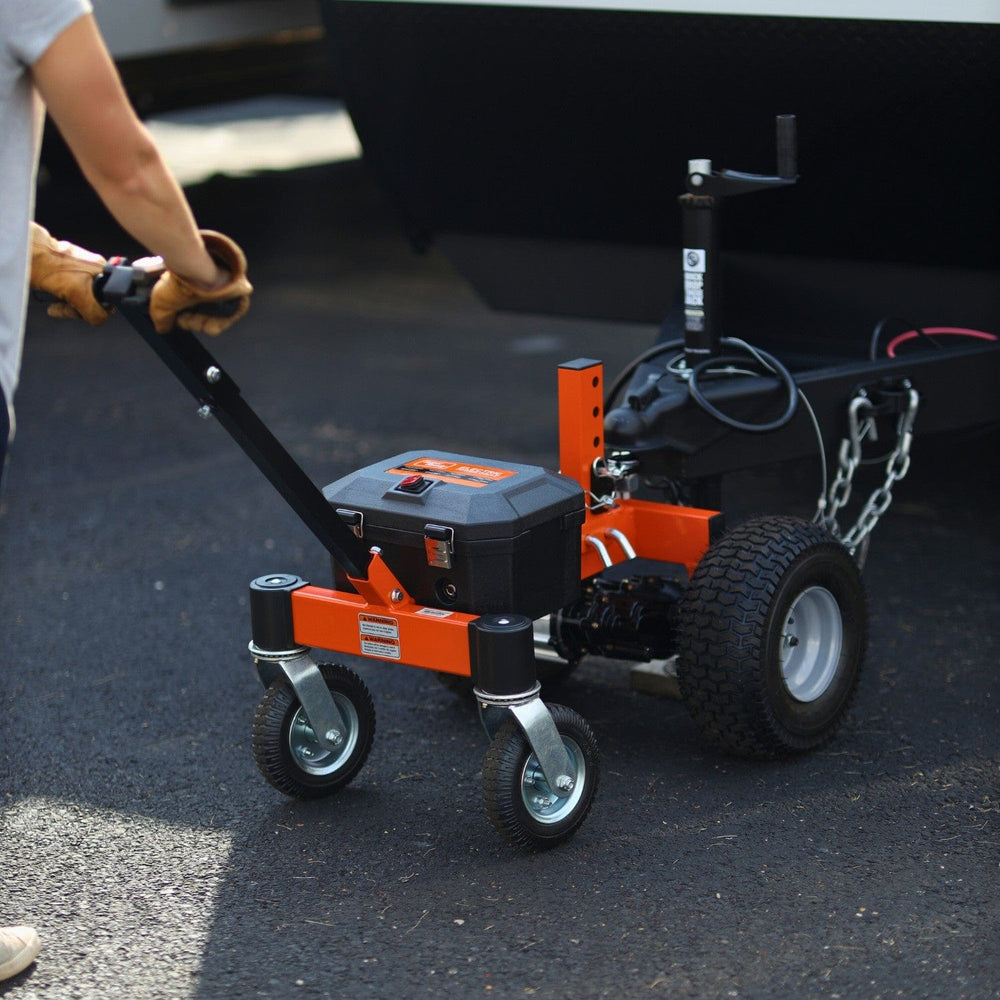
Is it safe to move a trailer with a dolly on a slope or incline?
This requires extreme caution and is generally not recommended. Trailer dollies are engineered for use on level ground. Attempting to move a trailer up a significant incline puts immense strain on the dolly's motor and drive wheels, which can lead to slippage or overheating. Moving downhill is even more hazardous. Gravity can easily cause the trailer's weight to overwhelm the dolly's braking capabilities, creating a dangerous runaway situation. For very slight, manageable grades, always have wheel chocks in hand to secure the trailer wheels instantly if needed. If your campsite involves a steep slope, it is far safer to use your tow vehicle or ask for assistance.
How fast does a trailer dolly move? Is it hard to control?
One of the greatest benefits of a trailer dolly is its slow, manageable speed. These devices operate at a comfortable walking pace, giving you plenty of time to think, react, and make precise adjustments. This is the key difference compared to the stress of making micro-corrections with a large tow vehicle. The controls are typically simple, often just a thumb switch for forward and reverse, combined with a tiller handle for steering. This slow, deliberate movement is what makes dolly moving so effective for tight spots—it allows you to execute sharp turns and stop on a dime without fighting the momentum and wide turning radius of your truck or SUV.
Why not just get better at backing up with my tow vehicle?
Improving your backing-up skills is a valuable asset for any RVer. However, a trailer dolly solves problems that skill alone simply cannot overcome. Some campsites present challenges like 90-degree turns from a narrow lane, where a tow vehicle physically cannot make the swing without hitting an obstacle. A dolly allows you to unhitch your trailer and pivot it in a space barely larger than its own footprint—a maneuver that's impossible when attached to a vehicle. It’s not about replacing skill; it’s about having the right tool for otherwise impossible situations, reducing stress, and preventing costly damage to your RV, your vehicle, and the campsite.
Related Products

Leave a comment
All comments are moderated before being published.
This site is protected by hCaptcha and the hCaptcha Privacy Policy and Terms of Service apply.