












Understanding Your Electric Trailer Dolly: Key Components and Features
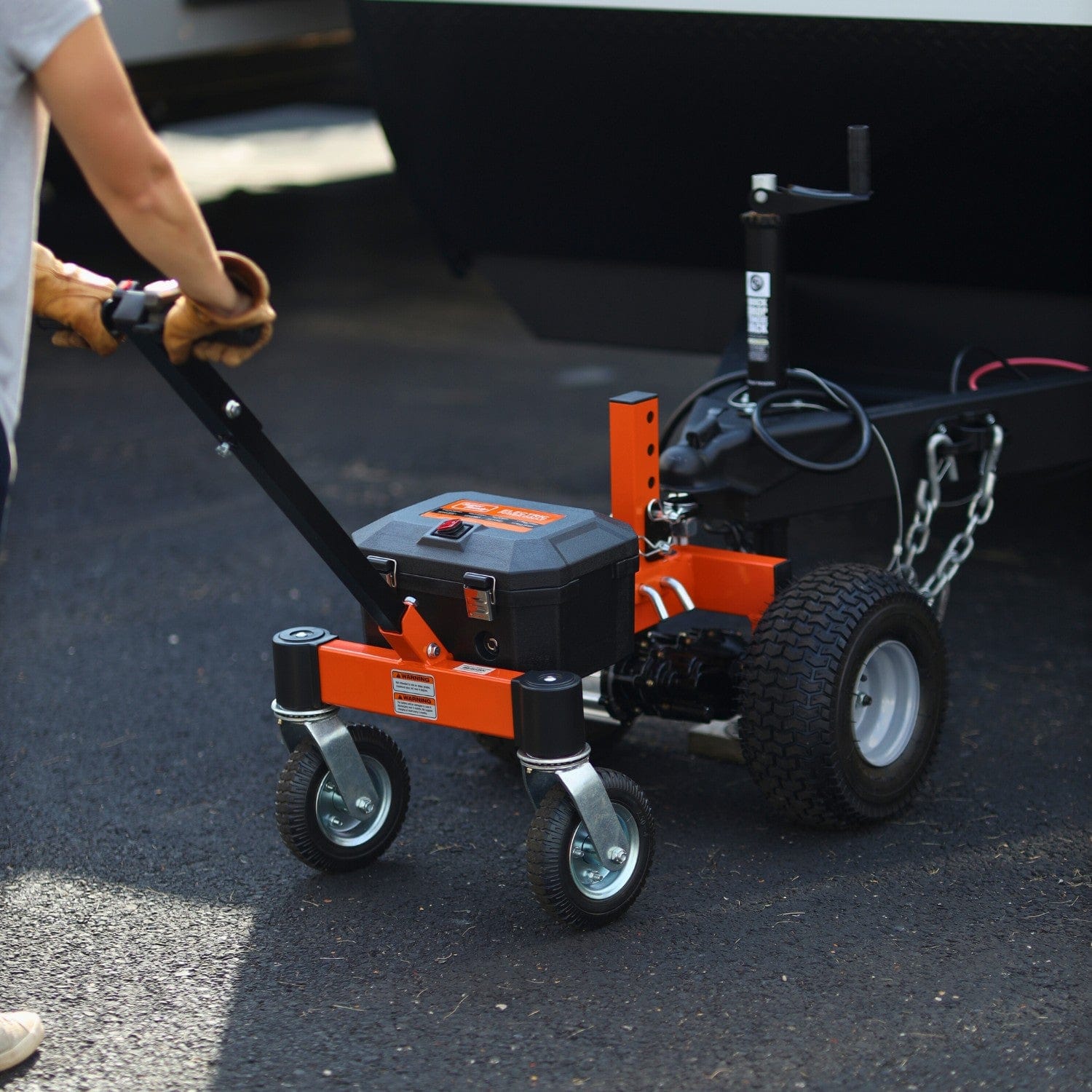
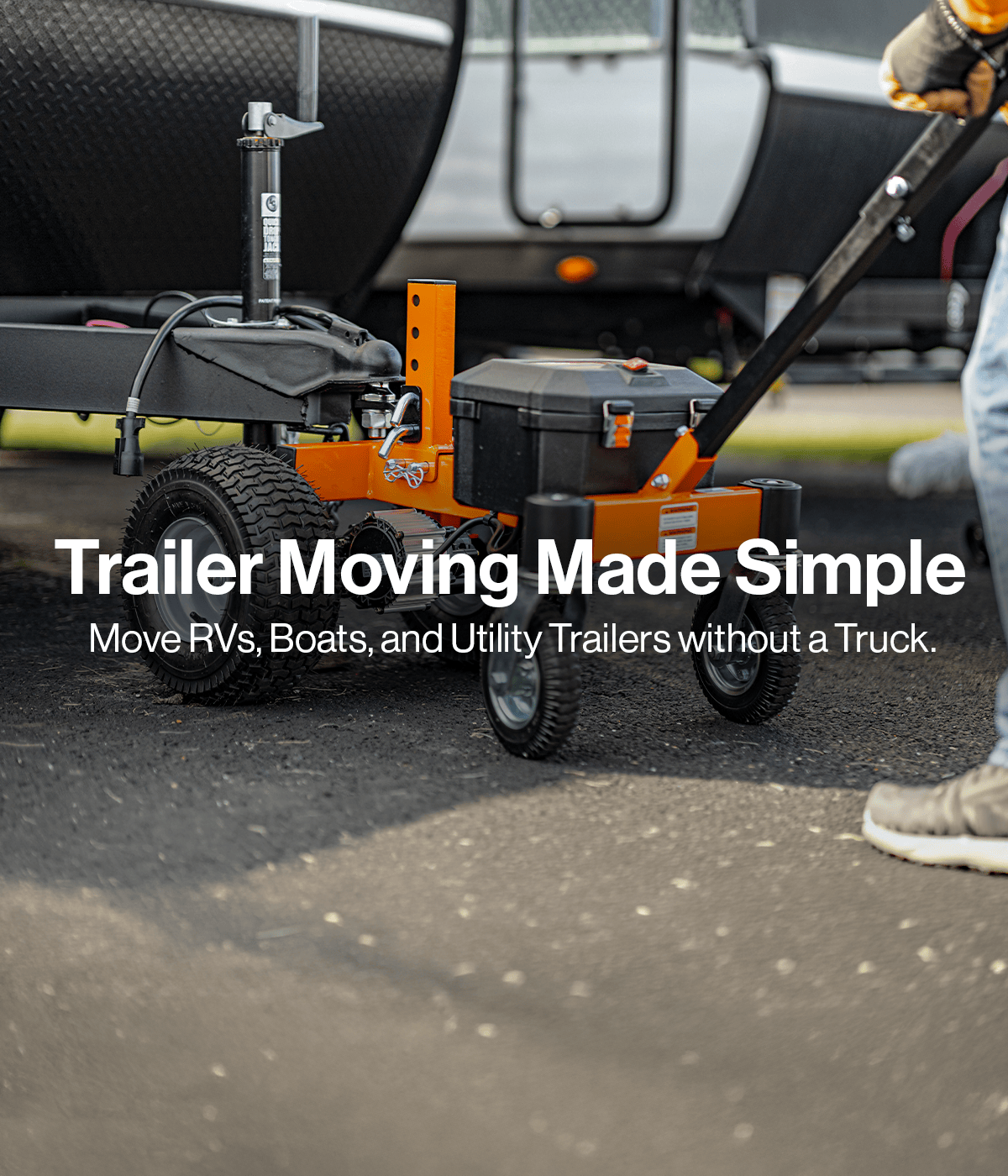
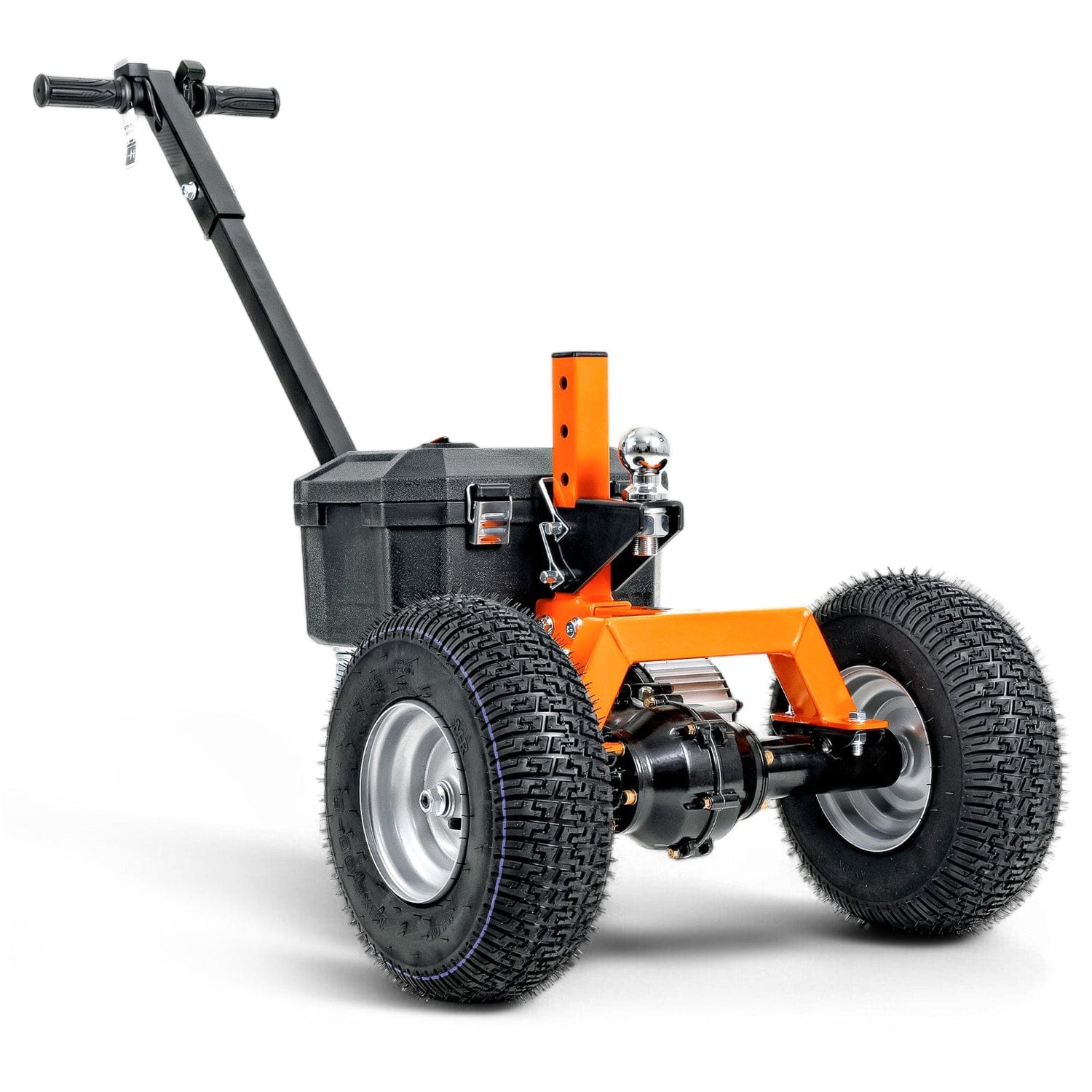
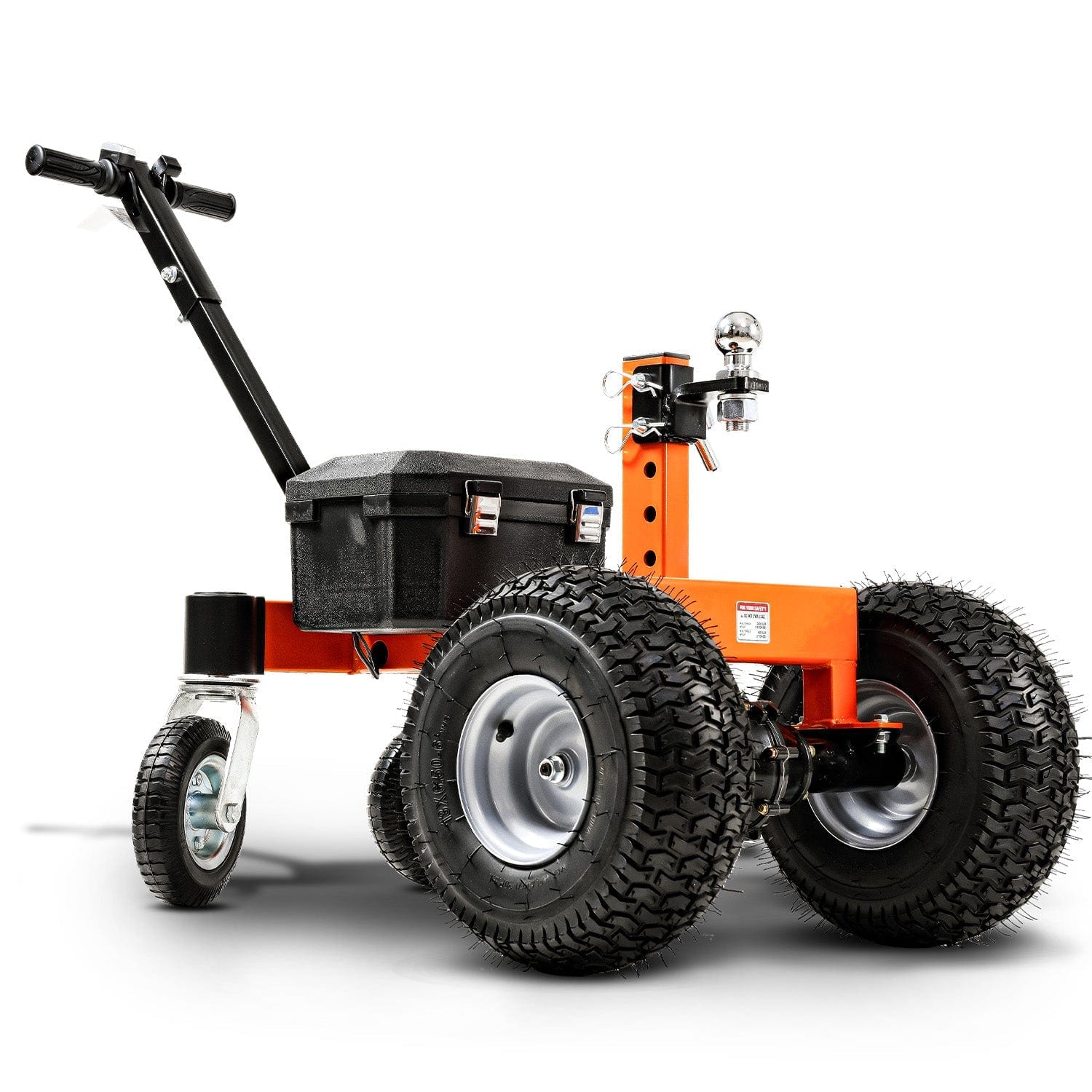
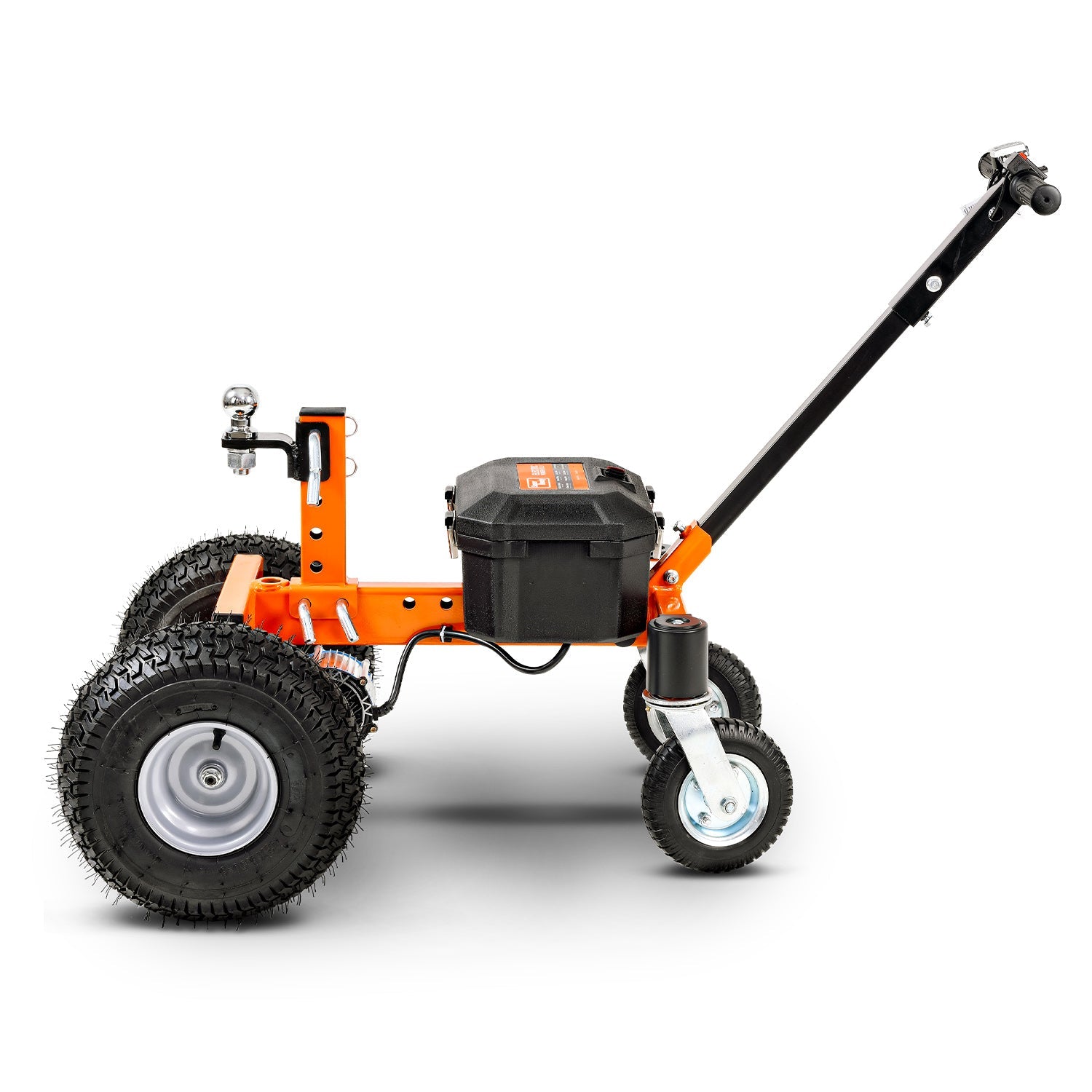
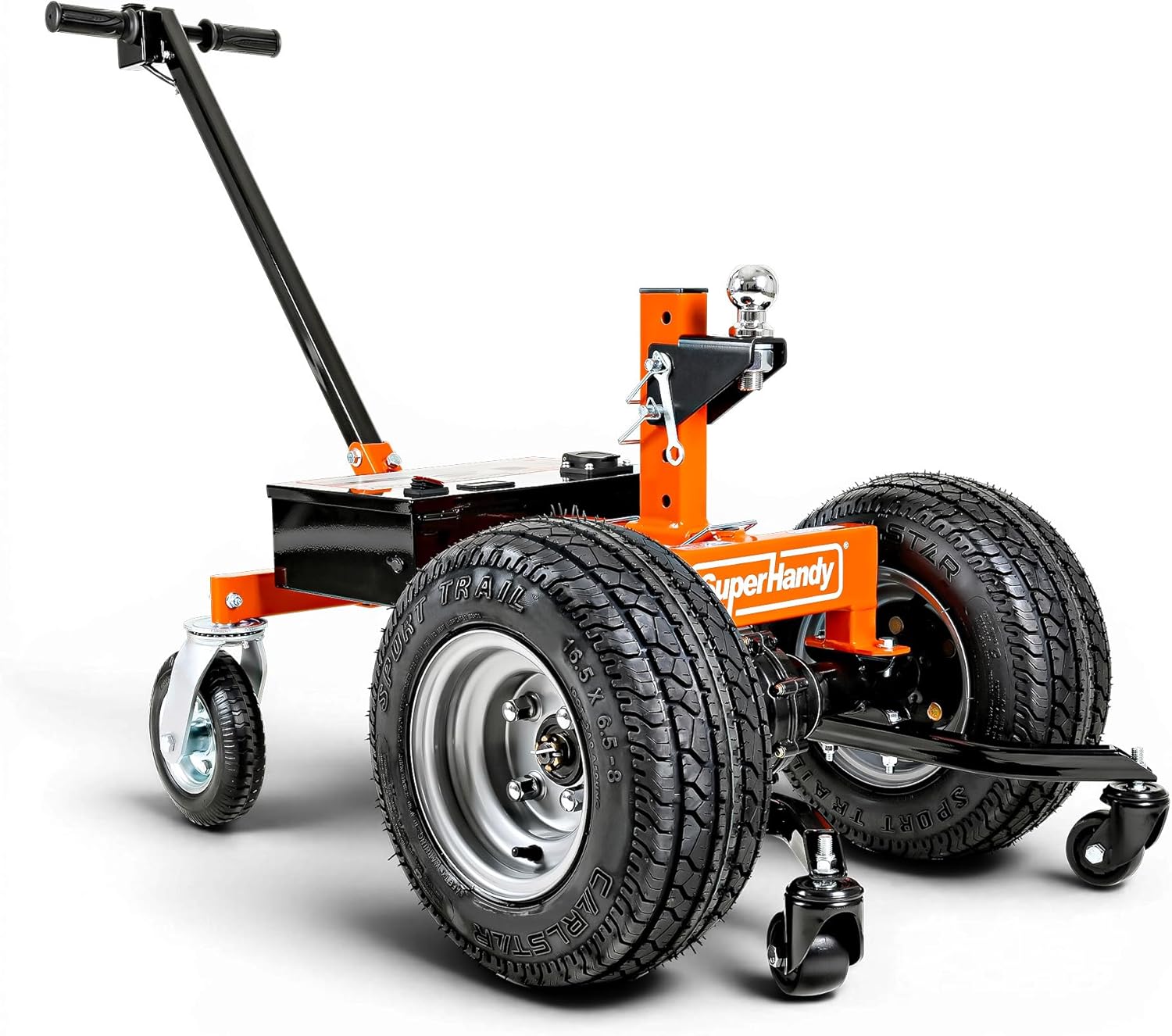
Before you can use your electric trailer dolly, it’s helpful to know what each part does. While designs vary slightly between models, most share a common set of components that work together to give you effortless control over your trailer.
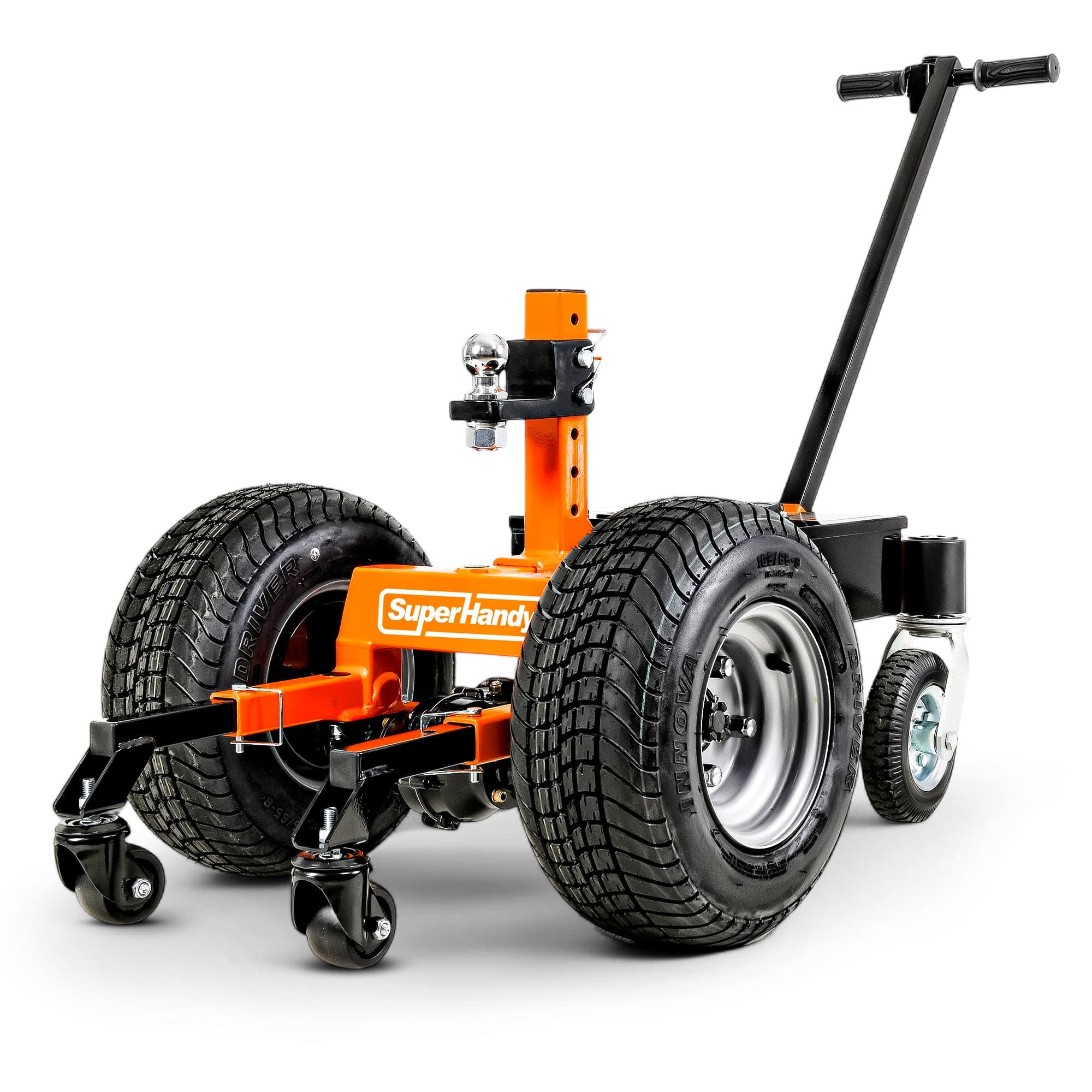
- Control Handle: This is your command center. The handle is used for steering and typically features a throttle for forward and reverse motion, a power switch, and sometimes a speed control setting.
- Motor and Drivetrain: The heart of the dolly, the electric motor provides the power to move thousands of pounds. It drives one or more wheels through a robust drivetrain, delivering consistent torque for smooth operation.
- Battery: This is the power source for the motor. Most electric dollies use a sealed, rechargeable lead-acid or lithium-ion battery. A battery life indicator is a common feature that lets you know when it’s time to recharge.
- Wheels/Tires: Electric trailer dollies are equipped with heavy-duty, all-terrain tires designed for maximum traction on surfaces like pavement, packed gravel, and firm grass.
- Ball Mount Assembly: This is the crucial connection point. It consists of a standard trailer ball that attaches to your trailer’s coupler. Many dollies feature an adjustable-height ball mount to ensure your trailer remains level during movement.
Choosing the Right Electric Trailer Dolly for Your Needs
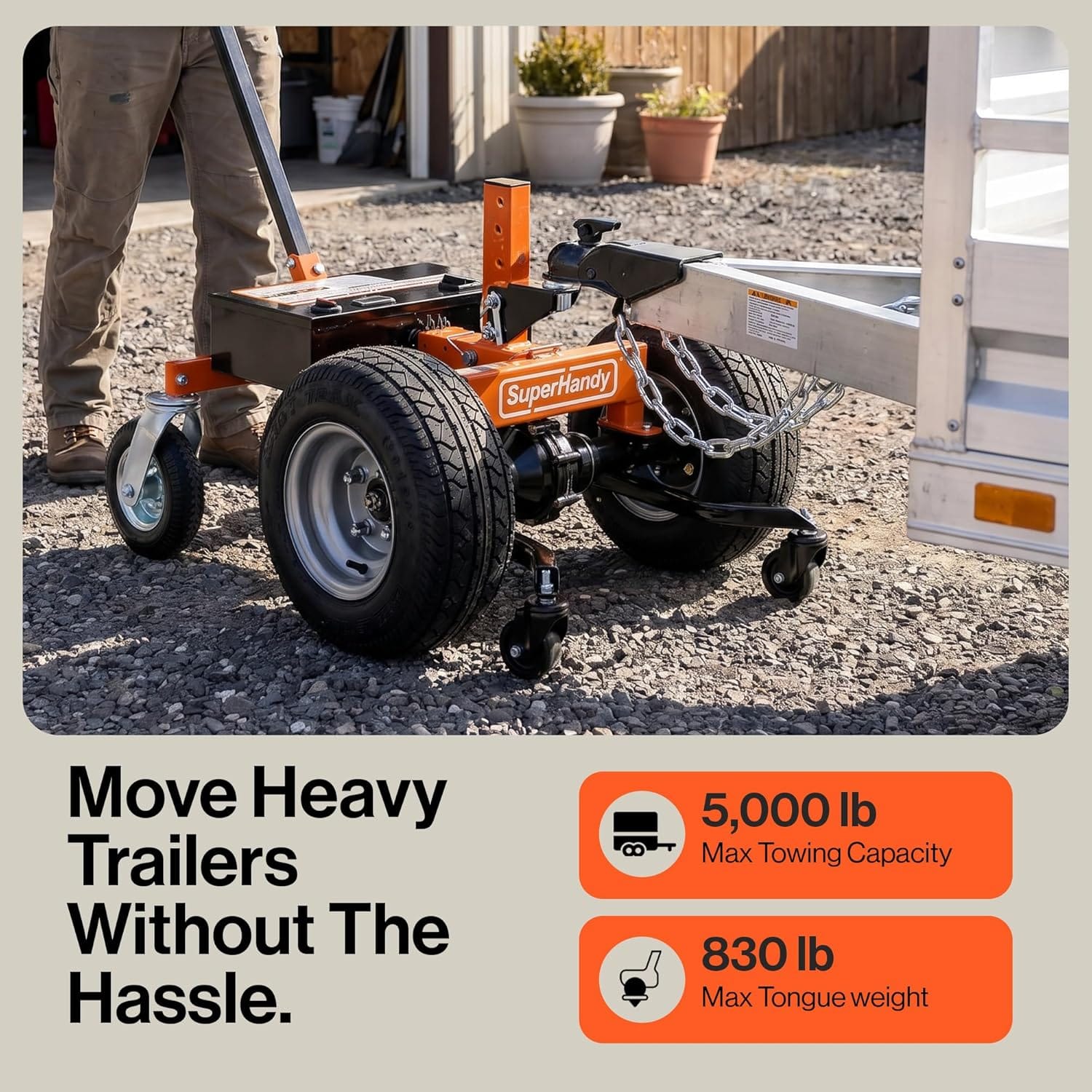
Selecting the correct electric trailer dolly is critical for both safety and performance. The primary factor to consider is weight capacity. Your dolly must be rated to handle your trailer's Gross Trailer Weight (GTW) and tongue weight. Using an undersized dolly is dangerous and can damage the dolly, your trailer, or both.
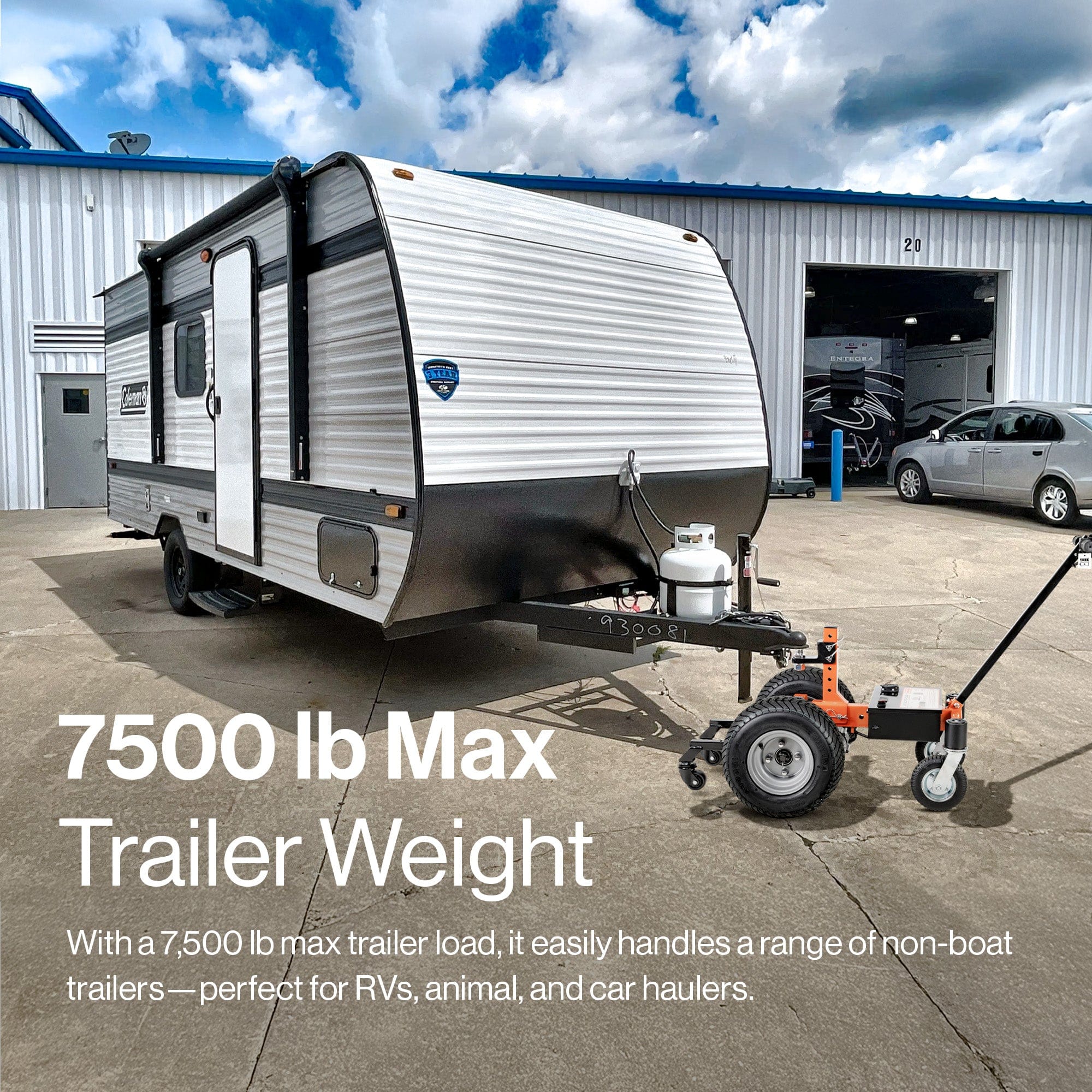
Always check your trailer’s specifications before purchasing. For smaller utility trailers or jet skis, a model like a 2800lb trailer dolly might be a perfect fit. As you move up to small campers or single-axle trailers, a 3600lb trailer dolly provides a greater margin of safety. For larger loads such as travel trailers and boats, you’ll need a more powerful unit. A 5000lb trailer dolly can handle a wide range of substantial trailers. For the heaviest recreational vehicles, horse trailers, or construction equipment, a heavy-duty 7500lb trailer dolly is the appropriate choice. Also, consider the terrain you'll be working on and the ball size required for your trailer's coupler. For public access decisions, ADA.gov explains how covered entities evaluate wheelchairs and other power-driven mobility devices.

Essential Safety Precautions Before Operating Your Trailer Dolly
Safety should always be your top priority. An electric trailer dolly is a powerful piece of machinery, and following proper safety protocols will prevent accidents and ensure a smooth operation.
- Read the Manual: Before your first use, thoroughly read and understand the manufacturer's operating manual and all safety warnings.
- Inspect Your Workspace: Clear the path of any obstacles, debris, pets, or people. Be aware of your surroundings at all times.
- Work on Level Ground: Electric trailer dollies are designed for use on relatively flat and level surfaces. Avoid operating on steep inclines or declines, as this can cause the trailer to become uncontrollable.
- Chock the Trailer Wheels: Before attaching or detaching the dolly, always secure the trailer’s wheels with heavy-duty wheel chocks to prevent it from rolling unexpectedly.
- Inspect the Equipment: Before each use, check that the dolly's battery is charged, the tires are properly inflated, and all nuts and bolts are tight.
- Wear Proper Gear: Always wear sturdy, closed-toe footwear and gloves to protect your hands and feet.
Step 1: Attaching the Electric Trailer Dolly to Your Trailer Coupler
Correctly attaching the dolly is the first and most important step in the process. A secure connection is essential for safe and effective maneuvering.
- Prepare the Trailer: Park your trailer on a hard, level surface. Place wheel chocks securely behind and in front of the trailer’s tires on both sides to ensure it cannot roll.
- Raise the Tongue Jack: Use your trailer's built-in tongue jack to raise the front of the trailer. Lift it high enough so there is ample clearance to roll the trailer dolly's ball mount underneath the coupler.
- Position the Dolly: Manually wheel the electric trailer dolly into position, aligning its trailer ball directly beneath the trailer's coupler.
- Lower and Latch the Coupler: Slowly lower the trailer tongue using the jack until the coupler is fully seated on the dolly’s trailer ball. Once it is resting securely, close the coupler latch and insert the safety pin or lock to secure it. Gently try to lift the tongue to confirm the latch is engaged.
- Retract the Tongue Jack: Fully raise the trailer’s tongue jack so that it is well clear of the ground and will not interfere with movement. Your trailer's tongue weight is now fully supported by the electric trailer dolly, and you are ready to power up.
Step 2: Powering Up and Testing Your Trailer Dolly Controls
With your trailer dolly securely attached, it's time to bring it to life. Locate the main power switch—typically a prominent red button or a key switch on the control unit or battery box. Once powered on, you should see an indicator light or a battery level display illuminate on the control handle. Before you move an inch, it’s critical to test the controls without any load-bearing movement.
Familiarize yourself with the throttle or directional switch. Gently test the forward and reverse functions. The wheels should engage smoothly without lurching. If your model, like the versatile 2800lb trailer dolly, has a variable speed dial, test its responsiveness. This pre-check ensures everything is working as expected and gives you a feel for the controls before the full weight of the trailer is in play.
Step 3: Maneuvering Your Trailer with Precision: Forward and Reverse
Now for the main event: moving your trailer. Grip the handlebars firmly and slowly engage the forward or reverse throttle. The key to smooth operation is to start slow. An electric trailer dolly provides significant torque, so a gentle touch is all that’s needed to get things moving. You’ll be steering from the trailer’s tongue, which is the opposite of driving a tow vehicle. To turn the rear of the trailer to the left, you will push the dolly's handle to the right, and vice-versa. For coverage planning, Medicare.gov outlines when wheelchairs and scooters may qualify as durable medical equipment.
Always keep your movements deliberate and controlled. As you guide the trailer, walk at a steady pace, keeping your eyes on the path ahead and on the trailer's corners. The direct, hands-on control offered by a powerful unit like the 3600lb trailer dolly allows for a level of precision that is impossible with a large truck, making it easy to line up your trailer perfectly.
Step 4: Navigating Tight Spaces and Obstacles with Your Trailer Dolly
This is where an electric trailer dolly truly proves its worth. Backing a trailer into a tight garage, a narrow side yard, or around a corner in a storage facility can be a stressful, multi-person job with a tow vehicle. With a trailer dolly, it becomes a simple, one-person task. Your vantage point at the front of the trailer gives you a clear view of all sides, eliminating the dangerous blind spots you’d have using your truck’s mirrors.
When approaching a 90-degree turn or a narrow opening, slow down and make small, incremental adjustments. The ability to pivot the trailer on its own axle is a game-changer. For heavier loads like large boats or campers, a heavy-duty model such as the 7500lb trailer dolly provides the necessary power and traction to handle these maneuvers safely. If you’re new to using a dolly or the space is particularly challenging, don’t hesitate to ask a spotter for assistance.
Step 5: Safely Parking and Securing Your Trailer Using the Dolly
Once you have maneuvered the trailer into its final parking spot, the securing process is straightforward but must be done correctly. Before you do anything else, secure the trailer's wheels with wheel chocks. This is the most important safety step to prevent any rolling or unexpected movement once the dolly is detached.
With the wheel chocks firmly in place, you can now lower the trailer’s own tongue jack until it makes solid contact with the ground and takes the full weight off the dolly. Once the trailer is resting securely on its own jack, you can raise the dolly’s ball mount, disengage any locking mechanisms, and power down your electric trailer dolly. This process ensures a stable and secure transition from dolly to parked, whether you're using a lighter unit or a robust 5000lb trailer dolly for a larger trailer.
Step 6: Detaching the Electric Trailer Dolly from Your Trailer
Once your trailer is perfectly positioned, chocked, and secured, detaching your electric trailer dolly is a straightforward process. Following these steps ensures both your safety and the proper care of your equipment. For medical context, MedlinePlus summarizes common mobility aids such as canes, walkers, wheelchairs, and scooters.
- Power Down the Dolly: Before doing anything else, turn off the main power switch on your trailer dolly. This prevents any accidental movement while you are unhitching.
- Raise the Trailer Tongue: Use your trailer’s built-in tongue jack to slowly lift the front of the trailer. Continue raising it until the trailer coupler has completely cleared the dolly’s ball hitch. You should see a clear separation between the two.
- Move the Dolly Away: With the trailer tongue supported by its own jack, carefully roll the electric trailer dolly away from the trailer hitch. Store it in a dry, secure location, ready for its next use.

Maintaining Your Electric Trailer Dolly for Longevity and Performance
Proper maintenance is the key to ensuring your electric trailer dolly provides reliable service for years to come. A little care after each use goes a long way.
- Battery Health is Paramount: Your dolly’s battery is its heart. Always recharge it after use, as storing a battery with a low charge can shorten its lifespan. If you’re storing the dolly for an extended period (like over the winter), it’s best practice to fully charge the battery and then store it in a cool, dry place, disconnected from the dolly if possible.
- Tire Inspection and Pressure: Before each use, give the tires a quick visual inspection. Check for adequate pressure, as underinflated tires can make maneuvering difficult and strain the motor. Look for any signs of cracking or significant wear and replace them as needed.
- Keep it Clean and Dry: After use, wipe down the dolly to remove any dirt, mud, or moisture. Pay special attention to the electrical controls and connections. Keeping the unit clean prevents rust and protects the sensitive electronic components.
- Check Hardware and Fasteners: The vibrations from moving a heavy trailer can occasionally loosen nuts and bolts. Periodically, take a few minutes to check that all hardware on your dolly is secure and tighten anything that has become loose.
Troubleshooting Common Electric Trailer Dolly Issues
Even the most reliable tools can encounter hiccups. If your electric trailer dolly isn’t behaving as expected, here are a few common issues and their likely solutions.
- Problem: The dolly won’t power on.
- Solution: The most common culprit is the battery. Ensure it is fully charged and that the battery cables are securely connected to the terminals. Double-check that the main power switch is in the "On" position and that any emergency stop buttons are disengaged.
- Problem: The dolly moves slowly or seems weak.
- Solution: A low battery is the first thing to check. If the battery is full, verify that your trailer's weight is not exceeding the dolly's capacity. A heavy-duty 7500lb trailer dolly is built for massive loads, while a smaller 2800lb trailer dolly is designed for lighter campers and boats. Also, check that the tires are properly inflated.
- Problem: The dolly is difficult to steer.
- Solution: Low tire pressure is often the cause. Ensure tires are inflated to the manufacturer’s recommended PSI. Also, operating on very soft ground like loose gravel or wet grass can make steering more challenging. Move to a firmer surface if possible.
When to Consider an Electric Trailer Dolly vs. Manual Options
Choosing between an electric and a manual trailer dolly depends on your specific needs, your trailer’s weight, and the terrain you’re navigating.
An electric trailer dolly is the often a practical choice if you:
- Move a heavy trailer, such as a large boat, a travel trailer, or a toy hauler. Models like a 5000lb trailer dolly provide the necessary muscle without any physical strain.
- Need to maneuver your trailer up a slight incline. The powered motor does the work for you, a task that is nearly impossible with a manual dolly.
- Have limited physical strength or want to avoid the risk of back strain.
- Frequently need to park in very tight spaces that require precise, inch-by-inch adjustments.
A manual trailer dolly might be sufficient if you:
- Are moving a very lightweight trailer (e.g., a small utility trailer or jet ski) on a perfectly flat, paved surface.
- Use it very infrequently for short-distance moves.
- Are on a strict budget.
For most trailer owners, the power, precision, and safety offered by an electric model like a 3600lb trailer dolly make it a worthwhile investment that saves time, effort, and potential strain.
Frequently Asked Questions About Electric Trailer Dollies
Even with a step-by-step guide, you might still have a few questions about getting the most out of your new equipment. An electric trailer dolly is a powerful tool, and understanding its capabilities and limitations is key to using it safely and effectively. Here are answers to some of the most common questions we receive from new and prospective owners.
FAQ: What is the weight capacity of most electric trailer dollies?
The weight capacity of an electric trailer dolly is one of its most important specifications, and it varies significantly from one model to another. There is no single "standard" capacity; instead, they are designed to handle a wide spectrum of trailer sizes and types. Choosing the correct capacity is crucial for both performance and safety.
When selecting a trailer dolly, you must consider your trailer's Gross Trailer Weight (GTW), which is the total weight of the trailer when fully loaded. This is different from the tongue weight, which is the downward force the trailer coupler exerts on the hitch ball. While tongue weight is an important factor for the dolly's traction, the overall pulling capacity must match or exceed your trailer's GTW. Using an underpowered dolly can strain the motor, cause the wheels to slip, and create a dangerous situation where you could lose control of your trailer.
The key is to match the tool to the job. For lighter loads like small utility trailers, personal watercraft, or small fishing boats, a model like the 2800lb trailer dolly offers plenty of power. As you move up to mid-sized campers, boat trailers, or food trailers, you’ll need a more robust unit. Options in this range include the versatile 3600lb trailer dolly or the powerful 5000lb trailer dolly, which provide a balance of strength and maneuverability. For heavy-duty applications involving large travel trailers, toy haulers, or equipment trailers, you should only consider a high-capacity model, such as a 7500lb trailer dolly, to ensure you have the muscle needed to move your investment safely. Always check your trailer’s VIN plate or owner’s manual for its GTW and choose a dolly with a rated capacity that comfortably exceeds that number. For air travel, FAA PackSafe lists battery and handling rules for wheelchairs and mobility devices.

FAQ: How long does the battery typically last on an electric trailer dolly?
Battery life is not a fixed number but rather a variable that depends heavily on how the electric trailer dolly is used. While some manufacturers may provide an estimate of continuous run time, real-world performance is influenced by several key factors. On average, you can expect to perform multiple parking or repositioning maneuvers on a single charge, but the exact duration can range from 30 minutes to over an hour of intermittent operation.
The primary factors that affect battery longevity per charge include:
- Trailer Weight: The heavier your trailer, the more current the dolly’s motor has to draw from the battery to move it, resulting in a shorter run time.
- Terrain and Incline: Moving a trailer on a smooth, level concrete surface requires far less energy than pulling it across soft grass, loose gravel, or up a slight incline. Every bit of resistance and every degree of slope demands more power from the battery.
- Operating Style: Continuous, long-distance movements will drain the battery faster than short, intermittent adjustments.
- Battery Health and Temperature: An older battery will naturally hold less charge than a new one. Furthermore, battery performance can degrade in extreme cold, reducing its effective capacity until it returns to a moderate temperature.
To maximize your battery's life and ensure your trailer dolly is always ready when you need it, follow a few best practices. Always fully charge the battery before its first use and try to recharge it after each significant use. Avoid storing the battery in a completely discharged state for long periods. If possible, store the dolly and its battery in a temperature-controlled environment, like a garage, to protect it from extreme heat or cold. Following the specific charging instructions in your dolly’s user manual is the best way to maintain battery health for years of reliable service.
FAQ: What is the weight capacity of most electric trailer dollies?
The weight capacity of an electric trailer dolly is one of its most important specifications, and it varies significantly from one model to another. There is no single "standard" capacity; instead, they are designed to handle a wide spectrum of trailer sizes and types. Choosing the correct capacity is crucial for both performance and safety.
When selecting a trailer dolly, you must consider your trailer's Gross Trailer Weight (GTW), which is the total weight of the trailer when fully loaded. This is different from the tongue weight, which is the downward force the trailer coupler exerts on the hitch ball. While tongue weight is an important factor for the dolly's traction, the overall pulling capacity must match or exceed your trailer's GTW. Using an underpowered dolly can strain the motor, cause the wheels to slip, and create a dangerous situation where you could lose control of your trailer.
The key is to match the tool to the job. For lighter loads like small utility trailers, personal watercraft, or small fishing boats, a model like the 2800lb trailer dolly offers plenty of power. As you move up to mid-sized campers, boat trailers, or food trailers, you’ll need a more robust unit. Options in this range include the versatile 3600lb trailer dolly or the powerful 5000lb trailer dolly, which provide a balance of strength and maneuverability. For heavy-duty applications involving large travel trailers, toy haulers, or equipment trailers, you should only consider a high-capacity model, such as a 7500lb trailer dolly, to ensure you have the muscle needed to move your investment safely. Always check your trailer’s VIN plate or owner’s manual for its GTW and choose a dolly with a rated capacity that comfortably exceeds that number.
FAQ: How long does the battery typically last on an electric trailer dolly?
Battery life is not a fixed number but rather a variable that depends heavily on how the electric trailer dolly is used. While some manufacturers may provide an estimate of continuous run time, real-world performance is influenced by several key factors. On average, you can expect to perform multiple parking or repositioning maneuvers on a single charge, but the exact duration can range from 30 minutes to over an hour of intermittent operation.

The primary factors that affect battery longevity per charge include:
- Trailer Weight: The heavier your trailer, the more current the dolly’s motor has to draw from the battery to move it, resulting in a shorter run time.
- Terrain and Incline: Moving a trailer on a smooth, level concrete surface requires far less energy than pulling it across soft grass, loose gravel, or up a slight incline. Every bit of resistance and every degree of slope demands more power from the battery.
- Operating Style: Continuous, long-distance movements will drain the battery faster than short, intermittent adjustments.
- Battery Health and Temperature: An older battery will naturally hold less charge than a new one. Furthermore, battery performance can degrade in extreme cold, reducing its effective capacity until it returns to a moderate temperature.
To maximize your battery's life and ensure your trailer dolly is always ready when you need it, follow a few best practices. Always fully charge the battery before its first use and try to recharge it after each significant use. Avoid storing the battery in a completely discharged state for long periods. If possible, store the dolly and its battery in a temperature-controlled environment, like a garage, to protect it from extreme heat or cold. Following the specific charging instructions in your dolly’s user manual is the best way to maintain battery health for years of reliable service.
Related Products


Leave a comment
All comments are moderated before being published.
This site is protected by hCaptcha and the hCaptcha Privacy Policy and Terms of Service apply.