












Moving a trailer without a tow vehicle can be a back-breaking, frustrating ordeal. Whether you're trying to wedge your boat into a tight garage spot, position a camper on a tricky incline, or simply reorganize your driveway, the sheer weight and awkwardness of the task can feel impossible. That's where an electric trailer dolly comes in—a game-changing tool that transforms a two-person struggle into a simple, one-person job.
Unlocking Effortless Trailer Maneuvering: What is an Electric Trailer Dolly?
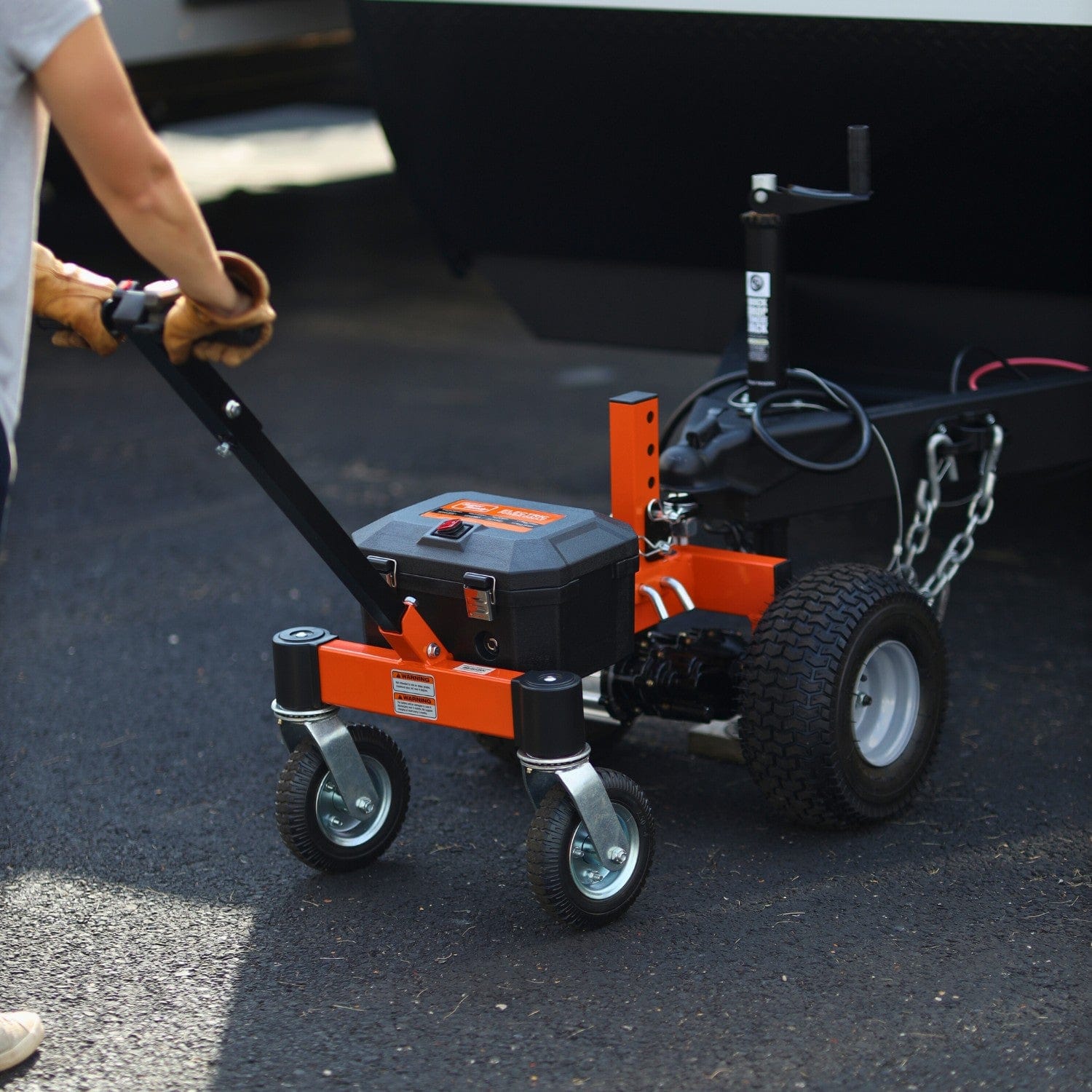
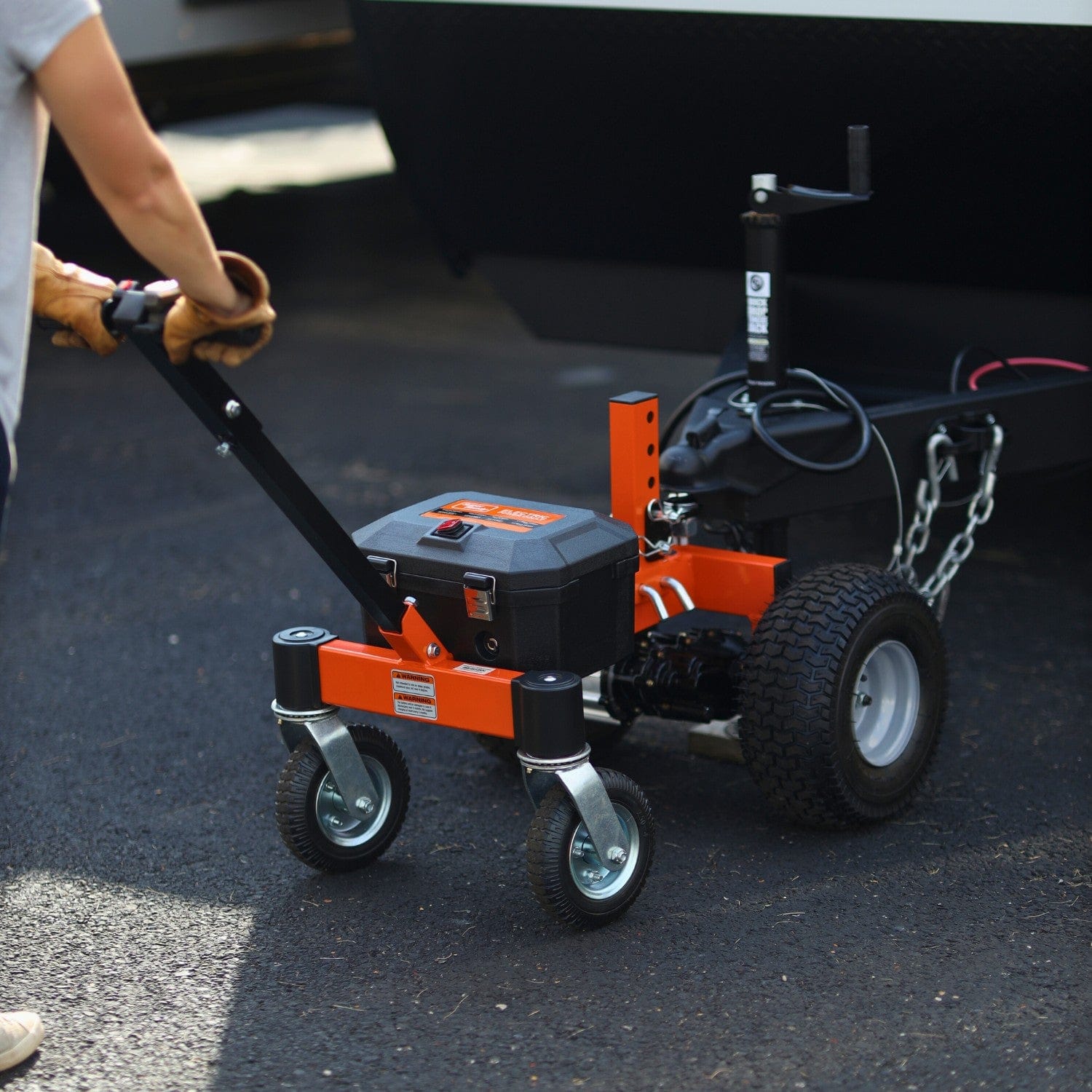
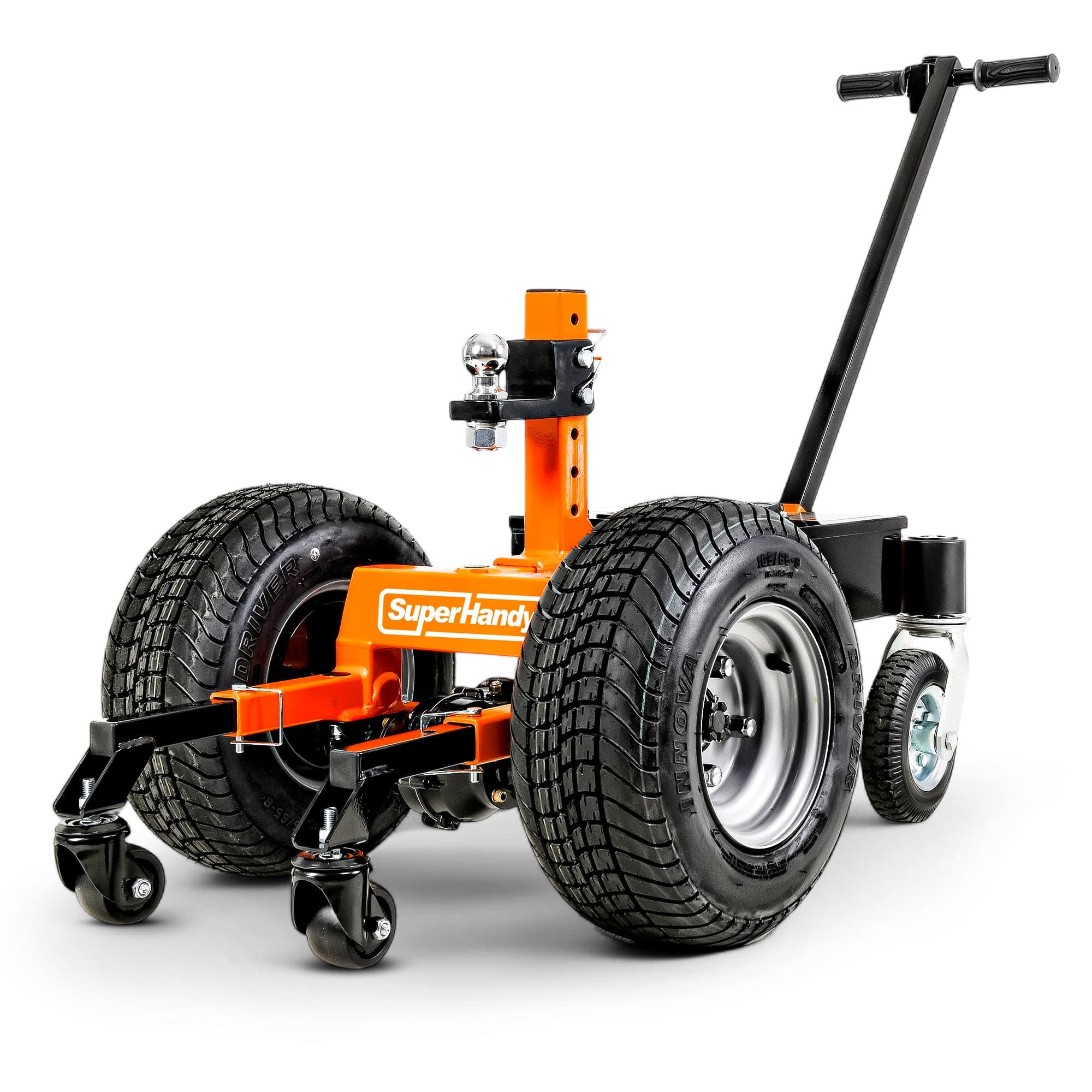
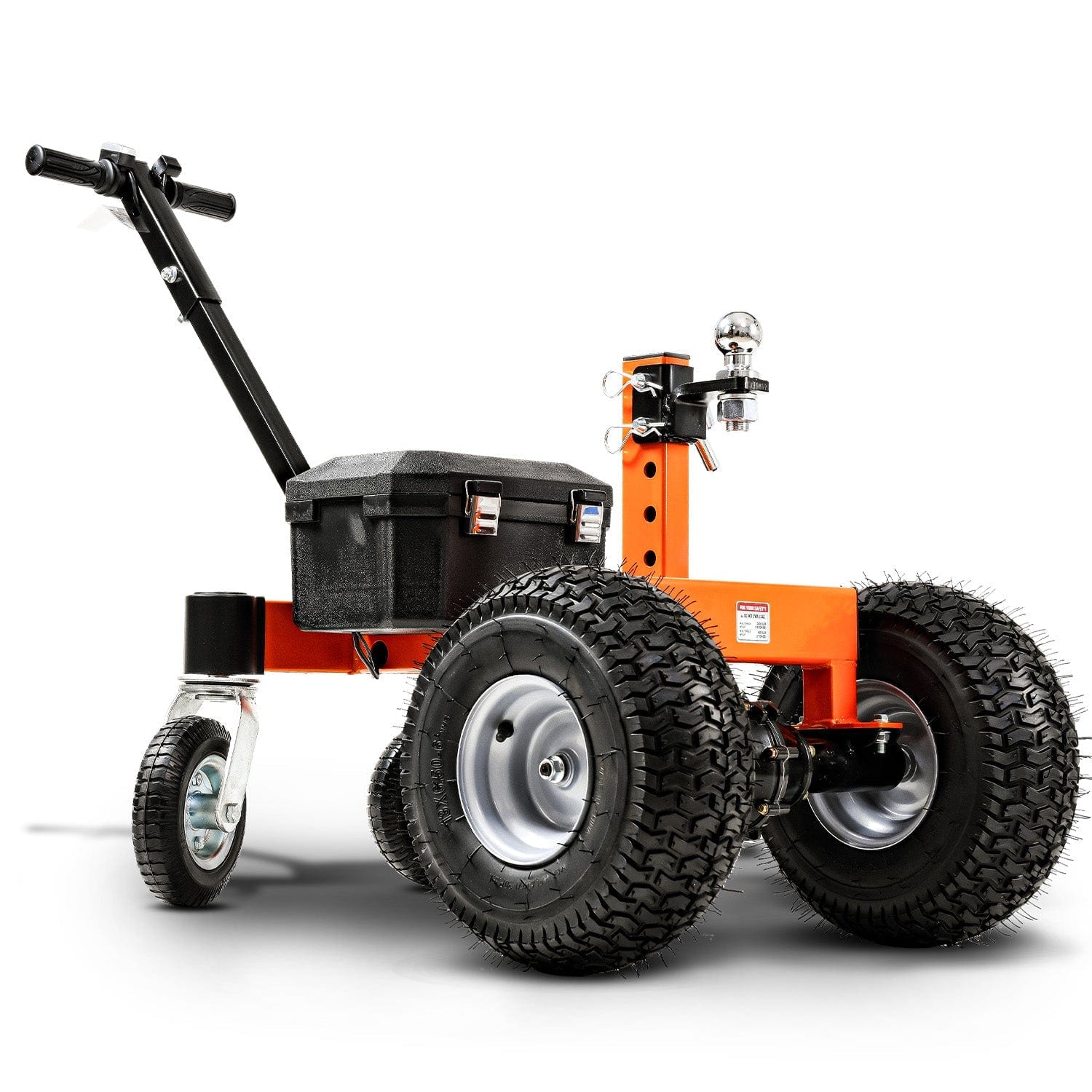
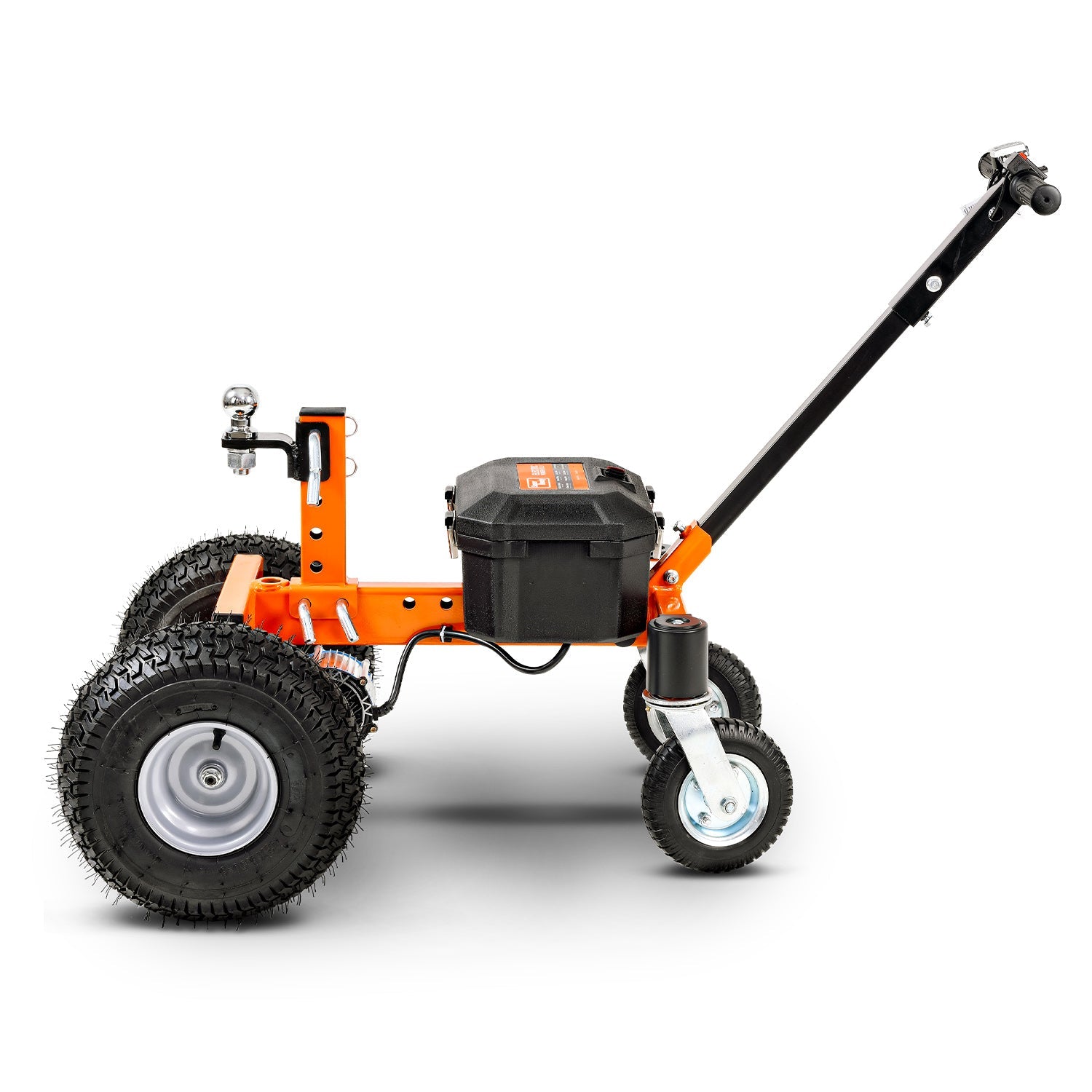
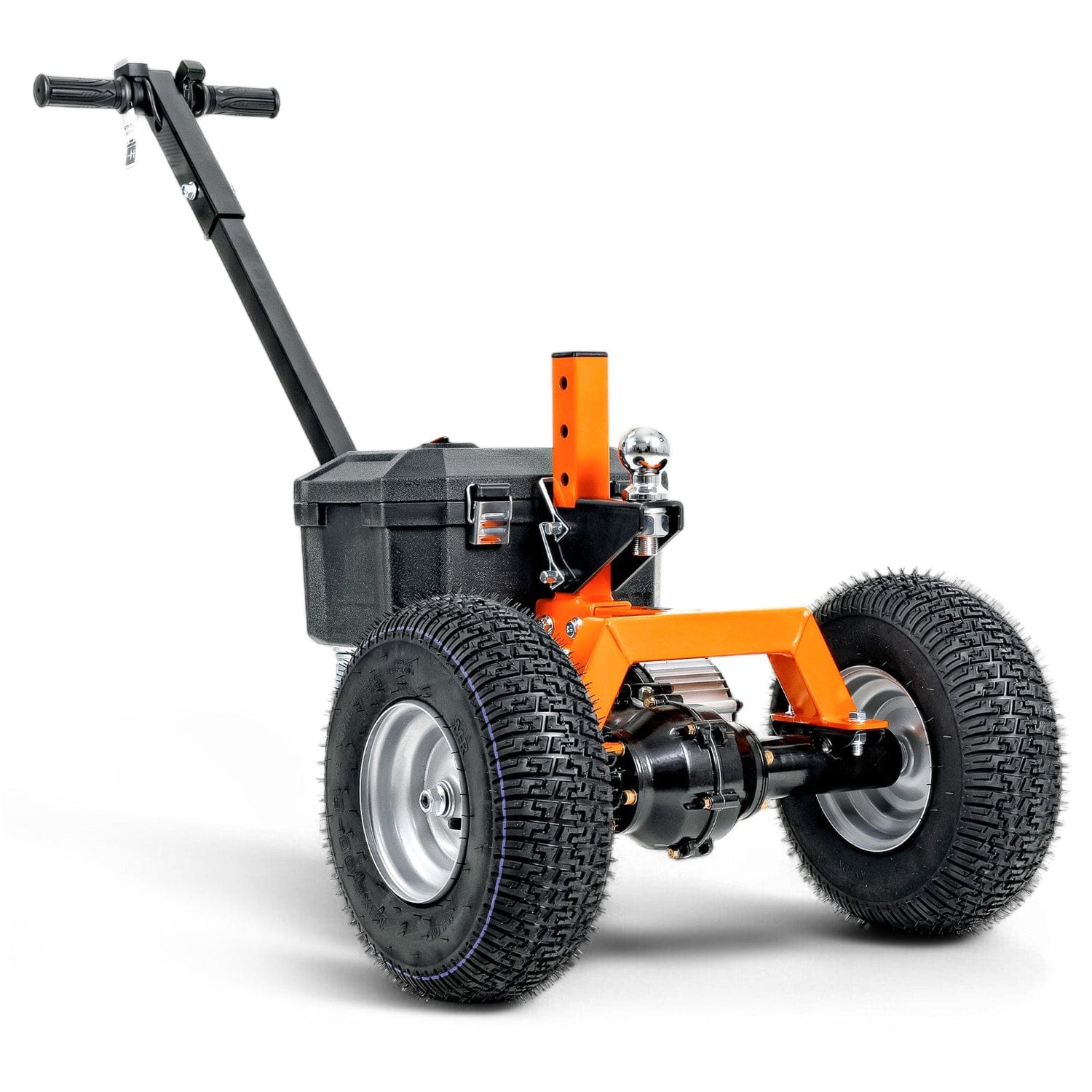
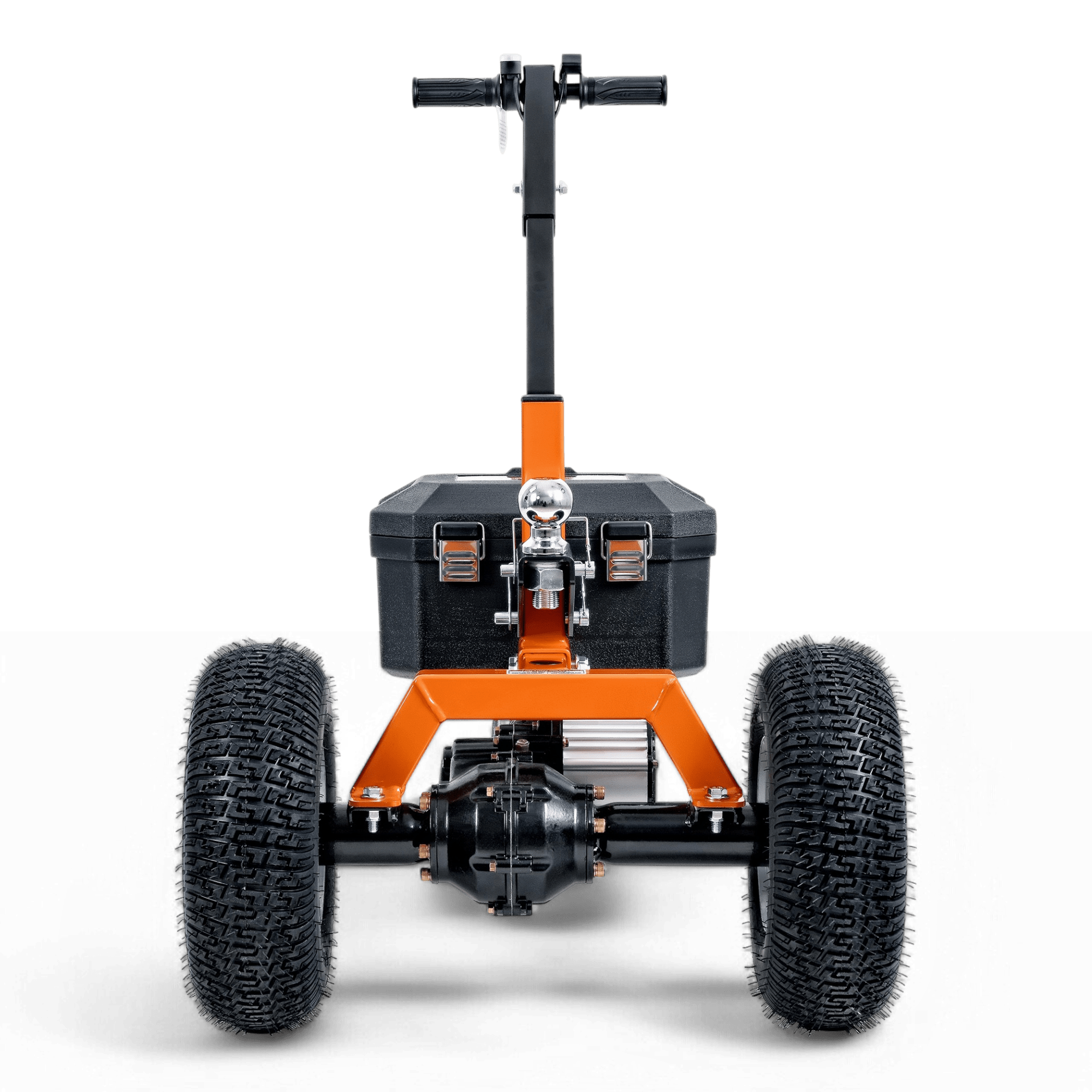
An electric trailer dolly is a compact, motorized, walk-behind machine designed to move trailers with precision and minimal physical effort. Think of it as a personal, remote-controlled tugboat for your land-based vessel. It connects directly to your trailer's hitch and uses a powerful electric motor, driven by a rechargeable battery, to smoothly push or pull the trailer exactly where you want it to go.
Instead of relying on the brute force of a tow vehicle or the strain of manual pushing, you simply guide the dolly with an ergonomic handlebar that houses all the controls—forward, reverse, and steering. These powerful tools come in various capacities to handle different loads, from smaller utility trailers that can be managed by a 2800lb trailer dolly to heavy-duty RVs requiring significant power.

Why Invest in an Electric Trailer Dolly? Key Benefits for Trailer Owners
Investing in an electric trailer dolly isn't just about convenience; it’s about gaining independence, safety, and unparalleled control over your valuable assets.
- Solo Operation: Move your trailer anytime, without needing a spotter or a second person.
- Unmatched Precision: Make micro-adjustments that are impossible with a truck or SUV.
- Reduced Physical Strain: Let the motor do the work, saving your back, knees, and energy.
- Damage Prevention: Avoid costly dings, scratches, and collisions with tight, controlled movements.
- Versatility: Easily maneuver boat trailers, campers, RVs, utility trailers, and more on various surfaces.
Protecting Your Back and Bumper: Ergonomics and Damage Prevention
Manually wrestling a trailer, even for a short distance, puts immense strain on your body. The awkward angles and heavy resistance can lead to serious muscle pulls and chronic back pain, as highlighted by workplace safety experts like OSHA regarding improper pushing and pulling techniques. An electric trailer dolly eliminates this risk. Its powered wheels and intuitive controls allow you to maintain an upright, neutral posture while the machine handles the load. A capable unit like the 3600lb trailer dolly can save you a trip to the chiropractor.
Equally important is protecting your equipment. The jerky movements and poor visibility associated with using a tow vehicle in tight quarters often lead to dented bumpers, scraped trailer sides, and damaged garage doors. A dolly's slow, deliberate pace gives you the time and perspective to avoid obstacles, preventing accidents that are both expensive and frustrating.
Navigating Tight Spots: Achieving Precision and Control with a Dolly
This is where an electric trailer dolly truly shines. Try backing a 20-foot trailer around a 90-degree corner into a narrow side yard with a pickup truck—it’s a nerve-wracking exercise in guesswork. With a dolly, you are standing at the front of the trailer, giving you a perfect 360-degree view of your surroundings. You can pivot the trailer on a dime and guide it into spaces with inch-perfect accuracy.
This level of control is indispensable for:
- Parking in a packed storage facility.
- Positioning a boat trailer in a single-car garage.
- Maneuvering an RV onto a precise leveling spot at a campsite.
- Navigating around obstacles in a crowded workshop or barn.
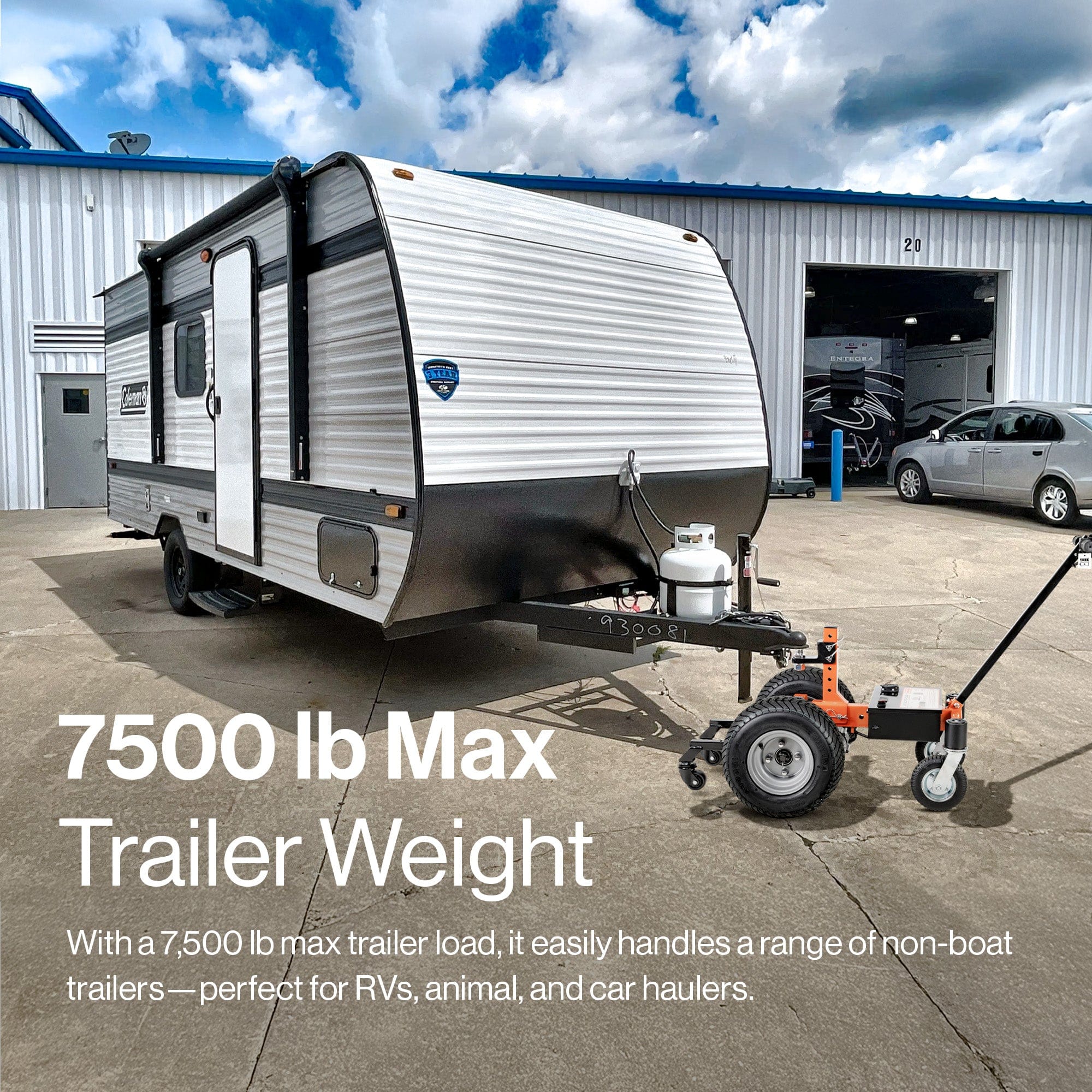
For larger boat trailers or campers that need to be slotted perfectly, a robust option like the 7500lb trailer dolly provides the necessary torque and control to make the job stress-free. You're no longer just moving a trailer; you're placing it with surgical precision.

Choosing the Right Electric Trailer Dolly: Critical Considerations
Not all electric trailer dollies are created equal. Selecting the right model isn't just about convenience—it's about safety, efficiency, and protecting your investment. A dolly that’s underpowered or ill-suited for your terrain can be frustrating at best and dangerous at worst. To make the right choice, you need to evaluate a few critical factors: your trailer's weight, the dolly's power system, and the environment where you'll be using it.
Matching Dolly Capacity to Your Trailer's Weight (GVWR and Tongue Weight)
This is the single most important consideration. Overloading a trailer dolly can lead to motor burnout, frame damage, or a dangerous loss of control. You need to know two key numbers for your trailer:
- Gross Vehicle Weight Rating (GVWR): This is the maximum total weight of your trailer when fully loaded with all gear, fuel, and equipment. The electric motor of the dolly has to be powerful enough to move this entire mass.
- Tongue Weight: This is the downward force that the trailer tongue exerts on the hitch ball. It's typically 10-15% of the trailer's GVWR. The dolly's frame and hitch mechanism must be strong enough to support this static load safely.
Your dolly's specifications must exceed both of these figures. Always check the manufacturer's plate on your trailer or consult its manual to find its GVWR. You can measure tongue weight with a specialized scale.
Rule of Thumb: Always choose a dolly with a capacity rating that is comfortably above your trailer’s GVWR. This provides a safety margin and ensures the motor isn't constantly straining at its limit.
- For small utility trailers or jet skis, a model like the SuperHandy 2800lb trailer dolly provides ample power for tight spaces.
- For mid-size campers or boats, upgrading to a robust unit like the 3600lb trailer dolly is a smart choice for reliable performance.
- For larger RVs, toy haulers, or construction trailers, you’ll need a heavy-duty workhorse like the 7500lb trailer dolly to handle the significant weight safely.
Evaluating Power Source, Battery Life, and Charging Options
The heart of an electric trailer dolly is its battery. Most models use a 12V or 24V system, typically powered by sealed lead-acid (SLA) batteries. These are reliable and cost-effective. The key performance indicators to look for are runtime and charge time.
Consider how long you’ll need to operate the dolly in a single session. Will you be moving the trailer a short distance into a garage, or across a larger storage yard? Look for models that specify a continuous runtime, often around 30 minutes, which is more than enough for most parking and positioning tasks. Also, check the recharge time—most dollies can be fully recharged overnight. A dolly with an integrated battery charger and a clear power level indicator adds significant convenience, preventing you from getting caught with a dead battery when you need it most.
Tire Type and Terrain Suitability: Which Dolly Works for Your Environment?
The dolly's wheels are its only connection to the ground, making tire choice critical for traction and control. The right tires depend entirely on the surfaces you'll be operating on.
- Solid Rubber Tires: These are best suited for hard, flat surfaces like concrete, pavement, or smooth asphalt. They are virtually maintenance-free and cannot go flat, making them a durable choice for shop floors and paved driveways.
- Pneumatic (Air-Filled) Tires: If you need to move your trailer over grass, packed dirt, gravel, or slightly uneven ground, pneumatic tires are essential. They act as shock absorbers and have deeper, more aggressive treads that provide superior traction on imperfect surfaces. The larger the diameter and width of the tire, the better it will perform on soft or challenging terrain. Ensure you select a dolly with tires designed for the environment where your trailer lives.
Hitch Compatibility and Secure Attachment Mechanisms
An electric trailer dolly is useless if it can’t securely connect to your trailer. Fortunately, most dollies are designed for compatibility with the most common type of trailer hitch: the ball coupler.
The crucial factor is matching the dolly's hitch ball to your trailer's coupler size. Standard sizes in North America are typically 1-7/8", 2", and 2-5/16". Most electric trailer dollies, including the versatile 3600lb trailer dolly, come equipped with a standard 2" ball, which fits a wide range of boat, utility, and cargo trailers. Always check your trailer's coupler and the dolly's specifications to ensure a perfect match.
Beyond the ball size, look for a robust locking mechanism. A quality dolly will have a heavy-duty, height-adjustable ball mount assembly. This allows you to raise or lower the hitch ball to align perfectly with your trailer's tongue, ensuring a level and secure connection before you move an inch.

Step-by-Step Guide: Safely Operating Your Electric Trailer Dolly
Once you’ve chosen the right dolly, operating it safely is paramount. While these devices are designed to be intuitive, following a consistent procedure minimizes risk and ensures smooth, damage-free maneuvering. This guide will walk you through the essential steps from pre-op checks to parking your trailer perfectly.
Pre-Operation Checklist: Preparing Your Dolly and Trailer for Movement
Before you power on the dolly, run through this quick but critical checklist. A few minutes of preparation can prevent major headaches.
- Check the Dolly's Charge: Ensure the dolly's battery has sufficient power for the job. You don’t want it dying halfway through moving your trailer into a tight spot.
- Inspect Dolly Tires: Check the air pressure in the dolly’s tires. Properly inflated tires provide better traction and stability, especially on uneven ground or slopes.
- Clear Your Path: Walk the intended path of movement. Remove any obstacles like rocks, tools, toys, or hoses that could get in the way.
- Chock the Trailer Wheels: Before disconnecting the trailer from your tow vehicle or its parked position, place wheel chocks securely behind the trailer's tires. This is a non-negotiable safety step to prevent unintentional rolling.
- Secure the Coupler: Lower your trailer's tongue jack until the coupler is directly over the dolly's hitch ball. Latch the coupler securely and engage any safety pins or clips. Once connected, raise the trailer tongue jack completely.
Smooth Control: Mastering Steering, Braking, and Speed Management
With your preparation complete, it’s time to move. The key is to be smooth, slow, and deliberate.
Start by turning on the electric trailer dolly. Most models have a simple forward/reverse switch and a throttle on the handle. Grip the handle firmly and apply gentle, gradual power. The dolly will begin to move the trailer. Avoid sudden, jerky movements. The power of a unit like the 7500lb trailer dolly is best applied smoothly to maintain control over heavy loads.
To steer, simply pivot the handle in the direction you want the front of the trailer to go. Remember that the trailer will pivot on its axle, so the rear will swing out in the opposite direction. Make wide, gentle turns whenever possible. For beginners, a smaller trailer paired with an easy-to-handle model like the 2800lb trailer dolly is a great way to practice.
Braking is typically achieved by releasing the throttle, as the dolly's motor provides natural resistance. Get a feel for how quickly it stops on level ground. When you have the trailer in its final position, re-chock the wheels before unhitching the dolly.
Parking and Storing Your Trailer with Ease and Accuracy
The final, and often most frustrating, step of any trip is parking the trailer. With a tow vehicle, this can mean a dozen back-and-forths, craning your neck, and hoping you don’t misjudge the angle. An electric trailer dolly transforms this chore into a simple, precise process.
Because you are controlling the trailer directly from the tongue, you have a perfect vantage point. This allows you to guide your boat, camper, or utility trailer into the tightest of spots with millimeter precision. Backing into a narrow garage bay, sliding it perfectly alongside your house, or positioning it on a specific storage pad becomes a one-person job. The dolly’s slow, controlled movement gives you the confidence to navigate corners and obstacles without fear of jackknifing or bumping into a wall. This level of accuracy not only saves time and frustration but also makes hitching up for your next adventure incredibly easy, as the coupler will be perfectly aligned.
Essential Safety Tips for All Electric Trailer Dolly Users
Operating an electric trailer dolly is straightforward, but moving thousands of pounds of equipment always requires a focus on safety. Adhering to these essential tips will protect you, your trailer, and your property.
- Respect the Grade: Electric dollies are designed for use on flat, level surfaces. Never attempt to operate on a steep incline or decline. Consult your dolly’s manual for its maximum grade rating, which is typically only a few degrees. A slope can cause the dolly to lose traction or allow the trailer’s weight to overwhelm the motor and brake, creating a dangerous runaway situation.
- Know Your Weight Limits: Never exceed the dolly’s maximum trailer weight capacity or its maximum tongue weight capacity. Overloading can damage the dolly’s motor and frame and lead to a loss of control. Whether you need a lightweight 2800lb trailer dolly for a small jet ski or a robust 7500lb trailer dolly for a large travel trailer, choosing the correct capacity is your most important safety decision.
- Always Use Wheel Chocks: Before you attach or detach the dolly, securely place wheel chocks on both sides of the trailer’s tires. This is a critical step to prevent any unexpected rolling, especially during the transition.
- Clear Your Path: Before you begin moving, walk the entire intended path. Remove any tools, rocks, toys, or other debris. Look for potholes, soft spots in the ground, or any other hazards that could stop the dolly abruptly or cause it to lose traction.
- Maintain a Secure Connection: Double-check that the trailer coupler is securely locked onto the dolly’s hitch ball and that any safety pins are in place. A loose connection can cause the trailer to detach from the dolly during movement.
Frequently Asked Questions About Electric Trailer Dollies
Can I use an electric trailer dolly on grass or gravel?
This largely depends on the specific model and its tires. Dollies equipped with large, pneumatic, all-terrain tires, like the SuperHandy 3600lb trailer dolly, are designed to handle firm grass and compacted gravel. However, very loose gravel, soft mud, or wet, spongy grass can cause the wheels to slip or dig in. Models with solid rubber tires are best suited for hard surfaces like asphalt or concrete.
How do I calculate my trailer's tongue weight?
Tongue weight is the downward force that the fully-loaded trailer tongue exerts on the hitch ball. As a general rule, it should be 10-15% of the total Gross Trailer Weight (GTW). You can measure it using a specialized tongue weight scale, or by using a standard bathroom scale with a simple lever setup for heavier trailers. Ensuring your tongue weight is within the dolly's specified limit is crucial for safe operation.
How long does the battery last on a single charge?
Battery life varies based on the dolly’s battery capacity, the weight of your trailer, the terrain you’re covering, and the ambient temperature. For most typical uses—like moving a trailer from a driveway into a garage or repositioning it in a storage yard—a fully charged battery will provide more than enough power. It's a good habit to recharge your dolly after each significant use so it’s always ready to go.
Related Products



Leave a comment
All comments are moderated before being published.
This site is protected by hCaptcha and the hCaptcha Privacy Policy and Terms of Service apply.