












Why Consider an Electric Trailer Dolly for Your Hauling Needs?
Maneuvering a heavy trailer, boat, or RV into a tight parking spot, garage, or campsite can be a stressful and physically demanding task. Relying on your tow vehicle often leads to a frustrating cycle of pulling forward and backing up, with limited visibility and a high risk of accidental bumps or scrapes. Manually pushing or pulling the trailer is often out of the question due to the immense weight, posing a significant risk of back strain or other injuries. This is where an electric trailer dolly becomes an indispensable tool. It transforms a difficult, two-person job into a simple, one-person operation. With precise, powered control at your fingertips, you can effortlessly guide your trailer into the perfect position without the strain, stress, or need for a tow vehicle. For public access decisions, ADA.gov explains how covered entities evaluate wheelchairs and other power-driven mobility devices.
Understanding the Core Components of an Electric Trailer Dolly
While they may seem complex, electric trailer dollies are built from a few key components working in harmony. Understanding them helps you appreciate how they provide such powerful and precise movement.
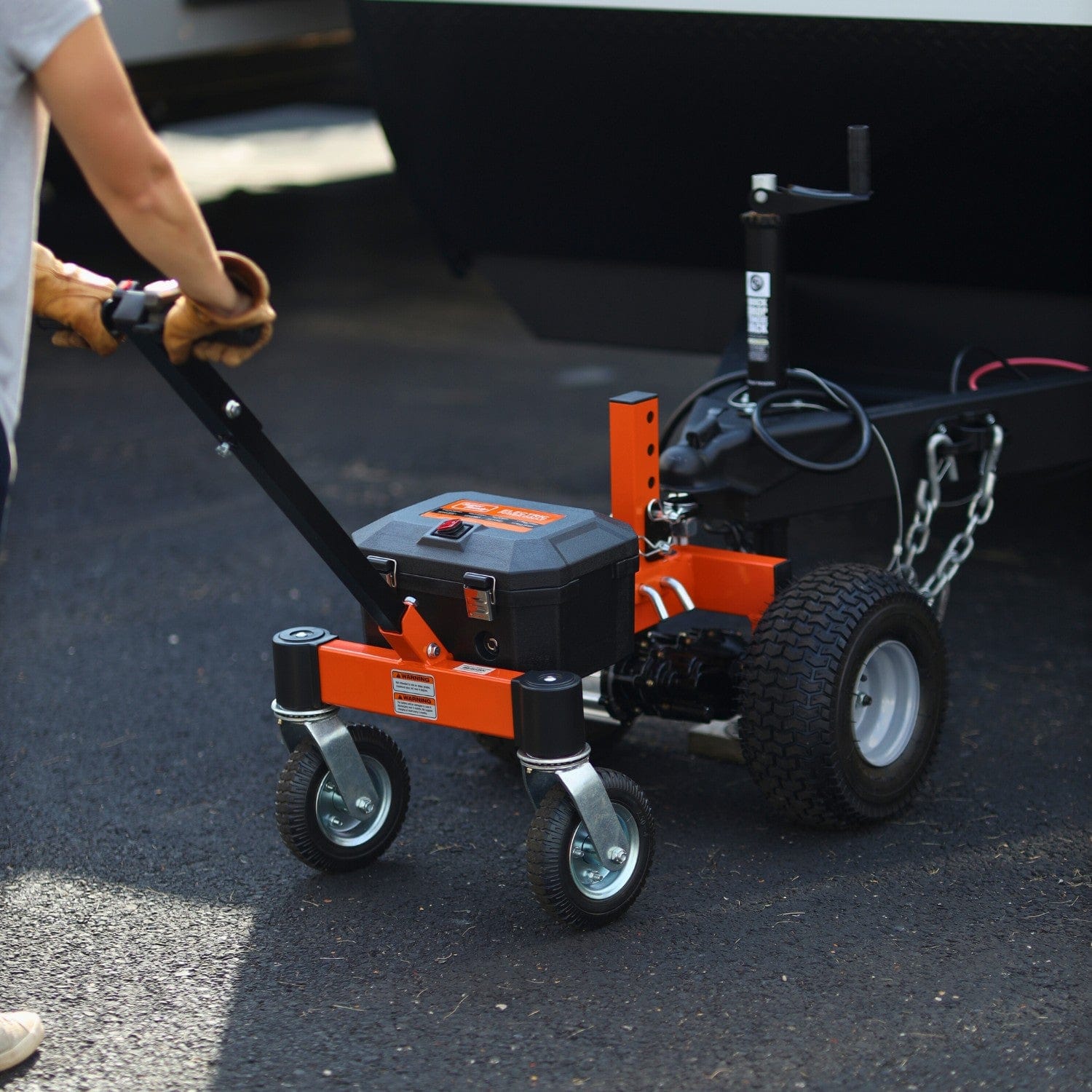
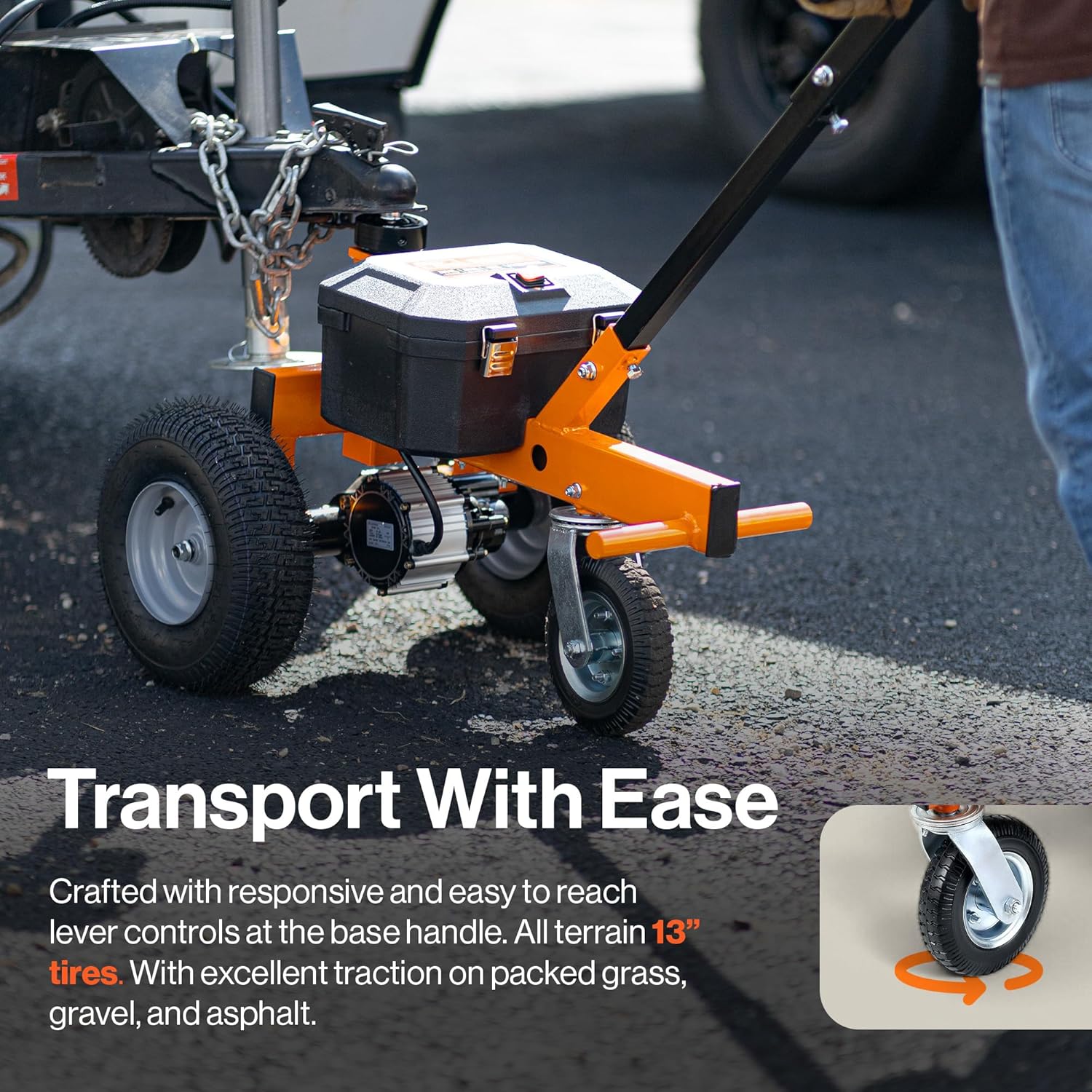
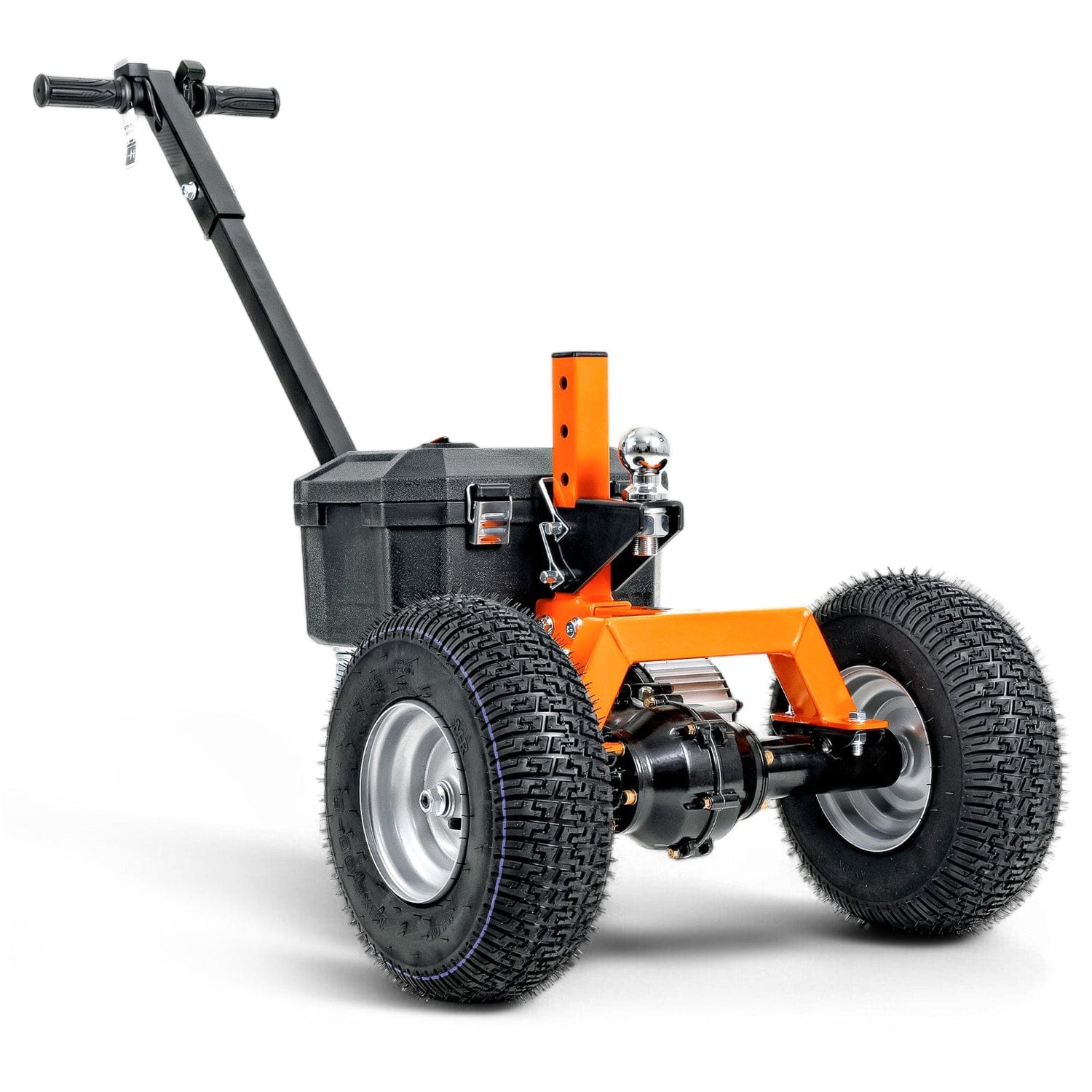
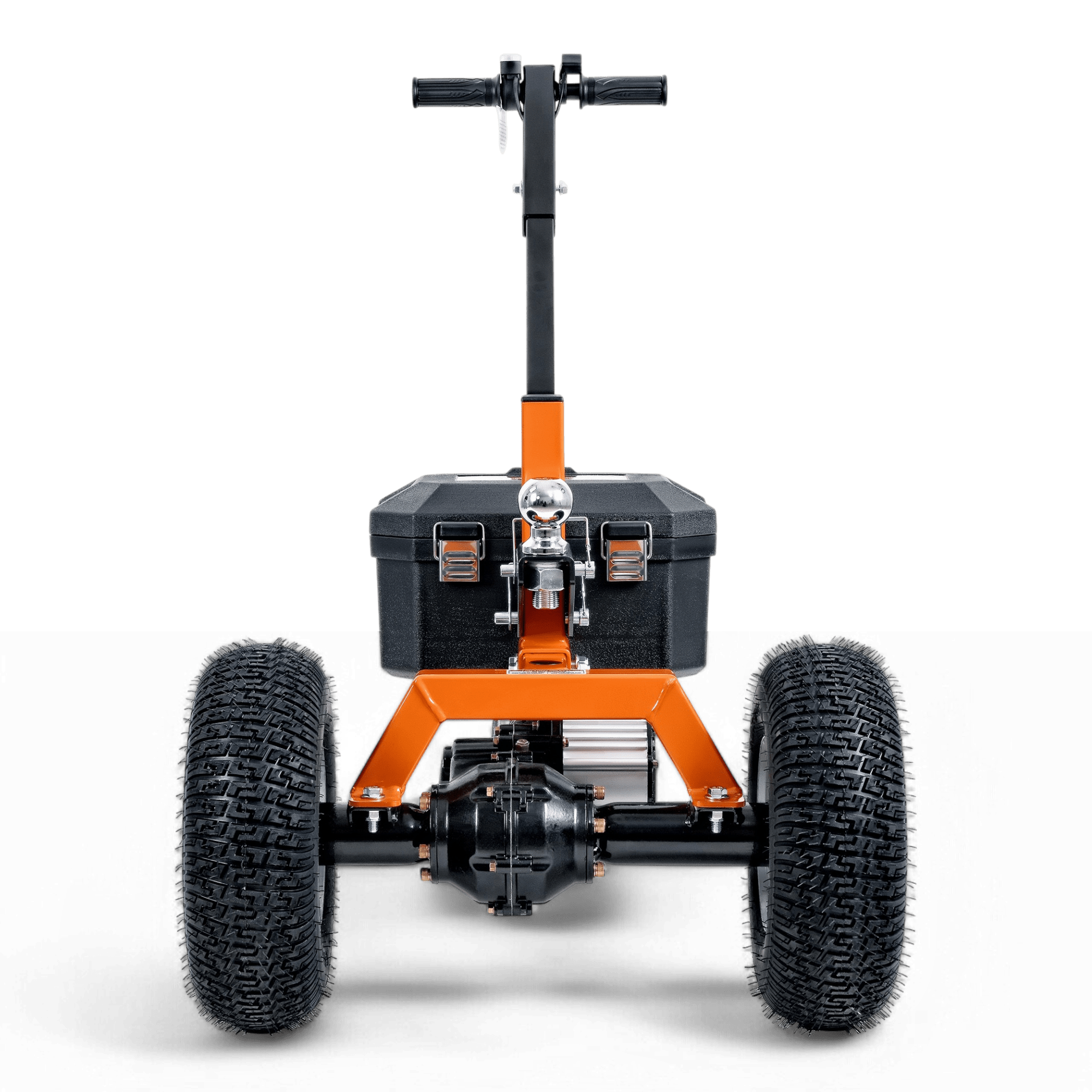
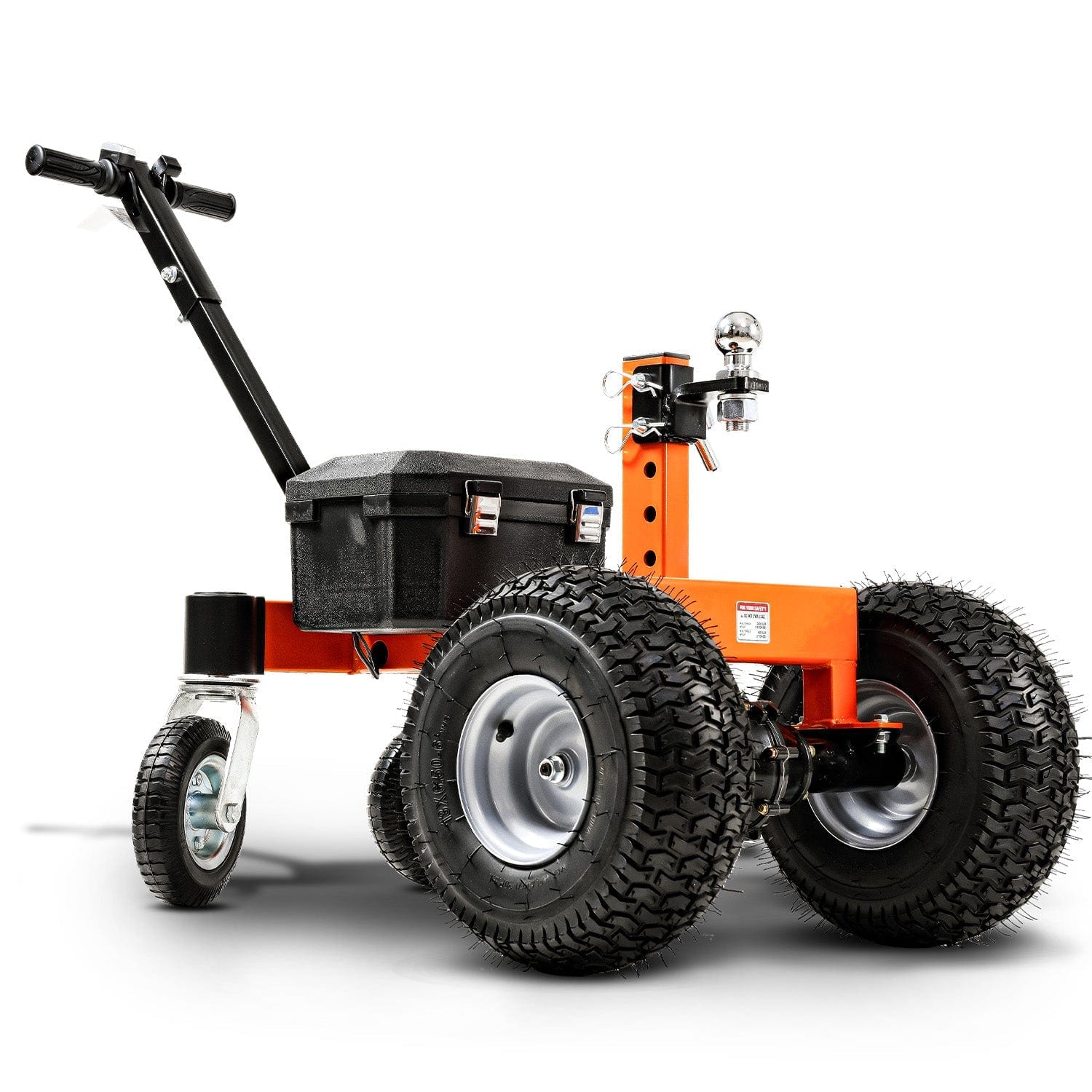
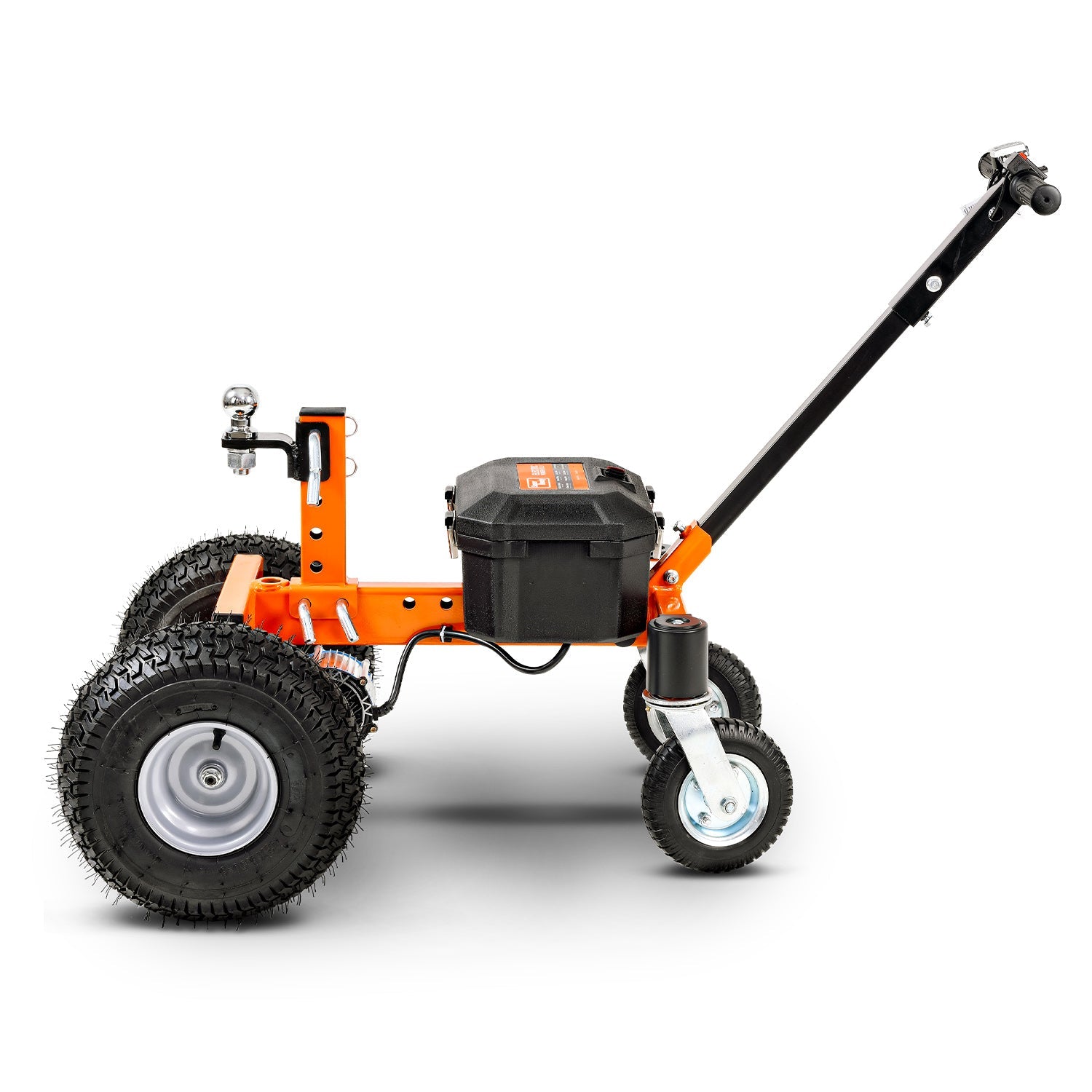
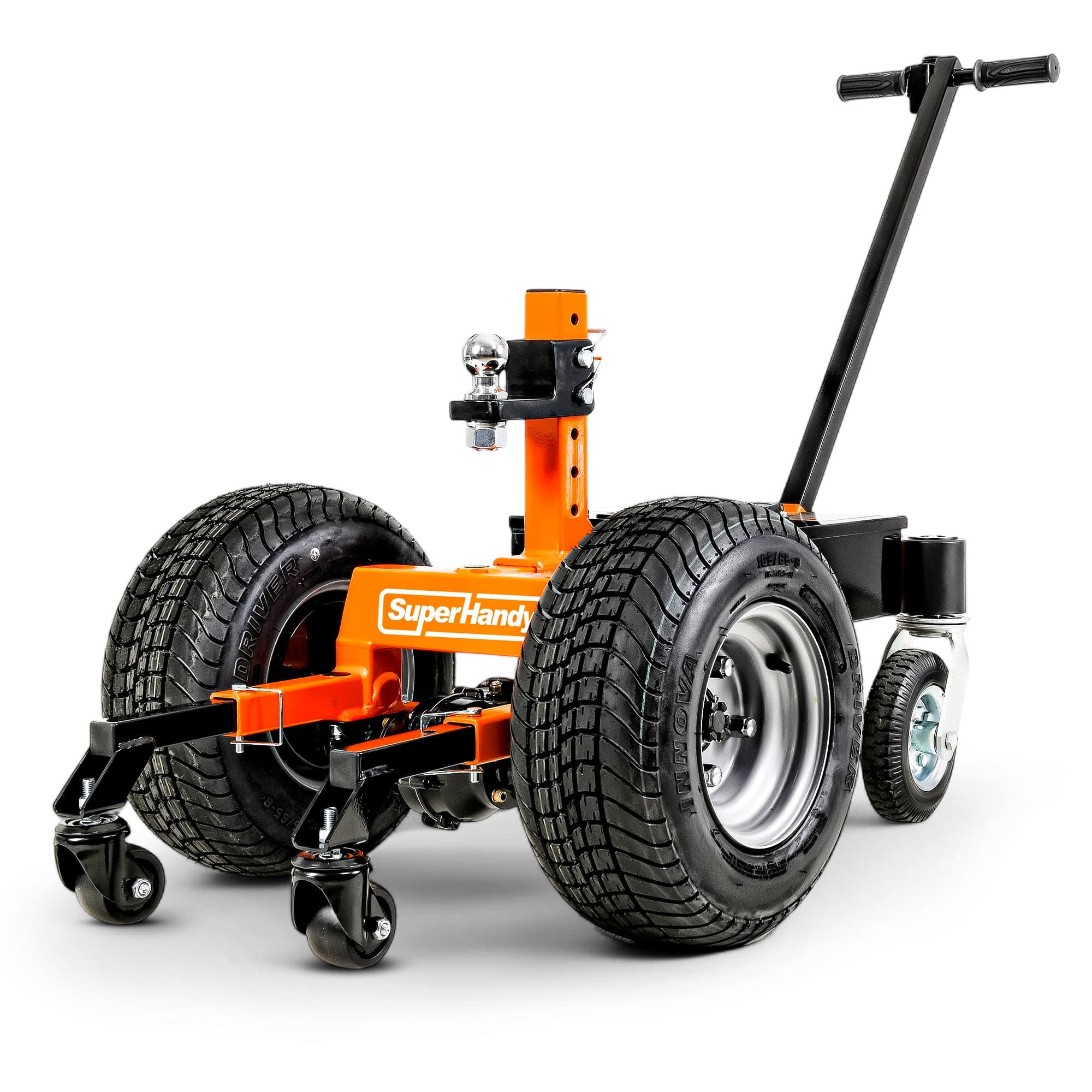
- Motor and Drivetrain: This is the heart of the dolly. A powerful electric motor provides the force, which is transferred through a gearbox to the wheels, generating the torque needed to move thousands of pounds.
- Frame: A heavy-duty, commercial-grade steel frame provides the structural integrity to support the trailer's tongue weight and withstand the forces of pulling and turning.
- Wheels/Tires: These are crucial for traction. Most dollies feature large, all-terrain rubber tires designed to grip various surfaces, from smooth concrete to gravel or firm grass. Some models use dual wheels for enhanced stability and traction.
- Ball Mount/Coupler: The dolly connects to your trailer via a standard hitch ball. High-quality dollies feature an adjustable-height ball mount to ensure a level connection with a wide range of trailer couplers.
- Control Handle: This is your command center. The handle includes ergonomic grips and intuitive controls for forward and reverse motion, steering, and often, variable speed adjustment.
Electric Trailer Dolly Power Sources: Battery vs. Corded
An electric trailer dolly needs a reliable power source to operate its motor. The two primary options are battery-powered (cordless) and corded electric.
Battery-Powered: The most common and versatile option, battery-powered dollies offer complete freedom of movement. They typically use sealed lead-acid or lithium-ion batteries, allowing you to operate them anywhere without being tethered to an outlet. This is ideal for large lots, boat ramps, and campsites where power access is limited. The only consideration is ensuring the battery is charged before you need it.
Corded Electric: While less common, some models plug directly into a standard wall outlet. The main advantage is continuous, uninterrupted power without ever worrying about battery life. However, your range is limited by the length of your extension cord, which can be cumbersome to manage and may pose a trip hazard. For most RV and boat owners, the flexibility of a battery-powered unit is far more practical.

Key Features to Look For: Capacity, Drive Type, and Maneuverability
When selecting an electric trailer dolly, three features are paramount: capacity, drive type, and maneuverability. Getting these right ensures the dolly will perform safely and effectively for your specific needs.
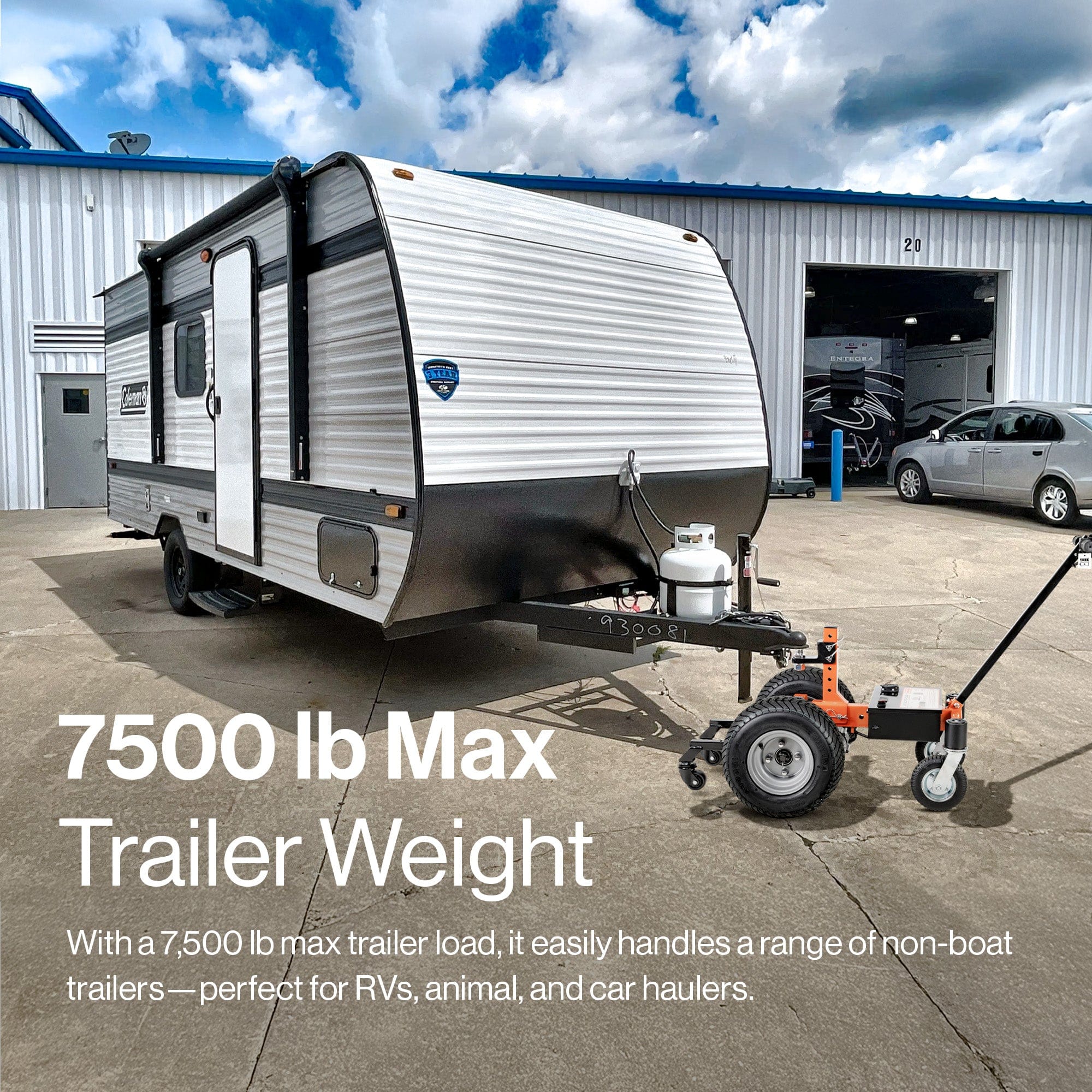
Capacity: This is the most critical factor. You must know your trailer's Gross Trailer Weight (GTW) and its tongue weight. An underpowered dolly is a serious safety hazard. For smaller utility trailers or pop-up campers, a model like a 2800lb trailer dolly may be sufficient. For mid-sized travel trailers and boats, you'll need a more capable unit, such as a 3600lb trailer dolly, which provides a great balance of power and agility. For large RVs, toy haulers, or heavy-duty commercial trailers, only a top-tier model like a robust 7500lb trailer dolly has the necessary power and braking capability. Always choose a dolly with a max capacity that exceeds your trailer's weight.
Drive Type: The drive system dictates traction and stability. Many heavy-duty dollies feature patented drive systems with free-wheeling capabilities for easy manual adjustments. Look for large, aggressive-tread tires that can handle imperfect surfaces like grass, gravel, and slight inclines. Dual-wheel designs often provide superior traction and stability compared to single-wheel models, reducing the chance of slippage on wet or loose ground.
Maneuverability: The whole point of a trailer dolly is precision. Features like variable speed control are invaluable, allowing you to move from a slow crawl for fine-tuning your position to a brisker pace for covering distance. A responsive, ergonomic handle that provides intuitive forward/reverse switching and steering control makes it easy to pivot and place your trailer exactly where you want it with minimal effort.
Comparing Top Electric Trailer Dolly Brands and Models
When you start shopping for an electric trailer dolly, you'll encounter several established brands, each with its own approach to design and power. Companies like Parkit360 and Trailer Valet are well-known in the market, often featuring distinct drive mechanisms like caterpillar tracks or dual-wheel systems. While these are quality options, it's crucial to compare them based on your specific needs for capacity, terrain, and budget. This is where SuperHandy stands out, offering a robust lineup that balances power, user-friendly features, and exceptional value for a wide range of trailer types. For coverage planning, Medicare.gov outlines when wheelchairs and scooters may qualify as durable medical equipment.
When comparing models, the most important factor is matching the dolly's capacity to your trailer's tongue weight and gross weight. For lighter loads like small utility trailers or jet skis, a compact and efficient model like the SuperHandy 2800lb trailer dolly is an ideal choice. For medium-duty applications such as small boats or campers, stepping up to the 3600lb trailer dolly provides the necessary muscle. And for those with heavy travel trailers or large boat trailers, the formidable 7500lb trailer dolly ensures you can move your biggest assets with confidence.
Electric Trailer Dollies for RVs: Navigating Tight Campsites
Every RV owner knows the stress of backing into a tight campsite. With trees, posts, picnic tables, and neighboring rigs creating a challenging obstacle course, it can be a high-pressure situation that tests your patience and reversing skills. An electric trailer dolly completely changes the game, turning a two-person, high-anxiety job into a simple, one-person task. Instead of craning your neck from the driver's seat of your tow vehicle, you can stand alongside your RV with a clear view of every corner.

Imagine unhitching your travel trailer in an open area near your site and then using the electric trailer dolly to guide it precisely into place. You can make micro-adjustments with the push of a button, perfectly positioning your RV on the pad and aligning it with hookups without the endless cycle of pulling forward and backing up. This level of control not only saves time and frustration but also significantly reduces the risk of costly collisions with campsite infrastructure or other vehicles.
Boat Trailer Dollies: Effortless Launching and Retrieval
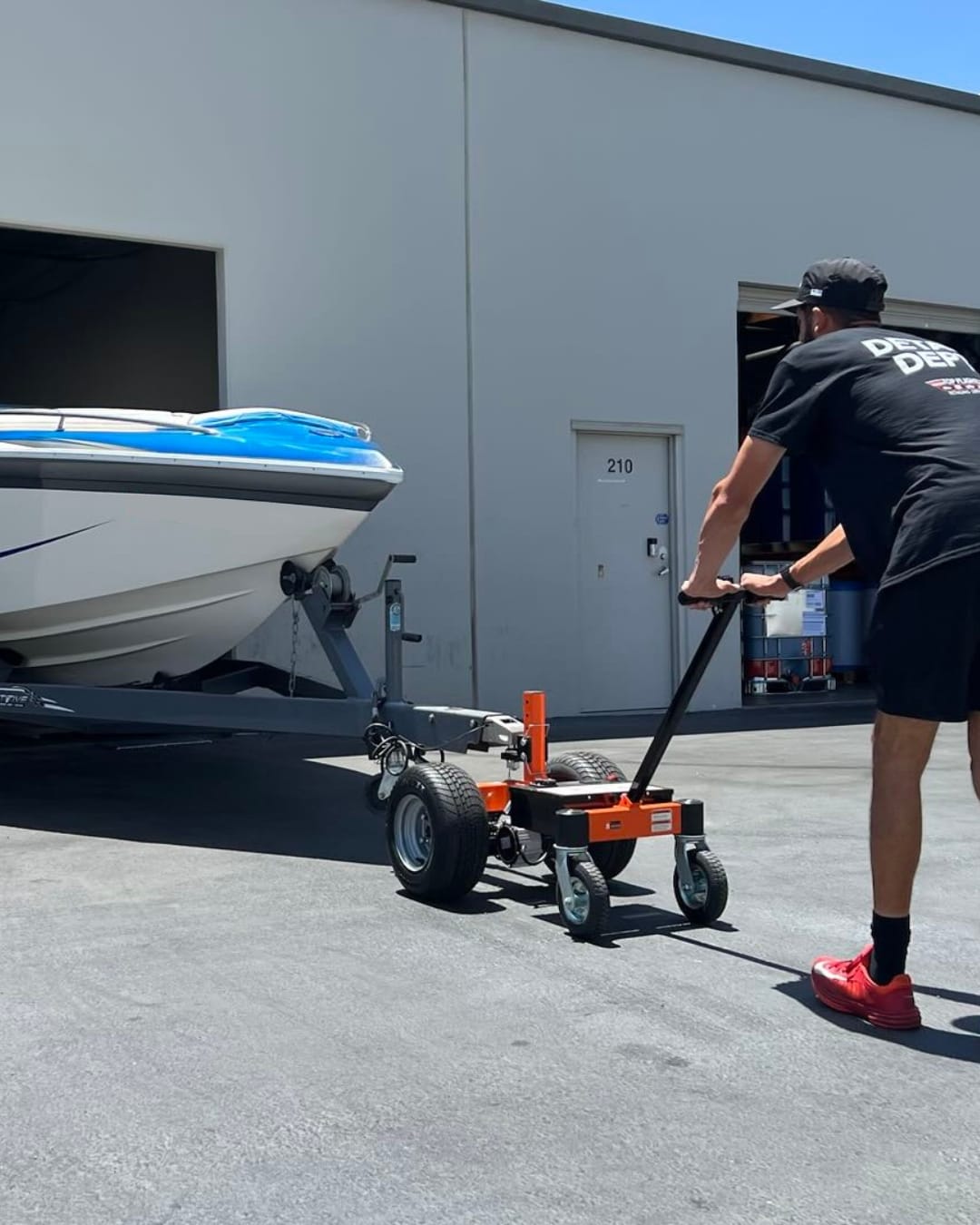
For boat owners, an electric trailer dolly is a game-changer for managing your trailer at home and at the launch ramp. Maneuvering a boat trailer in a tight driveway, garage, or storage unit can be just as difficult as parking an RV. A powerful trailer dolly allows you to effortlessly move your boat into its storage spot without needing to hitch it to your truck, saving your lawn, landscaping, and back from strain.

At the boat ramp, a dolly shines by helping you position the trailer in the staging area with precision. While you shouldn't submerge the dolly, you can use it to move the trailer from a distant parking spot to the top of the ramp, ready for your tow vehicle to take over for the final launch. This is especially helpful at busy ramps where quick, efficient movement is key. The all-terrain tires on models like the SuperHandy 3600lb trailer dolly are suitable for handling the gravel lots and uneven ground often found near water access points.
Versatile Applications: Beyond RVs and Boats
While RVs and boats are the most common uses for an electric trailer dolly, their versatility extends to nearly any type of trailer. The power and precision they offer can benefit hobbyists, homeowners, and business owners alike.
- Utility & Landscaping Trailers: For contractors and landscapers, an electric dolly makes it easy to move equipment-laden trailers around a job site or back into a workshop without firing up a truck.
- Horse Trailers: Safely and calmly position a horse trailer in a tight spot at the barn or showgrounds without the noise and jerky movements of a large vehicle, reducing stress on the animals inside.
- Concession & Food Trailers: Business owners can precisely place their mobile kitchens at festivals and events, maximizing their curb appeal and accessibility.
- Car Haulers: For mechanics and car enthusiasts, a dolly is suitable for maneuvering project cars on a trailer within a garage or workshop, allowing for easy repositioning without starting the tow vehicle.
Installation and Setup: Getting Your Electric Trailer Dolly Ready to Roll
You've unboxed your new electric trailer dolly—now it's time to get it moving. Proper setup is the foundation for safe and effective operation. Start by laying out all the parts and cross-referencing them with the user manual's inventory list. Assembly typically involves attaching the handle, mounting the ball hitch, and securing any brackets. Pay close attention to tightening all bolts and screws to the recommended torque to prevent loosening during operation.
Once assembled, the next step is power. For battery-powered models, it's crucial to fully charge the battery before its first use. This conditions the battery and ensures you get maximum runtime right from the start. For corded models, inspect the power cord for any damage before plugging it in. Finally, practice attaching the dolly to your trailer. Raise or lower the dolly's hitch ball to the correct height, back it under the trailer's coupler, and lower the coupler onto the ball. Ensure the coupler latch is fully engaged and secured with a pin or lock. Before you move your trailer, do a quick "pre-flight" check: turn the dolly on, test the forward and reverse controls, and make sure the wheels respond as expected. For medical context, MedlinePlus summarizes common mobility aids such as canes, walkers, wheelchairs, and scooters.
Maintenance Tips to Maximize Your Electric Trailer Dolly's Lifespan
An electric trailer dolly is a powerful tool, and like any piece of machinery, it requires regular maintenance to perform its best and last for years. A simple routine can prevent common problems and ensure your dolly is always ready when you are.
- Battery Health is Key: For battery-powered dollies, the battery is the heart of the unit. Always store the dolly with the battery charged, especially during long periods of inactivity like the winter months. Avoid letting the battery drain completely, as this can shorten its lifespan. If your dolly has a lead-acid battery, check and top off distilled water levels if applicable.
- Tire Inspection: Before each use, give the tires a quick visual inspection. Check for proper inflation, as under-inflated tires can make the motor work harder and reduce maneuverability. Look for any signs of excessive wear, cracks, or embedded objects.
- Keep It Clean: After moving your trailer, especially in dusty, muddy, or wet conditions, take a moment to wipe down your dolly. Keeping the chassis, motor housing, and chain drive clean prevents buildup that can lead to corrosion or interfere with moving parts.
- Check Hardware and Connections: Vibration can cause bolts and electrical connections to loosen over time. Periodically check that all hardware is tight. On models like the versatile 3600lb trailer dolly, ensuring the hitch mount and handle bolts are secure is a quick check that provides peace of mind.
Safety Precautions for Operating an Electric Trailer Dolly
Operating an electric trailer dolly makes moving heavy loads easy, but it demands your full attention and respect for safety protocols. Mishandling thousands of pounds can lead to serious injury or property damage.
- Know Your Capacity: The most important rule is to never exceed your dolly's rated weight capacity. This includes both the maximum trailer weight and, crucially, the maximum tongue weight. Using a dolly on a trailer that is too heavy can cause motor failure, loss of control, or structural damage. If you have a large RV or a heavy-duty boat, you need a unit built for the task, such as a 7500lb trailer dolly.
- Operate on Suitable Surfaces: Electric trailer dollies perform best on firm, level surfaces like concrete or asphalt. Avoid operating on steep inclines, soft grass, loose gravel, or sand, as this can cause the wheels to lose traction and you to lose control of the load.
- Clear Your Path: Before you start moving, walk the entire path your trailer will take. Remove any tools, toys, rocks, or other obstacles. Ensure that pets and people, especially children, are a safe distance away.
- Maintain Control: Always operate the dolly at a slow, walking pace. Keep both hands on the controls and be prepared to stop at any moment. Never try to stop a moving trailer with your body; let the dolly's motor and brake do the work.
Troubleshooting Common Electric Trailer Dolly Issues
Even with perfect maintenance, you might occasionally run into a snag. Most common issues are easy to diagnose and fix without a trip to the repair shop.
- Problem: The dolly won't turn on or move.
- Solution: Start with the obvious: Is the battery charged? Is the power switch in the "ON" position? Check that the battery is securely connected to the dolly. Some models have an emergency stop button that may have been pressed; ensure it is disengaged.
- Problem: The dolly moves slowly or seems weak.
- Solution: This is often a sign of being overloaded or operating on an unsuitable surface. Double-check that your trailer's tongue weight is not exceeding the dolly's limit. Even a lighter-duty 2800lb trailer dolly can struggle if asked to pull its maximum load up an incline or through soft dirt. Also, check that the tires are properly inflated, as low pressure increases rolling resistance.
- Problem: The dolly is difficult to steer.
- Solution: Poor steering is typically caused by improper tire inflation or an unbalanced load. Ensure both tires are inflated to the pressure recommended in the manual. Check that the trailer's tongue weight is properly centered over the dolly's axle.
Real-World User Reviews: What Owners Are Saying
Theory is one thing, but real-world performance is what truly matters. We constantly hear from customers who call their electric trailer dolly a "marriage saver," a "back saver," and a "game-changer." The most common praise centers on reclaiming previously unusable storage space. Owners are thrilled to finally fit their boat trailer into that tight side yard or maneuver their RV into the one perfect spot at a crowded campsite without a lengthy, stressful, multi-person operation.
One user who owns a heavy-duty toy hauler mentioned that moving it just a few feet to align with his truck hitch used to be an exhausting ordeal. Now, with a robust model like the 7500lb trailer dolly, he can position it perfectly by himself in minutes. Another common theme is the sheer convenience for boat owners, who can now single-handedly pull their trailer out of the garage and hook it up, cutting down their prep time and getting them to the water faster.

Frequently Asked Questions About Electric Trailer Dollies
As you explore your options, a few questions naturally come to mind. Here are the answers to some of the most common inquiries we receive.
Can an electric trailer dolly work on an incline? Yes, many electric trailer dollies are designed to handle slight to moderate inclines. However, it is crucial to check the manufacturer's specifications for the maximum recommended grade. Operating a dolly on a slope steeper than its rating can strain the motor and compromise braking ability. Always prioritize safety and ensure your chosen model is rated for the specific terrain you'll be navigating.
How do I determine the right weight capacity for my trailer? This is the most critical question. An electric trailer dolly's capacity refers to its ability to handle the trailer's tongue weight, not the gross trailer weight (GTW). Tongue weight is the downward force that the trailer tongue exerts on the hitch. As a general rule, tongue weight is typically 10-15% of the GTW. To be safe, choose a dolly with a maximum capacity that is well above your trailer's measured tongue weight. A versatile mid-range option like a 3600lb trailer dolly is a popular choice for a wide variety of campers and boats.
How long does the battery last on a single charge? Battery life varies based on the model, load, and terrain. Typically, you can expect 30-60 minutes of continuous use under a moderate load. For most users, this is more than enough time to perform several parking or repositioning maneuvers on a single charge. Factors like steep inclines, soft surfaces (like gravel or grass), and cold weather can reduce runtime. For air travel, FAA PackSafe lists battery and handling rules for wheelchairs and mobility devices.
Making Your Final Decision: Choosing the Right Electric Trailer Dolly for You
Selecting the perfect electric trailer dolly comes down to a careful assessment of your specific needs. By thinking through a few key factors, you can make a confident choice that will serve you well for years to come. Use this final checklist to guide your decision:
- Confirm Your Tongue Weight: Don't guess. Use a proper scale to measure your trailer's tongue weight to ensure you select a dolly with adequate capacity.
- Analyze Your Terrain: Will you be operating on smooth, level concrete or dealing with a gravel driveway and a slight incline? Be realistic about the surface conditions, as this will influence the power and tire type you need.
- Measure Your Space: Consider the tightness of the turns you need to make. Look for features like forward and reverse controls and a responsive steering handle that will make navigating your unique space simple and intuitive. For smaller utility or jet ski trailers in a standard garage, a nimble unit like the 2800lb trailer dolly often provides the perfect blend of power and maneuverability.
An electric trailer dolly is an investment in convenience, safety, and efficiency. By matching the dolly's capabilities to your trailer and environment, you're not just buying a piece of equipment—you're buying a hassle-free solution.
Related Products

Leave a comment
All comments are moderated before being published.
This site is protected by hCaptcha and the hCaptcha Privacy Policy and Terms of Service apply.