











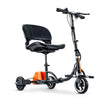

The vibrant energy of a bustling city is an experience everyone should enjoy. From street-side cafes and historic architecture to lively markets and museums, urban centers offer a world of discovery. But for those with mobility challenges, the simple act of navigating long city blocks, crowded sidewalks, and public transit can feel more like an obstacle course than an adventure. This is where the right piece of equipment doesn't just help—it transforms the entire experience. A compact, lightweight mobility scooter for adults is the key to unlocking true urban freedom, turning limitations into possibilities and letting you explore on your own terms.
Unlocking Urban Freedom: Why a Small Mobility Scooter is Your Exploration Essential
Imagine effortlessly gliding down a scenic riverwalk, independently browsing the stalls at a farmers' market, or meeting friends at a downtown gallery without worrying about the distance or draining your energy. A small mobility scooter isn't just a mobility aid; it's your personal passport to spontaneity and independence. Unlike larger, more cumbersome models, a travel mobility scooter is specifically designed for the dynamic urban environment. It empowers you to say "yes" to impromptu plans, explore that interesting side street, and fully immerse yourself in the city's rhythm without being held back.
How a Compact Scooter Enhances City Navigation and Accessibility
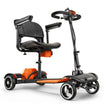
The design of a compact scooter is perfectly suited for the unique challenges of a city. Their smaller footprint and tighter turning radius are crucial for navigating narrow store aisles, bustling pedestrian areas, and crowded elevators with ease. While larger scooters might struggle, a nimble model like the 3-wheel SuperHandy Mobility Scooter can weave through obstacles smoothly. This enhanced maneuverability means more than just convenience; it means greater access to shops, restaurants, and attractions that might otherwise be inaccessible. You can conserve your energy for the activities you love, not just for the journey between them.
Key Considerations When Selecting Your Urban Mobility Scooter
Choosing the right scooter is about matching the device to your lifestyle and the demands of city exploration. The perfect urban scooter balances a specific set of features: portability for transport, battery life for a full day of adventure, comfort for varied surfaces, and the stability to give you confidence on the go. As we delve deeper, we’ll explore how to weigh these critical factors to find a scooter that feels like a natural extension of your desire to explore.
Assessing Portability and Disassembly for Public Transport & Storage
For any urban explorer, portability is paramount. Your scooter needs to seamlessly transition from the sidewalk to the car trunk, the subway, or your apartment. This is where understanding the difference between folding and disassembling models is key.
-
Folding Scooters: These models, like the innovative SuperHandy Mobility Scooter Pro, often collapse into a single, compact unit in seconds. This design is ideal for those who need to frequently store their scooter in a car trunk or a hall closet. It simplifies the process of getting in and out of vehicles and makes storage incredibly convenient.
-
Disassembling (Travel) Scooters: Other models are designed to be quickly taken apart into a few lighter, more manageable pieces without any tools. This can be a major advantage for individuals who need to lift the scooter themselves, as the weight of each individual component is significantly less than the whole unit. The SuperHandy Passport Flex and Passport Prime are excellent examples built for easy transport.
When evaluating options, always check the total weight and, for disassembling models, the weight of the heaviest piece. Consider your physical ability to lift these components. This single factor will heavily influence how often you use your scooter and how easily it integrates into your daily life and travel plans, whether you're navigating your local bus system or heading out on a cross-country trip.
Prioritizing Battery Range and Speed for City Adventures
When your goal is urban exploration, the last thing you want is "range anxiety." The battery life of your travel mobility scooter directly determines the scope of your adventure. A day in the city might involve visiting a museum, exploring a park, and then meeting friends for dinner—all without an easy opportunity to recharge.
Look for a scooter with a travel range that comfortably exceeds your planned daily mileage. Most small mobility scooters for adults offer a range between 6 and 15 miles on a single charge. Keep in mind that factors like your weight, the steepness of the terrain, and even the ambient temperature can affect battery performance. For those who want to maximize their time out, a model like the SuperHandy Passport Prime Mobility Scooter, with its impressive 15.5-mile range, provides true all-day freedom.
Speed is another key factor. While you won’t be breaking any land speed records, a top speed of around 4-5 mph is ideal. This pace is brisk enough to keep up with friends on foot and allows you to safely and efficiently cross city intersections before the light changes.
Evaluating Comfort, Maneuverability, and Stability on Varied Surfaces
City environments are unpredictable. You’ll encounter smooth museum floors, bumpy sidewalks, tight café corners, and crowded farmer's markets. Your scooter must be a comfortable and stable partner through it all.
- Comfort: Look for a well-padded seat, adjustable armrests, and adequate legroom. You’ll be seated for extended periods, so ergonomic design is crucial for preventing fatigue.
- Maneuverability: A scooter’s turning radius is paramount for indoor and crowded spaces. A smaller turning radius allows you to navigate narrow store aisles and sharp corners with ease, a key feature of the best small mobility scooters for adults.
- Stability: Urban terrain can include cobblestones, uneven pavement, and small curbs. While 3-wheel scooters often have a tighter turning radius, 4-wheel models provide a significantly more stable base, reducing the risk of tipping on uneven ground. A stable ride from a model like the SuperHandy Passport Flex 4-Wheel Power Mobility Scooter inspires confidence when navigating these challenging surfaces.
Understanding Weight Capacity and User-Specific Needs
Every mobility scooter has a manufacturer-specified maximum weight capacity. Adhering to this limit is not just a recommendation—it's essential for your safety and the scooter's longevity. Overloading a scooter can strain the motor, damage the frame, and compromise its stability.
When choosing, select a scooter with a weight capacity that is comfortably above your own body weight. Remember to also account for the weight of personal items you'll carry, such as a backpack, shopping bags, or an oxygen tank. Most lightweight mobility scooters for adults have capacities ranging from 220 to 300 lbs. The SuperHandy Mobility Scooter Pro offers a robust 265 lb capacity, making it a reliable choice for a wide range of users.
Understanding Different Small Mobility Scooter Designs for City Life
Not all travel mobility scooters are built the same. The primary designs you'll encounter are foldable and disassembling (or take-apart) models.
[IMAGE PLACEHOLDER]
-
Foldable Scooters: These scooters are designed for ultimate convenience. They typically collapse into a single, compact unit, much like a piece of luggage. Many, like the easy-to-use SuperHandy Mobility Scooter GUT112, can be folded or unfolded in seconds. This makes them perfect for users who frequently transport their scooter in a car trunk or need to store it in a small apartment closet.
-
Disassembling Scooters: These models break down into several lighter, more manageable components: the seat, the battery pack, and the front and rear sections of the frame. While this process takes a minute longer than folding, the individual pieces are significantly lighter than a complete foldable scooter. This is an excellent option for individuals who may not be able to lift the full weight of a one-piece scooter.
The right choice depends on your physical strength, your vehicle and home storage space, and how you plan to use it.
Comparing Foldable, Disassembling, and Travel Scooters
The terms "travel," "foldable," and "disassembling" are often used interchangeably, but they describe distinct designs tailored for portability. Understanding the differences is key to choosing the right small mobility scooter for your urban lifestyle.
-
Foldable Scooters: These are the champions of convenience. A foldable scooter collapses into a single, compact unit, often in just a few simple steps. This design is perfect for those who need to frequently store their scooter in a car trunk or a closet. Models like the lightweight and airline-approved
SuperHandy Mobility Scooter Proexemplify this, offering quick folding without any loose parts to manage. - Disassembling (or Take-Apart) Scooters: These scooters break down into several smaller, more manageable pieces—typically the seat, battery pack, front section, and rear section. The primary benefit is that each individual piece is much lighter to lift than a complete folded scooter. This is ideal for users who may have difficulty lifting a single, heavier unit but can handle smaller components.
-
Travel Scooters: This is a broad category that encompasses both foldable and disassembling models. The defining characteristic is that they are all designed with portability in mind, featuring lighter frames, more compact dimensions, and often airline-approved batteries. The
SuperHandy Passport Prime Mobility Scooteris a prime example of a versatile travel scooter built for on-the-go freedom.
[IMAGE PLACEHOLDER]
Making the Right Choice: Testing and Purchasing Your Scooter
After narrowing down your options based on technical specifications, the final step is ensuring the scooter feels right for you. A test ride is invaluable, whether it's at a local dealer or in your own home after an online purchase with a good return policy. This hands-on experience allows you to assess the real-world comfort and performance that specs on a page can't convey.
Essential Features to Look for During a Test Ride
When you get a chance to try a scooter, focus on these critical elements:
- Comfort and Ergonomics: Can you sit comfortably with your feet flat? Is the seat supportive? Check the tiller (handlebar) controls—are they easy to reach and operate without straining your hands or wrists?
- Maneuverability: Test the turning radius. Try navigating around tight corners to simulate crowded sidewalks or store aisles. The scooter should feel responsive and stable, not cumbersome.
- Control and Braking: Get a feel for the acceleration. Is it smooth or jerky? Test the brakes to ensure they engage reliably and bring you to a gentle, controlled stop.
- Ease of Use: If it’s a foldable or disassembling model, try the mechanism yourself. Can you perform the action without assistance? Ensure the process is as simple as advertised.
Where to Buy: Reputable Dealers vs. Online Retailers
You have two main avenues for purchasing your travel mobility scooter, each with distinct advantages.
Reputable Local Dealers offer the significant benefit of in-person service. You can test-ride multiple models, get expert advice tailored to your physical needs, and often receive white-glove delivery and setup. The trade-off can sometimes be a higher price point and a more limited selection than what's available online.
Online Retailers provide a vast selection, competitive pricing, and the convenience of home delivery. Leading online brands like SuperHandy bridge the gap by offering comprehensive product details, customer reviews, and video demonstrations. You can browse a wide range of options like the robust SuperHandy Passport Flex 4-Wheel Power Mobility Scooter or the ultra-portable SuperHandy Mobility Scooter from the comfort of your home. Just be sure to check the return policy and warranty details before you buy.
Frequently Asked Questions About Small Mobility Scooters for Urban Use
Navigating the world of mobility scooters can bring up a few questions, especially when you’re focused on urban travel. Below, we answer some of the most common queries to help you make an informed decision and get the most out of your new ride.
What is the average lifespan of a small mobility scooter battery?
The battery is the heart of your mobility scooter, and its lifespan is a crucial factor. On average, a well-maintained mobility scooter battery will last between 18 to 36 months. However, this range can vary significantly based on several key factors:
- Battery Type: Most modern lightweight scooters for adults use one of two battery types. Sealed Lead-Acid (SLA) batteries are the traditional, more affordable option but are heavier and typically have a shorter lifespan. Lithium-ion batteries, found in premium travel models like the SuperHandy Mobility Scooter Pro, are lighter, offer better performance, and generally last longer with proper care.
- Usage and Charging Cycles: A battery’s life is often measured in charge cycles (the number of times it can be fully charged and discharged). Most batteries are rated for 300-500 cycles. Frequent, heavy use and deep discharges will wear a battery down faster than occasional, light use.
- Charging Habits: To maximize lifespan, avoid letting your battery drain completely. It's best practice to charge your scooter after each use, regardless of the distance traveled. Also, unplug the charger once the battery is full to prevent overcharging, unless your charger has an automatic shut-off feature.
- Storage: Extreme temperatures are a battery's worst enemy. Storing your scooter or its battery in a very hot or cold environment (like a car trunk in summer or an unheated garage in winter) can permanently reduce its capacity and lifespan. Always store it in a cool, dry place.
By following the manufacturer's care instructions, you can ensure your scooter is always ready for your next city adventure.
[IMAGE PLACEHOLDER]
Can small mobility scooters be taken on airplanes?
Yes, absolutely! Traveling by air with a small mobility scooter is common and protected under federal regulations. However, you can't just roll up to the gate; you need to follow specific procedures, as the primary concern for airlines is the battery.
Here’s what you need to know:
-
Airline Approval is Key: The most important step is to contact your airline at least 48 hours before your flight. Inform them that you will be traveling with a personal mobility device. You will need to provide the scooter’s make and model, its dimensions, weight, and—most importantly—the battery type and specifications.
-
It's All About the Battery: According to the FAA (Federal Aviation Administration), the rules depend on the battery.
- Non-Spillable Batteries (SLA, Gel, AGM): These are generally allowed, but the airline needs to know. The battery can often remain in the scooter if it is securely housed.
- Lithium-ion Batteries: These have stricter regulations. The battery must be removed from the scooter before it's checked. You will then carry the battery with you into the cabin. There are also size limits, measured in Watt-hours (Wh). Most batteries under 300 Wh are permitted, but it's crucial to confirm the airline's specific limit.
-
Prepare for Check-in: The scooter itself will be checked as baggage, typically free of charge as durable medical equipment. At the gate, you may need to demonstrate how to collapse the scooter and remove the battery. Models designed for travel, like the ultra-compact SuperHandy Mobility Scooter GUT112 and the versatile Passport Flex 4-Wheel Power Mobility Scooter, make this process simple. High-performance travel scooters such as the SuperHandy Passport Prime often feature airline-compliant, easily removable batteries, taking the stress out of travel day.
By planning ahead and choosing a travel-friendly mobility scooter, the sky is truly the limit for your urban explorations.


Leave a comment
All comments are moderated before being published.
This site is protected by hCaptcha and the hCaptcha Privacy Policy and Terms of Service apply.