










Whether you own a boat, a camper, a utility trailer, or a fleet for your business, you know the freedom and utility they provide. But you also know the one moment that can turn a great day into a frustrating ordeal: parking it. Backing a trailer into a tight spot is a skill that tests patience, spatial awareness, and sometimes, relationships. It’s a persistent challenge that even seasoned drivers dread.
The fundamental difficulty lies in the physics of a tow vehicle and trailer. You're trying to control a pivot point you can't see, using counter-intuitive steering inputs from the driver's seat. A slight turn of the wheel can send the trailer veering off course. This is made worse by common obstacles: narrow driveways, cluttered garages, angled parking spots in a storage facility, or a sloped campsite. Every inch matters, yet precision is incredibly difficult to achieve when you're managing two separate vehicle lengths.
The Frustration and Hazards of Manual Trailer Positioning
When hitch-and-go reversing fails, many people resort to the "Armstrong method"—unhitching and pushing the trailer into place by hand. This is where frustration often escalates into genuine risk. Manually moving a trailer, even a seemingly light one, is an awkward, strenuous task. It involves wrestling with a heavy tongue weight, putting immense strain on your back, shoulders, and legs. The Occupational Safety and Health Administration (OSHA) consistently identifies overexertion from lifting and pushing as a leading cause of workplace injuries, and the same principles apply in your driveway.
Beyond the physical toll, the hazards to your property are significant. A slip of the hand or a loss of momentum can send a multi-thousand-pound trailer rolling into a garage door, scraping against a fence, or denting your tow vehicle. These "minor" accidents result in costly repairs and wasted time, turning a simple task into a major expense. The cycle of pushing, pulling, readjusting, and straining is not just inefficient; it's a gamble with your health and your equipment.
What Exactly is a Trailer Mover Dolly, and How Does it Simplify Positioning?
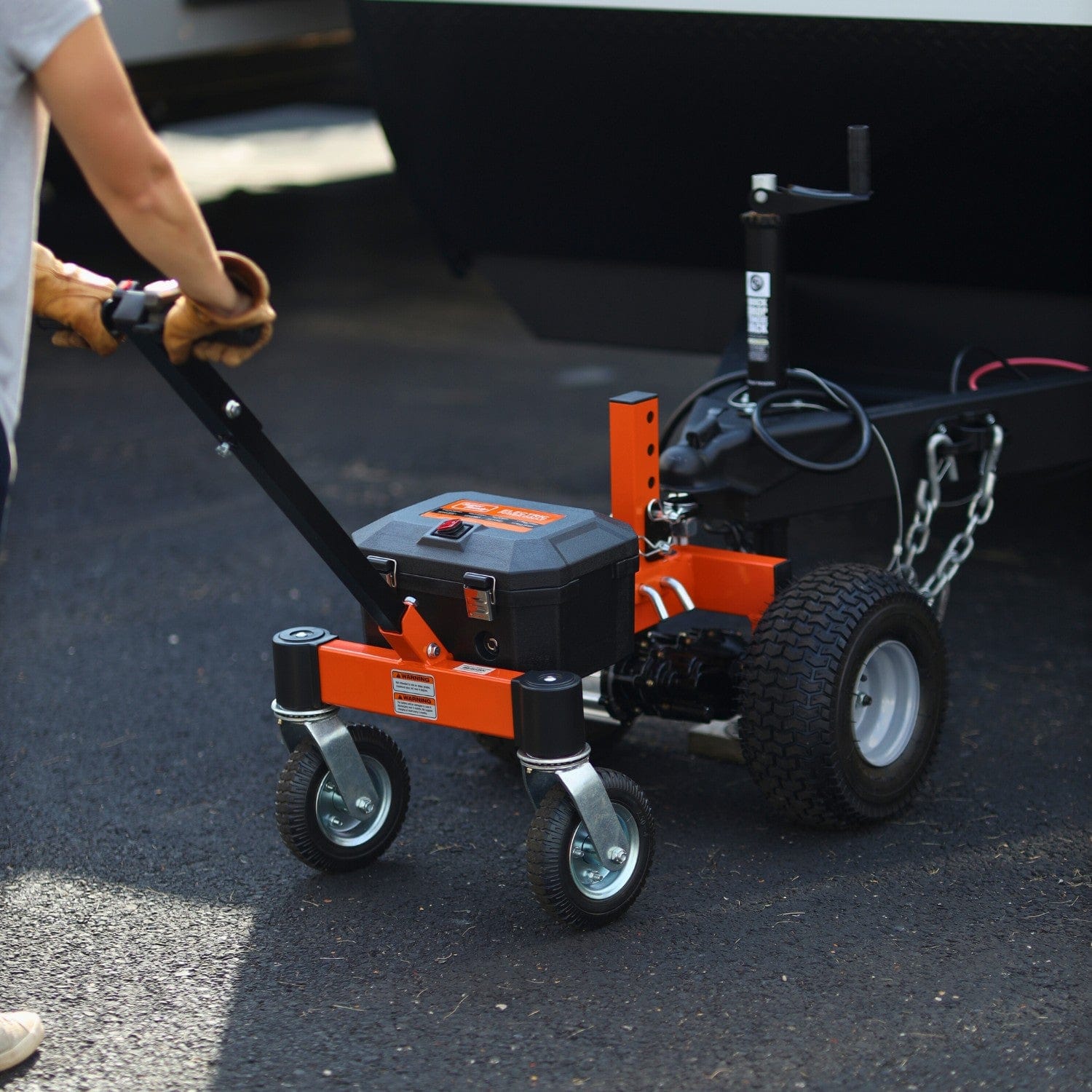
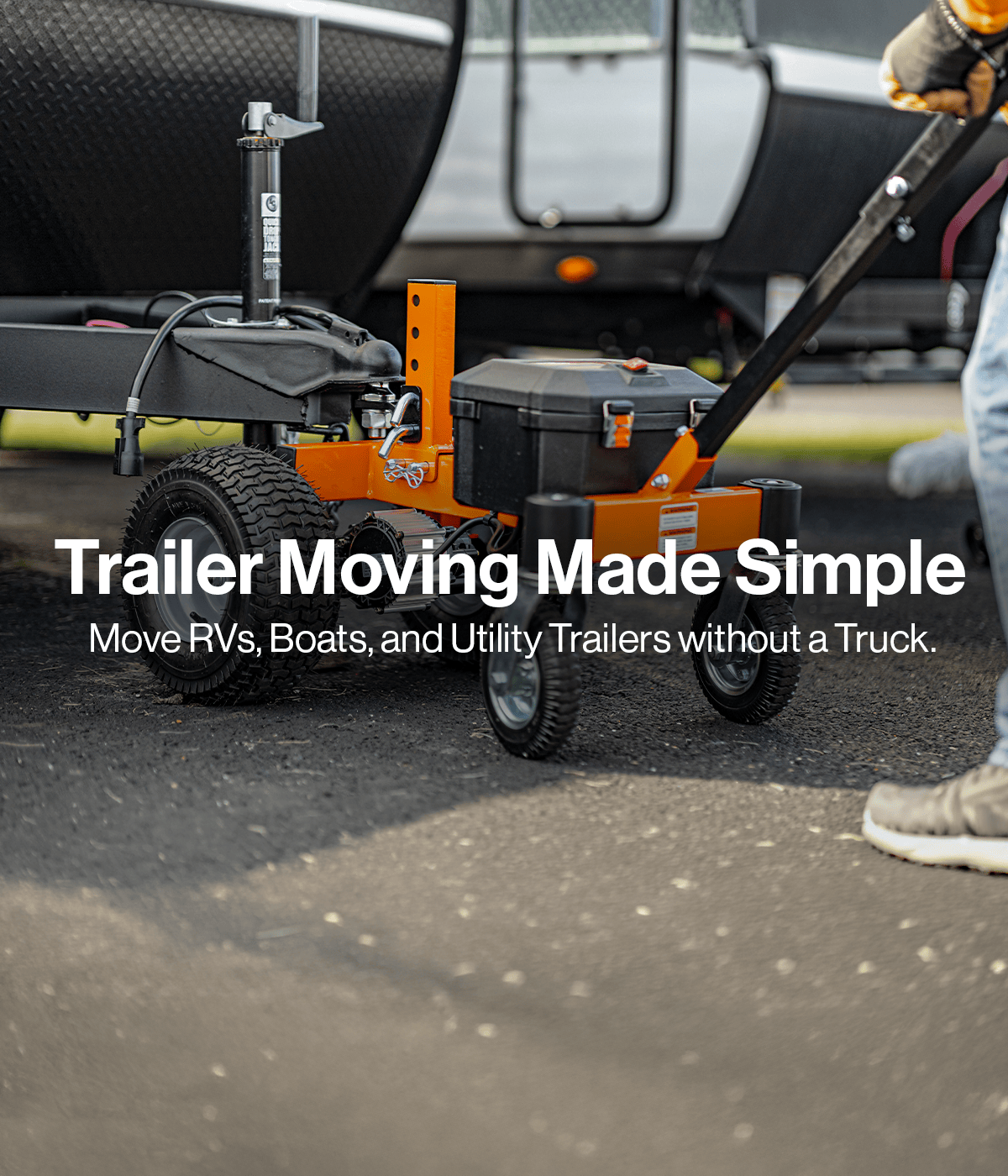
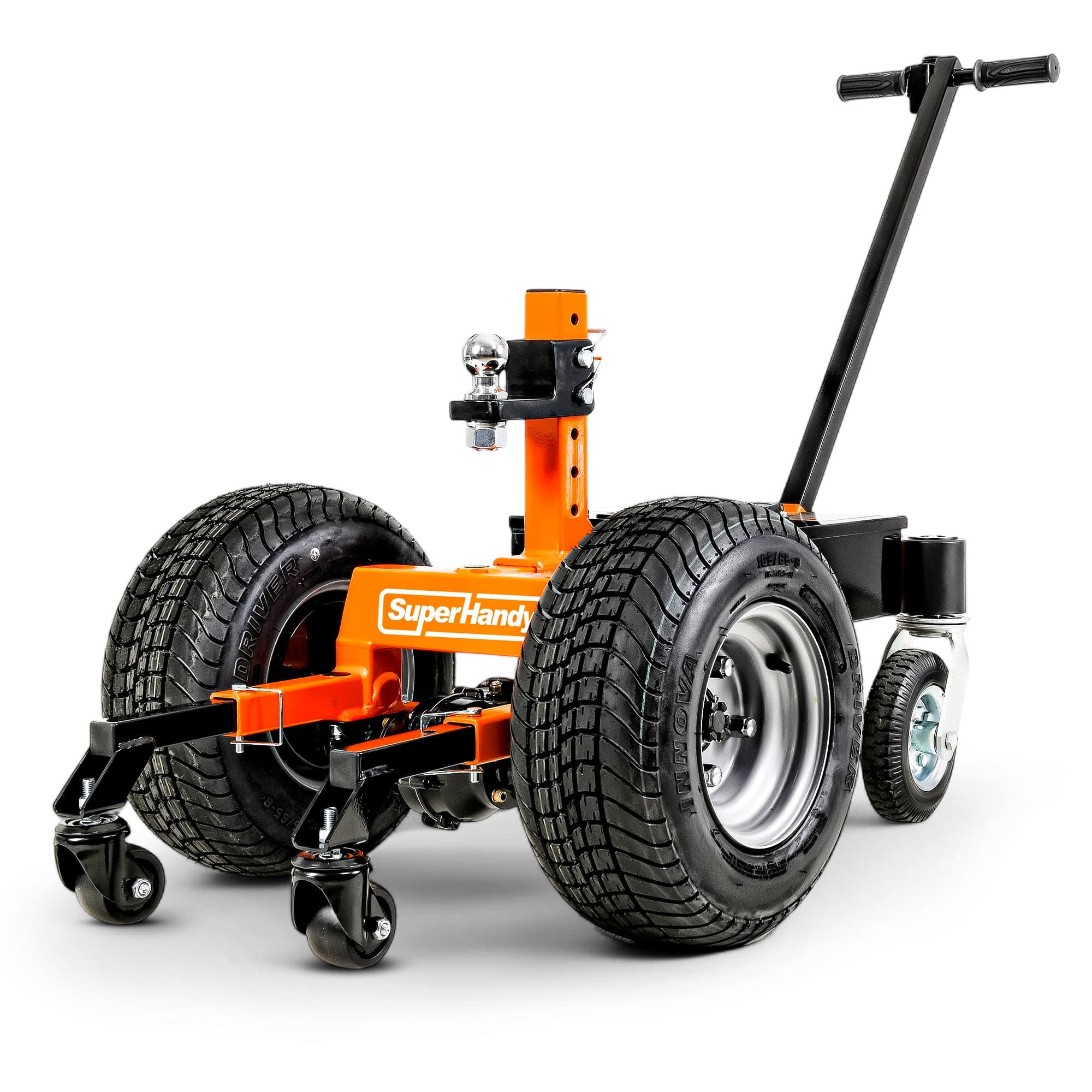
A trailer mover dolly is a specialized tool designed to eliminate the struggles of manual maneuvering. In its simplest form, it's a heavy-duty frame on wheels with a trailer ball that connects directly to your trailer’s coupler. This simple change has a profound impact: it moves the pivot point from your vehicle's hitch to the dolly itself, which you control directly at the front of the trailer.
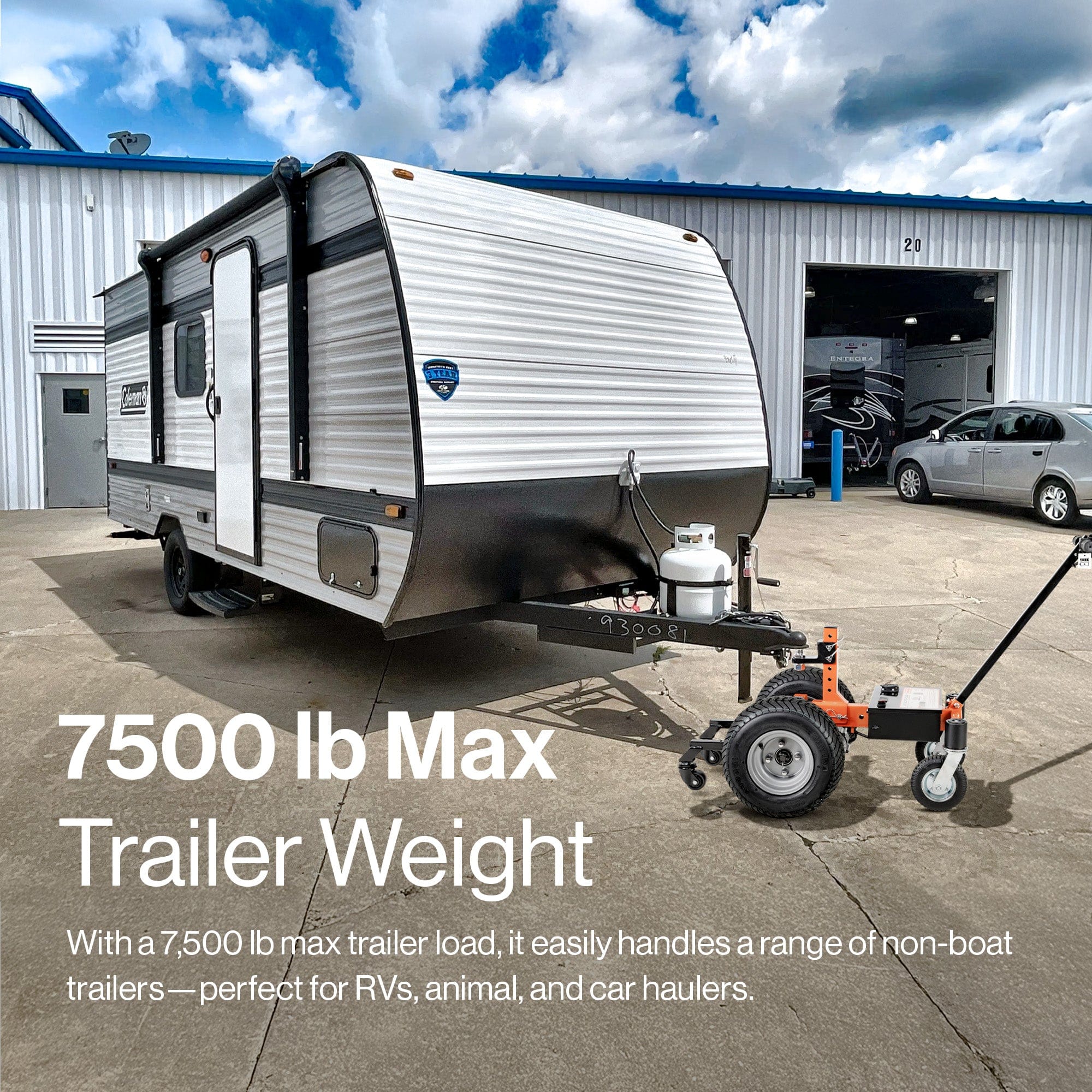
Suddenly, you're no longer guessing with a steering wheel. You have a direct, intuitive view of where the trailer is going. Pushing the dolly left moves the trailer left. It transforms the unwieldy trailer into something as simple to steer as a shopping cart, granting you pinpoint accuracy. For lighter utility or car dolly trailers, a manual Trailer Dolly Pro provides the necessary leverage to move hundreds of pounds with ease. For heavier loads, an electric powered trailer dolly takes over completely, using a motor to do all the heavy work for you.
Understanding Key Features and Technological Advantages of Modern Dollies
Today’s trailer dollies are far more than simple levers on wheels. They incorporate technology and thoughtful design to handle significant weight with minimal effort, providing a massive advantage over manual methods.
Key features to look for include:
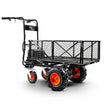
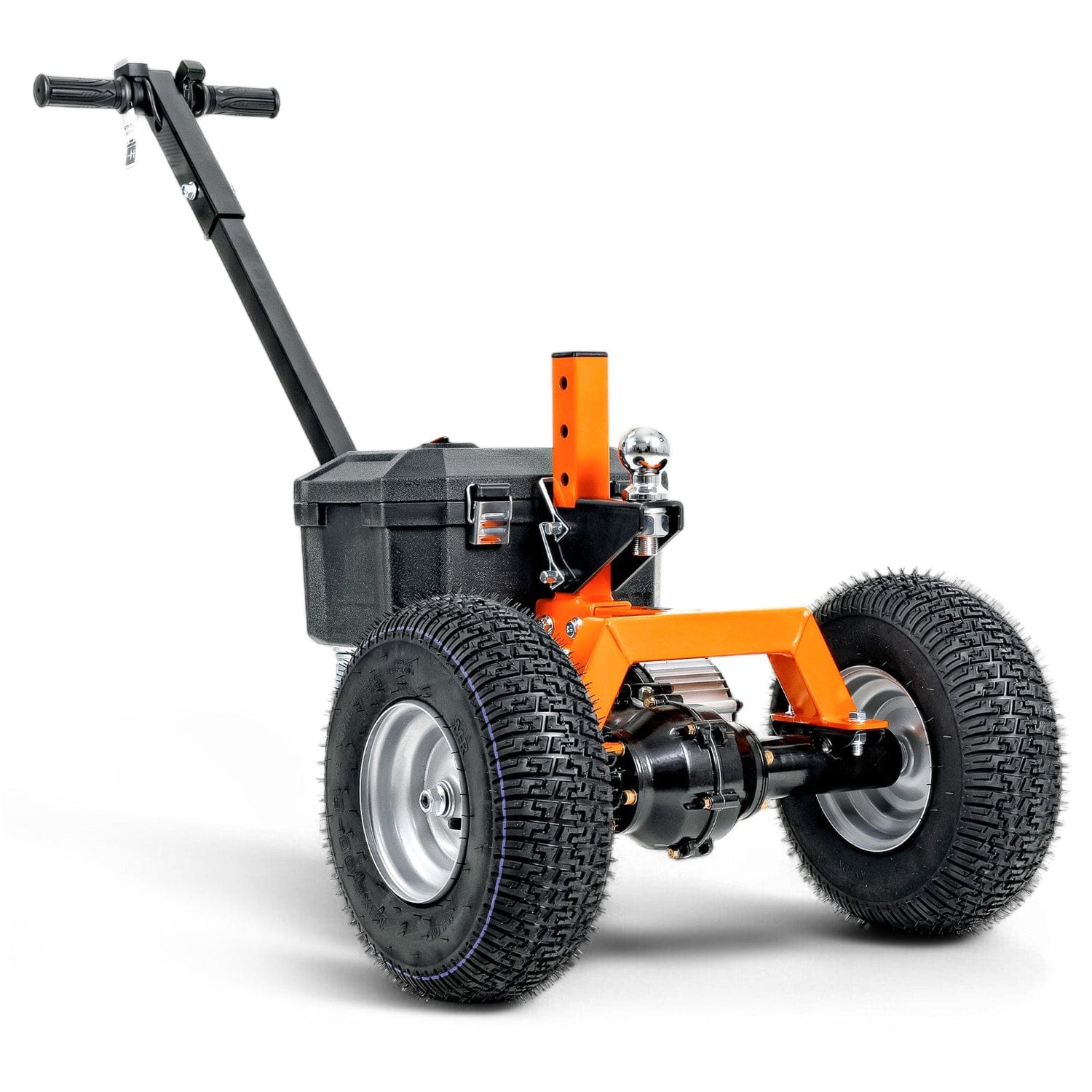
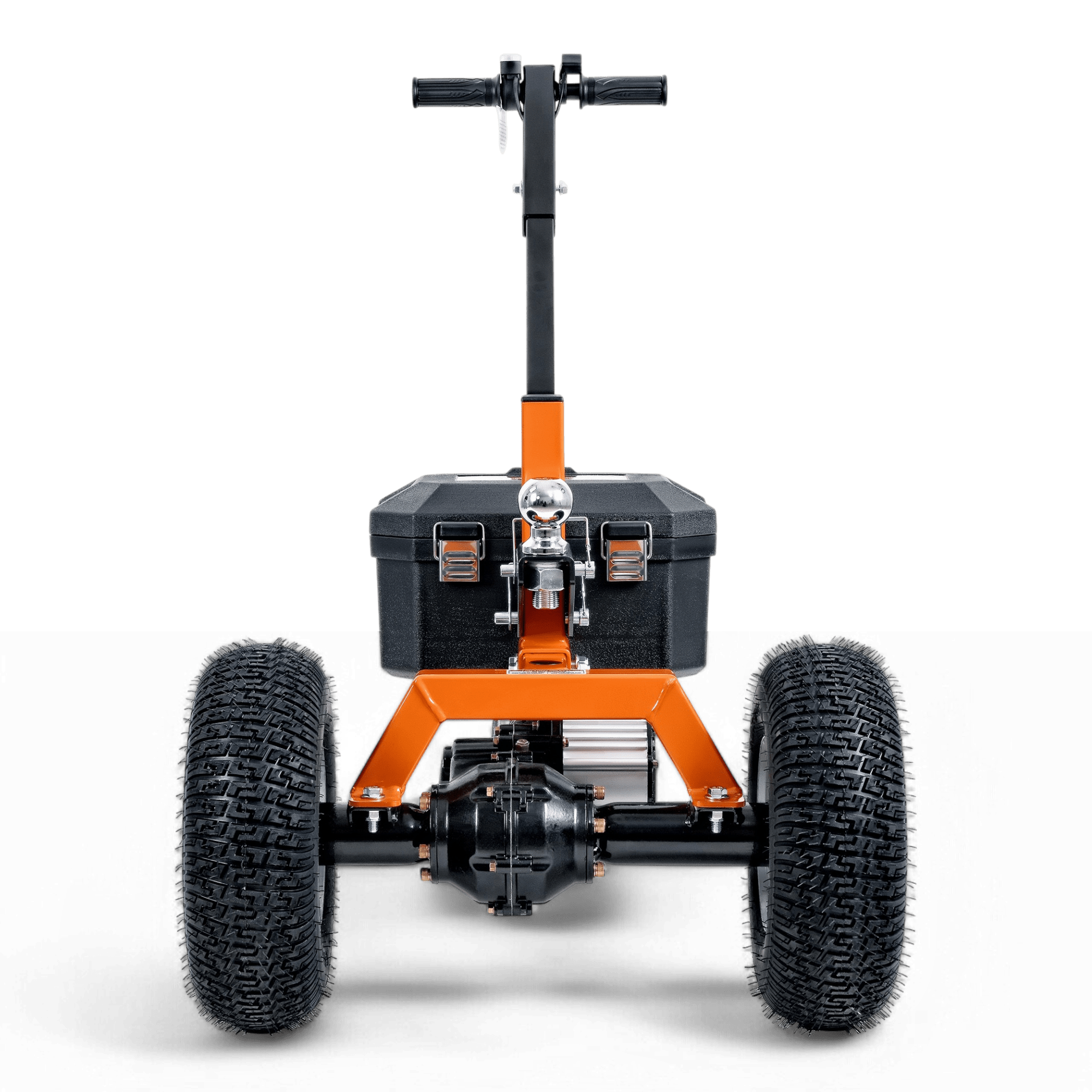
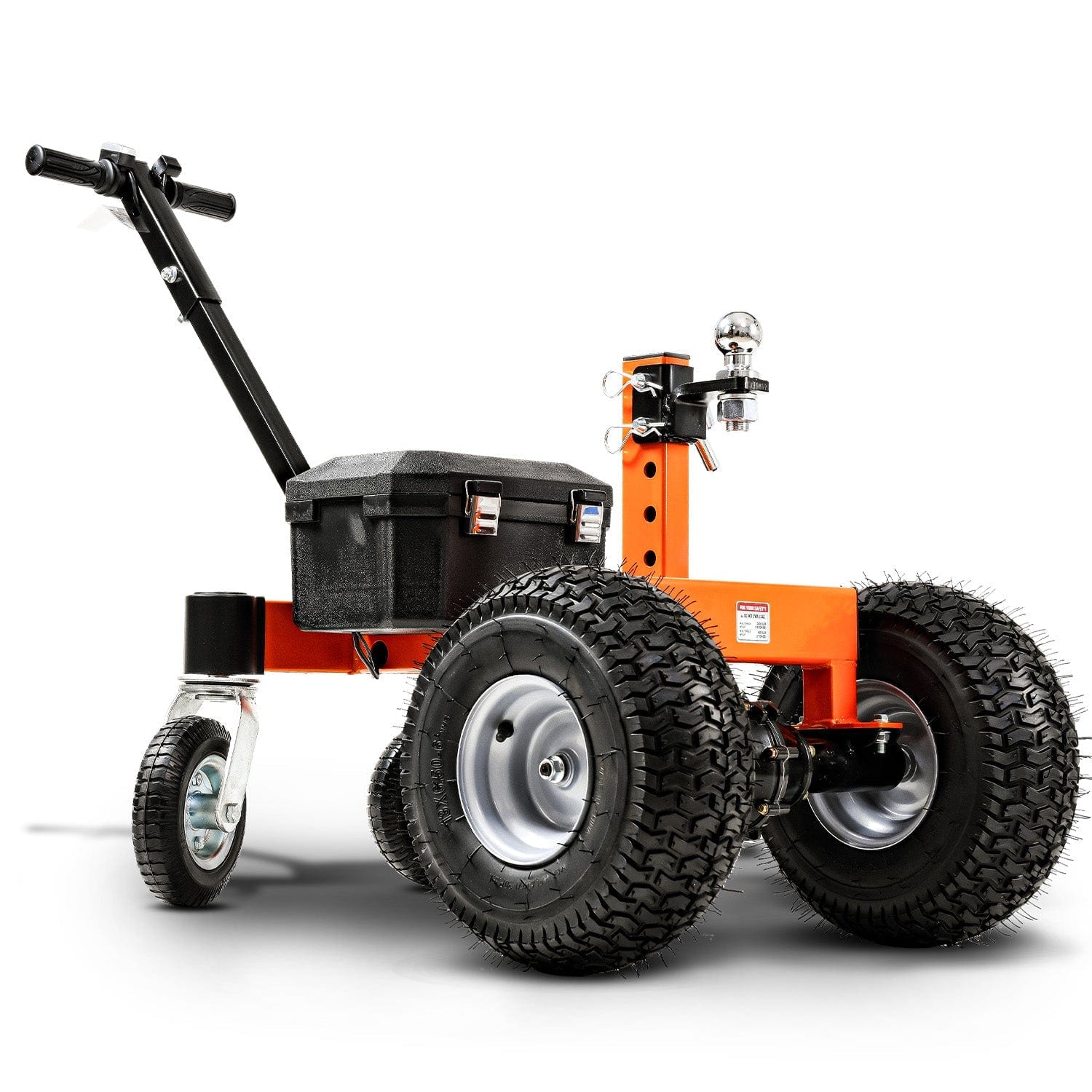
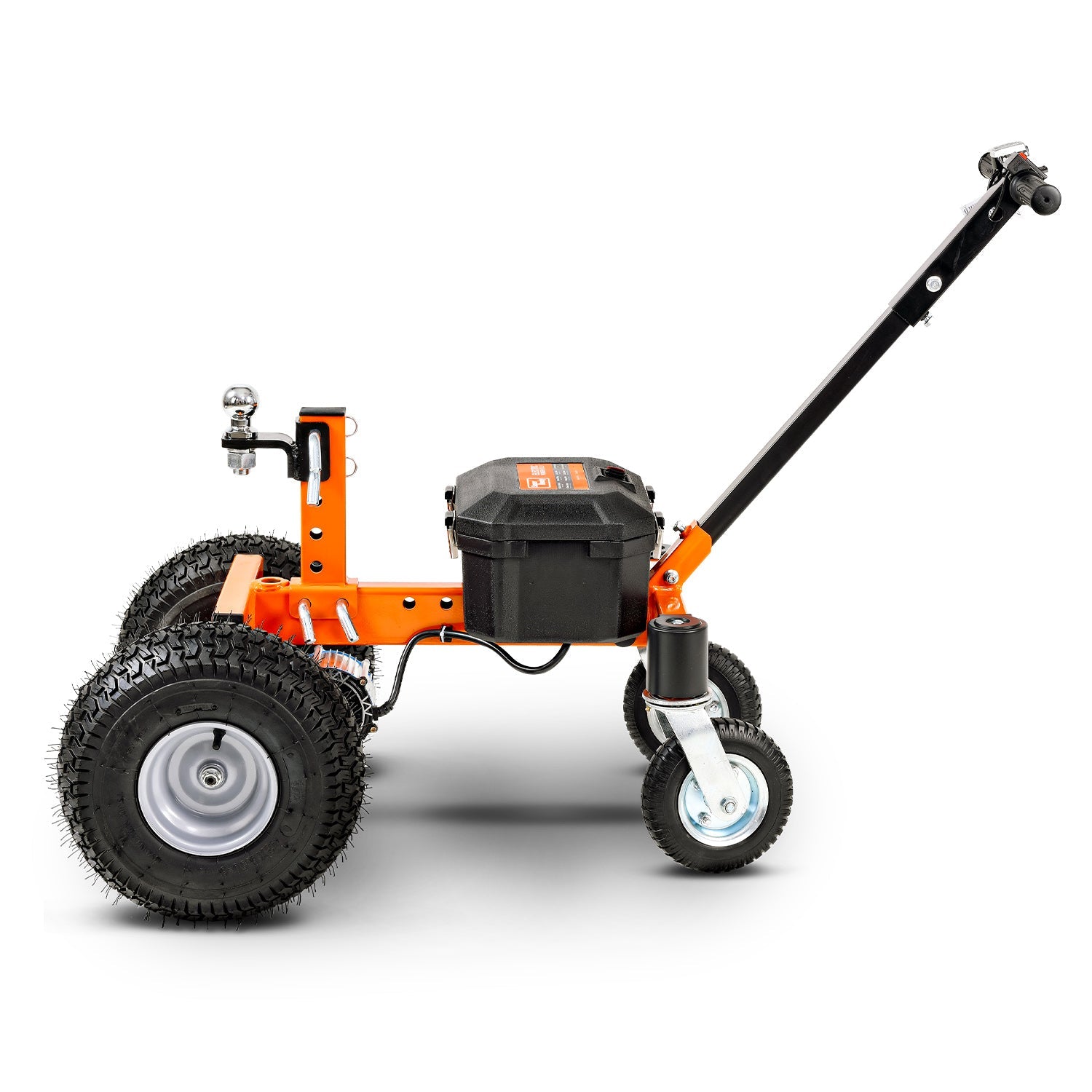
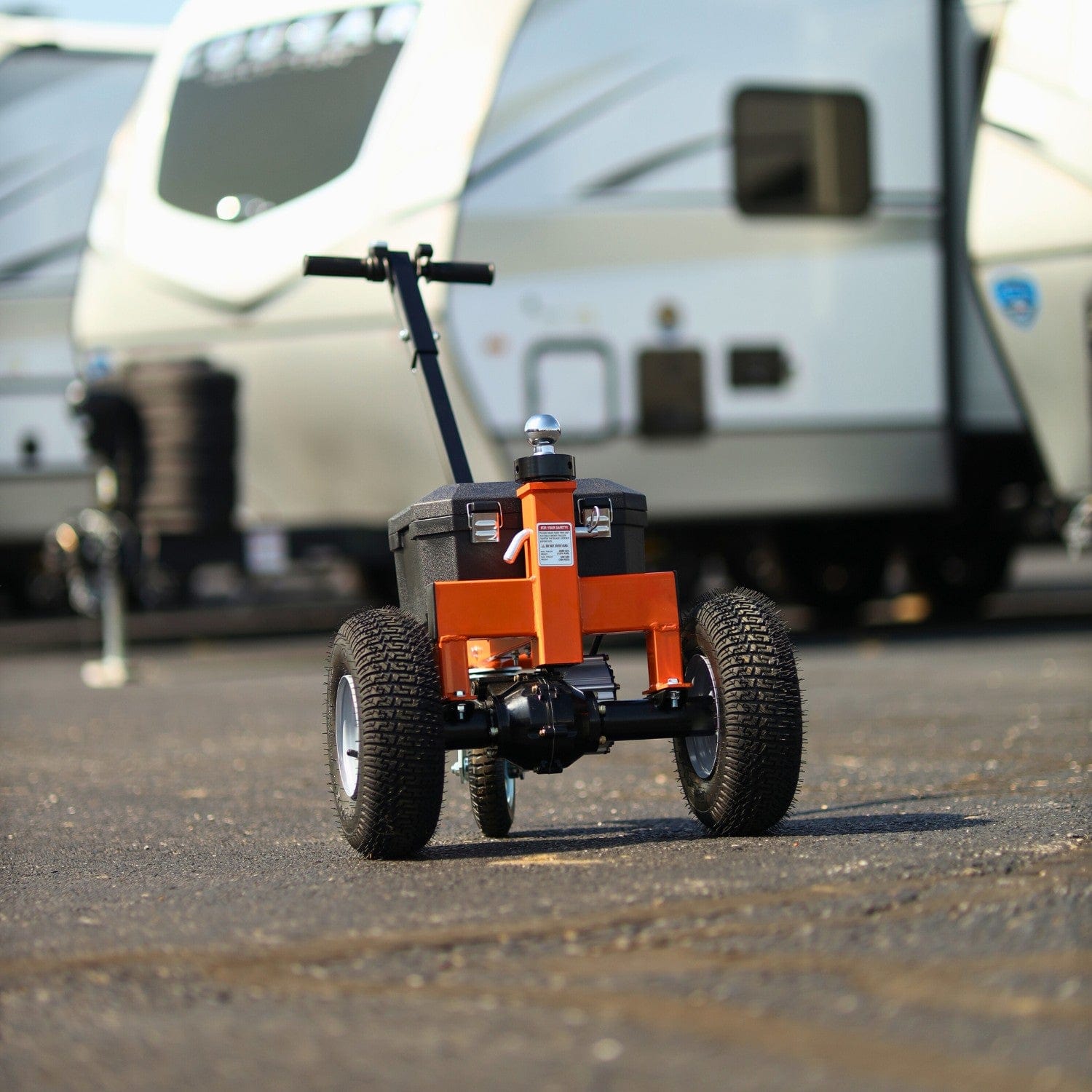
- Motorized Drive System: This is the true game-changer. An electric powered trailer dolly uses a powerful DC motor with forward and reverse controls, often with variable speed. Advanced models like the Electric Trailer Dolly 2800lbs Towing Capacity can effortlessly move thousands of pounds up slight inclines with just the press of a thumb.
- All-Terrain Tires: Large, heavy-tread pneumatic or solid rubber tires are crucial. They provide the necessary traction to move across imperfect surfaces like grass, packed gravel, and cracked pavement where manual pushing would be impossible.
- Adjustable Height Ball Mount: Versatility is key. A quality dolly allows you to raise or lower the trailer ball to match your trailer's coupler height, ensuring a level and secure connection for safe movement.
- Heavy-Duty Construction: A commercial-grade steel frame and a powder-coated finish ensure the dolly can withstand heavy tongue weights and resist rust and corrosion for years of reliable service.
These features combine to deliver unparalleled control, safety, and efficiency, turning a dreaded chore into a quick, simple, and satisfying task.
Evaluating the True Costs of Manual Trailer Maneuvering: Beyond the Obvious
When considering whether to invest in a trailer mover dolly, many owners focus solely on the upfront purchase price. This is a narrow view that misses the bigger picture. The true cost of maneuvering a trailer isn't found on a price tag; it's hidden in the cumulative expenses of time, physical effort, potential damage, and mounting frustration. Opting to "muscle it out" manually might seem free, but this approach carries a significant and often underestimated toll that can easily outweigh the cost of a dedicated tool.
Physical Strain, Time Waste, and Equipment Damage: The Unseen Expenses
The decision to forgo a dolly introduces three major "hidden costs" that trailer owners pay for again and again:
- Physical Strain: Pushing, pulling, and awkwardly lifting a trailer tongue—even for short distances—places immense strain on your back, shoulders, and joints. A single slip or jerky movement can lead to a debilitating injury, resulting in medical bills, lost work, and chronic pain. The risk of these musculoskeletal injuries increases significantly when dealing with uneven ground or inclines, turning a simple task into a high-stakes physical gamble.
-
Time Waste: What should be a five-minute task often balloons into a 30-minute ordeal. Manual maneuvering is a game of inches that requires constant readjustment, checking clearances, and often, a second or third person to act as a spotter. This wasted time adds up, chipping away at your productivity whether you're trying to get on the road for a weekend trip or managing inventory at a job site.
-
Equipment Damage: The lack of precise control during manual handling is a recipe for costly mistakes. A slight miscalculation can lead to scraping the trailer against a garage wall, denting your tow vehicle's bumper, or damaging the trailer's jack. These cosmetic and functional damages are not only expensive to repair but also decrease the value of your equipment. A simple, non-powered tool provides the leverage and control needed to prevent these common and frustrating accidents.
The Tangible ROI: How a Trailer Mover Dolly Justifies Its Investment
A trailer mover dolly isn't an expense; it's an investment in safety, efficiency, and asset protection. The return on investment (ROI) becomes clear when you measure it against the hidden costs of manual methods. By preventing just one significant trailer scrape, one visit to a chiropractor, or by reclaiming hours of wasted time over a season, the dolly has already paid for itself. It transforms a multi-person, high-risk job into a safe, simple, one-person operation.
Enhancing Safety, Boosting Efficiency, and Extending Equipment Lifespan
The tangible benefits of a trailer dolly directly counteract the unseen expenses of manual labor, delivering value in three critical areas:
- Enhancing Safety: The most important return is the protection of your health. A dolly eliminates the physical exertion and awkward body mechanics that cause injuries. You are no longer the engine; you are the operator, guiding the load with controlled leverage instead of brute force. This dramatic reduction in physical risk is arguably the most valuable benefit.

-
Boosting Efficiency: The time savings are immediate and substantial. A single person can precisely position a heavy trailer into a tight spot in a fraction of the time it would take two or three people to struggle with it manually. For heavier loads where efficiency is paramount, an Electric Trailer Dolly 2800lbs Towing Capacity offers effortless, motorized control, allowing you to move thousands of pounds with just the push of a button.
-
Extending Equipment Lifespan: With the superior control and maneuverability offered by a dolly, the risk of accidental damage plummets. Smooth, deliberate movements prevent the collisions, jackknifes, and scrapes that degrade your trailer and tow vehicle. By protecting your assets from unnecessary wear and tear, a dolly helps maintain their condition and resale value for years to come.
Head-to-Head: Precision and Power with a Dolly vs. Manual Effort
When it comes to repositioning a trailer, the difference between using a dolly and muscling it by hand is like the difference between using a surgical scalpel and a butter knife. Manual effort relies on brute force, guesswork, and often, the help of a spotter. It’s a game of shove, check, and repeat, where overcorrections are common and the risk of a runaway trailer is always present. You’re fighting against the trailer’s inertia with every push.
A trailer mover dolly, by contrast, transforms the task by providing a mechanical advantage. It focuses your effort through a lever and wheels, allowing for controlled, incremental movements. An electric powered trailer dolly takes this a step further, replacing your physical exertion with a motor that delivers consistent, smooth power. This allows a single person to guide a heavy trailer with fingertip control, making precise placement not just possible, but simple.
Maneuvering Capability, Control, and Terrain Limitations Compared
Let's break down the practical differences in performance between these two methods.
- Maneuvering: Manually pushing a trailer severely limits your ability to make tight turns. Pivoting a tandem-axle trailer by hand on a driveway is a recipe for frustration and fatigue. A trailer dolly acts as a pivot point directly under the coupler, enabling incredibly sharp turns—even 90 degrees or more. This is essential for navigating around corners, into tight garage spaces, or alongside a building.
-
Control: Control is the dolly's greatest strength. The long handle provides leverage, allowing you to steer the trailer tongue with minimal effort. Electric models offer variable speed control, letting you creep the trailer into position with millimeter accuracy. Manual pushing offers the least control; the trailer often wants to roll in a direction you didn't intend, especially on slight inclines, creating a significant safety hazard.
-
Terrain: Neither method is perfect for all surfaces. Manual maneuvering is safest and most effective on perfectly flat, hard surfaces like concrete. A slight slope or soft ground can make it nearly impossible. Similarly, most car dolly trailers perform best on pavement or hard-packed dirt. However, models equipped with large, pneumatic tires can handle grass, gravel, and uneven terrain far better than a person can alone, significantly expanding where you can safely position your trailer.
Who Benefits Most from a Trailer Mover Dolly? Identifying Ideal Scenarios
While nearly any trailer owner can find a use for a dolly, certain individuals and situations see an immediate and dramatic benefit. You are an ideal candidate for a trailer mover dolly if you:
- Store your trailer in a tight space: This includes a standard garage, a narrow side yard, or a packed storage unit where backing in with a tow vehicle is impossible.
- Frequently move your trailer alone: A dolly eliminates the need for a second person to help push, pull, and spot, enhancing both safety and independence.
- Have physical limitations: Repositioning a trailer by hand can lead to serious back and muscle strain. A dolly minimizes the physical toll, reducing the risk of injury as highlighted by OSHA guidelines on pushing and pulling forces.
- Own heavier trailers: For boat, camper, or heavy-duty utility trailers, a dolly isn't just a convenience—it's an essential safety tool.
- Need to make precise connections: Lining up the coupler to the hitch ball can be a frustrating back-and-forth process with a tow vehicle. A dolly allows you to bring the two together perfectly on the first try.
Tailoring Solutions for Homeowners, Small Businesses, and Specialized Industries
The right trailer dolly depends entirely on your specific needs, from load weight to frequency of use.
For homeowners with lighter boat, utility, or jet ski trailers that need to be tucked into a garage or shed, a robust manual dolly is often the perfect solution. A model like the Trailer Dolly Pro provides the leverage and control needed for occasional moves on paved surfaces without the cost of a motorized unit.
For small businesses like landscapers, contractors, or mobile food vendors, time is money. An electric dolly becomes a powerful efficiency tool. When you need to quickly detach and position a heavy equipment trailer at a job site or maneuver a food trailer into a tight festival spot, the powered assistance is invaluable. For these demanding, repetitive tasks, upgrading to a model like the Electric Trailer Dolly 2800lbs Towing Capacity provides the necessary power and durability to handle daily use with heavier loads, saving time and reducing employee fatigue.
Specialized industries, such as RV storage facilities, boat marinas, and even light aircraft hangars, rely on these tools for daily operations. Here, heavy-duty electric dollies are non-negotiable for moving customer assets safely and efficiently without starting up a large tow vehicle for every small adjustment.
Making Your Decision: Is a Trailer Mover Dolly Worth the Investment for Your Needs?
The decision to invest in a trailer mover dolly ultimately comes down to a personal cost-benefit analysis. We’ve explored the risks of manual maneuvering and the clear advantages a dolly provides in safety, precision, and efficiency. To determine if it’s the right choice for you, consider these key questions:
- How often do you move your trailer? If you’re repositioning your boat, RV, or utility trailer multiple times a month, the time and energy saved will quickly justify the cost.
- What is your storage situation? Do you navigate tight corners, a narrow side yard, or a crowded garage? A dolly provides the precise, 360-degree control needed to park your trailer perfectly without dings, dents, or frustration.
- Do you typically work alone? A trailer dolly transforms a two-person job into a safe, one-person task. This independence is invaluable, eliminating the need to coordinate with a spotter.
- Are you concerned about physical strain? The repetitive pushing, pulling, and lifting involved in manual moving can lead to back, shoulder, and knee injuries. A dolly bears the load, protecting your body from unnecessary wear and tear.
For smaller utility trailers or boats on level, paved surfaces, a robust option like the Electric Trailer Dolly 2800lbs Towing Capacitycan be a game-changer. For heavier loads, frequent use, or slight inclines, upgrading to a motorized unit like the Trailer Dolly Pro eliminates nearly all physical effort and offers superior control.

If you answered "yes" to even one of the questions above, a trailer mover dolly isn't just a luxury—it's a strategic investment in your safety, time, and property.
Frequently Asked Questions About Trailer Mover Dollies (Q&A)
What's the difference between a manual and an electric trailer dolly?
The primary difference is the power source. A manual dolly relies on your physical strength to push or pull the trailer, using leverage to make it easier. They are affordable and effective for lighter trailers on flat, hard surfaces. An electric trailer dolly uses a battery-powered motor to do the work for you. It provides effortless movement, superior control, and the ability to handle heavier loads and slight inclines, making it ideal for large trailers or users who want to avoid physical exertion.
Can a trailer dolly work on grass or gravel?
Performance on soft or uneven surfaces depends heavily on the model. Standard trailer dollies are designed for optimal use on hard, level surfaces like concrete or asphalt. However, many powered dollies feature larger, all-terrain pneumatic tires that can handle firm grass, packed dirt, and fine gravel. Always check the manufacturer's specifications for terrain limitations. For very soft or loose surfaces, performance will be diminished.
How do I determine the right towing capacity for my trailer?
Choosing the right capacity is critical for safety. You need to know your trailer's tongue weight, which is the downward force the fully-loaded trailer tongue exerts on the hitch. As a general rule, tongue weight should be 10-15% of the total Gross Trailer Weight (GTW). A dolly's capacity rating refers to the maximum tongue weight it can safely handle. Always choose a dolly with a capacity that exceeds your trailer’s maximum tongue weight to ensure a safe margin. You can find your trailer’s specifications in the owner's manual or on the VIN plate. For guidance on weighing your trailer, consult resources from the National Association of Trailer Manufacturers (NATM).
Is a trailer mover dolly difficult to use?
Not at all. Trailer dollies are designed for simplicity and ease of use. Assembly is typically straightforward, often requiring just a few bolts and basic tools. Once assembled, you simply lower your trailer's coupler onto the dolly's hitch ball, secure it, and you're ready to move. For manual dollies, you use the long handle for leverage. For electric models, operation is as simple as pressing a button or twisting a throttle on the handle. It's significantly less complicated and much safer than trying to make fine adjustments with a tow vehicle.
Related Products

Leave a comment
All comments are moderated before being published.
This site is protected by hCaptcha and the hCaptcha Privacy Policy and Terms of Service apply.